
Vance Rebukes Israeli Critics of U.S.-Iran Peace Agreement, Warning Against Alienating 'Only Powerful Ally'
Vice President JD Vance issued a stark warning to Israeli officials criticizing the newly signed U.S.-Iran memorandum of understanding, urging them to 'wake up and smell the reality.' The rebuke highlights growing friction between the Trump administration and Israel over the framework to end the three-month war.
By Factlen Editorial Team
- Trump Administration
- Believes the deal successfully ends a costly war and establishes a verifiable path to denuclearize Iran using economic leverage.
- Israeli Security Establishment
- Views the MoU as a capitulation that leaves Iran's nuclear threshold intact and protects Hezbollah from Israeli military pressure.
- U.S. Defense Hawks
- Skeptical of Iran's willingness to comply and deeply opposed to the $300 billion reconstruction fund, but hesitant to openly defy Trump.
- Iranian Leadership
- Frames the agreement as a victory that breaks the U.S. naval blockade and secures vital economic relief while preserving regional influence.
What's not represented
- · Lebanese Civilians and Government
- · Global Shipping and Energy Markets
Why this matters
The public clash exposes a rare and severe rift between the U.S. and Israel just as the Trump administration attempts to finalize a historic peace deal with Tehran. If the U.S.-Israeli alliance fractures, it could reshape Middle Eastern security dynamics and complicate the 60-day sprint to dismantle Iran's nuclear program.
Key points
- VP JD Vance warned Israeli cabinet members to stop criticizing the U.S.-Iran peace framework.
- The MoU ends a three-month war, reopening the Strait of Hormuz and lifting a U.S. naval blockade.
- The deal establishes a 60-day window to negotiate the dismantling of Iran's nuclear program.
- Israeli officials strongly oppose the deal's inclusion of a ceasefire in Lebanon and a proposed $300 billion reconstruction fund for Iran.
- Vance reminded Israeli critics that U.S. taxpayers fund the majority of Israel's defensive weaponry.
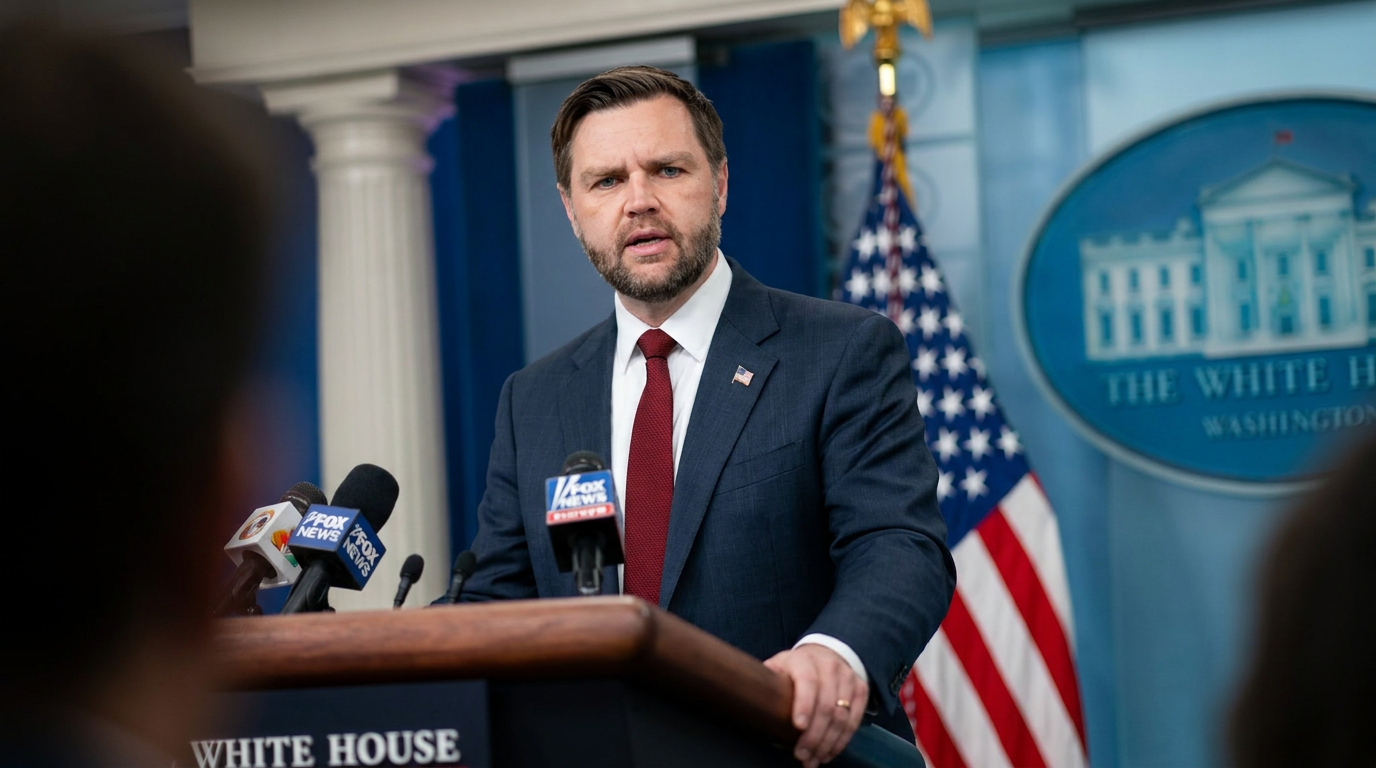
Vice President JD Vance delivered a blistering public rebuke to Israeli officials who have criticized the newly signed U.S.-Iran memorandum of understanding (MoU), warning them not to alienate Washington.[1][2]
Speaking at a White House press briefing on Thursday, Vance told members of Prime Minister Benjamin Netanyahu's cabinet to "wake up and smell the reality of the situation." He pointedly reminded them that President Donald Trump is the "only head of state in the entire world who is sympathetic to the nation of Israel at this moment in time."[3][7]
The unprecedented public dressing-down exposes a severe diplomatic rift over the 14-point MoU, which was digitally signed by U.S. and Iranian leadership to end a three-month war. The framework reopens the Strait of Hormuz, lifts the U.S. naval blockade on Iranian ports, and establishes a 60-day window to negotiate a permanent settlement regarding Tehran's nuclear program.[4][5][6]

Israeli hardliners, including National Security Minister Itamar Ben Gvir and Finance Minister Bezalel Smotrich, have fiercely opposed the deal. They argue it leaves Israel vulnerable, fails to immediately dismantle Iran's enrichment infrastructure, and rewards Tehran with premature economic relief.[3][8]
A major sticking point is a provision mandating a ceasefire across all regional fronts, including Lebanon. Israel is currently conducting a military offensive against Hezbollah in southern Lebanon, and Israeli officials have explicitly stated they do not consider themselves bound by the U.S.-Iran agreement's terms regarding their northern border.[4][8]
A major sticking point is a provision mandating a ceasefire across all regional fronts, including Lebanon.
Vance dismissed the Israeli cabinet's grievances, highlighting the immense financial and military backing the United States provides. "If I was in the cabinet of the Israeli government, I might not be attacking the only powerful ally that I have anywhere left in the entire world," he stated, noting that two-thirds of the defensive weapons protecting Israel are paid for by American taxpayers.[2][7]

The MoU has also drawn skepticism from pro-Israel hawks within the U.S. Republican party, though many are hesitant to directly cross President Trump. Critics have zeroed in on a proposed $300 billion reconstruction fund for Iran and the potential unfreezing of billions in foreign assets.[1][5]
The Trump administration insists these financial incentives are strictly conditional. Vance clarified that international inspectors from the International Atomic Energy Agency (IAEA) will be granted access to Iran, and that economic relief will only flow if Tehran verifiably destroys its highly enriched uranium stockpile and halts support for proxy militias.[4][5]
The economic impacts of the preliminary deal are already rippling through global markets. Following the announcement that the U.S. military had lifted its naval blockade, allowing cargo ships and oil tankers to resume transit through the Strait of Hormuz, global oil prices saw an immediate drop.[1][6]

As the 60-day technical negotiation phase begins, the durability of the peace remains highly fragile. With Israel vowing to maintain its operations in Lebanon and Iran threatening to view such actions as a violation of the MoU, the Trump administration faces a complex diplomatic sprint to finalize the treaty before regional hostilities reignite.[4][8]
How we got here
Late Feb 2026
The U.S. and Israel launch military strikes against Iran, beginning a three-month war.
April 2026
A temporary ceasefire is implemented as back-channel negotiations begin.
June 14-15, 2026
U.S. and Iranian officials digitally sign a 14-point Memorandum of Understanding.
June 17, 2026
The U.S. military begins lifting its naval blockade of Iranian ports, allowing ships to transit the Strait of Hormuz.
June 18, 2026
VP JD Vance publicly rebukes Israeli cabinet members for attacking the agreement.
Viewpoints in depth
The Trump Administration's Stance
The White House views the agreement as a necessary step to end a costly war and establish a verifiable path to denuclearize Iran.
Administration officials, led by Vice President JD Vance, argue that the MoU successfully leverages military and economic pressure to force Tehran to the negotiating table. By lifting the naval blockade and reopening the Strait of Hormuz, the U.S. aims to stabilize global energy markets. The administration insists that the proposed $300 billion reconstruction fund and sanctions relief are strictly conditional on Iran allowing IAEA inspectors to verify the destruction of its highly enriched uranium stockpile.
The Israeli Government's View
Israeli leaders fear the deal provides premature economic relief to Iran while leaving its nuclear threshold and proxy networks intact.
Prime Minister Benjamin Netanyahu's cabinet views the 60-day negotiation window as a dangerous concession that allows Iran to retain critical enrichment infrastructure. Furthermore, Israeli officials are deeply opposed to the MoU's provision mandating a ceasefire across all regional fronts, including Lebanon. Israel maintains that it must continue its military operations against Hezbollah to secure its northern border, setting up a direct clash with the terms of the U.S.-brokered agreement.
U.S. Congressional Hawks
Conservative lawmakers and defense analysts are skeptical of Iran's willingness to comply and oppose the massive reconstruction fund.
While hesitant to openly defy President Trump, many pro-Israel Republicans and defense think tanks have voiced severe reservations about the deal. Critics argue that the $300 billion reconstruction fund effectively rewards Tehran for its aggression and guarantees the survival of the current regime. They demand strict oversight and express doubt that the 60-day technical negotiations will yield a watertight mechanism for dismantling Iran's nuclear program.
What we don't know
- Whether Israel will defy the MoU by continuing its military offensive against Hezbollah in Lebanon.
- The exact verification mechanisms the IAEA will use to ensure Iran dismantles its highly enriched uranium stockpile.
- How the proposed $300 billion reconstruction fund will be financed and administered.
Key terms
- Memorandum of Understanding (MoU)
- A formal agreement between two or more parties that establishes a framework for future negotiations, though often lacking the binding legal weight of a formal treaty.
- Strait of Hormuz
- A crucial maritime chokepoint between the Persian Gulf and the Gulf of Oman, through which a significant portion of the world's oil supply passes.
- IAEA
- The International Atomic Energy Agency, the United Nations watchdog responsible for monitoring and verifying nuclear programs.
- Highly Enriched Uranium
- Uranium that has been processed to a high concentration of the U-235 isotope, making it capable of being used in nuclear weapons.
Frequently asked
Why is Israel criticizing the U.S.-Iran deal?
Israeli officials argue the deal leaves Iran's nuclear infrastructure partially intact, rewards Tehran with financial incentives, and unfairly demands a halt to Israel's military operations against Hezbollah in Lebanon.
What did JD Vance say to Israel?
Vance told Israeli critics to 'wake up and smell the reality,' warning them not to attack the United States, which he described as Israel's 'only powerful ally' left in the world.
What does Iran get out of the MoU?
In the short term, the U.S. is lifting its naval blockade and allowing the Strait of Hormuz to reopen. If Iran meets strict nuclear benchmarks over the next 60 days, it could receive sanctions relief and access to a $300 billion reconstruction fund.
Sources
Source coverage
8 outlets
4 viewpoints surfaced








[1]Al JazeeraU.S. Defense Hawks
Pro-Israel hawks in US criticise Iran MoU but avoid clashing with Trump
Read on Al Jazeera →[2]The New York TimesIsraeli Security Establishment
Vance Lashes Out at Israeli Critics of U.S.-Iran Agreement to End the War
Read on The New York Times →[3]The Times of IsraelIsraeli Security Establishment
Vance: Israeli critics of Trump need to 'wake up' to their situation, he's 'only head of state' who still likes Israel
Read on The Times of Israel →[4]CBS NewsTrump Administration
Israel has a copy of the U.S.-Iran deal, Trump says
Read on CBS News →[5]The GuardianTrump Administration
JD Vance says specifics to be worked out as Senate Republicans say there are many unanswered questions
Read on The Guardian →[6]Radio Free Europe / Radio LibertyIranian Leadership
Trump May Release US-Iran Agreement Before Signing, Vance Says
Read on Radio Free Europe / Radio Liberty →[7]DawnIranian Leadership
'Wake up': US VP Vance rebukes Israeli critics of Iran deal
Read on Dawn →[8]Council on Foreign RelationsU.S. Defense Hawks
In the U.S.-Iran agreement, Israelis fear they will lose the peace
Read on Council on Foreign Relations →

More in news politics
See all 8 stories →Strait of Hormuz
U.S. Lifts Blockade on Iranian Ports as 60-Day Window Opens for Final Peace Deal
8 sources

U.S.-Israel Relations
Vice President Vance Rebukes Israeli Critics of U.S.-Iran Peace Agreement
6 sources
US-Iran Deal
U.S. and Iran Sign Agreement to End War; Vance Lashes Out at Israeli Critics
7 sources
U.S.-Iran Deal
U.S. and Iran Sign 14-Point Agreement to End War, Sparking Fierce Backlash from Israel
6 sources

Every angle. Every day.
Get news politics stories with full source coverage and perspective breakdowns delivered to your inbox.