
U.S. Lifts Blockade on Iranian Ports as 60-Day Window for Final Agreement Begins
The United States has ended its naval blockade of Iranian ports following a preliminary memorandum of understanding, initiating a 60-day negotiation period for a comprehensive security and nuclear pact. The move has already triggered a drop in global oil prices as commercial shipping resumes in the Strait of Hormuz.
By Factlen Editorial Team
- US Administration
- Argues the preliminary agreement is a historic breakthrough that will stabilize the Middle East and lower domestic gas prices.
- Iranian Leadership
- Views the blockade lift as a necessary precondition for talks, demanding permanent sanctions relief to maintain the agreement.
- Energy Markets
- Focused purely on the immediate resumption of oil flows and the reduction of geopolitical risk premiums.
- Regional Skeptics
- Deeply concerned that the 60-day window allows Iran to rebuild its economy without guaranteed concessions on its nuclear program.
What's not represented
- · Commercial shipping operators
- · European Union diplomats
Why this matters
The reopening of Iranian ports and the Strait of Hormuz directly lowers global energy costs by stabilizing one of the world's most critical shipping choke points. However, the 60-day window carries high stakes: a failure to reach a final deal could trigger an immediate snapback of military and economic blockades, throwing global markets back into turmoil.
Key points
- The U.S. Navy has ended its blockade of Iranian ports following a preliminary MoU.
- The agreement triggers a 60-day negotiation window for a final nuclear and security pact.
- Global oil prices have dropped as commercial shipping resumes in the Strait of Hormuz.
- Iran has agreed to a temporary freeze on high-level uranium enrichment.
- Failure to reach a final deal within 60 days could trigger an automatic snapback of the blockade.
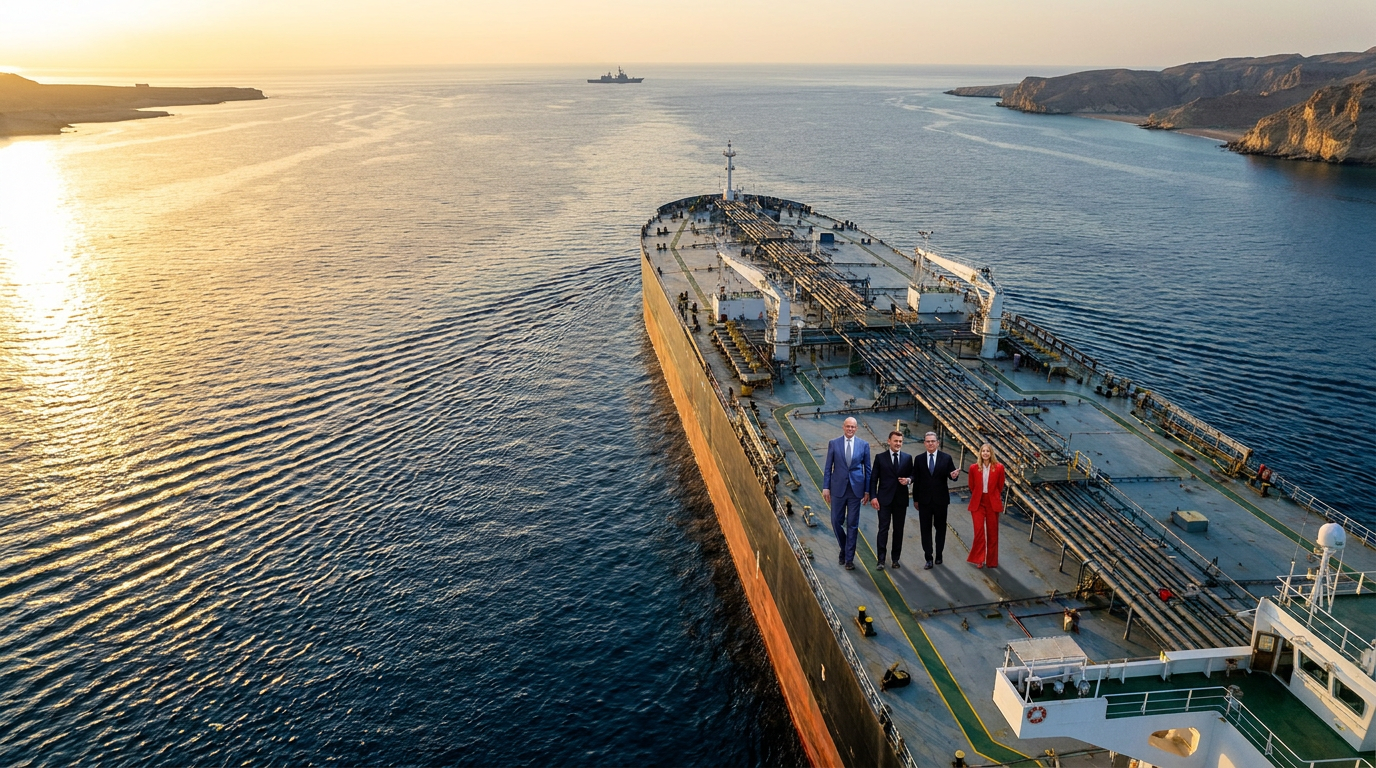
The U.S. Navy has officially lifted its blockade on Iranian ports, allowing commercial vessels to enter and exit the country's coastal waters for the first time since the crisis escalated. The strategic pivot follows the signing of a preliminary Memorandum of Understanding (MoU) between Washington and Tehran, triggering a strict 60-day countdown to forge a permanent security and nuclear agreement.[1][3]
Under the terms of the MoU, the United States has suspended active maritime interdictions in the Strait of Hormuz and the Gulf of Oman. In exchange, Iran has agreed to a temporary freeze on high-level uranium enrichment and has granted international inspectors renewed access to key nuclear facilities that had previously been off-limits.[3][4]
The immediate economic impact has been stark. Global energy markets reacted swiftly to the de-escalation, with Brent crude prices dropping significantly as traders priced out the geopolitical risk premium that had inflated energy costs during the blockade. Commercial shipping companies, which had been rerouting vessels at massive expense, are now cautiously resuming normal transit through the vital waterway.[5][6]

President Donald Trump has touted the preliminary agreement as a major victory for his administration's foreign policy. Taking to social media, the president highlighted that "oil is flowing and prices are dropping," arguing that the maximum pressure campaign successfully forced Tehran back to the negotiating table under terms highly favorable to the United States.[2][7]
President Donald Trump has touted the preliminary agreement as a major victory for his administration's foreign policy.
Domestic reception to the diplomatic maneuver remains divided. A recent Reagan Institute Summer Survey indicates that 39% of Americans favor a negotiated settlement with Iran, while 36% still support pushing for regime change. The tight margins underscore the political tightrope the administration walks as it attempts to finalize a complex international treaty ahead of the midterm elections.[7]
In Tehran, officials have framed the lifting of the blockade not as a concession, but as a hard-won victory against a Western economic siege. Iranian state media emphasizes that the 60-day window is a test of American reliability, warning that any delay in broader sanctions relief will result in an immediate resumption of their nuclear activities and a withdrawal from the MoU.[8]
The rapid diplomatic thaw has alarmed several key U.S. allies in the region. Israeli officials have publicly demanded strict verification mechanisms, expressing deep concern that the 60-day pause allows Iran to export oil and generate revenue without permanently dismantling its nuclear infrastructure or curbing its financial support for regional proxy groups.[9]
Negotiators now face a grueling two-month sprint in Geneva to convert the fragile MoU into a binding treaty. The core sticking points remain the sequencing of permanent sanctions relief, the exact limitations on Iran's ballistic missile program, and the mechanisms for international oversight.[1][4]

If the 60-day clock expires without a comprehensive agreement, U.S. officials have warned of an automatic "snapback" mechanism that would instantly reinstate the naval blockade and secondary economic sanctions. For now, the global economy is enjoying a temporary reprieve, balancing the lure of renewed trade against the looming deadline.[1][3][5]
How we got here
Early 2026
The U.S. imposes a strict naval blockade on Iranian ports amid escalating nuclear tensions.
June 2026
The U.S. and Iran sign a preliminary Memorandum of Understanding in Geneva.
June 18, 2026
The U.S. officially lifts the blockade, and the 60-day negotiation window begins.
August 2026
The deadline for negotiators to finalize a comprehensive security and nuclear pact.
Viewpoints in depth
US Administration's view
The White House views the preliminary deal as a vindication of its maximum pressure strategy.
U.S. officials argue that the severe economic and military pressure of the blockade successfully forced Tehran to the negotiating table. By securing a freeze on high-level uranium enrichment before lifting the blockade, the administration claims it has negotiated from a position of strength. The immediate drop in global oil prices is also being touted as a major domestic victory ahead of upcoming elections.
Iranian Leadership's view
Tehran frames the blockade lift as a necessary precondition, not a concession, demanding further sanctions relief.
Iranian state media and government officials have portrayed the MoU as a victory against Western economic siege tactics. They maintain that Iran's nuclear program is peaceful and argue that the 60-day window is a test of Washington's commitment to diplomacy. Iranian negotiators have made it clear that if permanent sanctions relief is not secured by the deadline, they will immediately resume full-scale nuclear activities.
Regional Allies' view
Middle Eastern allies, particularly Israel, worry the pause allows Iran to regroup without making permanent concessions.
Allies in the region view the 60-day window with deep skepticism. Israeli officials have warned that lifting the blockade allows Iran to immediately begin exporting oil, generating vital revenue that could be funneled to regional proxy groups. They are demanding strict, unannounced verification mechanisms and fear that the U.S. might accept a flawed final deal simply to avoid reinstating the costly naval blockade.
What we don't know
- Whether Iran will fully comply with the temporary freeze on uranium enrichment during the 60-day window.
- If negotiators can resolve the complex sequencing of permanent sanctions relief before the deadline.
- How regional allies might react if they feel the final agreement does not sufficiently curb Iran's regional influence.
Key terms
- Memorandum of Understanding (MoU)
- A formal, non-binding agreement outlining the broad terms of a future treaty, often used as a stepping stone in complex negotiations.
- Strait of Hormuz
- A highly strategic waterway between the Persian Gulf and the Gulf of Oman, through which a significant portion of the world's oil supply passes.
- Snapback mechanism
- A diplomatic clause that automatically reinstates previous sanctions or blockades if a party violates the terms of an agreement or if negotiations fail.
Frequently asked
Why did the U.S. lift the blockade?
The U.S. lifted the blockade to fulfill its end of a preliminary Memorandum of Understanding (MoU), paving the way for 60 days of negotiations for a final security and nuclear deal.
How does this affect gas prices?
The resumption of oil shipments through the Strait of Hormuz has already caused global crude prices to drop, which typically translates to lower prices at the pump for consumers.
What happens if the 60 days expire without a deal?
U.S. officials have stated there is an automatic 'snapback' mechanism that would instantly reinstate the naval blockade and strict economic sanctions if a comprehensive agreement is not reached.
Sources
Source coverage
9 outlets
4 viewpoints surfaced









[1]NPREnergy Markets
U.S. lifts blockade on Iranian ports as 60-day clock for a final deal starts ticking
Read on NPR →[2]Al JazeeraIranian Leadership
Are prices really dropping in the US, as Trump claims?
Read on Al Jazeera →[3]The Wall Street JournalUS Administration
U.S. Lifts Naval Blockade on Iran, Starting 60-Day Countdown for Nuclear Pact
Read on The Wall Street Journal →[4]BBC NewsRegional Skeptics
US Navy ends Strait of Hormuz blockade as Iran talks enter critical 60-day window
Read on BBC News →[5]ReutersEnergy Markets
Oil prices slide as US lifts Iranian port blockade following preliminary peace accord
Read on Reuters →[6]BloombergEnergy Markets
Brent Crude Drops as Strait of Hormuz Shipping Resumes Amid US-Iran Thaw
Read on Bloomberg →[7]Fox NewsUS Administration
New poll reveals where Americans stand after Trump agreement with Iran
Read on Fox News →[8]Middle East EyeIranian Leadership
Iranian officials cautiously optimistic as US sanctions ease under new MoU
Read on Middle East Eye →[9]The Times of IsraelRegional Skeptics
Israel expresses deep concern over US-Iran 60-day timeline, demands strict verification
Read on The Times of Israel →
Every angle. Every day.
Get news politics stories with full source coverage and perspective breakdowns delivered to your inbox.