
US and Iran Sign Memorandum to End War, Sparking Debate Over Sanctions and $300 Billion Reconstruction Fund
President Trump and Iranian leaders have signed a 14-point memorandum of understanding to halt the months-long conflict, establishing a 60-day ceasefire and reopening the Strait of Hormuz. Vice President JD Vance defended the framework against critics, emphasizing that Iran will not receive sanctions relief or a proposed $300 billion reconstruction fund without fully dismantling its nuclear program.
By Factlen Editorial Team
- The Trump Administration
- Argues the agreement is a massive diplomatic victory that ends the war while retaining maximum leverage over Iran's nuclear program.
- Foreign Policy Skeptics
- Warns that the deal provides Iran with immediate relief and a propaganda victory while relying on vague promises for nuclear compliance.
- Congressional War Opponents
- Views the agreement as a necessary exit ramp from an unauthorized and economically damaging conflict.
What's not represented
- · Commercial shipping operators
- · Iranian civilian population
Why this matters
The agreement halts a major geopolitical conflict that disrupted global shipping and energy markets, but its vague terms leave the long-term fate of Iran's nuclear program and the stability of the Middle East deeply uncertain.
Key points
- The U.S. and Iran have signed a 14-point memorandum of understanding to halt the nearly four-month war.
- The agreement includes a 60-day ceasefire and the immediate reopening of the Strait of Hormuz to commercial shipping.
- A proposed $300 billion reconstruction fund for Iran is contingent on finalizing a permanent nuclear deal.
- Vice President JD Vance stated Iran will not receive sanctions relief until it destroys its enriched uranium stockpile.
- Critics argue the deal offers Iran upfront benefits while deferring strict enforcement mechanisms.
The United States and Iran have officially signed a 14-point memorandum of understanding (MOU), bringing a tentative halt to a nearly four-month war that has rattled global energy markets and reshaped Middle Eastern geopolitics. The agreement, signed electronically by President Donald Trump and Iranian President Masoud Pezeshkian, establishes an immediate 60-day ceasefire and paves the way for a broader permanent treaty.[1][5]
The text of the MOU, brokered with the help of Pakistani and Qatari mediators, mandates the immediate reopening of the Strait of Hormuz to commercial shipping and the lifting of the U.S. naval blockade within 30 days. In exchange, the two nations have committed to a two-month negotiating window to finalize a comprehensive deal addressing Iran's nuclear and ballistic missile programs.[3][5]
However, the framework has ignited fierce debate in Washington over its concessions. A central flashpoint is a provision stating the U.S. and regional partners will develop a plan providing "at least $300 billion" for the reconstruction and economic development of Iran, contingent upon the final agreement.[4][5]

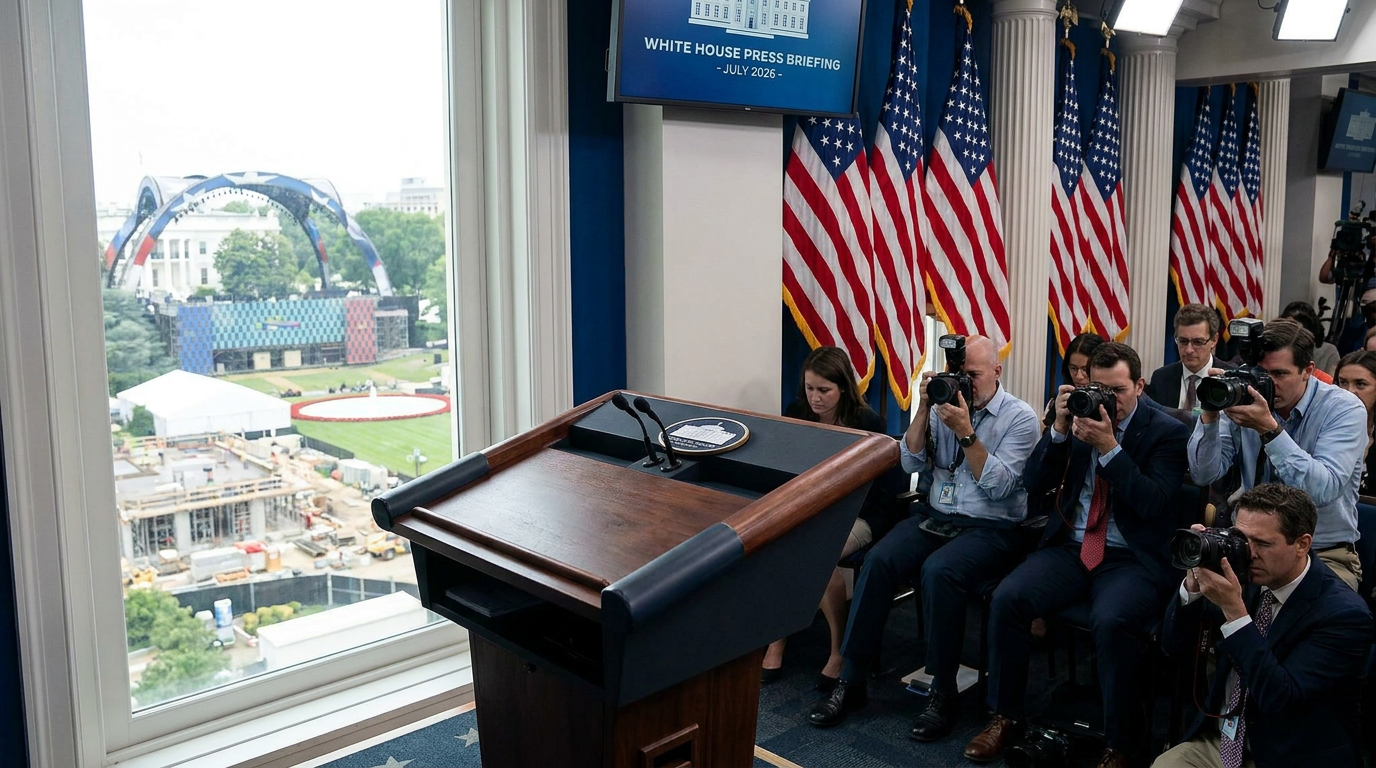
Vice President JD Vance took to the White House briefing room to aggressively defend the pact, pushing back against claims that the administration had capitulated. Vance insisted that Tehran would receive "no U.S. money" and that any sanctions relief or foreign investment would require Iran to fundamentally change its behavior, including the complete destruction of its enriched uranium stockpile.[2][7]
"This is not the Obama deal," Vance told reporters, drawing a sharp contrast with the 2015 Joint Comprehensive Plan of Action. He argued that while the previous administration allowed Iran to maintain enrichment capabilities, the new framework demands the total dismantling of those systems and severe caps on ballistic missiles before any economic benefits flow.[3][7]
"This is not the Obama deal," Vance told reporters, drawing a sharp contrast with the 2015 Joint Comprehensive Plan of Action.
Critics, however, argue the administration is overselling the MOU's leverage. Foreign policy hawks and some lawmakers have pointed out that the agreement offers Iran immediate benefits—such as the cessation of hostilities and the lifting of the naval blockade—while deferring the hardest enforcement questions to future talks.[2][4]
Analysts note that the text requires Iran to dilute its highly enriched uranium under international supervision, but leaves the exact mechanisms of verification unresolved. Skeptics warn that Iran has a history of exploiting diplomatic windows, and that promising a massive reconstruction fund upfront diminishes American leverage.[3][4]

President Trump, who initially demanded unconditional surrender when the war began in late February, has lashed out at detractors. In a social media post, he dismissed critics of the MOU as "fools" and insisted that the U.S. retains the ultimate enforcement mechanism: the threat of renewed military force. "If they don't behave, we'll go right back to dropping bombs," Trump stated earlier at the G7 summit.[1][6]
The administration's pivot to diplomacy comes amid mounting domestic pressure. Just weeks prior, the U.S. House of Representatives passed a War Powers resolution with bipartisan support aimed at forcing the president to end the conflict, reflecting growing fatigue over the war's economic toll and lack of congressional authorization.[8]
As the 60-day clock begins, the focus now shifts to the technical negotiations. U.S. and Iranian delegations are expected to meet to hammer out the specifics of the nuclear restrictions, a process that will test whether the administration's "maximum pressure" military campaign can translate into a durable diplomatic victory.[3][5]

The economic stakes of the ceasefire are immense. The conflict severely disrupted traffic through the Strait of Hormuz, a vital maritime chokepoint, sending shockwaves through global energy markets and driving up domestic gas prices. The MOU's mandate to clear the strait and resume commercial shipping is seen as a critical relief valve for the global economy, though maritime security experts warn that rebuilding trust among commercial carriers will take time.[3][5]
Ultimately, the success of the memorandum hinges on the upcoming 60-day sprint. With hardliners in both Washington and Tehran watching closely, negotiators face the daunting task of converting a fragile ceasefire into a permanent, verifiable treaty that satisfies the core security demands of both nations.[2][6]
How we got here
Late Feb 2026
The U.S. and Israel launch a military campaign against Iran, beginning the war.
April 2026
A temporary ceasefire is announced but is repeatedly violated by sporadic clashes.
June 3, 2026
The U.S. House passes a War Powers resolution in a bipartisan rebuke of the unauthorized conflict.
June 17, 2026
President Trump and Iranian President Pezeshkian electronically sign the 14-point memorandum of understanding.
Viewpoints in depth
The Trump Administration's View
Argues the MOU is a massive win that stops a costly war while setting the stage to permanently dismantle Iran's nuclear program.
Administration officials, led by Vice President JD Vance, maintain that the framework provides unprecedented leverage. They argue that by refusing to grant sanctions relief or reconstruction funds until Iran completely destroys its enriched uranium and caps its missile program, the U.S. avoids the pitfalls of previous diplomatic efforts. The administration insists that the immediate reopening of the Strait of Hormuz is a massive economic victory for the U.S. and its allies, achieved while keeping the military option firmly on the table.
Foreign Policy Skeptics
Warn that the deal provides Iran with immediate relief and a propaganda victory while relying on vague promises.
Foreign policy hawks and critics of the administration argue that the memorandum is a dangerous capitulation. They point out that Iran receives immediate, tangible benefits—such as the lifting of the naval blockade and a cessation of hostilities—in exchange for a 60-day negotiating window with no guaranteed outcome. Skeptics warn that the promise of a $300 billion reconstruction fund diminishes American leverage and that Iran has a long history of exploiting diplomatic pauses to fortify its military positions.
Congressional War Opponents
View the agreement as a necessary, overdue exit ramp from an unauthorized and economically damaging conflict.
Lawmakers who have pushed for War Powers resolutions see the MOU as a necessary step to end a conflict that the executive branch launched without congressional approval. For this camp, the primary concern is the economic and human toll of a prolonged Middle Eastern war. They welcome the ceasefire and the reopening of global shipping lanes, arguing that the U.S. cannot afford an open-ended military entanglement, regardless of the specific technicalities of the nuclear negotiations.
What we don't know
- Whether Iran will agree to the total destruction of its uranium stockpiles during the 60-day negotiation window.
- How the proposed $300 billion reconstruction fund will be financed and administered by regional partners.
- If the ceasefire will hold, given recent sporadic hostilities and the complex network of regional proxy forces.
Key terms
- Memorandum of Understanding (MOU)
- A formal agreement between two or more parties that establishes a framework for cooperation, often serving as a stepping stone to a final, binding treaty.
- Strait of Hormuz
- A crucial waterway between the Persian Gulf and the Gulf of Oman through which roughly a fifth of the world's oil supply passes.
- Uranium Enrichment
- The process of increasing the concentration of the U-235 isotope in uranium, which can be used for civilian nuclear power or, at high levels, nuclear weapons.
Frequently asked
Is the war between the U.S. and Iran officially over?
The two nations have signed a memorandum of understanding establishing a 60-day ceasefire and a framework for peace, but a final, permanent treaty has not yet been reached.
Will the U.S. pay Iran $300 billion?
No. The agreement states the U.S. and regional partners will develop a plan for $300 billion in reconstruction, but the administration insists this will not involve U.S. taxpayer money and is contingent on Iran's compliance.
What happens to Iran's nuclear program?
The MOU leaves the specifics to upcoming negotiations, but the U.S. is demanding the complete destruction of Iran's enriched uranium stockpiles and severe caps on its missile program.
Sources
Source coverage
8 outlets
3 viewpoints surfaced








[1]AxiosThe Trump Administration
Exclusive: Trump tells The Axios Show there are 'no limits' to his power after Iran war
Read on Axios →[2]The New York TimesForeign Policy Skeptics
Vance’s Defense of Iran Deal Rests on Vague and Misleading Claims
Read on The New York Times →[3]CBS NewsThe Trump Administration
Here's how Trump's memo of understanding with Iran compares to the Obama nuclear deal
Read on CBS News →[4]The Washington PostForeign Policy Skeptics
The Iran deal comes with a familiar false promise
Read on The Washington Post →[5]Military TimesCongressional War Opponents
Read the 14-point memorandum of understanding between the United States and Iran
Read on Military Times →[6]South China Morning PostThe Trump Administration
Vance calls Iran deal a 'win-win' as Trump lashes out at 'fools' who oppose it
Read on South China Morning Post →[7]Iran InternationalThe Trump Administration
US says Iran deal will end enrichment, destroy uranium stocks, cap missiles
Read on Iran International →[8]PBS NewsCongressional War Opponents
House passes resolution for first time to halt military action against Iran in rebuke of Trump
Read on PBS News →
More in news politics
See all 9 stories →US-Iran Relations
US Lifts Naval Blockade on Iran as 60-Day Peace Deal Takes Effect
8 sources
EPA Watch
Federal Judge Rules EPA Illegally Canceled $2.8 Billion Climate Justice Grant Program
7 sources
US-Iran Deal
US Lifts Naval Blockade on Iran as Vance Defends Peace Deal Against Israeli Criticism
8 sources
US-Iran Deal
U.S. Lifts Naval Blockade on Iran as 60-Day Peace Negotiations Begin
8 sources
Every angle. Every day.
Get news politics stories with full source coverage and perspective breakdowns delivered to your inbox.