
U.S. and Iran Sign 14-Point Memorandum to Pause War and Reopen Strait of Hormuz
The United States and Iran have agreed to a 60-day ceasefire, lifting the U.S. naval blockade and reopening critical shipping lanes while deferring a final nuclear agreement to upcoming negotiations.
By Factlen Editorial Team
- Trump Administration
- Argues the blockade forced an unconditional surrender and the deal reopens global trade while retaining military leverage.
- Hawkish Republicans
- Views the lifting of the blockade and sanction waivers as a dangerous capitulation that rewards Iranian aggression.
- Iranian Leadership
- Frames the agreement as a victory for national resilience, securing immediate economic relief without surrendering nuclear infrastructure.
- Global Mediators & Markets
- Relieved by the de-escalation and the resumption of oil shipments, prioritizing economic stability over political victories.
What's not represented
- · Lebanese civilians affected by the ongoing proxy conflict
- · European allies excluded from the bilateral negotiations
- · Commercial shipping companies navigating the newly reopened strait
Why this matters
The 60-day ceasefire averts a catastrophic global energy crisis by reopening the Strait of Hormuz, but it leaves the ultimate fate of Iran's nuclear program unresolved, setting the stage for high-stakes negotiations that will determine the future of the Middle East.
Key points
- The U.S. and Iran signed a 14-point framework agreement to implement a 60-day ceasefire.
- Iran will reopen the Strait of Hormuz to commercial shipping toll-free for two months.
- The U.S. will lift its naval blockade within 30 days and grant immediate oil sanction waivers.
- The agreement defers the resolution of Iran's 60% enriched uranium stockpile to future talks.
- Regional partners have proposed a $300 billion reconstruction fund contingent on a final deal.
The 2026 U.S.-Iran war has officially paused, bringing a temporary halt to a conflict that has severely disrupted the Middle East and sent shockwaves through global energy markets. Following months of intense military engagements and a crippling economic siege, the United States and Iran have formally signed the "Islamabad Memorandum of Understanding." This 14-point framework agreement is designed to immediately end active hostilities, reopen critical international shipping lanes, and establish a foundation for a permanent peace treaty. Brokered after weeks of back-channel diplomacy, the memorandum represents the most significant de-escalation since the war began, though it leaves several of the most intractable geopolitical disputes unresolved for the time being.[8]
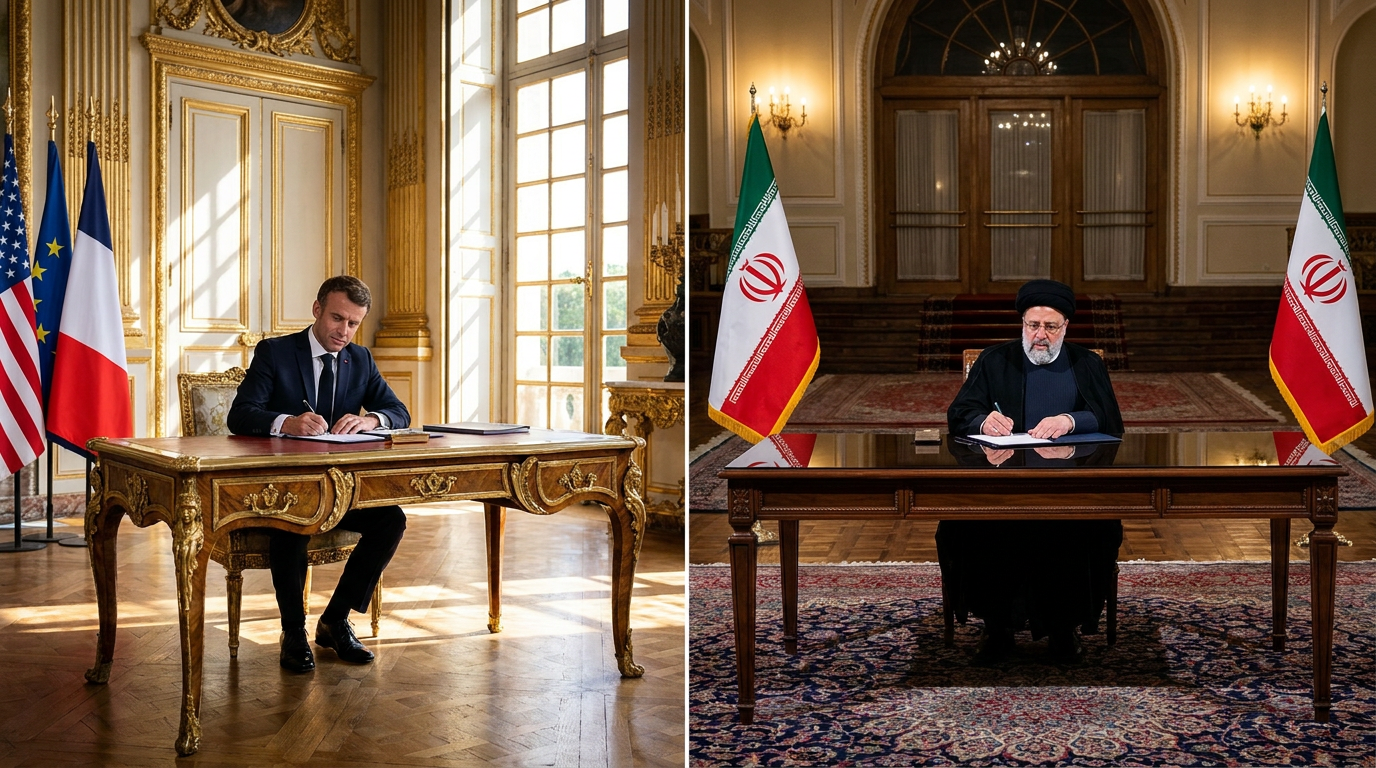
The agreement was finalized in a highly unusual, split-screen diplomatic moment that underscored the lingering distrust between the two nations. President Donald Trump signed the document remotely following a state dinner with French President Emmanuel Macron at the Palace of Versailles, while Iranian President Masoud Pezeshkian simultaneously signed his copy in Tehran. The diplomatic breakthrough was primarily brokered by the government of Pakistan, with Prime Minister Shehbaz Sharif publicly announcing the successful mediation effort after weeks of hosting delegations in Islamabad. Additional diplomatic support and facilitation were provided by Qatar, Saudi Arabia, Turkey, and Egypt, reflecting a broad regional consensus that the devastating conflict needed to be brought to a swift conclusion before it spiraled into a wider regional conflagration.[7][8]
Rather than serving as a comprehensive, permanent peace treaty, the Islamabad Memorandum functions primarily as a 60-day ceasefire and a binding roadmap for future, more detailed negotiations. The text explicitly mandates the immediate and permanent termination of military operations on all fronts, which crucially includes the volatile proxy battleground of Lebanon. By freezing the conflict in place, the agreement establishes a two-month diplomatic window during which American and Iranian negotiators will meet in Switzerland to hammer out a permanent nuclear and security pact. This phased approach allows both sides to claim an immediate victory while deferring the most politically sensitive compromises to a later date, though it also means the risk of the war resuming remains uncomfortably high.[4][5]
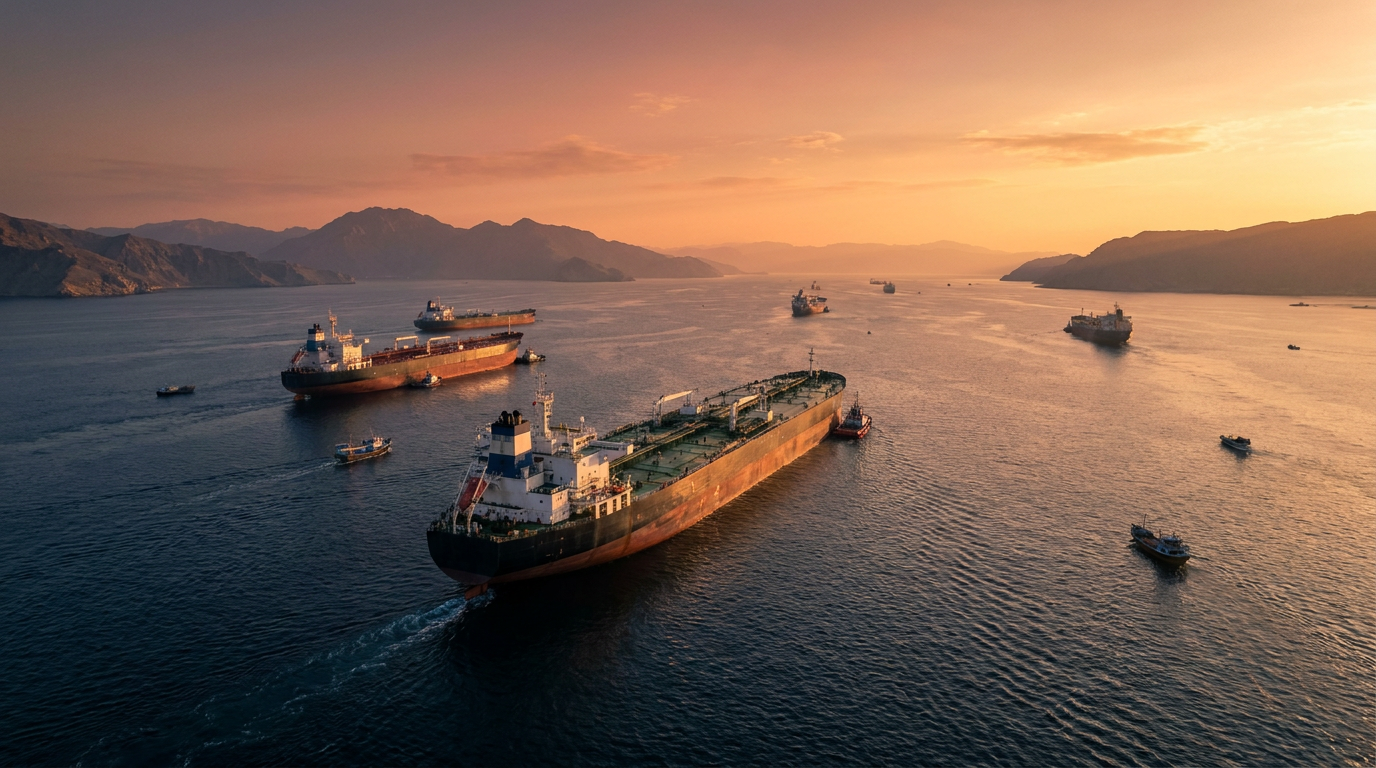
For the global economy, the most immediate and consequential impact of the memorandum is the reopening of the Strait of Hormuz. Iran has formally agreed to clear the strategic waterway of all technical and military obstacles—widely understood to mean the removal of undersea naval mines—and allow the safe, toll-free passage of commercial shipping for the duration of the 60-day ceasefire. This critical maritime chokepoint handles roughly one-fifth of the world's entire oil and natural gas supply. Its prolonged closure during the war had threatened to trigger a worldwide economic depression, sending energy prices skyrocketing and forcing shipping companies to reroute vessels thousands of miles out of the way. The immediate resumption of traffic is expected to rapidly stabilize global markets.[3][6]

In exchange for reopening the strait and halting military strikes, the United States is systematically dismantling its economic and military stranglehold on Tehran. The memorandum explicitly mandates that the U.S. military must begin lifting its comprehensive naval blockade of Iranian ports immediately upon the signing of the document. The Pentagon is required to execute a full and complete removal of the blockade within 30 days, allowing maritime traffic to return to pre-war levels. Furthermore, the United States has committed to withdrawing its military forces from the immediate proximity of the Islamic Republic within 30 days of a final, permanent deal being reached, signaling a significant shift in the Pentagon's force posture in the Persian Gulf.[5]
Crucially for Tehran's domestic stability, the framework agreement grants Iran immediate waivers from crippling U.S. oil sanctions, providing an instant injection of capital into a heavily battered economy. Within hours of the memorandum being signed and the ceasefire going into effect, international observers noted that the first Iranian crude oil exports in over two months had successfully departed through the Strait of Hormuz. This immediate economic relief was a non-negotiable demand from the Iranian negotiating team, who required tangible proof that the United States was willing to ease its "maximum pressure" campaign before committing to broader discussions regarding their nuclear infrastructure and regional proxy networks.[4][7]
Looking ahead to the final negotiations, the framework also dangles a massive, unprecedented financial incentive for a permanent peace. The text outlines a collaborative plan for the United States and its regional partners to develop a definitive, mutually agreed-upon mechanism to deliver at least $300 billion for the reconstruction and economic development of the Islamic Republic of Iran. However, U.S. officials have been quick to stress that this massive reconstruction fund, along with the unfreezing of billions of dollars in currently restricted Iranian assets, is strictly contingent on Iran signing and fully complying with a final, verifiable nuclear deal. President Trump has also emphasized that any American or allied investments in Iran would be entirely voluntary.[4][7]

Looking ahead to the final negotiations, the framework also dangles a massive, unprecedented financial incentive for a permanent peace.
Despite the sweeping economic and military provisions, what the memorandum notably does not do is solve the underlying nuclear question that sparked the broader crisis. Unlike the Obama-era Joint Comprehensive Plan of Action (JCPOA), which spanned hundreds of pages of highly technical limits on centrifuges and enrichment facilities, this 14-point document entirely defers the fate of Iran's nuclear program to the upcoming talks in Switzerland. The framework simply states that Iran reaffirms it will not procure or develop nuclear weapons, while both sides agree to maintain the current status quo of the nuclear program during the 60-day window, leaving the hardest technical negotiations for the diplomatic teams to resolve in the coming weeks.[4]
The stakes for those upcoming nuclear negotiations could not be higher. Iran currently possesses a significant stockpile of uranium enriched to 60 percent purity—a level that has no civilian justification and is only a short technical step away from the 90 percent purity required for weapons-grade material. The memorandum states that both countries have "agreed to resolve the disposition of stockpiled enriched material." The United States is expected to push aggressively for a requirement that the highly enriched uranium be downblended on-site under the strict, continuous supervision of the International Atomic Energy Agency, ensuring that Tehran cannot rapidly break out and assemble a nuclear device if the broader peace process collapses.[4][6]
The political fallout in Washington has been immediate, fierce, and deeply polarized. President Trump has aggressively defended the pact, utilizing an interview with Axios to assert that there are "no limits" to his presidential power and framing the diplomatic outcome as an "unconditional surrender" by the Iranian government. "We defeated them totally militarily," Trump stated, pointing to the devastating effectiveness of the U.S. naval blockade that choked off Iran's economy. By framing the memorandum as a dictated peace rather than a negotiated compromise, the administration is attempting to preempt criticism from foreign policy hawks who view any diplomatic engagement with Tehran as a sign of American weakness.[1]

Vice President JD Vance, who served as the primary architect and lead American negotiator of the deal, has subsequently become its most prominent public defender. Vance has embarked on an extensive media tour to sell the agreement to a skeptical Republican base, arguing that ending the war, reopening the Strait of Hormuz, and lowering domestic energy prices is the pragmatic, America First choice. For Vance, who is widely viewed as the front-runner for the 2028 Republican presidential nomination, the success or failure of the Islamabad Memorandum carries massive political implications, tying his future political fortunes directly to the behavior of the Iranian government over the next 60 days.[2][8]
However, Vance's robust defense of the agreement has faced intense scrutiny from both political opponents and independent analysts. Critics have pointed out that his public claims regarding overwhelming U.S. leverage are highly misleading, given the reality of the concessions made at the negotiating table. Opponents note that Iran successfully secured its most urgent and vital needs—the lifting of the U.S. naval blockade and immediate waivers to export crude oil—without having to dismantle a single centrifuge or permanently alter its nuclear infrastructure. This dynamic has led some observers to question whether the United States gave up its most powerful economic weapons too early in the diplomatic process.[2]
Hawkish Republicans and staunch allies of Israel have been particularly vocal in their criticism of the immediate concessions, comparing the memorandum unfavorably to the JCPOA that Trump himself abandoned during his first term. They argue that lifting the blockade and publicly dangling a $300 billion reconstruction incentive package effectively rewards Tehran for its regional aggression and proxy warfare. For these critics, allowing Iran to retain its 60 percent enriched uranium stockpile while simultaneously receiving billions of dollars in oil revenue represents a dangerous capitulation that will ultimately fund future attacks against American interests and allies in the Middle East.[3][4]

The framework agreement also faces a severe and immediate test on the Lebanese front. While the memorandum explicitly calls for the "permanent termination of the war on all fronts, including in Lebanon," the government of Israel has consistently maintained that its military campaign to dismantle Hezbollah is a separate, ongoing objective that it will pursue regardless of U.S.-Iran diplomacy. Demonstrating this disconnect, the Israeli military continued to carry out limited strikes in southern Lebanon even after the memorandum was signed, prompting stern warnings from Tehran that any continued Israeli presence in Lebanon would be viewed as a direct violation of the agreement with Washington.[5][6]
For now, the global economy is breathing a collective sigh of relief as oil flows resume through the Strait of Hormuz and the immediate threat of a wider regional war recedes. But the 60-day diplomatic clock is already ticking, and the hardest compromises remain entirely unresolved. If the upcoming negotiations in Switzerland fail to produce a permanent, verifiable agreement regarding Iran's nuclear program, the region could quickly plunge back into chaos. President Trump has already issued a stark public warning regarding the fragility of the ceasefire, stating bluntly that if Iran does not behave during the negotiation window, the United States will "go right back to dropping bombs."[3][4]
How we got here
April 13, 2026
Following failed peace talks, President Trump imposes a total naval blockade on Iranian ports.
June 12, 2026
Pakistani mediators announce that the U.S. and Iran have reached an agreement on the final text to end the war.
June 14, 2026
U.S. Vice President JD Vance and Iranian Parliament Speaker Mohammad Bagher Ghalibaf digitally sign the memorandum.
June 17, 2026
President Trump and Iranian President Masoud Pezeshkian remotely sign the agreement, officially putting the 60-day ceasefire into effect.
Viewpoints in depth
The Trump Administration's View
The White House frames the memorandum as a total military victory that forced Iran to the table.
President Trump and Vice President JD Vance argue that the U.S. naval blockade was so devastatingly effective that it amounted to an 'unconditional surrender' by Tehran. By securing a 60-day ceasefire and reopening the Strait of Hormuz, the administration claims it has averted a global economic depression while retaining the ultimate leverage: the threat of resuming military strikes if Iran fails to agree to a permanent, restrictive nuclear deal.
Hawkish Critics' View
Conservative critics and Israeli allies view the immediate concessions as a dangerous capitulation.
Opponents of the deal point out that Iran secured its most urgent needs—the lifting of the U.S. naval blockade and immediate waivers to export crude oil—without dismantling a single centrifuge. Critics compare the 14-point framework unfavorably to the Obama-era JCPOA, arguing that dangling a $300 billion reconstruction fund rewards Tehran for its aggression and leaves Israel vulnerable on the Lebanese front.
Iran's View
Tehran portrays the agreement as a triumph of national resistance that broke the U.S. economic siege.
For the Iranian leadership, the memorandum is a vital lifeline. By agreeing to a temporary pause and opening the Strait of Hormuz, Iran successfully forced the U.S. to dismantle its crippling naval blockade and waive oil sanctions. Crucially, Tehran managed to achieve this immediate economic relief while keeping its 60% enriched uranium stockpile intact, deferring the hardest concessions to future diplomatic rounds.
What we don't know
- Whether Iran will agree to dismantle or downblend its 60% enriched uranium stockpile during the 60-day window.
- How Israel will respond to the ceasefire, particularly regarding its ongoing military operations against Hezbollah in Lebanon.
- Whether the proposed $300 billion regional reconstruction fund will materialize if a final agreement is reached.
Key terms
- Islamabad Memorandum of Understanding
- A 14-point framework agreement brokered by Pakistan that establishes a 60-day ceasefire in the 2026 U.S.-Iran war.
- Strait of Hormuz
- A critical maritime chokepoint between the Persian Gulf and the Gulf of Oman, through which roughly one-fifth of the world's oil supply passes.
- Naval Blockade
- A military operation by the U.S. Navy that prevented any ships from entering or leaving Iranian ports during the conflict.
- Uranium Downblending
- The process of mixing highly enriched uranium with natural uranium to reduce its purity, making it unusable for nuclear weapons.
Frequently asked
Is the 2026 U.S.-Iran war officially over?
Not permanently. The Islamabad Memorandum implements a 60-day ceasefire to allow for negotiations on a final peace and nuclear agreement.
What happens to the Strait of Hormuz?
Iran has agreed to clear the waterway of military obstacles and allow commercial shipping to pass toll-free for the next 60 days.
Did the U.S. lift its sanctions on Iran?
The U.S. granted immediate waivers for Iranian crude oil exports and agreed to fully lift its naval blockade within 30 days. Broader sanctions relief depends on a final deal.
What happens to Iran's nuclear program?
The memorandum defers the nuclear issue. The fate of Iran's 60% enriched uranium stockpile will be decided during the 60-day negotiation window in Switzerland.
Sources
Source coverage
8 outlets
4 viewpoints surfaced








[1]AxiosTrump Administration
Exclusive: Trump tells The Axios Show there are 'no limits' to his power after Iran war
Read on Axios →[2]The New York TimesHawkish Republicans
Vance’s Defense of Iran Deal Rests on Vague and Misleading Claims
Read on The New York Times →[3]The GuardianGlobal Mediators & Markets
Trump signs 14-point peace agreement with Iran
Read on The Guardian →[4]CBS NewsHawkish Republicans
Here's how Trump's memo of understanding with Iran compares to the Obama nuclear deal
Read on CBS News →[5]Military TimesGlobal Mediators & Markets
Read the 14-point memorandum of understanding between the United States and Iran
Read on Military Times →[6]Council on Foreign RelationsGlobal Mediators & Markets
What to Know About the U.S.-Iran Memorandum of Understanding
Read on Council on Foreign Relations →[7]Radio Free Europe/Radio LibertyIranian Leadership
Trump, Pezeshkian Sign Deal Aimed At Ending Iran War
Read on Radio Free Europe/Radio Liberty →[8]WikipediaGlobal Mediators & Markets
Islamabad Memorandum
Read on Wikipedia →

More in news politics
See all 7 stories →Iran Peace Deal
US Lifts Naval Blockade on Iran as 60-Day Peace Deal Takes Effect
8 sources
US-Iran Deal
US Lifts Naval Blockade on Iran as Peace Deal Sparks Bitter Rift with Israel
8 sources
UK By-Elections
UK By-Elections: Conservatives Seize Aberdeen South as Burnham Eyes Labour Leadership in Makerfield
6 sources

US-Iran Truce
US Lifts Naval Blockade on Iran as 60-Day Peace Negotiations Begin
8 sources
Every angle. Every day.
Get news politics stories with full source coverage and perspective breakdowns delivered to your inbox.