
US Lifts Naval Blockade on Iran as 60-Day Peace Deal Takes Effect
The United States has officially lifted its naval blockade on Iran, initiating a 60-day negotiating window under a newly signed peace agreement. The move has sparked intense debate over the lifting of oil sanctions and Tehran's plans to impose new maritime fees in the Strait of Hormuz.
By Factlen Editorial Team
- US Administration
- Argues the deal provides crucial leverage to end hostilities while maintaining commitments to regional allies.
- Israeli & Security Critics
- Fears the lifting of oil sanctions rewards Tehran prematurely and endangers regional security.
- Iranian Leadership
- Views the end of the blockade as a victory and an opportunity to assert sovereignty over regional waterways.
- Global Energy Markets
- Focused on the economic whiplash between returning Iranian oil supply and new transit fees.
What's not represented
- · European Union Negotiators
- · Commercial Shipping Companies
Why this matters
The lifting of the naval blockade and oil sanctions fundamentally alters the security and economic landscape of the Middle East. For global consumers, the deal's success or failure over the next 60 days will directly dictate energy prices and the safety of international shipping routes.
Key points
- The US has officially lifted its naval blockade on Iran, starting a 60-day negotiating period.
- Vice President JD Vance defended the agreement in Israel, citing unprecedented US leverage.
- Critics argue lifting oil sanctions provides Tehran with an unearned economic windfall.
- Iran plans to implement new maritime transit fees in the Strait of Hormuz.
- Energy markets face volatility as returning Iranian oil clashes with the threat of new shipping fees.
The United States has formally lifted its naval blockade on Iran, triggering a 60-day diplomatic window intended to cement a permanent end to recent military hostilities. The move represents the most significant de-escalation in the region this year, shifting the conflict from open maritime confrontation to high-stakes negotiations over the Middle East's security architecture.[1][8]
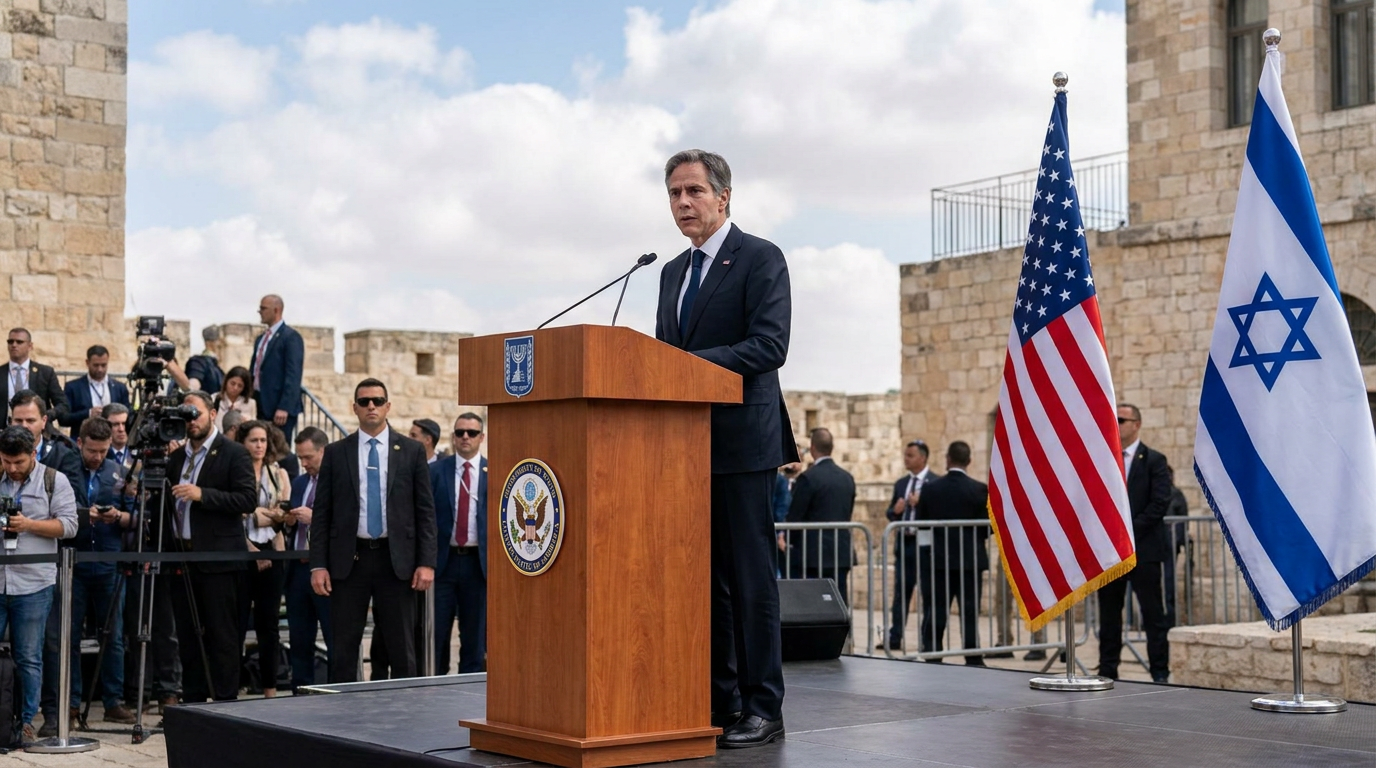
Vice President JD Vance confirmed the blockade's end during a tense visit to Israel, where he faced intense pushback from regional allies regarding the administration's concessions. Vance argued that the newly signed peace agreement provides the United States with unprecedented leverage to dictate the outcome of the upcoming talks, framing the 60-day window as a strict probationary period for Tehran.[1][2][4]
"Trump is your only ally left in the world," Vance reportedly told Israeli critics, pushing back against accusations that the White House had conceded too much to secure the ceasefire. He emphasized the billions of dollars in defense aid the US continues to provide to Israel as proof of the administration's unwavering commitment to regional security, even as it pivots toward diplomacy.[2][4]

However, the specific mechanics of the deal have drawn immediate scrutiny from policy analysts and international observers. The agreement includes the lifting of key oil sanctions, a concession that critics argue provides Tehran with an immediate economic windfall before any permanent behavioral changes or nuclear concessions are secured.[3][5]
However, the specific mechanics of the deal have drawn immediate scrutiny from policy analysts and international observers.
Fact-checkers have challenged the administration's assertion that Iran gained no new benefits from the sanctions relief. Economic data suggests the unfreezing of oil revenues will rapidly inject capital into the Iranian economy, potentially complicating the US's leverage narrative and alarming neighboring states who fear a newly enriched Iranian military apparatus.[3][8]
Complicating the diplomatic victory lap is Iran's simultaneous announcement that it plans to introduce maritime transit fees for vessels passing through the Strait of Hormuz. The strategic chokepoint handles a massive portion of the world's seaborne oil, and the new fees threaten to offset the market stabilization expected from the blockade's end.[2][6]

Iranian state media has framed the blockade's lifting as a strategic retreat by the United States. Officials in Tehran maintain that the 60-day window will be used to formalize their regional security architecture, with the Hormuz fees acting as a new, non-negotiable assertion of maritime sovereignty over their territorial waters.[7]
Energy markets have reacted with distinct volatility to the overlapping announcements. While the prospect of Iranian crude returning to the global market initially signaled a potential drop in prices, the looming threat of Hormuz transit fees has kept Brent crude futures elevated, leaving traders uncertain about the net impact on global supply chains.[6]

The next 60 days will test whether the administration's diplomatic gamble pays off. Negotiators from both sides are expected to convene in a neutral third country next week to begin hashing out the technical details of a permanent treaty, even as domestic political pressure mounts in Washington, Jerusalem, and Tehran.[1][8]
How we got here
Earlier this year
The US imposes a strict naval blockade on Iranian ports amid escalating regional hostilities.
Last week
A preliminary peace deal is signed, establishing a framework for de-escalation.
Today
The US officially lifts the naval blockade, beginning the 60-day negotiating window.
Next week
Negotiators from both nations are scheduled to meet in a neutral third country to draft a permanent treaty.
Viewpoints in depth
US Administration's View
The White House argues the deal is a necessary pivot from military conflict to diplomatic leverage.
Administration officials, led by Vice President JD Vance, maintain that the 60-day window is not a capitulation but a strategic test. By lifting the blockade, the US shifts the burden of proof onto Tehran to demonstrate its willingness to integrate peacefully into the regional order. Officials argue that the threat of snapping sanctions and blockades back into place provides the US with maximum leverage during the upcoming talks, all while maintaining robust defense commitments to allies like Israel.
Israeli & Security Critics' View
Regional allies and security analysts fear the deal rewards aggression without securing permanent safety guarantees.
Critics in Jerusalem and Washington view the lifting of oil sanctions as a dangerous miscalculation. They argue that unfreezing Iranian revenues provides an immediate cash injection that could be funneled into regional proxy groups, regardless of the outcome of the 60-day talks. From this perspective, the US has surrendered its most potent economic and military leverage upfront, leaving allies vulnerable if negotiations collapse.
Iranian Leadership's View
Tehran frames the end of the blockade as a victory for its resistance strategy and an assertion of sovereignty.
Iranian state media and government officials have celebrated the lifting of the blockade as a strategic retreat by Western forces. Rather than viewing the 60-day window as a probationary period, Tehran sees it as an opportunity to cement its status as a dominant regional power. The immediate announcement of maritime transit fees for the Strait of Hormuz underscores this approach, signaling that Iran intends to dictate the terms of maritime security in its territorial waters moving forward.
What we don't know
- Whether Iran will actually enforce the proposed maritime transit fees in the Strait of Hormuz during the 60-day window.
- How quickly Iranian oil will return to the global market and impact baseline crude prices.
- What specific permanent concessions the US is demanding in exchange for a finalized peace treaty.
Key terms
- Naval Blockade
- A military operation in which ships are used to prevent vessels from entering or leaving a nation's ports, which the US had previously imposed on Iran.
- Strait of Hormuz
- A narrow, strategically vital waterway between the Persian Gulf and the Gulf of Oman through which a massive portion of the world's oil supply passes.
- Sanctions Relief
- The temporary or permanent lifting of economic penalties, allowing a country to resume international trade, such as Iran selling oil on the global market.
Frequently asked
What happens during the 60-day window?
The US and Iran will engage in negotiations to finalize a permanent peace treaty, while the naval blockade and key oil sanctions remain suspended.
Why are Israeli officials criticizing the deal?
Critics in Israel argue that lifting oil sanctions enriches Iran's military capabilities before Tehran has made any permanent behavioral or nuclear concessions.
What are the new Strait of Hormuz fees?
Iran has announced plans to charge maritime transit fees for commercial vessels passing through the Strait of Hormuz, asserting sovereignty over the critical oil chokepoint.
Sources
Source coverage
8 outlets
4 viewpoints surfaced








[1]Al JazeeraUS Administration
Iran war live: JD Vance defends Iran deal as US says naval blockade lifted
Read on Al Jazeera →[2]The GuardianIsraeli & Security Critics
JD Vance tells Iran deal critics in Israel: Trump is your only ally left in the world
Read on The Guardian →[3]NYTIsraeli & Security Critics
Vance’s Defense of Iran Deal Rests on Vague and Misleading Claims
Read on NYT →[4]Fox NewsUS Administration
Vance stands firm in Israel, defends administration's Iran peace framework
Read on Fox News →[5]The Times of IsraelIsraeli & Security Critics
Israeli officials express deep concern as US lifts Iranian naval blockade
Read on The Times of Israel →[6]ReutersGlobal Energy Markets
Oil markets volatile as US lifts Iran sanctions, Tehran eyes Hormuz transit fees
Read on Reuters →[7]Tehran TimesIranian Leadership
Blockade ends as US retreats; Iran asserts sovereignty over Hormuz transit
Read on Tehran Times →[8]Associated PressGlobal Energy Markets
Inside the 60-day window: What the US-Iran peace deal actually mandates
Read on Associated Press →
More in news politics
See all 7 stories →Digital Trust
How Cryptographic 'Nutrition Labels' Are Solving the Political Deepfake Problem
7 sources

Iran Peace Deal
US Lifts Naval Blockade on Iran as 60-Day Peace Deal Takes Effect
8 sources
US-Iran Deal
US Lifts Naval Blockade on Iran as Peace Deal Sparks Bitter Rift with Israel
8 sources
UK By-Elections
UK By-Elections: Conservatives Seize Aberdeen South as Burnham Eyes Labour Leadership in Makerfield
6 sources

Every angle. Every day.
Get news politics stories with full source coverage and perspective breakdowns delivered to your inbox.