
The 2026 E-Bike Buying Guide: Motors, Batteries, and the New Safety Mandates
As new battery safety laws take effect and motor technology matures, buying an electric bike in 2026 requires looking past the spec sheet. Here is how to navigate the classes, components, and certifications to find the right ride.
By Factlen Editorial Team
- Urban Commuters
- Value Class 3 speeds, throttle options for stop-and-go traffic, and high-capacity batteries for reliable daily transit.
- Safety Regulators
- Prioritize mandatory third-party system testing (UL 2849) to eliminate the risk of lithium-ion battery fires.
- Recreational Riders
- Focus on natural ride feel, mid-drive torque for climbing hills, and Class 1 compliance for unrestricted trail access.
- Value-Conscious Buyers
- Seek reliable hub motors and standardized components that offer the best long-term cost of ownership without premium markups.
What's not represented
- · Independent bike mechanics who service direct-to-consumer e-bikes
- · City planners designing infrastructure for higher-speed Class 3 e-bikes
Why this matters
An electric bike is a significant financial investment that can replace a car and improve your health, but buying the wrong model can lead to legal trail restrictions, expensive maintenance, or severe fire hazards. Understanding 2026's new safety standards and motor classifications ensures you purchase a reliable, legal, and serviceable vehicle.
Key points
- New 2026 regulations make UL 2849 or UL 2271 battery safety certifications mandatory in key markets like California.
- Class 1 e-bikes offer the widest trail access, while Class 3 models are best for high-speed road commuting.
- Mid-drive motors utilize the bike's gears, making them significantly better for climbing hills than rear hub motors.
- Torque (measured in Nm) is a more accurate indicator of real-world climbing power than peak motor wattage.
- Cold weather can reduce a lithium-ion battery's range by up to 30 percent, making larger batteries (600+ Wh) ideal for year-round riders.
- Buying bikes with standardized parts from brands like Bosch or Shimano ensures local bike shops can service them.
The electric bicycle market has crossed a threshold. In 2026, e-bikes are no longer novelty gadgets or bulky retrofits; they are highly specialized, viable replacements for the family car. But as the technology has matured, the buying process has grown increasingly complex. Shoppers are bombarded with an alphabet soup of technical jargon—watt-hours, torque ratings, mid-drives, and smart battery management systems [1].[1]
Making the right choice matters more than ever. A well-chosen e-bike can transform a grueling daily commute into the best part of the day, offering cardiovascular benefits without the sweat [2]. Conversely, buying the wrong machine can lead to a heavy, underpowered frustration that gathers dust in the garage, or worse, a vehicle that local bike shops refuse to service due to proprietary parts.[2]
This explainer cuts through the marketing noise to focus on the engineering realities of the 2026 market. By understanding how motors deliver power, how battery certifications protect your home, and how legal classifications dictate where you can ride, you can find a machine perfectly tailored to your local terrain and lifestyle [1].[1]
The most significant shift in the 2026 e-bike landscape has nothing to do with speed or styling—it is entirely about fire safety. As of January 1, 2026, landmark legislation like California's SB 1271 mandates that all new e-bikes and batteries sold must meet stringent third-party safety certifications [4]. This regulatory ripple effect has transformed the national market, making uncertified batteries a liability of the past.[4]
When shopping, the gold standard to look for is UL 2849. This certification evaluates the entire electrical drivetrain—the battery, motor, controller, wiring, and charger—as a single, holistic ecosystem to ensure they communicate safely and prevent electrical surges [4]. A secondary standard, UL 2271, focuses strictly on the battery pack, subjecting the cells to grueling physical abuse tests, including overcharging and puncture simulations.[4]

Beneath the certification sticker lies the brain of the battery: the Smart Battery Management System (BMS). In modern e-bikes, a smart BMS actively monitors cell temperatures, balances power loads, and predicts thermal issues before they escalate into the dreaded thermal runaway [4]. Buyers should explicitly ask retailers if a bike features a smart BMS and verifiable UL certification before making a purchase.[4]
Once safety is secured, the next critical decision is navigating the three-class legal framework. In the United States, e-bikes are not defined solely by motor wattage, but by how they deliver power and their top assisted speed [6]. Choosing the wrong class can legally bar you from your favorite local bike paths or nature trails.[6]

Class 1 e-bikes are the most universally accepted. They provide electrical assistance only when the rider is actively pedaling (known as pedal-assist), and the motor cuts off at 20 mph [6]. Because they closely mimic the behavior of a traditional bicycle, Class 1 models are generally permitted on multi-use paths, rail trails, and specialized mountain bike networks.[6]
They provide electrical assistance only when the rider is actively pedaling (known as pedal-assist), and the motor cuts off at 20 mph [6].
Class 2 e-bikes introduce a throttle. They allow the bike to move under motor power without any pedaling input, though assistance is still capped at 20 mph [6]. This throttle-on-demand feature is incredibly useful for urban commuters who need to accelerate quickly from a dead stop at traffic lights, or for riders with joint mobility issues. However, Class 2 bikes face stricter scrutiny and are often banned from non-motorized dirt trails.[6]
Class 3 e-bikes, often called "speed pedelecs," are built for the road. They are pedal-assist only, but the motor continues to provide power up to 28 mph [6]. For riders tackling long suburban commutes alongside vehicle traffic, Class 3 systems shorten travel times significantly. Due to their higher speeds, they are typically restricted to roads and painted bike lanes, and often require the rider to wear a helmet by law.[6]
The heart of any e-bike is its motor, and the market is divided into two primary architectures: hub motors and mid-drive motors. Hub motors are housed inside the center of the rear wheel [5]. They are mechanically simpler, highly reliable, and generally more budget-friendly. For riders navigating flat city streets or casual beach cruisers, a hub motor provides plenty of smooth, pushing power.[5]

Mid-drive motors, however, are the hallmark of premium e-bikes. Positioned at the bike's bottom bracket between the pedals, mid-drives keep the weight low and centered, resulting in superior balance and handling [5]. More importantly, mid-drives transfer power through the bike's existing chain and gears. This allows the motor to leverage mechanical advantage, making it vastly superior for climbing steep hills or hauling heavy cargo.[5]
When evaluating motor strength, many buyers mistakenly focus on peak wattage. In reality, torque—measured in Newton-meters (Nm)—is the metric that dictates real-world performance [5]. Torque determines how forcefully the bike accelerates and how easily it conquers inclines. For flat terrain, 40 to 60 Nm is sufficient. But for riders living in hilly neighborhoods or carrying groceries, seeking a motor with 90 to 100 Nm of torque will prevent the bike from feeling sluggish on a climb.[5]

Battery capacity is the other half of the performance equation. Instead of looking at volts or amp-hours in isolation, buyers should focus on Watt-hours (Wh), which represents the total energy in the "tank" [1]. A 400 to 500 Wh battery is adequate for short neighborhood loops, but a 600 to 750 Wh battery is the sweet spot for daily commuters, providing a comfortable buffer against range anxiety.[1]
It is crucial to understand that manufacturer range claims are often calculated under ideal conditions—a lightweight rider on flat ground with minimal wind. Real-world range is impacted by rider weight, tire pressure, and especially temperature. In winter months, cold weather can temporarily reduce a lithium-ion battery's range by 20 to 30 percent, making a larger capacity battery a wise investment for year-round riders [7].[7]
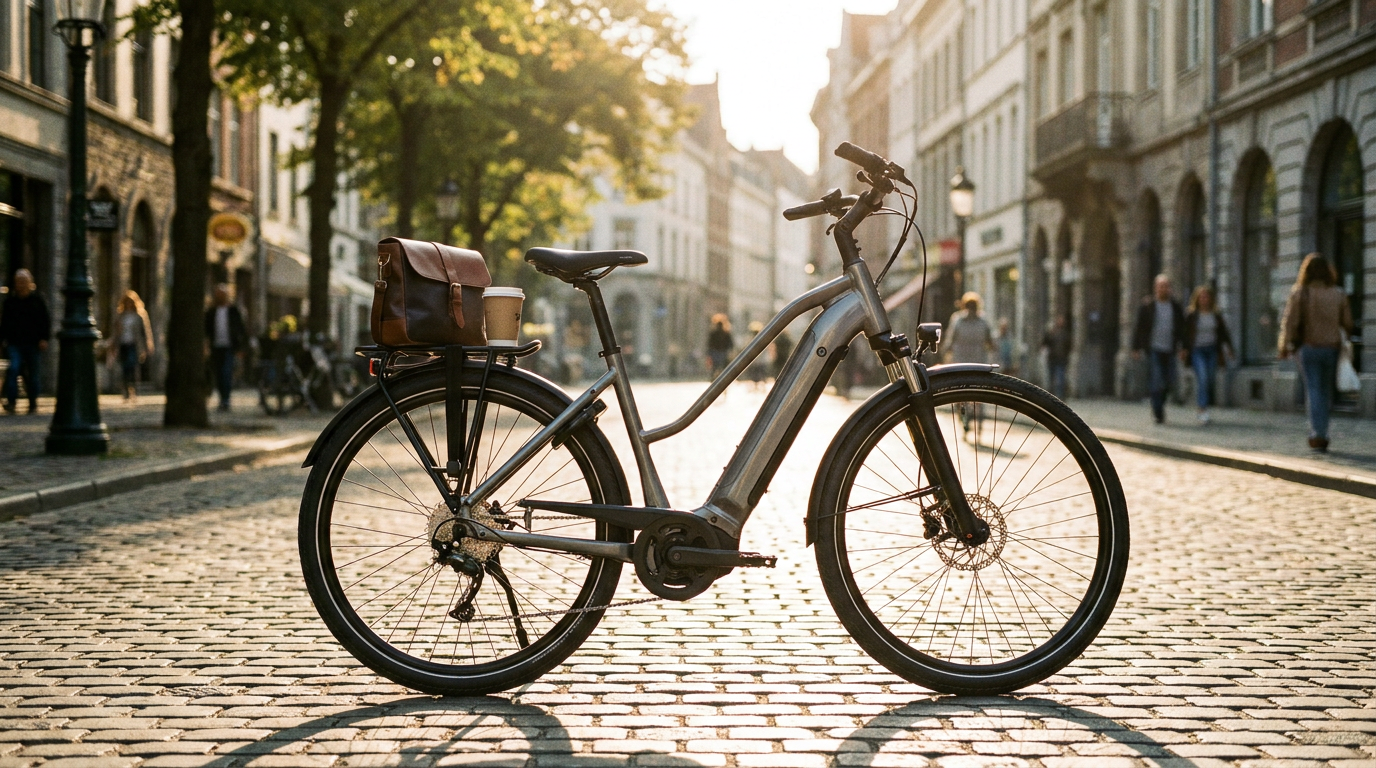
Beyond the electronics, frame geometry plays a massive role in daily usability. Step-through frames, which eliminate the high top tube, have become the industry standard for utility and commuter bikes [3]. They allow riders to easily mount and dismount the bike, which is essential when balancing a rear rack loaded with panniers or a child seat.[3]
Finally, buyers must consider the total cost of ownership and local repairability. Budget e-bikes found online often rely on cheap, proprietary electronic components. When these parts fail, local bike shops frequently refuse to service them due to liability concerns and a lack of replacement parts [8].[8]
Investing in an e-bike with standardized drivetrains and electronics from established manufacturers—such as Bosch, Shimano, or Yamaha—ensures that the bike can be diagnosed and repaired by certified mechanics in almost any city [8]. A quality e-bike is a long-term transportation asset, and prioritizing serviceable components guarantees it will remain on the road for years to come.[8]
How we got here
2020
The pandemic sparks a massive global surge in e-bike adoption for recreation and commuting.
2023
High-profile battery fires in New York City prompt Local Law 39, banning the sale of uncertified e-bike batteries.
2025
Major e-bike manufacturers transition to 'UL-first' design principles to prepare for impending nationwide regulations.
Jan 2026
California's SB 1271 takes effect, legally mandating UL 2849 or UL 2271 certification for all new e-bikes sold in the state.
Viewpoints in depth
Safety Regulators' view
Focuses on eliminating the risk of thermal runaway through mandatory third-party system testing.
For fire marshals and safety regulators, the e-bike boom brought an unacceptable rise in lithium-ion battery fires caused by cheap, uncertified aftermarket cells. This camp successfully lobbied for laws like California's SB 1271 and New York's Local Law 39. They argue that component-level testing is no longer enough; the entire electrical ecosystem (UL 2849) must be certified together to ensure the charger, battery, and motor communicate safely without causing surges.
Urban Commuters' view
Prioritizes speed, cargo capacity, and throttle options to replace daily car trips.
Riders using e-bikes as their primary vehicle view them through the lens of utility and efficiency. This group heavily favors Class 3 models capable of 28 mph to keep pace with suburban road traffic, or Class 2 models with throttles that make starting from a dead stop with a heavy load of groceries effortless. For commuters, a high-capacity battery (600+ Wh) and integrated lighting are non-negotiable necessities, not luxury add-ons.
Recreational Riders' view
Values a natural cycling feel, balanced weight distribution, and unrestricted trail access.
Traditional cyclists and mountain bikers adopting electric assistance prefer machines that amplify their effort rather than replacing it. This camp strongly advocates for Class 1 pedal-assist bikes, as they are the only models universally permitted on non-motorized dirt trails. They also overwhelmingly favor mid-drive motors with sophisticated torque sensors, which provide power smoothly in proportion to how hard the rider pedals, maintaining the authentic feel of a traditional bicycle.
What we don't know
- Whether other US states will adopt California's strict UL certification mandates before the end of 2026.
- How the influx of high-speed Class 3 e-bikes will impact future municipal bike lane speed limits and infrastructure planning.
Key terms
- UL 2849
- A rigorous safety standard that certifies an e-bike's entire electrical system—including the battery, motor, and charger—to prevent electrical surges and fires.
- Smart BMS
- Battery Management System; the internal computer that monitors cell temperatures and balances power loads to prevent overheating and extend battery life.
- Torque (Nm)
- Measured in Newton-meters, this is the rotational force a motor produces. Higher torque means stronger acceleration and easier hill climbing.
- Watt-hours (Wh)
- A measure of battery capacity representing the total energy stored. It is the most accurate metric for estimating an e-bike's potential range.
- Pedal-Assist (PAS)
- A sensor system where the electric motor only provides power while the rider is actively pedaling.
Frequently asked
Are UL-certified e-bikes legally required in 2026?
In many jurisdictions, yes. California's SB 1271 mandates that all new e-bikes and batteries sold after January 1, 2026, must carry UL 2849 or UL 2271 certification. Even where not legally required, insurers and landlords are increasingly demanding it.
What is the difference between a hub motor and a mid-drive motor?
A hub motor sits inside the center of the rear wheel and pushes the bike forward, making it great for flat terrain. A mid-drive motor sits between the pedals and uses the bike's gears, providing vastly superior torque for climbing steep hills.
How much battery range do I actually need?
For casual neighborhood rides, 400 to 500 Watt-hours (Wh) is sufficient. Daily commuters should look for 600 to 750 Wh to provide a buffer against range anxiety, especially in winter when cold weather can reduce battery efficiency by 20 to 30 percent.
Can I ride a Class 2 e-bike on mountain bike trails?
Often, no. Because Class 2 e-bikes feature a throttle that allows them to move without pedaling, they are frequently banned from non-motorized dirt trails and specialized mountain bike networks. Class 1 bikes are much more widely accepted on trails.
Sources
Source coverage
8 outlets
4 viewpoints surfaced








[1]Factlen Editorial TeamValue-Conscious Buyers
Synthesis by Factlen editorial team
Read on Factlen Editorial Team →[2]BicyclingRecreational Riders
Buying an E-Bike This Summer? 15 Editor-Tested Picks Worth the Money
Read on Bicycling →[3]CyclingNewsRecreational Riders
Best electric bikes: Quick list and reviews
Read on CyclingNews →[4]TST EbikeSafety Regulators
What does UL 2849 mean for e-bike safety in 2026?
Read on TST Ebike →[5]EveloValue-Conscious Buyers
Understanding Class 1, Class 2, and Class 3 Electric Bikes
Read on Evelo →[6]PunkRideUrban Commuters
So You Want an E-Bike But What Class Are You In
Read on PunkRide →[7]FiidoUrban Commuters
E-Bike Buying Quick Guide: Pick the Right Pedelec Quickly
Read on Fiido →[8]Cycling ElectricRecreational Riders
The best electric bikes we have reviewed and recommend buying in 2026
Read on Cycling Electric →

Every angle. Every day.
Get shopping stories with full source coverage and perspective breakdowns delivered to your inbox.