
Shingles Vaccine Linked to 24% Lower Risk of Dementia in Major New Study
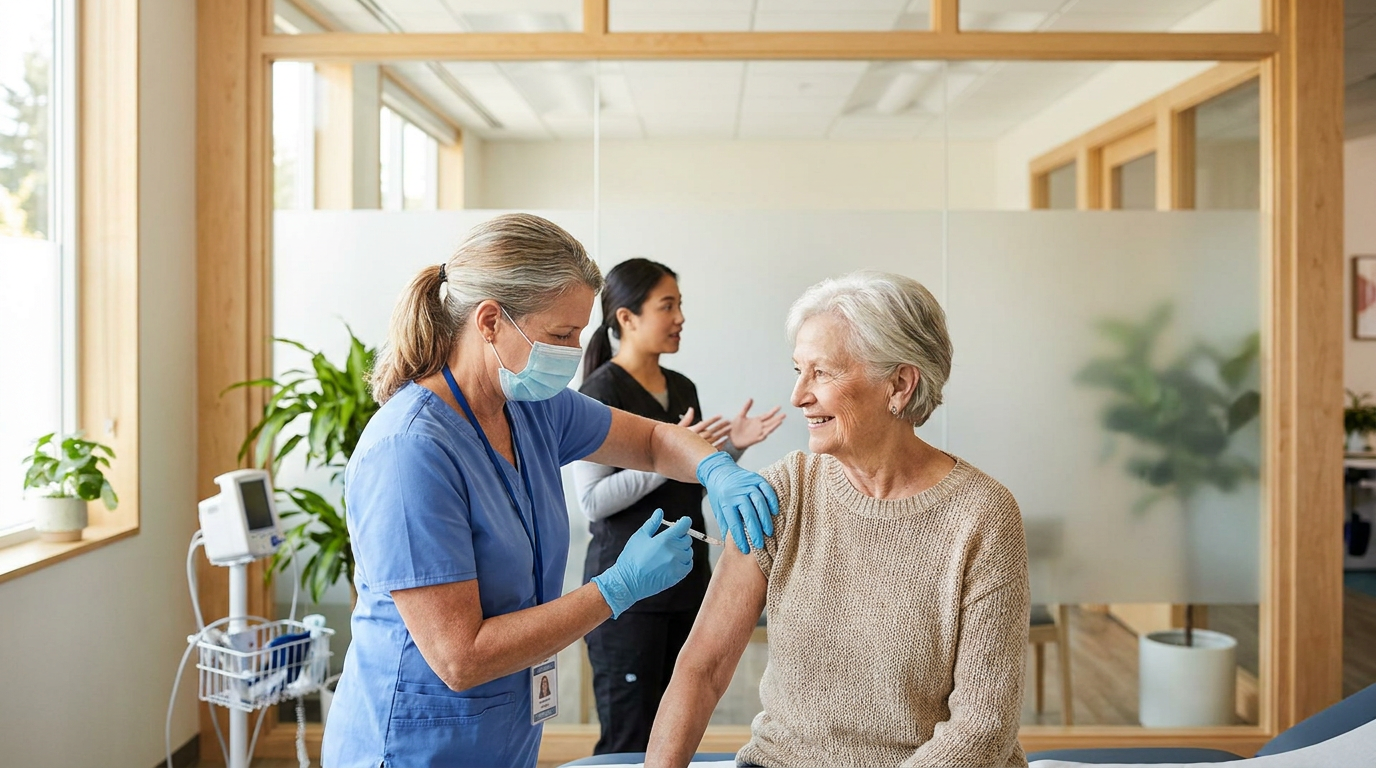
A massive analysis of over 500,000 Medicare patients found that older adults who received the modern shingles vaccine had a significantly lower risk of developing dementia over a four-year period.
By Factlen Editorial Team
- Epidemiological Caution
- Emphasizes the need for randomized controlled trials to rule out the 'healthy vaccinee bias' before declaring causation.
- Immunological Optimism
- Focuses on the biological mechanisms, theorizing that the vaccine's adjuvant trains the immune system to clear toxic brain proteins.
- Public Health Pragmatism
- Argues that the cognitive benefits should be immediately leveraged to boost historically low shingles vaccination rates among seniors.
What's not represented
- · Patients currently living with advanced dementia
- · Health insurance providers evaluating preventative coverage
Why this matters
Dementia is one of the most devastating and difficult-to-treat conditions in modern medicine. If a widely available, safe vaccine can significantly reduce the risk of cognitive decline, it offers millions of older adults a tangible, immediate way to protect their long-term brain health.
Key points
- A new study of over 500,000 Medicare patients links the modern shingles vaccine to a 24% lower risk of dementia.
- The absolute risk of developing dementia dropped from 24.6% in unvaccinated patients to 18.8% in vaccinated patients over four years.
- The findings align with previous research on older vaccines, strengthening the theory that viral inflammation drives cognitive decline.
- Researchers theorize the vaccine either prevents inflammation-induced micro-strokes or stimulates the immune system to clear harmful brain proteins.
- Experts caution that a randomized controlled trial is needed to definitively prove the vaccine directly causes the reduction in dementia.
Dementia remains one of the most intractable and devastating challenges in modern medicine, with researchers spending decades and billions of dollars chasing elusive treatments that often yield only marginal benefits. But a growing body of evidence suggests that a powerful defense mechanism against cognitive decline might already be sitting in pharmacy refrigerators worldwide. A massive new study has found that the modern shingles vaccine—a routine immunization recommended for older adults—is associated with a dramatically lower risk of developing dementia. The findings offer a rare beacon of hope in the field of neurodegeneration, pointing to a widely available, FDA-approved tool that could help millions of aging adults protect their long-term brain health while simultaneously preventing a painful viral infection.[1][2]
The compelling new data, published in the prestigious Annals of Internal Medicine, provides some of the most robust evidence to date linking viral immunization with cognitive preservation. Led by researchers at the Brown University School of Public Health, the study meticulously analyzed the electronic health records and Medicare claims of more than 500,000 beneficiaries. The research team specifically focused on a highly vulnerable demographic: adults aged 66 and older who had recently been admitted to skilled nursing facilities for either short-term rehabilitation or long-term care. By zeroing in on this specific population, the researchers were able to track cognitive outcomes in a group that is historically at high risk for both shingles outbreaks and the onset of dementia.[2][3][5]
Crucially, the Brown University study focused exclusively on the recombinant zoster vaccine, known commercially as Shingrix. Introduced to the United States market in 2017, this newer formulation is currently the only shingles shot available to American patients, having entirely replaced older, live-attenuated versions of the vaccine. The researchers designed their analysis to emulate a randomized controlled trial, comparing patients who received at least one dose of the recombinant vaccine within a year of their nursing facility stay against those who remained unvaccinated. The scale of the data allowed the team to filter out patients who had already been diagnosed with dementia, ensuring they were tracking entirely new cases of cognitive decline over a four-year follow-up period.[3][5]
The top-line results of the analysis were striking, catching even the veteran researchers off guard. Over the four-year observation window, patients who received the recombinant shingles vaccine demonstrated a 24 percent lower risk of being diagnosed with any form of dementia compared to their unvaccinated peers. This relative risk reduction held true across various demographic subsets within the skilled nursing facilities, suggesting a broad and resilient protective effect. For a disease landscape characterized by decades of failed clinical trials and marginal therapeutic gains, a 24 percent reduction achieved through a standard preventative immunization represents a monumental shift in how the medical community might approach cognitive preservation.[1][2][5]
When translated into absolute risk reduction—the actual, real-world difference in the probability of an event occurring—the numbers remained highly significant and practically actionable. The data revealed that 24.6 percent of the unvaccinated cohort developed dementia during the study period, compared to just 18.8 percent of those who received the shot. This 5.8 percentage point drop represents a massive public health victory on a population scale. According to the study's authors, this absolute reduction translates to roughly one in 17 cases of dementia potentially being prevented simply through routine vaccination, a staggering figure when applied to the millions of aging adults entering the Medicare system each year.[2][4][5]

This is not the first time the scientific community has spotted a tantalizing link between shingles immunization and the preservation of cognitive function. The Brown University findings build upon a landmark 2025 study from Stanford University, which analyzed a unique natural experiment in Wales. In that scenario, a strict age cutoff for vaccine eligibility allowed researchers to compare the long-term health outcomes of older adults who barely qualified for the shot against those who narrowly missed the cutoff. That earlier research, which focused on the older live-attenuated version of the vaccine, found a 20 percent reduction in dementia risk over a seven-year period. The new data confirms that the modern, more effective recombinant vaccine carries an even stronger neuroprotective signal.[6][7]
This is not the first time the scientific community has spotted a tantalizing link between shingles immunization and the preservation of cognitive function.
Digging deeper into the demographic data, the researchers uncovered fascinating nuances in how the vaccine's protective effects were distributed among the population. The association between the recombinant zoster vaccine and a lowered risk of dementia appeared to be notably stronger in women than in men, a critical detail given that women historically bear a disproportionate burden of Alzheimer's disease and other forms of cognitive decline. Furthermore, the neuroprotective benefits were most pronounced in individuals who had never received the older, live-attenuated version of the shingles vaccine in the past. These granular findings are providing neurologists with vital clues as they attempt to unravel exactly who benefits most from the immunization and how those benefits manifest over time.[3][5]
The persistent correlation between the vaccine and brain health has ignited a fierce debate among neurologists and immunologists regarding the underlying biological mechanisms. Why would a vaccine designed to prevent a blistering, painful skin rash have any measurable impact on the brain's complex cognitive architecture? The answer likely lies in the intricate and often destructive relationship between latent viral infections and chronic systemic inflammation. Shingles is caused by the varicella-zoster virus, the exact same pathogen responsible for childhood chickenpox. After the initial childhood infection clears, the virus does not leave the body; instead, it retreats into the nervous system, lying dormant in nerve tissue for decades.[2][6][8]
As the human immune system naturally weakens with age, the dormant varicella-zoster virus can reactivate, traveling back down the nerve pathways to cause a shingles outbreak. This reactivation triggers a massive cascade of systemic inflammation throughout the body. In recent years, chronic inflammation has been increasingly recognized by the medical community as a primary driver of neurodegeneration and cognitive decline. By preventing the virus from reactivating, the shingles vaccine effectively neutralizes a major source of neurological inflammation. Some researchers theorize that this reduction in inflammatory stress protects the brain's delicate vascular system, potentially preventing the micro-strokes and blood flow disruptions that are known to compound the risk of vascular dementia.[2][4][8]

Beyond simply blocking viral reactivation, immunologists are exploring a second, even more fascinating hypothesis centered on the vaccine's specific chemical composition. The modern recombinant shingles vaccine contains a highly potent adjuvant—an ingredient specifically designed to hyper-stimulate the body's immune response to the introduced viral proteins. Some scientists speculate that this powerful adjuvant might trigger a biological phenomenon known as trained immunity. Under this theory, the vaccine provides a general, systemic boost to the immune system's natural scavenger cells. This heightened state of alert might inadvertently train the body's defenses to become far more efficient at identifying and clearing out the toxic amyloid plaques and neurofibrillary tangles that are the hallmark biological signatures of Alzheimer's disease.[3][8]
Despite the robust data and compelling biological theories, epidemiologists urge a degree of caution, pointing to a well-known statistical confounder known in medical research as the healthy vaccinee bias. In purely observational studies, people who proactively seek out preventative healthcare—such as staying up to date on their recommended immunizations—tend to be significantly healthier overall than those who do not. Vaccinated individuals often have better access to high-quality medical care, higher levels of health literacy, more active lifestyles, and more robust social support networks. All of these socioeconomic and lifestyle factors independently lower a person's risk of developing dementia, making it incredibly difficult for researchers to definitively isolate the vaccine itself as the sole protective agent against cognitive decline.[3][7]
The Brown University research team was acutely aware of this inherent bias and meticulously adjusted their statistical models to account for a wide array of demographic differences, underlying health conditions, and healthcare utilization patterns among the nursing facility residents. Even after these rigorous mathematical adjustments, the protective association between the shingles vaccine and dementia remained remarkably strong and statistically significant. However, experts across the medical community agree that observational data, no matter how well-adjusted or massive in scale, can ultimately only prove correlation. To definitively establish that the recombinant shingles vaccine directly causes a reduction in dementia risk, the scientific community will need to conduct a large-scale, randomized controlled trial—a massive, multi-year undertaking that researchers are now urgently calling for.[4][5]

Regardless of the exact biological mechanism or the need for future clinical trials, the current findings carry immediate and profound public health implications. Uptake of the shingles vaccine remains historically low across the United States, particularly among the highly vulnerable populations entering long-term care facilities who stand to benefit the most from its protection. The dual-benefit nature of this discovery could fundamentally alter public health messaging and geriatric care strategies in the coming years. If a single, widely available, and FDA-approved shot can simultaneously prevent a debilitating, painful viral infection and offer a tangible shield against the devastation of cognitive decline, it represents one of the most actionable and accessible tools currently available to aging adults in the fight against dementia.[3][4][5]
How we got here
2006
The FDA approves Zostavax, the first live-attenuated vaccine to prevent shingles in older adults.
2017
The FDA approves Shingrix, a highly effective recombinant vaccine, which eventually replaces Zostavax in the U.S. market.
April 2025
A Stanford University study of a natural experiment in Wales links the older shingles vaccine to a 20% reduction in dementia risk.
June 2026
Brown University researchers publish data showing the modern recombinant vaccine lowers dementia risk by 24% in a massive cohort of Medicare patients.
Viewpoints in depth
Epidemiological Caution
Experts emphasize the need for randomized controlled trials to rule out the 'healthy vaccinee bias' before declaring causation.
Epidemiologists point out that observational studies are inherently limited by the 'healthy vaccinee bias.' Individuals who proactively seek out vaccinations tend to have better healthcare access, higher health literacy, and generally healthier lifestyles—all factors that independently protect against dementia. While the Brown University researchers adjusted their models to account for these variables, skeptics argue that statistical adjustments can never fully replace the rigor of a randomized controlled trial. Until such a trial is conducted, they maintain that the vaccine should be viewed as correlated with, rather than a proven cause of, cognitive preservation.
Immunological Optimism
Researchers focus on the biological mechanisms, theorizing that the vaccine's adjuvant trains the immune system to clear toxic brain proteins.
Immunologists are increasingly fascinated by the potential off-target benefits of the recombinant vaccine's adjuvant—the chemical compound designed to hyper-stimulate the immune response. This camp theorizes that the adjuvant triggers 'trained immunity,' essentially putting the body's natural scavenger cells on high alert. Once activated, these cells might become highly efficient at crossing the blood-brain barrier and clearing out the amyloid plaques and neurofibrillary tangles that cause Alzheimer's disease. For these researchers, the shingles vaccine represents a potential backdoor into treating neurodegeneration by leveraging the body's own immune system.
Public Health Pragmatism
Advocates argue that the cognitive benefits should be immediately leveraged to boost historically low shingles vaccination rates among seniors.
Public health officials view the debate over exact biological mechanisms as secondary to the immediate practical benefits of the discovery. Shingles vaccination rates remain stubbornly low, particularly among vulnerable populations in long-term care facilities. Because the recombinant vaccine is already FDA-approved, widely available, and proven safe for preventing a painful viral infection, pragmatic advocates argue that the potential dementia-prevention benefits should be aggressively incorporated into public health messaging today. They believe that highlighting the dual benefits could overcome vaccine hesitancy and significantly improve overall geriatric care.
What we don't know
- Whether the vaccine directly prevents dementia or if vaccinated individuals simply share other healthy habits that protect their brains.
- The exact biological mechanism linking the prevention of the varicella-zoster virus to the preservation of cognitive function.
- How long the neuroprotective benefits of the recombinant shingles vaccine last beyond the four-year study period.
Key terms
- Recombinant Zoster Vaccine (RZV)
- A modern vaccine that uses a small piece of the virus combined with an immune-boosting adjuvant to prevent shingles.
- Varicella-zoster virus
- The virus that causes chickenpox in childhood and can reactivate decades later as shingles.
- Adjuvant
- An ingredient used in some vaccines that helps create a stronger immune response in people receiving the vaccine.
- Healthy vaccinee bias
- A statistical phenomenon where people who get vaccinated appear to have better health outcomes simply because they generally practice healthier habits and have better healthcare access.
- Absolute risk reduction
- The actual, real-world difference in the probability of an event occurring between a treated group and a control group.
Frequently asked
Which shingles vaccine was studied?
The study focused on the recombinant zoster vaccine, known commercially as Shingrix, which has been the only shingles vaccine available in the U.S. since 2020.
Does the vaccine cure dementia?
No. The vaccine is associated with a lower risk of developing dementia in the future, but it is a preventative measure, not a cure for those who already have advanced cognitive decline.
How much does it lower the risk?
The study found a 24% relative reduction in dementia diagnoses over four years, which translates to an absolute risk reduction of 5.8 percentage points.
Why might a shingles shot protect the brain?
Researchers believe it may prevent the severe systemic inflammation caused by a shingles outbreak, or the vaccine's immune-boosting ingredients might help the body clear out harmful brain proteins.
Sources
Source coverage
8 outlets
3 viewpoints surfaced






[1]STAT NewsImmunological Optimism
STAT+: Shingles vaccine may lower dementia risk, new study finds
Read on STAT News →[2]Inc.Public Health Pragmatism
A common vaccine may be the secret to avoiding cognitive decline
Read on Inc. →[3]MedPage TodayEpidemiological Caution
Study Looks at Risk for Dementia After Shingles Vaccine in High-Risk Group
Read on MedPage Today →[4]CIDRAPPublic Health Pragmatism
Shingles vaccine may protect against dementia
Read on CIDRAP →[5]Brown UniversityPublic Health Pragmatism
Study suggests shingles vaccine may lower dementia risk
Read on Brown University →[6]Stanford MedicinePublic Health Pragmatism
Shingles vaccine may protect against dementia
Read on Stanford Medicine →[7]Harvard T.H. Chan School of Public HealthEpidemiological Caution
Shingles vaccine may be protective against dementia
Read on Harvard T.H. Chan School of Public Health →[8]Vaccines TodayImmunological Optimism
How might shingles vaccines reduce dementia risk?
Read on Vaccines Today →

Every angle. Every day.
Get health stories with full source coverage and perspective breakdowns delivered to your inbox.