
Ukraine Launches Largest Drone Attack on Moscow, Striking Major Oil Refinery
Ukraine launched an unprecedented swarm of nearly 200 drones at Moscow, striking a critical oil refinery and forcing the closure of all four major airports. Ukrainian President Volodymyr Zelensky framed the attack as direct retaliation for recent Russian strikes on Kyiv.
By Factlen Editorial Team
- Ukrainian Strategy & Allies
- Focus on the strikes as a necessary tactical evolution to degrade Russian logistics and force diplomatic negotiations.
- Independent & Neutral Analysts
- Highlight the technological escalation, the failure of Moscow's air defenses, and the broader geopolitical implications.
- Russian Official Narrative
- Emphasize the high interception rate of air defenses and frame the attacks as desperate acts of terrorism.
What's not represented
- · Moscow residents affected by the strikes
- · Global energy market analysts
Why this matters
This unprecedented strike shatters the illusion of safety in the Russian capital and demonstrates Ukraine's rapidly advancing long-range strike capabilities. By successfully penetrating Moscow's dense air defenses to cripple a critical energy facility, Kyiv is forcing the economic and psychological costs of the war directly onto Russian citizens.
Key points
- Ukraine launched nearly 200 drones at Moscow in the largest attack on the capital to date.
- The strikes severely damaged the Kapotnya oil refinery, which supplies 40% of Moscow's petrol.
- All four major Moscow airports were forced to suspend operations and cancel flights.
- President Zelensky called the attack retaliation for recent Russian strikes on a historic Kyiv monastery.
- Military analysts note Ukraine's successful use of new jet-powered missile drones to evade air defenses.
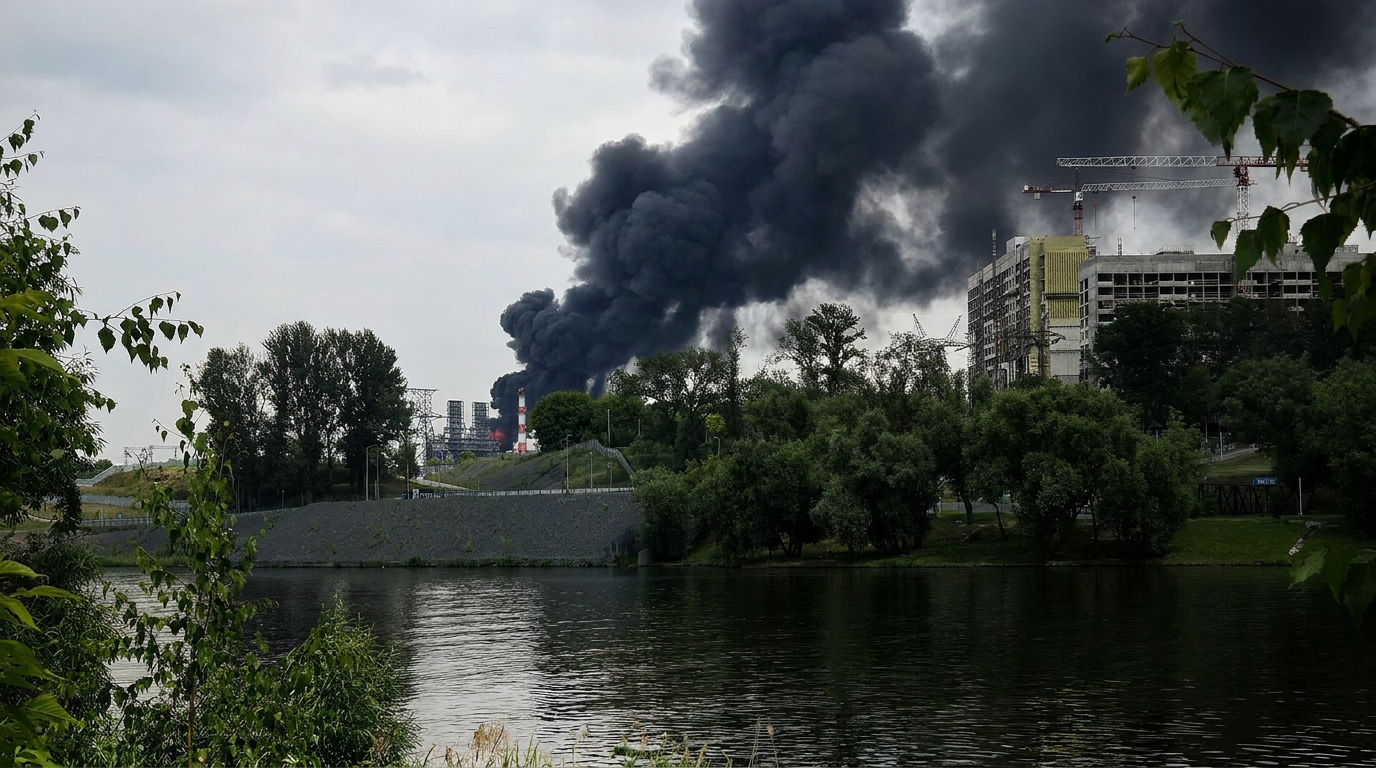
Ukraine launched the largest drone assault on Moscow since the war began, sending a swarm of nearly 200 drones into the Russian capital early Thursday morning. The unprecedented barrage penetrated the city's heavily layered air defenses, striking residential areas, a shopping mall, and a critical oil refinery that supplies much of the city's fuel. Plumes of thick black smoke dominated the Moscow skyline for hours, offering a stark visual of the war reaching deep into Russian territory. The sheer scale of the attack brought the reality of the conflict directly to the doorsteps of millions of Russians who have largely been shielded from the daily devastation experienced in Ukraine.[1][2][7]
The most significant damage occurred at the Gazprom Neft refinery in the southeastern Kapotnya district, a facility that had already been targeted earlier in the week. Videos circulating on social media showed a massive fireball erupting from the complex, with one explosion sending the heavy lid of a fuel storage tank rocketing high into the air. The refinery is a vital energy node for the capital, processing roughly 11 million metric tons of oil annually. It supplies up to 40 percent of Moscow's gasoline and half of its diesel fuel. Disabling such a critical piece of infrastructure not only hampers Russian military logistics but also threatens to create localized fuel shortages and economic disruption within the capital.[1][3][4]

Beyond the refinery, the drone swarm caused widespread chaos and destruction across the greater Moscow region. Debris from intercepted drones and direct strikes damaged a high-rise apartment building in the town of Zhukovsky, an industrial technology park in Zelenograd, and several private homes. Regional authorities reported that at least 17 people were injured in the attacks, including two children. The airspace over the capital was completely paralyzed for much of the morning. All four major Moscow airports—Sheremetyevo, Domodedovo, Vnukovo, and Zhukovsky—were forced to suspend operations, resulting in the evacuation of terminals and the cancellation or delay of hundreds of commercial flights.[2][5][7]
Ukrainian President Volodymyr Zelensky explicitly framed the assault as direct retaliation for Russia's recent intensifying bombardment of Kyiv. Earlier in the week, a Russian missile strike severely damaged the nearly 1,000-year-old Kyiv Pechersk Lavra, a historic monastery complex regarded as one of the holiest Orthodox sites in the world. In a voice message sent to reporters, Zelensky stated, "We certainly do not want Ukraine to be burning because of the enemy. But if Ukraine is burning, your Moscow will be burning, as well." He emphasized that the aggressive strikes on Russian soil are a necessary tactic to force Russian President Vladimir Putin to the negotiating table and end the aggression.[2][3][7]
Ukrainian President Volodymyr Zelensky explicitly framed the assault as direct retaliation for Russia's recent intensifying bombardment of Kyiv.
The success of Thursday's strike highlights a significant evolution in Ukraine's domestic weapons manufacturing and tactical deployment. Ukrainian defense sources indicated that alongside conventional long-range propeller drones, the military actively employed newly developed jet-powered missile drones. These advanced platforms travel at much higher speeds and are significantly harder for traditional anti-aircraft systems to track and intercept. Russian military bloggers and independent defense analysts noted that the sheer volume and speed of the incoming swarm appeared to overwhelm Moscow's Pantsir air defense systems, which are widely considered to be some of the densest and most sophisticated in the country.[1][4]

In response to the barrage, the Russian Defense Ministry claimed its air defense forces successfully shot down 555 Ukrainian drones nationwide overnight. Moscow Mayor Sergei Sobyanin stated that nearly 180 of those were intercepted on their approach to the capital alone. Despite these official claims of high interception rates, hard-line Russian nationalists expressed outrage on social media. Many questioned how such a massive strike could penetrate the capital's defenses, arguing that the visible destruction undermines the Kremlin's long-standing narrative that the "special military operation" remains firmly under control and poses no threat to everyday Russian citizens.[3][5][8]
This dramatic escalation comes just days after Zelensky met with US President Donald Trump at a Group of Seven summit in France. During the summit, Trump urged both sides to reach a negotiated settlement to end the bloodshed, though he acknowledged there was no immediate end in sight. The Moscow strike puts the Russia-Ukraine war squarely back at the center of the global geopolitical agenda, even as the US administration focuses heavily on its recently signed, controversial peace agreement with Iran. European leaders have been pushing for the US to help facilitate a direct meeting between Zelensky and Putin, but the renewed violence complicates any immediate diplomatic off-ramps.[2][6]

As emergency crews in Moscow work to extinguish the refinery fires and assess the structural damage to residential buildings, Kyiv is bracing for an inevitable and severe Russian reprisal. Explosions were already reported in Kyiv and other Ukrainian cities on Thursday morning as Russia launched ballistic missiles in response to the Moscow strikes. The escalating tit-for-tat attacks on civilian centers and critical energy infrastructure suggest a volatile new phase of the conflict. With both sides demonstrating the capability and willingness to strike deep into enemy territory, the war is increasingly becoming a battle of attrition that neither capital can easily escape.[3][7]
How we got here
May 2023
Two drones explode over the Kremlin in the first symbolic strike on Moscow.
Summer 2023
Sporadic drone strikes hit the Moscow City financial district and various non-residential buildings.
Early 2025
Ukraine begins launching larger, coordinated drone swarms targeting Russian energy infrastructure.
June 16, 2026
Russia launches a missile strike damaging the historic Kyiv Pechersk Lavra monastery.
June 18, 2026
Ukraine retaliates with a massive 200-drone swarm on Moscow, crippling the Kapotnya oil refinery.
Viewpoints in depth
Ukrainian Leadership
Argues that bringing the war to Moscow is a necessary tactic to force a diplomatic resolution.
Kyiv maintains that striking the Russian capital is the only way to make the Russian populace and elite feel the true cost of the invasion. By targeting critical economic infrastructure like the Kapotnya refinery, Ukrainian officials believe they can degrade Russia's war machine while simultaneously creating domestic political pressure on Vladimir Putin to negotiate an end to the conflict.
Russian Authorities
Frames the strikes as terrorist acts that are successfully being repelled by air defenses.
The Kremlin and local Moscow officials consistently downplay the strategic impact of the strikes, emphasizing the high interception rate of their air defense systems. They characterize the attacks on civilian areas and commercial infrastructure as desperate acts of terrorism by Kyiv, using the incidents to justify continued and intensified missile barrages against Ukrainian cities.
Independent Military Analysts
Focuses on the technological shift and the vulnerability of Russian air space.
Defense experts point out that Ukraine's integration of jet-powered missile drones represents a significant leap in capability. They argue that the sheer volume of the swarm tactics used in this attack successfully exposed the limitations and gradual depletion of Moscow's layered air defense networks, proving that no Russian strategic site is entirely impenetrable.
What we don't know
- The full extent of the structural damage and operational downtime at the Kapotnya oil refinery.
- How the Kremlin will adjust its air defense strategy to counter the new jet-powered missile drones.
- Whether this escalation will accelerate or derail recent international pushes for a negotiated ceasefire.
Key terms
- Kapotnya Oil Refinery
- A major Gazprom Neft facility in southeastern Moscow that processes 11 million tons of oil annually and supplies much of the city's fuel.
- Pantsir Air Defense System
- A family of Russian self-propelled, medium-range surface-to-air missile and anti-aircraft artillery systems designed to protect vital military and industrial targets.
- Jet-powered missile drones
- A newer class of Ukrainian unmanned aerial vehicles that travel at much higher speeds than conventional propeller drones, making them harder to intercept.
Frequently asked
What was the main target of the attack?
The primary target was the Kapotnya oil refinery in southeastern Moscow, which supplies up to 40% of the capital's gasoline.
How many drones were used?
Russian authorities reported intercepting nearly 180 to 200 drones on their approach to Moscow, out of over 500 launched nationwide.
Were there any civilian casualties?
Yes, Russian officials reported that at least 17 people were injured in the Moscow region, and several residential buildings were damaged by debris and direct strikes.
Why did Ukraine launch this attack now?
President Zelensky stated the strike was direct retaliation for recent Russian bombings in Kyiv, including an attack on a historic Orthodox monastery.
Sources
Source coverage
8 outlets
3 viewpoints surfaced








[1]The GuardianUkrainian Strategy & Allies
What did Ukraine target in Moscow and how significant was the drone attack?
Read on The Guardian →[2]The Washington PostUkrainian Strategy & Allies
Ukraine pummels Russian capital with what may be largest drone strike yet on Moscow
Read on The Washington Post →[3]Defense NewsIndependent & Neutral Analysts
Ukraine hits Moscow refinery in major drone attack on Russian capital
Read on Defense News →[4]NVUkrainian Strategy & Allies
Ukraine actively employed jet-powered missile drones during the June 18 attack
Read on NV →[5]MeduzaIndependent & Neutral Analysts
How Ukraine's drone attacks on Moscow have escalated
Read on Meduza →[6]CGTNRussian Official Narrative
Ukraine hits Moscow in 'large-scale' attack, sparking fires and evacuations
Read on CGTN →[7]PBSIndependent & Neutral Analysts
Ukrainian drones set a Moscow refinery ablaze in a major attack on the Russian capital
Read on PBS →[8]CFPublicIndependent & Neutral Analysts
Ukraine launches new wave of drone attacks on Russia early Thursday
Read on CFPublic →

More in news politics
See all 7 stories →US-Iran Deal
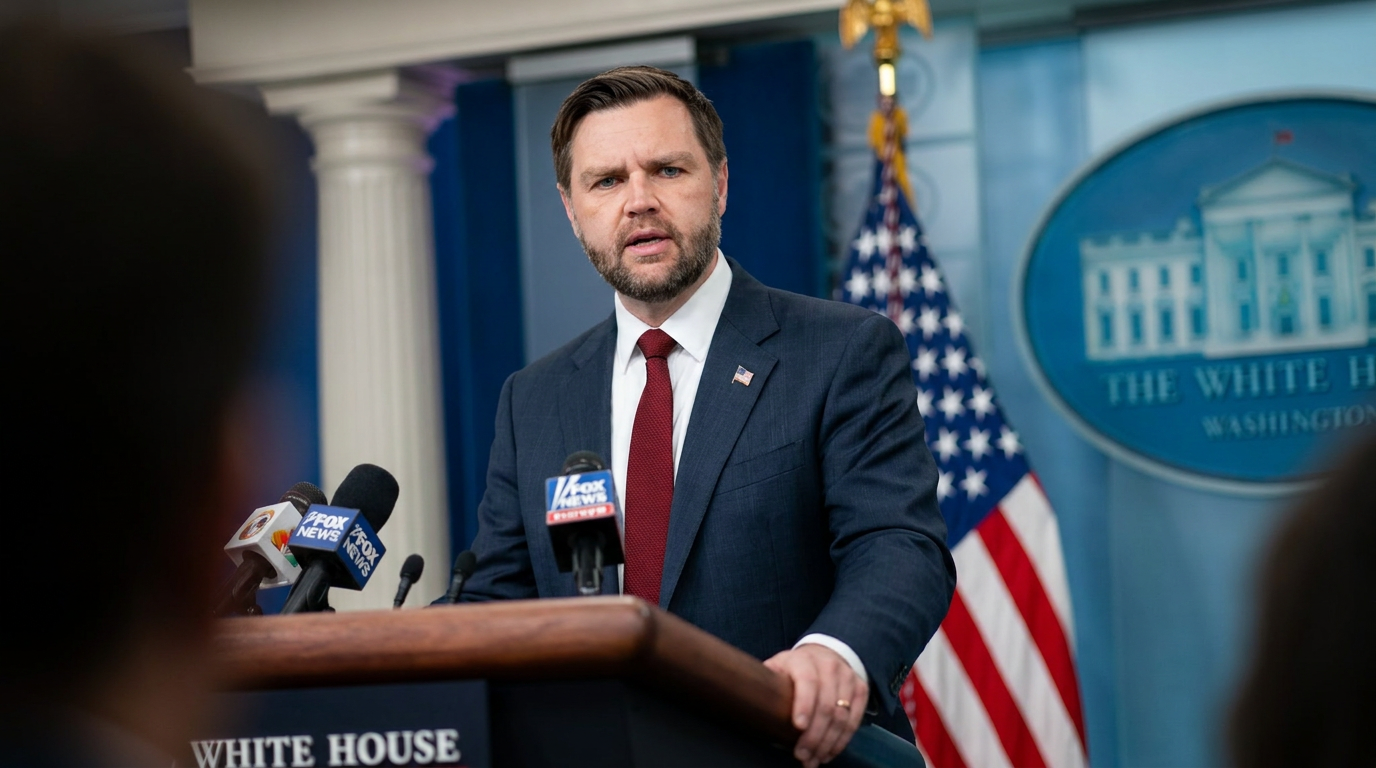
US Lifts Naval Blockade on Iran as Vance Defends Peace Deal Against Israeli Criticism
8 sources
US-Iran Deal
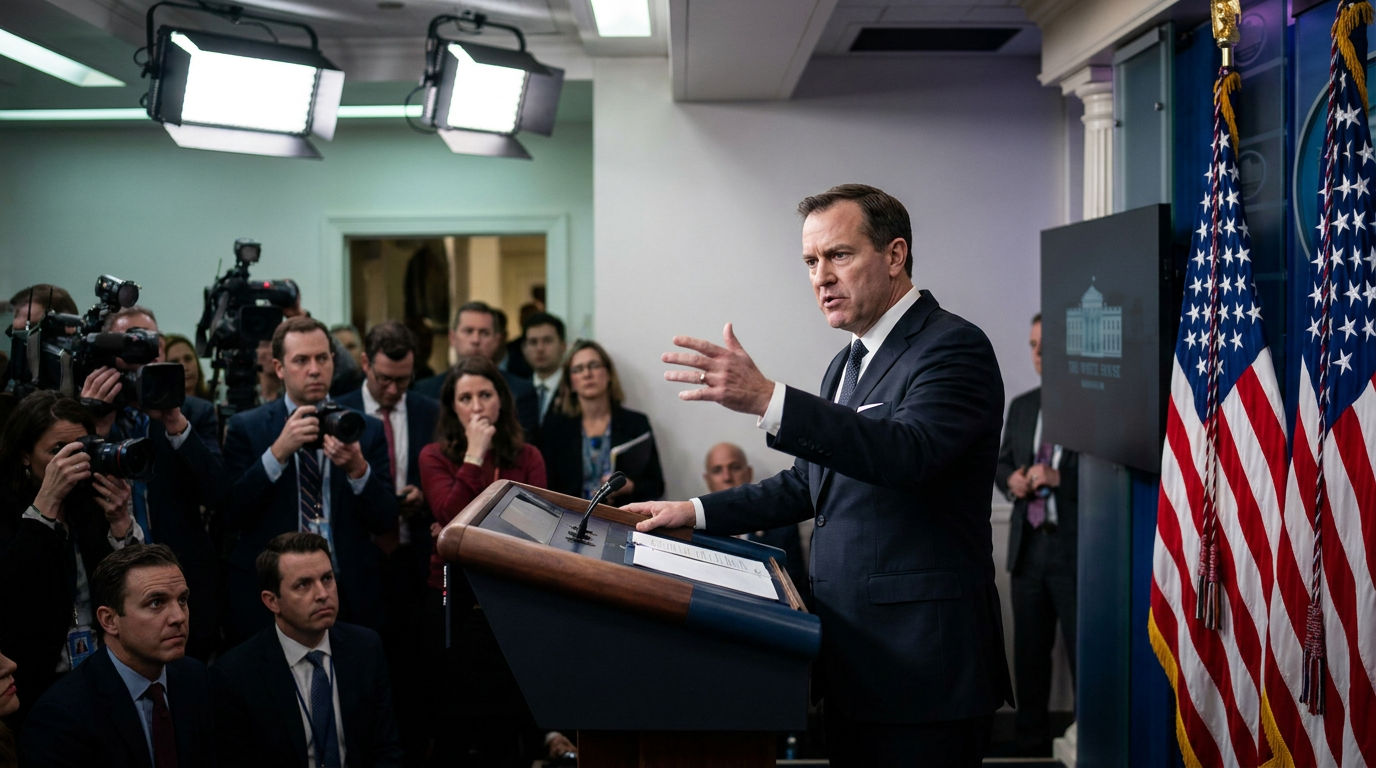
U.S. Lifts Naval Blockade on Iran as 60-Day Peace Negotiations Begin
8 sources
Emissions Policy
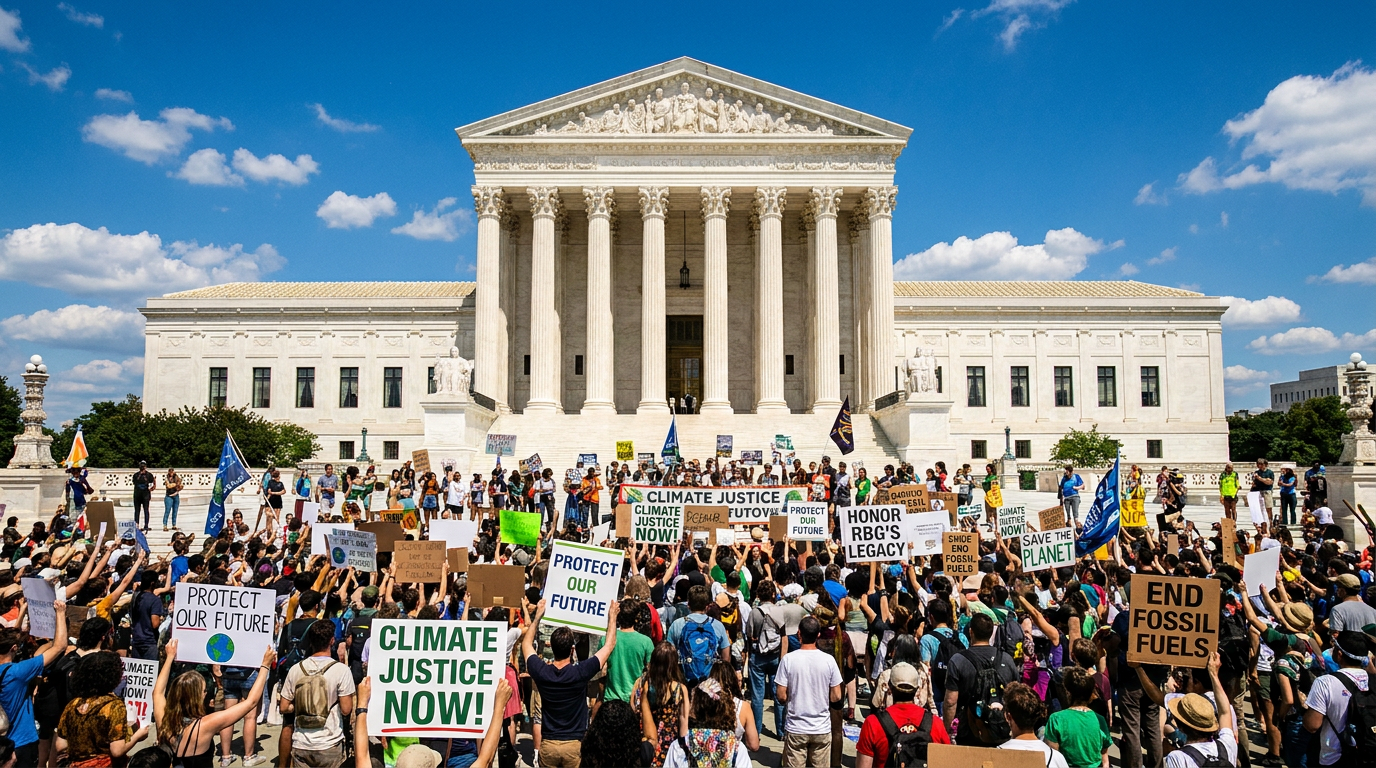
Supreme Court Strikes Down EPA Tailpipe Emissions Rules, Upending US Transition to EVs
8 sources
US-Iran Deal
US Lifts Naval Blockade as 60-Day Iran Peace Deal Takes Effect
8 sources
Every angle. Every day.
Get news politics stories with full source coverage and perspective breakdowns delivered to your inbox.