
US Lifts Naval Blockade as 60-Day Iran Peace Deal Takes Effect
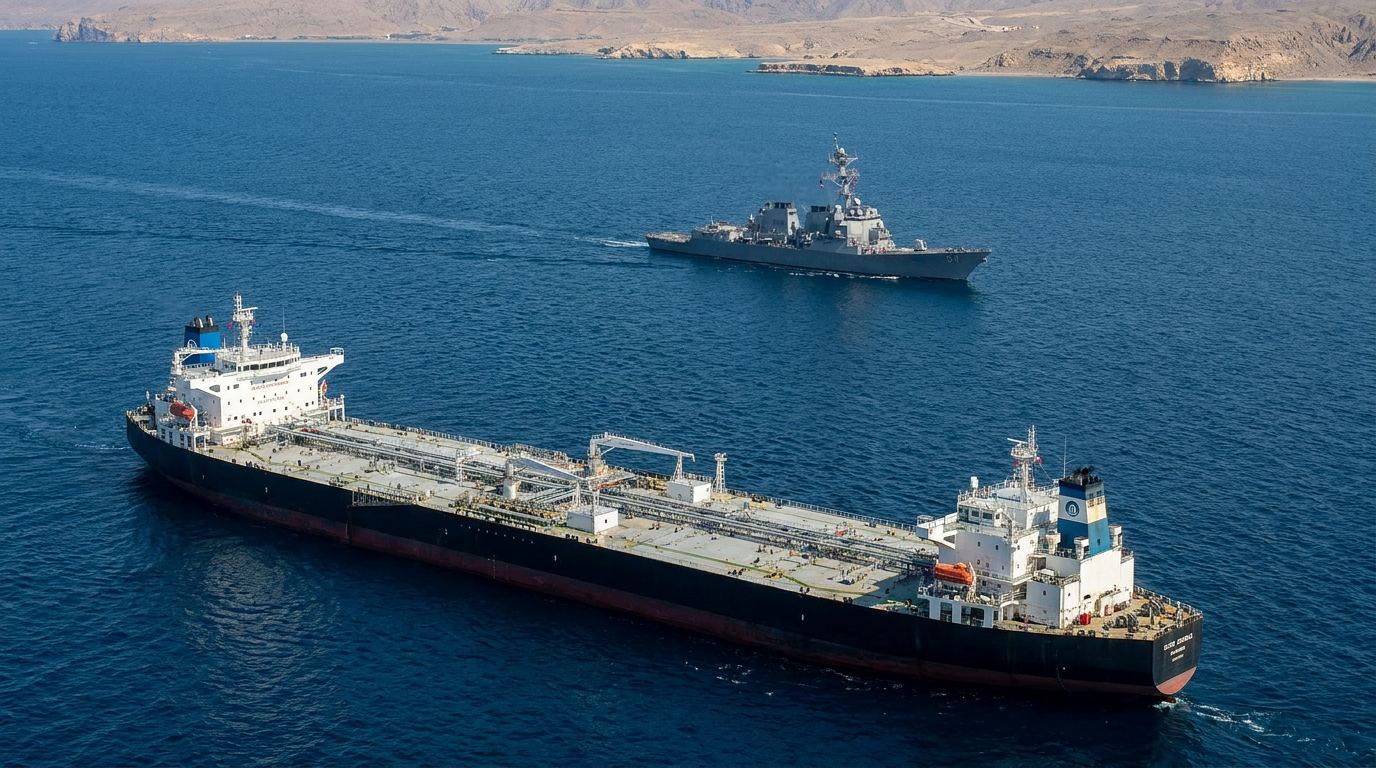
The United States has officially lifted its naval blockade of Iran, opening a 60-day negotiating window to finalize a peace agreement and restore global oil traffic through the Strait of Hormuz.
By Factlen Editorial Team
- US Administration
- Argues the deal is a historic victory that reopens global trade without conceding long-term nuclear capabilities to Iran.
- Iranian Leadership
- Frames the agreement as a desperate American concession, claiming victory and asserting sovereign control over the Strait of Hormuz.
- Global Economic Observers
- Focused on the immediate relief to oil markets and the potential complications of Iran's proposed maritime transit fees.
- Israeli Security Establishment
- Remains skeptical of Iran's nuclear promises and insists on maintaining military presence in Lebanon regardless of the US-Iran MoU.
What's not represented
- · Commercial shipping companies navigating the Strait of Hormuz
- · Lebanese civilians in the southern security zone
Why this matters
The reopening of the Strait of Hormuz provides immediate relief to global energy markets, lowering oil prices and easing inflation. However, the fragile 60-day negotiation period will determine whether the Middle East achieves lasting peace or returns to a devastating, potentially nuclear-armed conflict.
Key points
- The US has lifted its naval blockade of Iran, allowing commercial vessels to access Iranian ports and the Strait of Hormuz.
- A 60-day negotiation window has begun to finalize a peace deal, focusing on dismantling Iran's highly enriched uranium stockpile.
- The US has issued temporary waivers allowing Iran to sell oil freely, providing immediate relief to global energy markets.
- Iranian state media claims the agreement allows Tehran to collect maritime transit fees in the Strait of Hormuz, a claim the US denies.
- Reports indicate Iran may already be collecting informal transit tolls from oil tankers using cryptocurrencies like Bitcoin and Tether.
- Israeli Prime Minister Benjamin Netanyahu has refused to withdraw troops from southern Lebanon, complicating the broader peace negotiations.
The United States has officially lifted its naval blockade of Iran, allowing commercial vessels to access Iranian ports and reopening the critical Strait of Hormuz to global shipping. The monumental shift marks the beginning of a 60-day negotiation window established by a newly signed Memorandum of Understanding (MoU) between Washington and Tehran. The agreement, signed by President Donald Trump and Iranian President Masoud Pezeshkian, aims to formally end the devastating war that has gripped the Middle East since February. Vice President JD Vance confirmed that US Central Command has already allowed more than a dozen ships to pass through the blockade, signaling that Washington is honoring the initial military provisions of the fragile peace pact.[1][7]
The immediate stakes of reopening the waterway are massive for the global economy. The Strait of Hormuz is a vital geopolitical chokepoint that historically handles roughly 20 percent of the world's oil exports. Its months-long closure during the conflict drove up energy prices, rattled financial markets, and fueled inflation worldwide. In exchange for the blockade's end, the United States has issued temporary waivers allowing Iran to sell its oil freely on the global market. This concession provides immediate, much-needed relief to Tehran's battered economy, which has been suffocated by years of strict international sanctions and the recent military conflict.[4][6]
Despite the apparent diplomatic breakthrough, the exact terms of the MoU remain highly contested, with the two sides presenting vastly different interpretations of what was actually agreed upon. The most explosive disagreement centers on the future management of the Strait of Hormuz itself. Iranian state media, citing informed sources, claims that a last-minute clause was added to the agreement that implicitly grants Tehran the sovereignty to collect "maritime service fees" for ships transiting the waterway. Iranian officials argue that these fees are necessary to cover the security, environmental, and insurance costs associated with managing the strait, and plan to formally implement the toll system after the 60-day negotiation period concludes.[2][3]

The prospect of an Iranian toll system has sent shockwaves through global energy and financial sectors. Reports indicate that Iran may have already begun collecting informal tolls from vessels navigating the strait, with charges reportedly ranging from $1 per barrel of oil to approximately $2 million per tanker. To bypass the US dollar-dominated financial system and evade the reach of traditional banking networks like SWIFT, Tehran is allegedly collecting these maritime fees in cryptocurrencies such as Bitcoin and Tether. If formalized, this system would function as a decentralized, unavoidable tax on a significant portion of the global oil supply.[6]
The US administration vehemently denies that it agreed to any such toll system. Vice President Vance and President Trump have publicly stated that the agreement ensures long-term, toll-free passage through the strait. Vance has pushed back against critics who argue the administration conceded too much, emphasizing that the 60-day window is designed to hammer out the core issue that sparked the conflict: Iran's nuclear program. Washington is demanding that Iran dilute its stockpile of highly enriched uranium, destroy existing enriched materials, and permanently cap its ballistic missile program so it can no longer threaten global security.[1][7][8]

The US administration vehemently denies that it agreed to any such toll system.
Vance stressed that, unlike the 2015 Obama-era nuclear accord, this new agreement will absolutely forbid Iran from enriching uranium at any level. However, Iran maintains that its nuclear program is strictly peaceful and insists that broader sanctions relief must be guaranteed upfront. Tehran is eyeing a proposed $300 billion reconstruction fund, which the US has reportedly agreed to help establish using regional private-sector investments. Vance has clarified that Iran will not receive any direct US funds and that access to outside investment is strictly contingent on Tehran's full compliance with the nuclear disarmament demands.[4][7]
The domestic political rhetoric surrounding the deal highlights the deep animosity that still exists between the two nations. Iran's new Supreme Leader, Mojtaba Khamenei, who recently succeeded his father following a targeted military strike, publicly taunted the United States in his first comments on the agreement. Khamenei claimed that it was the American president who, "out of desperation," used all kinds of leverage to secure the deal. This framing is intended for a domestic Iranian audience, projecting strength and asserting that Tehran successfully outlasted the US military pressure campaign without surrendering its core sovereign rights.[5]

The geopolitical fallout of the MoU also extends to Israel, creating a potential flashpoint that could easily derail the fragile peace process. Israeli Prime Minister Benjamin Netanyahu has declared victory over Iran but explicitly refused to withdraw Israeli troops from the security zone they currently occupy in southern Lebanon. This directly contradicts Iran's interpretation of the agreement, as Tehran insists the deal requires a full Israeli withdrawal from Lebanese territory. The conflicting narratives over Lebanon place the Trump administration in a difficult position, as it attempts to mediate between its closest Middle Eastern ally and its primary regional adversary.[2]
Critics in Washington, including several Republican lawmakers, have expressed deep skepticism over the MoU's brevity and the lack of concrete enforcement mechanisms. Vance admitted that the document is only about a page and a half long, describing it as a "very general document" with the specifics left to be worked out during the technical negotiation phase. As the 60-day clock ticks down, the international community watches closely. The success or failure of these high-stakes talks in Switzerland will determine whether the Middle East steps back from the brink of total war or plunges into a renewed, potentially nuclear-armed conflict.[1][8]

European allies and international watchdogs are approaching the 60-day window with cautious optimism, though significant hurdles remain. The European Union has indicated it will leave its own sanctions on Iran in place for now, waiting to see if Tehran genuinely complies with the nuclear disarmament protocols before lifting economic restrictions. Meanwhile, the International Atomic Energy Agency (IAEA) is preparing to send inspectors back into Iranian facilities to verify the dilution of the highly enriched uranium stockpiles. If these technical negotiations collapse, the US has left the door open to resume military operations, ensuring that the next two months will be a tense, high-stakes diplomatic tightrope walk for all parties involved.[1][8]
How we got here
February 2026
The US and Israel go to war with Iran, leading to a US naval blockade and the closure of the Strait of Hormuz.
April 2026
A tentative ceasefire is reached between the warring parties.
June 17, 2026
The US and Iran sign a Memorandum of Understanding to officially end hostilities.
June 18, 2026
The US officially lifts its naval blockade, and a 60-day negotiation period begins.
Viewpoints in depth
US Administration
The deal is a historic victory that reopens global trade while maintaining leverage to dismantle Iran's nuclear program.
Vice President JD Vance and the Trump administration argue that lifting the naval blockade was a necessary concession to rescue the global economy from skyrocketing oil prices. They maintain that the US has not surrendered any actual funds to Tehran, stressing that the proposed $300 billion reconstruction fund and broader sanctions relief are strictly contingent on Iran destroying its highly enriched uranium and capping its missile capabilities.
Iranian Leadership
The agreement is a desperate American capitulation that validates Iran's regional sovereignty and right to collect maritime transit fees.
Emboldened by the US withdrawal, Iran's new Supreme Leader Mojtaba Khamenei has framed the MoU as a total victory. Iranian state media insists the text implicitly grants Tehran the right to charge 'maritime service fees' for vessels navigating the Strait of Hormuz. By demanding upfront sanctions waivers and allegedly collecting transit tolls in cryptocurrency, Tehran is projecting that it has successfully outlasted the US military pressure campaign.
Global Economic Observers
The immediate reopening of the Strait of Hormuz is a massive relief, but Iran's proposed toll system threatens long-term market stability.
Energy analysts and financial watchdogs are breathing a sigh of relief as oil tankers resume normal routes, easing the inflationary pressure that gripped the global economy during the blockade. However, reports that Iran is already collecting informal transit fees in Bitcoin and Tether have sparked alarm. Observers warn that if Iran successfully normalizes a toll system on 20% of the world's oil supply, it would function as a permanent, decentralized tax on global energy markets.
What we don't know
- Whether Iran will actually destroy its stockpile of highly enriched uranium as demanded by the US.
- How the US will respond if Iran formally implements its planned maritime transit fees in the Strait of Hormuz.
- Whether Israel's refusal to withdraw from southern Lebanon will derail the broader US-Iran peace negotiations.
Key terms
- Memorandum of Understanding (MoU)
- A preliminary, non-binding agreement outlining the broad terms of the ceasefire and the framework for the upcoming 60-day negotiations.
- Strait of Hormuz
- A narrow, strategically vital waterway between the Persian Gulf and the Gulf of Oman, through which a fifth of global oil flows.
- Naval Blockade
- The US military operation that previously prevented commercial vessels from entering or exiting Iranian ports.
- Highly Enriched Uranium
- Uranium processed to a purity level close to weapons-grade, which the US is demanding Iran dilute or destroy.
Frequently asked
What happens during the 60-day window?
The US and Iran will negotiate the final terms of the peace deal, focusing on dismantling Iran's nuclear program and establishing regional security, while the ceasefire holds.
Is Iran charging ships to use the Strait of Hormuz?
Iran claims the MoU allows them to collect 'maritime service fees' after the 60 days, and reports suggest they are already collecting informal tolls in cryptocurrency, though the US denies agreeing to tolls.
Will the US lift all sanctions on Iran?
The US has issued temporary waivers allowing Iran to sell oil freely, but broader sanctions relief depends on Iran's compliance with nuclear demands in the final deal.
What is Israel's stance on the deal?
Israeli Prime Minister Benjamin Netanyahu has declared victory but refuses to withdraw troops from southern Lebanon, a point of contention as Iran insists the deal requires a full Israeli withdrawal.
Sources
Source coverage
8 outlets
4 viewpoints surfaced








[1]PBS NewsHourUS Administration
Deal is reached to end Iran war and Trump orders stop to U.S. naval blockade
Read on PBS NewsHour →[2]The GuardianIranian Leadership
Iran announces plans to bring in maritime fees for strait of Hormuz
Read on The Guardian →[3]The Times of IsraelIsraeli Security Establishment
Iran's Fars news agency says Hormuz maritime fees added to US deal last minute
Read on The Times of Israel →[4]Anadolu AgencyGlobal Economic Observers
Questions raised on lifting of sanctions as US-Iran agree to peace deal
Read on Anadolu Agency →[5]ITV NewsIranian Leadership
Iran's supreme leader taunts Trump's 'desperate' deal as US lifts blockade
Read on ITV News →[6]Crypto BriefingGlobal Economic Observers
Tolls, tankers, and Tether: Iran reportedly collecting crypto for Strait of Hormuz transit
Read on Crypto Briefing →[7]Iran InternationalUS Administration
US says Iran deal will end enrichment, destroy uranium stocks, cap missiles
Read on Iran International →[8]The New York TimesUS Administration
Vance’s Defense of Iran Deal Rests on Vague and Misleading Claims
Read on The New York Times →
More in news politics
See all 7 stories →Digital Trust
How Cryptographic 'Nutrition Labels' Are Solving the Political Deepfake Problem
7 sources

Iran Peace Deal
US Lifts Naval Blockade on Iran as 60-Day Peace Deal Takes Effect
8 sources
US-Iran Deal
US Lifts Naval Blockade on Iran as Peace Deal Sparks Bitter Rift with Israel
8 sources
UK By-Elections
UK By-Elections: Conservatives Seize Aberdeen South as Burnham Eyes Labour Leadership in Makerfield
6 sources
Every angle. Every day.
Get news politics stories with full source coverage and perspective breakdowns delivered to your inbox.