
Oura vs. Whoop vs. Apple Watch: Choosing the Right Wearable in 2026
The era of simple step-counting is over. Here is a definitive guide to the trade-offs between the market's top three health trackers.
By Factlen Editorial Team
- Passive Trackers & Biohackers
- Prioritize unobtrusive design, sleep staging accuracy, and long-term physiological trends without the distraction of a screen.
- Connected Generalists
- Want a single device that handles active workout tracking, medical-grade alerts, and daily smartphone integration.
- Performance Athletes
- Value actionable coaching, balancing daily exertion with overnight recovery, and distraction-free training.
What's not represented
- · Budget-conscious consumers who cannot afford $300+ hardware or ongoing subscriptions.
- · Traditional mechanical watch enthusiasts who refuse to wear digital screens on their wrists.
Why this matters
Choosing the wrong fitness tracker is a $300 to $800 mistake that often results in the device sitting unused in a drawer. Understanding the specific trade-offs between battery life, subscription costs, and data philosophy ensures you invest in a tool that actually improves your daily health and recovery.
Key points
- The 2026 wearable market forces users to choose between form factor, battery life, and data philosophy.
- The Oura Ring 4 excels in passive sleep tracking and unobtrusive design, boasting an eight-day battery life.
- Whoop 5.0 acts as an algorithmic coach, balancing daily cardiovascular strain with overnight recovery for serious athletes.
- The Apple Watch Series 11 remains the ultimate connected smartwatch, offering FDA-cleared medical alerts and live workout metrics.
- No single device is perfect; buyers must weigh subscription costs and charging logistics against their specific health goals.
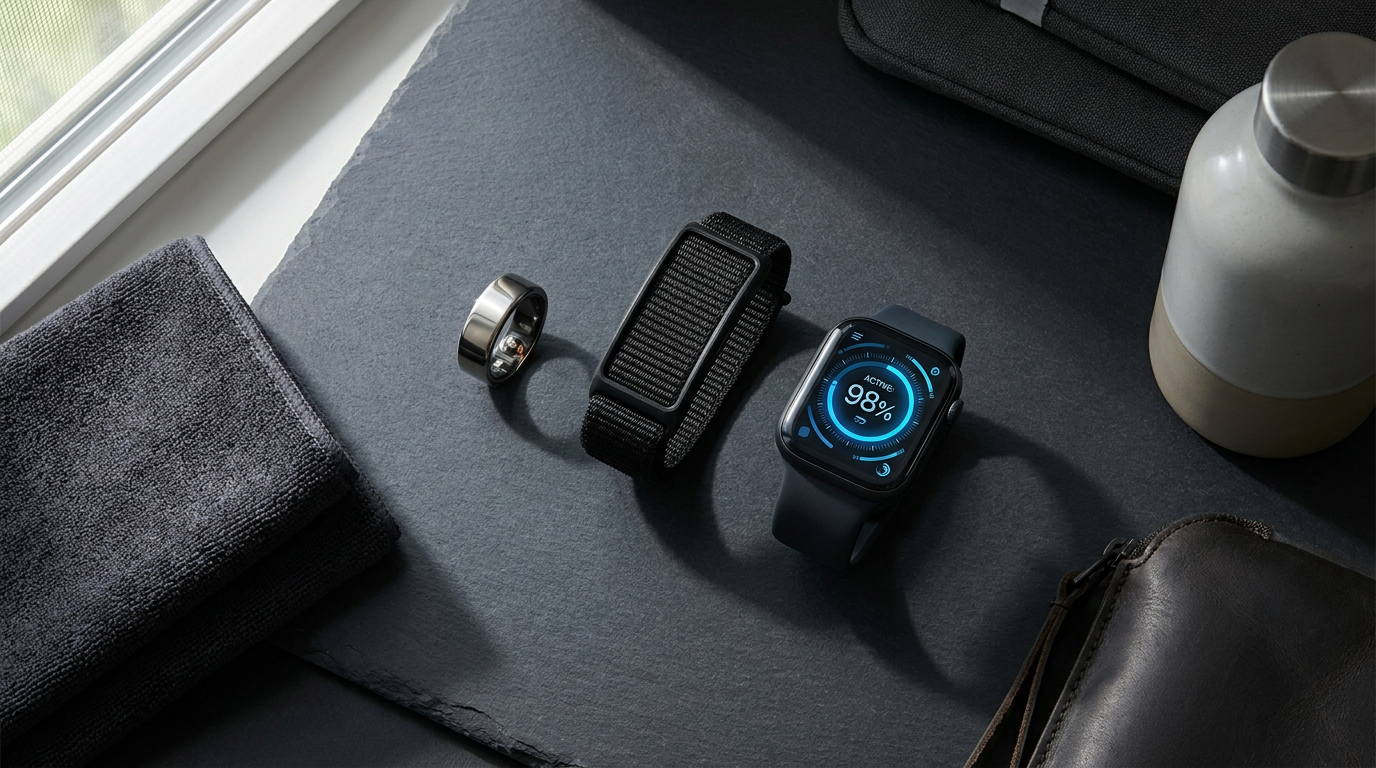
The era of simple step-counting is officially over. Today’s fitness trackers have evolved into sophisticated longevity tools that measure heart rate variability (HRV), blood oxygen saturation, and detailed sleep staging to predict illness and optimize daily recovery. But as the wearable market matures in 2026, a stark reality has emerged: no single device can do everything perfectly. The choice now requires a deliberate trade-off between form factor, battery life, and data philosophy. Consumers must decide whether they want a passive background sensor, an aggressive athletic coach, or a fully connected digital assistant strapped to their wrist.[1][6]
The core dilemma centers on how you want to interact with your personal health data. The Apple Watch Series 11, Oura Ring 4, and Whoop 5.0 represent three fundamentally different approaches to human telemetry. Buying the wrong one is an expensive mistake, not because the hardware is flawed, but because each was engineered for a completely different lifestyle. To find the right fit, users must evaluate the case for and against each device, examining the clinical evidence and identifying exactly when each system thrives or fails. This side-by-side analysis strips away the marketing jargon to quantify the real-world trade-offs of the industry's top three wearables.[6][9]
The Oura Ring 4 leads the market for passive, unobtrusive tracking. The case for the Oura rests on its form factor and sensor placement. Because blood vessels in the finger are closer to the surface than those on the wrist, the ring captures highly accurate pulse waves. It boasts an eight-day battery life, meaning users rarely have to take it off, which ensures consistent overnight data collection. For individuals who find wrist-worn devices uncomfortable during sleep, the Oura provides a frictionless alternative that simply blends into the background.[5][10]

However, the case against the Oura Ring becomes apparent the moment you step into a gym. It is a passive sensor, offering virtually no live workout interface or real-time heart rate zones during exercise. Furthermore, wearing a titanium ring while lifting heavy weights or gripping a barbell can be mechanically uncomfortable and risks scratching the device's finish. Users must also factor in the ongoing cost; beyond the initial $299 to $349 hardware price, Oura requires a $5.99 monthly subscription to unlock its detailed insights.[7][9]
The evidence supporting Oura’s accuracy is robust, particularly regarding sleep architecture. In independent validation studies, the Oura Ring has consistently demonstrated near-ECG-grade reliability for resting heart rate, hitting 99.9% accuracy. Research conducted at Brigham and Women's Hospital showed it had the highest sleep staging agreement with clinical polysomnography among consumer wearables. Ultimately, the Oura Ring fits well when your primary goals are sleep optimization, readiness tracking, and long-term health trends. It does not fit when you need a live training computer or refuse to pay a monthly subscription.[8][10]
The evidence supporting Oura’s accuracy is robust, particularly regarding sleep architecture.
For those who view their body as an engine that needs constant tuning, the Whoop 5.0 offers a completely different paradigm. The case for Whoop is built entirely around its strain-to-recovery algorithm. Unlike other trackers that simply present raw data, Whoop acts as an automated coach. It explicitly connects how hard you trained—measuring cardiovascular and muscular strain—with how well you recovered overnight. The 2026 model features a screenless design and a 14-day battery life, ensuring athletes remain focused on their physical output rather than smartwatch notifications.[2][6]

The case against Whoop centers on its rigid subscription model and occasional sensor inaccuracies during specific movements. Whoop does not sell its hardware; instead, users pay an annual membership of roughly $239. If you stop paying, the device becomes a useless piece of plastic. Additionally, some users report that the optical heart rate sensor struggles to maintain accuracy during erratic, high-intensity interval training or activities involving heavy wrist flexion, sometimes requiring a separate bicep band to capture reliable data.[4][9]
The evidence for Whoop highlights its utility in behavioral modification rather than pure diagnostic precision. While its nocturnal HRV tracking shows moderate to high agreement with ECG references, its true value lies in how it changes user habits. By quantifying the exact physiological cost of alcohol, late meals, or overtraining, it forces accountability. Whoop fits well when you are a data-driven athlete who wants explicit coaching on how hard to push each day. It does not fit when you want a one-time purchase, a screen to check the time, or basic step counting.[6][8]
Standing in stark contrast to the screenless bio-wearables is the Apple Watch Series 11. The case for Apple’s flagship device is its unmatched versatility and ecosystem integration. It is the gold standard for active workout tracking, offering a brilliant display for live heart rate zones, pacing, and GPS routing. Beyond fitness, it is a legitimate medical safety net, featuring FDA-cleared single-lead ECG recording, irregular rhythm notifications, and highly reliable crash and fall detection. There is also no mandatory health subscription required after purchasing the hardware.[1][5]

The case against the Apple Watch is entirely about battery life and distraction. Even with recent efficiency improvements, the Series 11 requires charging every 18 to 36 hours. This creates a logistical headache for sleep tracking; users must find a dedicated window to charge the device, often leading to gaps in overnight data. Furthermore, it is a heavy, glowing computer strapped to your wrist. For users trying to disconnect from digital noise and notification fatigue, the Apple Watch can feel counterproductive to mental recovery.[6][9]
The clinical evidence supporting the Apple Watch is unparalleled in the consumer space, particularly for cardiovascular anomaly detection. Its atrial fibrillation detection algorithms have been validated in massive human trials, making it a genuinely life-saving tool for certain populations. The Apple Watch fits well when you want a single device that handles active workouts, smartphone notifications, and medical-grade safety alerts. It does not fit when you prioritize seamless, uninterrupted sleep tracking, multi-day battery life, or a distraction-free environment.[8][10]

Ultimately, the 2026 wearable market proves that the best tracker is entirely subjective. If your focus is on longevity, passive data collection, and understanding your sleep architecture without wearing a screen to bed, the Oura Ring remains the premier choice. If you are actively training for an event and need an algorithmic coach to balance your daily exertion with your overnight recovery, Whoop justifies its ongoing subscription cost. But if you want a comprehensive digital assistant that tracks your runs, monitors your heart rhythm, and keeps you connected to the world, the Apple Watch stands alone.[6][9]
How we got here
2015
The original Apple Watch launches, primarily focused on basic activity rings and smartphone notifications.
2018
Oura releases its Gen 2 ring, shifting the wearable conversation toward passive sleep tracking and recovery.
2021
Whoop introduces the 4.0 band, cementing the subscription-based, screenless recovery coaching model.
2026
The latest generation of wearables solidifies a fragmented market where users must choose between form factor, battery life, and data philosophy.
Viewpoints in depth
Passive Trackers & Biohackers
Prioritize unobtrusive design and sleep staging accuracy without the distraction of a screen.
This camp argues that the most valuable health data is gathered overnight. They favor devices like the Oura Ring because the form factor does not interfere with sleep comfort or daytime aesthetics. For biohackers, the focus is on long-term physiological trends—such as baseline body temperature and heart rate variability—rather than live workout metrics. They view screens and notifications as active stressors that degrade the very recovery metrics they are trying to improve.
Performance Athletes
Value actionable coaching, balancing daily exertion with overnight recovery.
Athletes and rigorous trainers view wearables as dynamic coaching tools rather than passive diaries. This perspective, championed by Whoop users, relies heavily on the strain-to-recovery algorithm. They argue that knowing your sleep stages is useless unless the software explicitly tells you how much cardiovascular load you can handle the next day. They are willing to pay ongoing subscription fees for software that actively modifies their training behavior and prevents overtraining.
Connected Generalists
Want a single device that handles active workout tracking, medical alerts, and daily smartphone integration.
This group values utility and ecosystem integration above all else. They argue that a wearable should do more than just track health—it should actively assist in daily life. For connected generalists, the Apple Watch is the ultimate tool because it provides live pacing during a run, allows them to leave their phone at home, and offers FDA-cleared medical safety nets like fall detection and ECGs. They are willing to accept the trade-off of daily charging in exchange for maximum functionality.
What we don't know
- Whether upcoming software updates will allow passive trackers like Oura to provide better real-time workout metrics.
- How long the subscription-only model of devices like Whoop will remain viable as competitors offer similar features for free.
- If future Apple Watch iterations can significantly extend battery life without compromising their bright displays and processing power.
Key terms
- Heart Rate Variability (HRV)
- The measure of the variation in time between each heartbeat, used as a key indicator of physical recovery and nervous system readiness.
- Polysomnography (PSG)
- A comprehensive clinical sleep study used as the medical gold standard for measuring sleep stages and diagnosing sleep disorders.
- Strain-to-Recovery Algorithm
- A software model that calculates how much physical exertion a person can handle on a given day based on their overnight sleep and physiological recovery.
- SpO2
- An estimate of the amount of oxygen in the blood, often measured overnight to detect breathing interruptions or sleep apnea.
Frequently asked
Can I use the Oura Ring for live heart rate tracking during a workout?
While the Oura Ring 4 does track active heart rate, it lacks a screen for real-time feedback and is generally not recommended for heavy weightlifting due to the risk of scratching the titanium finish.
Does Whoop require a monthly subscription to work?
Yes. Whoop operates entirely on a subscription model (approximately $239 annually). The hardware is included, but if you stop paying the subscription, the device stops providing data.
Is the Apple Watch accurate for sleep tracking?
The Apple Watch Series 11 provides highly accurate sleep data, but its 18- to 36-hour battery life means users must find time to charge it during the day to wear it consistently overnight.
Which wearable is best for detecting irregular heart rhythms?
The Apple Watch is the only device among the three with FDA-cleared single-lead ECG recording and irregular rhythm notifications, making it the best choice for cardiovascular safety monitoring.
Sources
Source coverage
10 outlets
3 viewpoints surfaced










[1]PCMagConnected Generalists
The Best Fitness Trackers for 2026
Read on PCMag →[2]WareablePerformance Athletes
Best fitness trackers 2026: Top picks for sleep, longevity, and athletes
Read on Wareable →[3]Live Science
Best sleep trackers 2026: Monitor your rest and recovery
Read on Live Science →[4]Business Insider
The best fitness trackers in 2026, tested and reviewed
Read on Business Insider →[5]CNETConnected Generalists
Best Fitness Trackers for 2026
Read on CNET →[6]Sensai FitPerformance Athletes
Apple Watch vs Oura Ring vs WHOOP vs Garmin: Which Fitness Tracker Should You Actually Buy in 2026?
Read on Sensai Fit →[7]CudisConnected Generalists
Best Fitness Trackers in 2026: Ranked by Features, Battery, and Value
Read on Cudis →[8]The Longevity StorePassive Trackers & Biohackers
Oura Ring Gen 3 vs Whoop 4.0 vs Apple Watch Series 9 comparison
Read on The Longevity Store →[9]Ask VoraPassive Trackers & Biohackers
Fitbit Air vs WHOOP vs Oura vs Apple Watch: Which Wearable Fits You?
Read on Ask Vora →[10]Mattress MiraclePassive Trackers & Biohackers
Oura Ring 4 vs Whoop 5.0 vs Apple Watch: Sleep Tracking Compared
Read on Mattress Miracle →



Every angle. Every day.
Get guides stories with full source coverage and perspective breakdowns delivered to your inbox.