
How Synthetic E-Fuels Could Save the Combustion-Engine Supercar
As the 2035 European emissions ban approaches, high-performance automakers are turning to carbon-neutral synthetic fuels to keep the emotional appeal of internal combustion alive.
By Factlen Editorial Team
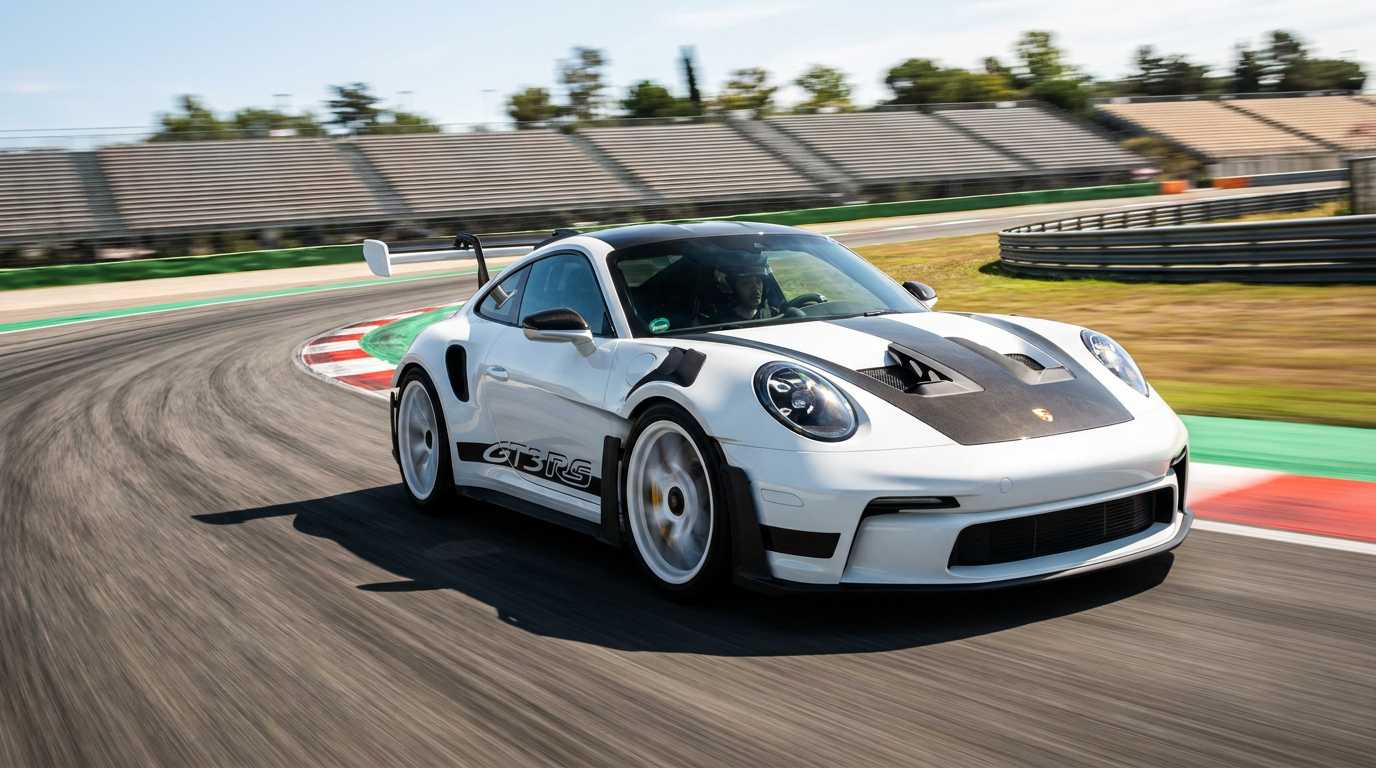
- Supercar Manufacturers
- Focused on preserving the emotional and mechanical heritage of internal combustion through carbon-neutral innovation.
- E-Fuel Advocates
- Believe synthetic fuels are a vital, drop-in solution for decarbonizing existing fleets and hard-to-electrify sectors.
- Efficiency Skeptics
- Argue that the high cost and energy losses of e-fuels make them an impractical distraction from direct electrification.
What's not represented
- · Mass-market consumers priced out of e-fuels
- · Renewable energy grid operators
Why this matters
For automotive enthusiasts, the transition to electric vehicles threatened to erase the visceral sound and mechanical engagement of traditional supercars. Synthetic fuels offer a carbon-neutral loophole that could preserve automotive heritage without compromising global climate goals.
Key points
- The European Union's 2035 zero-emission mandate includes a critical exemption for vehicles powered entirely by carbon-neutral synthetic fuels.
- E-fuels are manufactured by combining green hydrogen with carbon dioxide captured directly from the atmosphere, creating a net-neutral carbon cycle.
- Because they are chemically identical to traditional gasoline, e-fuels can be used in existing combustion engines without any mechanical modifications.
- High production costs and thermodynamic inefficiency mean e-fuels will likely remain a premium product for supercars and aviation, rather than a mass-market solution.
For over a century, the defining characteristic of the world's most coveted supercars has been the internal combustion engine. The shrieking wail of a naturally aspirated V12 or the mechanical symphony of a flat-six is central to the identity of brands like Ferrari, Lamborghini, and Porsche. However, the European Union's looming 2035 mandate, which requires all new passenger cars to produce zero tailpipe emissions, presented an existential threat to this legacy. The legislation was widely interpreted as a death knell for combustion, forcing the automotive industry into a rapid, wholesale pivot toward battery-electric vehicles. Yet, as the deadline approaches, a technological lifeline has emerged that could save the mechanical soul of the supercar without derailing global climate targets: synthetic e-fuels.[1]
The resistance to a purely electric future in the ultra-luxury sector is rooted in emotion rather than performance. Electric motors can easily out-accelerate traditional engines, but they lack the visceral engagement that buyers demand at the highest price points. Lamborghini CEO Stephan Winkelmann has openly noted that fully electric supercars currently lack the emotional aspects of their combustion-powered equivalents, which has translated into slower-than-expected sales for high-end EVs. While Lamborghini is bridging the gap with plug-in hybrids like the V12-powered Revuelto, the company is looking toward synthetic fuels as a long-term solution to keep combustion engines legally and environmentally viable.[2]
Across the Italian Motor Valley, Ferrari is adopting a similar dual-path strategy. While the Prancing Horse is developing its first fully electric vehicle—expected to feature synthesized audio to replicate engine noise—the company refuses to abandon its combustion heritage. Ferrari CEO Benedetto Vigna has explicitly stated that he believes synthetic e-fuels are the way forward for the brand, allowing them to continue producing combustion-engine models well beyond the 2030s. For these manufacturers, the survival of the internal combustion engine is not a rejection of environmental responsibility, but a desperate bid to preserve the unique mechanical artistry that defines their existence.[3]
To understand how synthetic e-fuels could thread this regulatory needle, one must look at their chemical composition. E-fuels, or electrofuels, are a specific category of synthetic liquid fuels designed to be entirely carbon-neutral over their lifecycle. Unlike conventional fossil fuels, which extract ancient carbon from the earth and release it into the atmosphere, e-fuels are manufactured using ingredients that are already above ground. The process relies on two primary inputs: hydrogen and carbon dioxide. When produced using renewable energy, the resulting liquid mimics the exact chemical properties of gasoline, but without adding any new greenhouse gases to the global carbon cycle.[4][5]

The manufacturing mechanism begins with the production of green hydrogen. This is achieved through a highly energy-intensive process called electrolysis, where renewable electricity—sourced from wind, solar, or hydroelectric power—is used to split water molecules into pure hydrogen and oxygen. Because the electricity comes from renewable sources, the hydrogen generation process is entirely free of direct greenhouse gas emissions. This green hydrogen forms the foundational energy carrier for the synthetic fuel, but it must be combined with carbon to create a liquid hydrocarbon that can be burned in a traditional engine.[4][8]
The second crucial step is sourcing the carbon dioxide. To ensure the fuel is genuinely net-neutral, the CO2 must be extracted directly from the atmosphere or captured from biological sources. This is typically achieved through Direct Carbon Capture (DCC) technology, which uses massive fans to suck ambient air through specialized membranes or liquid solvents that trap the CO2 molecules. By pulling carbon dioxide out of the air to make the fuel, the process effectively pre-offsets the emissions that will eventually be released when the fuel is burned in a car's engine.[5]
To ensure the fuel is genuinely net-neutral, the CO2 must be extracted directly from the atmosphere or captured from biological sources.
Once the green hydrogen and captured carbon dioxide are secured, they are brought together in a synthesis facility. Subjected to high pressures and temperatures in the presence of a chemical catalyst—often utilizing the century-old Fischer-Tropsch process or methanol synthesis—the gases bond to form long-chain liquid hydrocarbons. These raw synthetic hydrocarbons are then refined into specific fuel grades, including synthetic gasoline, diesel, or even aviation kerosene. The end result is a clear, energy-dense liquid that is chemically indistinguishable from high-octane unleaded fuel.[4]
The most significant advantage of synthetic e-fuels is their drop-in compatibility. Because the chemical structure mirrors that of fossil fuels, e-fuels can be pumped directly into existing internal combustion engines without requiring any mechanical modifications. This means a brand-new Ferrari or a vintage 1960s Porsche 911 can run on e-fuels flawlessly. Furthermore, the global infrastructure of pipelines, tanker trucks, and standard petrol stations can distribute e-fuels without the need for the multi-trillion-dollar infrastructure overhaul required by the battery-electric transition.[4][6]

Porsche has been the automotive industry's most aggressive pioneer in proving this concept at scale. The German automaker partnered with international energy companies to build the Haru Oni pilot plant in Punta Arenas, Chile. This location was chosen for its near-constant, high-speed winds, which allow wind turbines to operate at maximum efficiency to power the energy-hungry electrolysis and carbon capture processes. Porsche's investment is a calculated bet that scaling up production will eventually drive down costs, providing a lifeline for its iconic 911 sports car and its massive global fleet of classic vehicles.[1][7]
The automotive industry's lobbying efforts have already yielded significant legislative victories. Recognizing the potential of this technology, the European Commission revised its strict 2035 zero-emission mandate to include a specific exemption for vehicles running exclusively on carbon-neutral synthetic fuels. This compromise provides crucial wriggle room for low-volume, high-performance manufacturers to continue developing combustion engines, provided they can implement technological safeguards to ensure the cars cannot be fueled by traditional fossil gasoline.[1][7]
Despite the optimism from supercar manufacturers, e-fuels face severe criticism regarding their overall energy efficiency. The multi-step process of generating renewable electricity, using it to split water, capturing carbon, synthesizing the fuel, and then burning it in an inherently inefficient combustion engine results in massive energy losses. Critics point out that it is vastly more efficient to take that same renewable electricity and feed it directly into the battery of an electric vehicle, which converts over 80 percent of its stored energy into forward motion, compared to the roughly 30 percent efficiency of a combustion engine.[6][8]
This thermodynamic inefficiency translates directly into exorbitant costs. According to data from the International Council on Clean Transportation (ICCT), the production cost of the e-fuels required to drive a combustion-engine car 100 kilometers is nearly ten times higher than the cost of the renewable electricity needed to drive a battery-electric vehicle the same distance. At current production scales, a single gallon of synthetic fuel can cost upwards of forty dollars, making it entirely unfeasible for the average commuter driving a mass-market sedan.[6]

Furthermore, the automotive sector will have to compete for a severely limited supply of e-fuels. Heavy industries that are exceptionally difficult to electrify—such as long-haul maritime shipping and commercial aviation—are desperate for high-density liquid fuels to meet their own decarbonization targets. Policymakers and environmental analysts argue that the limited global capacity for green hydrogen and e-fuel production should be prioritized for airplanes and cargo ships, rather than being burned in luxury sports cars when battery-electric alternatives exist.[5][8]
Ultimately, synthetic e-fuels are unlikely to save the internal combustion engine for the masses. The daily commute belongs to the battery-electric vehicle. However, for the rarefied world of supercars, e-fuels offer a bespoke, premium solution. Just as mechanical watches survived the invention of the digital quartz movement by elevating themselves to luxury art forms, the combustion engine is poised to become a niche, high-end indulgence. Thanks to synthetic fuels, the visceral roar of a V12 engine will continue to echo on racetracks and mountain passes, completely decoupled from the carbon emissions of the past.

How we got here
2022
Porsche opens the Haru Oni e-fuel pilot plant in Punta Arenas, Chile.
March 2023
The European Union agrees to exempt e-fuel vehicles from the 2035 combustion engine ban.
May 2024
Lamborghini CEO publicly states that fully electric supercars currently lack the emotional appeal required by buyers.
2026
Automakers accelerate dual-strategy development, balancing EV platforms with e-fuel combustion research.
Viewpoints in depth
Supercar Manufacturers
Argue that e-fuels are essential to preserving brand identity and mechanical emotion.
For brands like Ferrari, Lamborghini, and Porsche, the internal combustion engine is not just a propulsion method; it is the core of their brand identity. These manufacturers argue that the visceral sound and mechanical engagement of a high-revving engine cannot be replicated by electric motors. They view the massive R&D investment in synthetic e-fuels as a necessary expense to keep their heritage alive. By achieving carbon neutrality through the fuel itself, they believe they can satisfy environmental regulations without sacrificing the emotional connection that justifies their vehicles' premium price tags.
Environmental Regulators
Demand strict carbon neutrality but are willing to grant legislative exemptions for net-zero technologies.
Regulators, particularly within the European Union, are primarily focused on eliminating new greenhouse gas emissions by 2035. While their initial legislation heavily favored battery-electric vehicles, they have shown a willingness to remain technology-neutral, provided the alternative genuinely achieves net-zero emissions. The concession to allow e-fuels represents a pragmatic compromise, acknowledging that as long as the carbon cycle is perfectly balanced—and strict safeguards prevent the use of fossil fuels in exempted vehicles—the ultimate goal of climate protection is still met.
Clean Energy Analysts
Emphasize the thermodynamic inefficiency of e-fuels compared to direct electrification.
Energy analysts and environmental watchdogs frequently point out the sheer inefficiency of the e-fuel production cycle. They argue that using renewable electricity to create green hydrogen, capturing carbon, synthesizing a liquid fuel, and then burning it in an engine wastes the vast majority of the original energy. From this perspective, the limited global supply of renewable electricity and green hydrogen should be strictly reserved for sectors that have no battery-electric alternative, such as aviation and maritime shipping, rather than being squandered on luxury passenger cars.
What we don't know
- Whether the global production capacity of green hydrogen can scale fast enough to meet the simultaneous demands of the automotive, aviation, and shipping industries.
- How regulators will enforce the requirement that exempted combustion vehicles run exclusively on synthetic fuels rather than cheaper fossil gasoline.
Key terms
- Synthetic E-Fuels
- Liquid hydrocarbon fuels manufactured using renewable electricity, green hydrogen, and captured carbon dioxide.
- Direct Carbon Capture (DCC)
- Technology that extracts carbon dioxide directly from the ambient air to be used as a raw material.
- Electrolysis
- The process of using electricity to split water into hydrogen and oxygen.
- Fischer-Tropsch Process
- A chemical reaction that converts a mixture of carbon monoxide and hydrogen into liquid hydrocarbons.
- Net-Zero Emissions
- A state where the greenhouse gases released into the atmosphere are perfectly balanced by the amount removed.
Frequently asked
Can I use e-fuels in my current gas-powered car?
Yes. Synthetic e-fuels are chemically identical to traditional fossil fuels and act as a 'drop-in' replacement, requiring no engine modifications.
Are e-fuels completely pollution-free?
No. Burning e-fuels still produces tailpipe emissions, but because the fuel is made from carbon captured from the air, the overall carbon cycle is net-neutral.
Will e-fuels replace electric vehicles?
It is highly unlikely. Due to their high production costs and energy inefficiency, e-fuels will likely be reserved for aviation, shipping, and high-end supercars, while daily commuting will rely on battery-electric vehicles.
Sources
Source coverage
8 outlets
3 viewpoints surfaced








[1]Automotive AddictionSupercar Manufacturers
The 2035 EU Car Ban and the Future of Combustion
Read on Automotive Addiction →[2]CarScoopsSupercar Manufacturers
Lamborghini CEO Says It's Too Early For Fully Electric Supercars
Read on CarScoops →[3]CarsGuideSupercar Manufacturers
Ferrari's electric and e-fuel future
Read on CarsGuide →[4]Sustain FuelsE-Fuel Advocates
What are e-fuels and how are they made?
Read on Sustain Fuels →[5]Horse PowertrainEfficiency Skeptics
What are e-fuels and synthetic fuels?
Read on Horse Powertrain →[6]Autovista GroupEfficiency Skeptics
Do we want to save the planet or the internal-combustion engine?
Read on Autovista Group →[7]EV CentralEfficiency Skeptics
European U-turn on 2035 combustion ban
Read on EV Central →[8]MHIE-Fuel Advocates
What are e-fuels and how are they made?
Read on MHI →
Every angle. Every day.
Get automotive stories with full source coverage and perspective breakdowns delivered to your inbox.