
How the US-Iran Peace Deal is Reshaping Global Oil Markets and Shipping
A 14-point interim agreement has reopened the Strait of Hormuz and sent oil prices tumbling, but the 60-day clock leaves long-term economic stability in question.
By Factlen Editorial Team
- Energy Markets & Shippers
- Relief over the immediate resumption of trade is tempered by anxiety over the 60-day deadline.
- US Administration
- The deal is a necessary step to avert a global economic depression and restore energy flows.
- Iranian Leadership
- The agreement codifies Iran's battlefield resilience and secures vital economic relief.
- US Foreign Policy Hawks
- The agreement surrenders vital economic leverage before securing binding nuclear concessions.
What's not represented
- · European energy consumers
- · Regional Gulf states (e.g., Oman, Saudi Arabia)
Why this matters
The reopening of the Strait of Hormuz instantly removes the largest bottleneck in global energy supply, pulling oil prices down from recession-inducing highs. However, the temporary 60-day nature of the agreement means the threat of future shipping tolls and renewed inflation remains highly active.
Key points
- The US and Iran signed a 14-point MoU to pause their 110-day conflict.
- The Strait of Hormuz has reopened, with Iran guaranteeing 60 days of toll-free passage.
- Global oil prices dropped below $80 a barrel following the announcement.
- The US lifted its naval blockade and granted a 60-day waiver for Iranian oil exports.
- Iranian officials indicated they plan to charge transit fees after the 60-day window expires.
- The agreement proposes a $300 billion economic rehabilitation plan for Iran.
The 110-day conflict between the United States and Iran has reached a fragile pause, bringing immediate, albeit temporary, relief to the global economy. On Wednesday, the two nations signed a 14-point Memorandum of Understanding (MoU) that halts military operations and begins the unwinding of the largest energy supply disruption in modern history.[4][6]
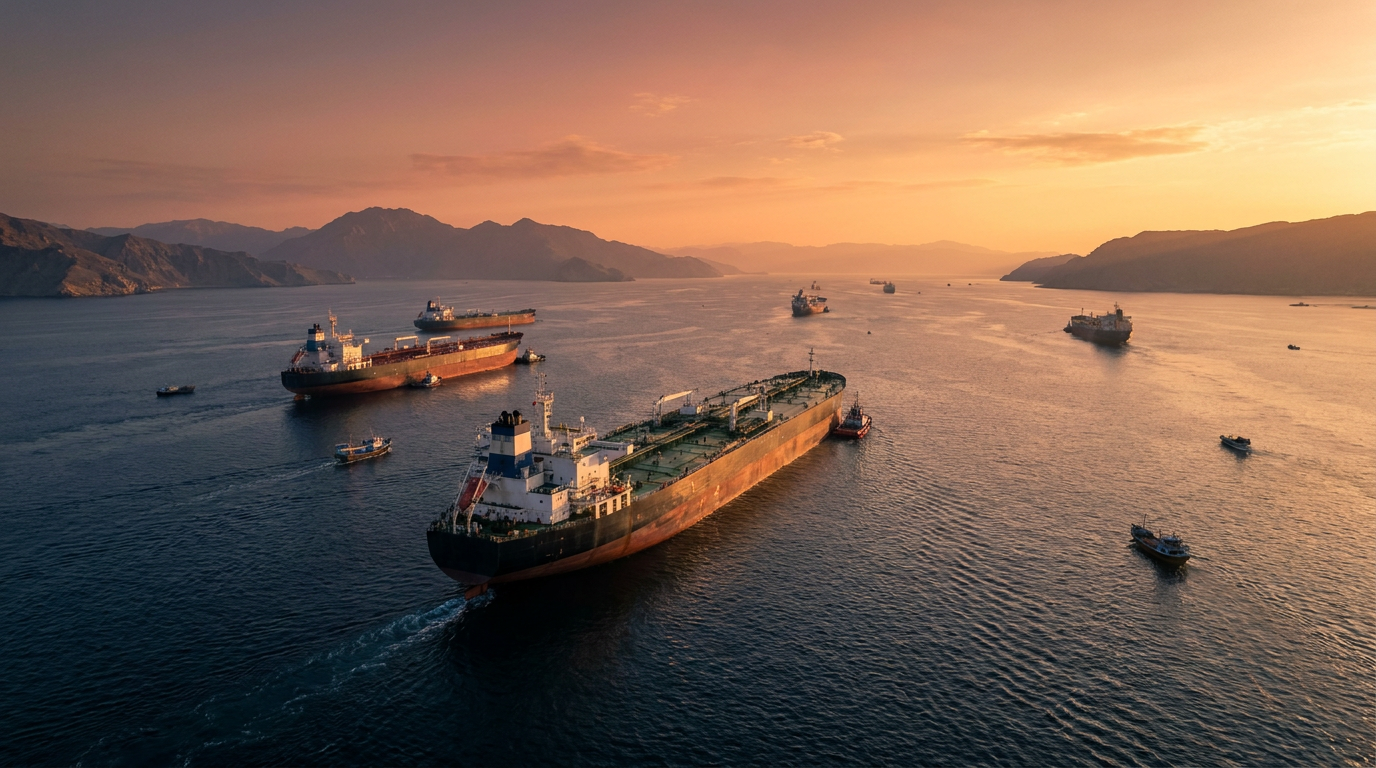
The economic centerpiece of the interim agreement is the reopening of the Strait of Hormuz. For nearly four months, the vital maritime chokepoint—which typically handles a fifth of the world's seaborne oil—was effectively closed by the conflict and a US naval blockade.[5][7]
The closure had sent shockwaves through global energy markets, driving Brent crude prices to a peak of $120 a barrel in April and raising fears of a global recession. Now, under the terms of the MoU, the US has lifted its blockade, and Iran has committed to allowing toll-free passage for commercial vessels for the next 60 days.[4][5]
The immediate market reaction has been a collective exhale. Oil prices tumbled below $80 a barrel in early trading on Thursday, returning to levels last seen before the war began on February 28.[5][6]

Shipping data confirms that the waterway is already coming back to life. US Vice President JD Vance announced that 12.5 million barrels of oil flowed through the strait on Wednesday night alone, signaling a rapid resumption of trade.[7]
Maritime analytics firms reported that at least a dozen tankers, including Saudi crude carriers and Qatari liquefied natural gas (LNG) vessels, have transited the strait in recent days. This marks a stark contrast to the height of the war, when daily traffic plummeted by more than 90 percent, dropping from an average of 130 ships to roughly 10.[10]
Beyond the physical movement of ships, the MoU fundamentally alters the sanctions landscape, at least for the short term. The United States has agreed to issue waivers allowing the export of Iranian crude oil, petroleum products, and derivatives for the duration of the 60-day negotiation period.[4][9]
For the maritime and insurance industries, this temporary authorization creates a narrow window for tanker operators and oil traders to legally lift Iranian crude. However, industry analysts warn that stakeholders must proceed with extreme caution, given the lingering legal risks and the potential for the political climate to shift rapidly.[9]

For the maritime and insurance industries, this temporary authorization creates a narrow window for tanker operators and oil traders to legally lift Iranian crude.
The agreement also includes a highly ambitious, and deeply controversial, economic rehabilitation component. The text outlines a commitment to develop a $300 billion plan for the reconstruction and economic development of Iran, to be undertaken alongside regional partners.[4][8]
The mechanics of this massive funding initiative remain entirely undefined. It is unclear where the capital will originate, how it will be distributed, and what specific conditions will be attached to its disbursement during the final negotiations.[8][9]
While the immediate resumption of trade is a victory for energy importers, the MoU is explicitly an interim measure. The 60-day clock is ticking toward a formal negotiation period in Geneva, where the most intractable issues—including Iran's nuclear program and its ballistic missile capabilities—must be addressed.[4][8]
The temporary nature of the economic concessions has sparked fierce debate in both Washington and Tehran. Former US President Donald Trump, who signed the deal, claimed the agreement was necessary to prevent the conflict from triggering a "worldwide depression."[2]
Conversely, US foreign policy hawks and several lawmakers have sharply criticized the MoU, arguing that lifting the blockade and granting oil waivers surrenders vital economic leverage. Critics contend that the deal allows Tehran to immediately refill its state coffers before any binding constraints are placed on its nuclear ambitions.[4][8]

On the Iranian side, officials are framing the agreement as a strategic victory that codifies their battlefield resilience and secures necessary economic relief without sacrificing sovereignty.[8]
The most significant point of future friction lies in the administration of the Strait of Hormuz itself. While the MoU guarantees 60 days of free passage, Iranian officials have made it clear that they view this as a temporary concession.[4]
Iran's parliamentary speaker, Mohammad Bagher Ghalibaf, stated publicly that the strait "will not return to pre-war conditions" and asserted that Iran intends to charge commercial vessels a transit fee once the 60-day grace period expires.[4][6]
Such a move would fundamentally alter the economics of global shipping and is likely to face intense opposition from the US and Gulf states, who have historically rejected any long-term arrangement that monetizes access to international waters.[4]

How we got here
Feb 28, 2026
The US-Iran war begins, effectively closing the Strait of Hormuz to commercial shipping.
April 2026
Global oil prices peak at $120 a barrel amid the severe disruption to energy supplies.
June 17, 2026
The US and Iran digitally sign a 14-point Memorandum of Understanding to halt hostilities.
June 18, 2026
The US lifts its naval blockade, and commercial tankers resume transit through the Strait of Hormuz.
August 2026
The 60-day toll-free passage window expires, marking the deadline for a final comprehensive agreement.
Viewpoints in depth
The US Administration's View
The deal is a necessary step to avert a global economic depression and restore energy flows.
Administration officials emphasize the immediate economic benefits of the MoU, pointing to the rapid resumption of oil shipments and the stabilization of global markets. By lifting the naval blockade, they argue the US has acted in good faith to de-escalate a conflict that was threatening to trigger a worldwide recession, while maintaining the option to re-impose pressure if Iran fails to meet its commitments during the 60-day window.
The Iranian Leadership's View
The agreement codifies Iran's battlefield resilience and secures vital economic relief.
Iranian officials and state-aligned media are framing the MoU as a strategic victory. They highlight the lifting of the US naval blockade and the 60-day oil export waivers as essential economic lifelines achieved without sacrificing sovereignty. Crucially, leadership maintains that the Strait of Hormuz remains under Iranian jurisdiction, signaling their intent to eventually monetize the waterway once the temporary toll-free period expires.
Energy Markets & Shippers
Relief over the immediate resumption of trade is tempered by anxiety over the 60-day deadline.
For tanker operators and oil traders, the MoU offers a critical, albeit narrow, window to resume operations in one of the world's most important transit routes. While the immediate drop in Brent crude prices reflects market optimism, industry analysts warn that the underlying geopolitical risks remain unresolved. Shippers are particularly concerned about Iran's stated intention to charge transit fees after 60 days, which could fundamentally alter the economics of global maritime trade.
US Foreign Policy Hawks
The agreement surrenders vital economic leverage before securing binding nuclear concessions.
Critics of the deal, including several US lawmakers, argue that granting oil export waivers and lifting the blockade amounts to an unearned concession. They contend that allowing Iran to immediately refill its state coffers removes the primary economic pressure required to force Tehran into meaningful compromises on its nuclear program and ballistic missile capabilities during the upcoming Geneva negotiations.
What we don't know
- Whether Iran will actually implement transit tolls on commercial shipping after the 60-day grace period expires.
- How the proposed $300 billion economic rehabilitation plan for Iran will be funded or structured.
- Whether the upcoming Geneva negotiations can successfully resolve the core disputes over Iran's nuclear program.
Key terms
- Memorandum of Understanding (MoU)
- A preliminary, non-binding agreement outlining the framework and intent for a future, more comprehensive treaty.
- Strait of Hormuz
- A strategic maritime chokepoint between the Persian Gulf and the Gulf of Oman, essential for global energy transport.
- Brent Crude
- A major global benchmark for oil prices, used to price two-thirds of the world's internationally traded crude oil.
- Naval Blockade
- The use of military ships to cut off a specific area, preventing the entry or exit of maritime traffic and trade.
- Sanctions Waiver
- A temporary exemption granted by a government allowing specific prohibited economic activities to take place without penalty.
Frequently asked
What is the Strait of Hormuz and why does it matter?
It is a narrow waterway connecting the Persian Gulf to the open ocean. It is a critical chokepoint that handles approximately 20% of the world's seaborne oil supply.
Does this deal permanently end the US-Iran war?
No. The 14-point Memorandum of Understanding is an interim agreement that establishes a 60-day ceasefire and negotiation period to reach a final treaty.
Will ships have to pay to use the Strait of Hormuz?
The MoU guarantees toll-free passage for 60 days. However, Iranian officials have stated they intend to charge transit fees once that period expires.
What happens to US sanctions on Iran?
The US has lifted its naval blockade and issued temporary waivers allowing Iran to export crude oil and petroleum products for the next 60 days.
Sources
Source coverage
10 outlets
4 viewpoints surfaced








[1]CNBCUS Administration
U.S.-Iran deal in photos: ships in the Strait of Hormuz, daily life in Tehran
Read on CNBC →Trump claims Iran deal is 'unconditional surrender,' says his power has 'no limits': Axios
Read on CNBC →[3]BloombergUS Foreign Policy Hawks
Gold Set for Weekly Loss as Hawkish Fed Outweighs Peace Deal
Read on Bloomberg →[4]The GuardianUS Foreign Policy Hawks
US-Iran deal takeaways: reopening the strait of Hormuz, waived oil sanctions and Lebanon
Read on The Guardian →[5]Yahoo FinanceEnergy Markets & Shippers
Oil prices drop further below 80 dollars a barrel as US-Iran peace deal signed
Read on Yahoo Finance →[6]ICISEnergy Markets & Shippers
Oil prices fall after US, Iran sign interim peace agreement
Read on ICIS →[7]The HinduUS Foreign Policy Hawks
Oil slips again as U.S., Iran sign peace deal
Read on The Hindu →[8]Institute for the Study of WarIranian Leadership
Iran Update, June 16, 2026
Read on Institute for the Study of War →[9]Holland & KnightEnergy Markets & Shippers
U.S.-Iran Interim Agreement: Implications for the Maritime Industry and Oil Trade
Read on Holland & Knight →[10]Yeni ŞafakEnergy Markets & Shippers
Strait of Hormuz reopening gradually as tanker traffic resumes after US-Iran deal
Read on Yeni Şafak →

Every angle. Every day.
Get business stories with full source coverage and perspective breakdowns delivered to your inbox.