
The Science of Zone 2: Why Cyclists Are Going Slow to Get Faster
Backed by cellular physiology and elite training data, the 'Zone 2' endurance method has revolutionized amateur cycling by proving that low-intensity volume is the key to high-performance speed.
By Factlen Editorial Team
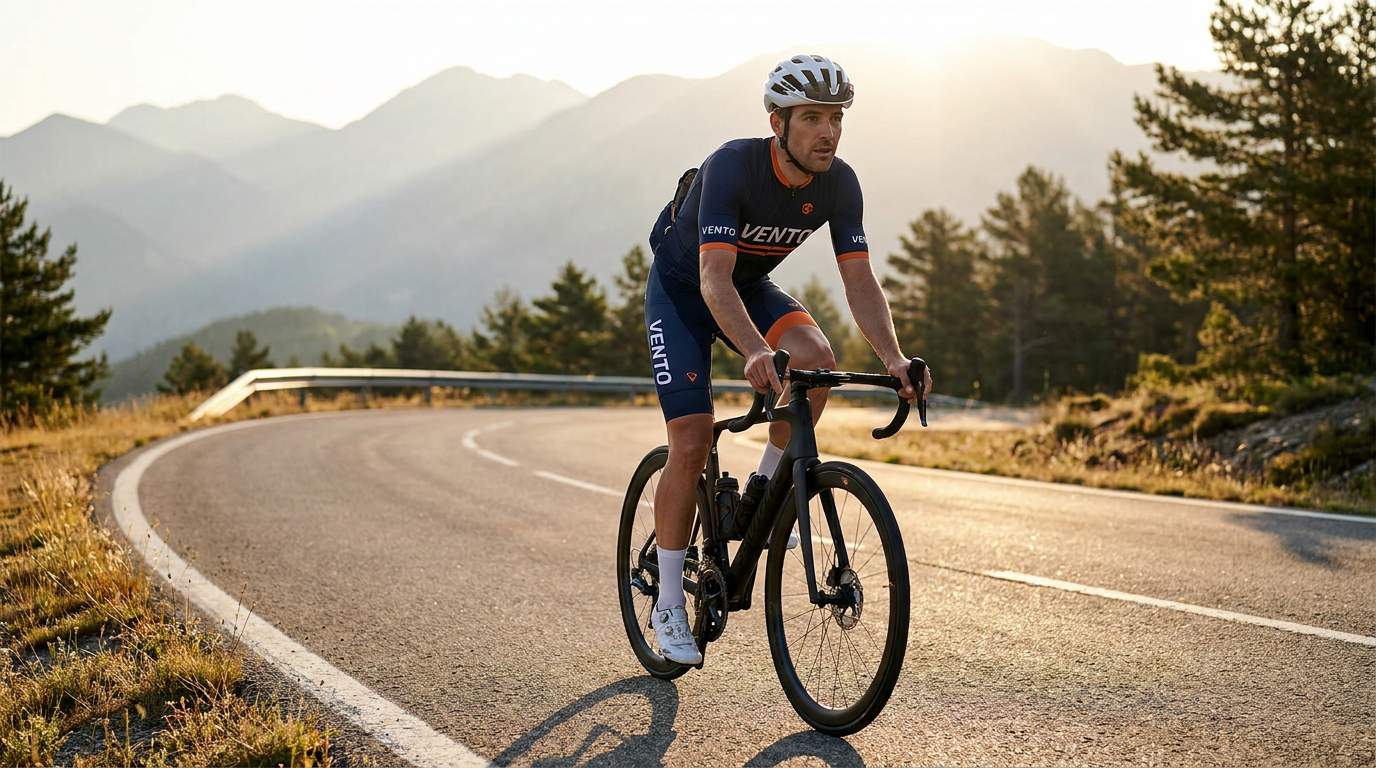
- Exercise Physiologists
- Focus on the cellular adaptations of low-intensity training, specifically mitochondrial density and fat oxidation.
- Endurance Coaches
- Emphasize the practical application of the 80/20 polarized model for athletes balancing volume and intensity.
- Cycling Media & Amateurs
- Explore how elite training concepts trickle down to recreational riders and the challenges of execution.
What's not represented
- · Recreational riders without power meters
- · Sprinters and track cyclists who rely on anaerobic systems
Why this matters
Understanding how to build an aerobic base doesn't just improve race times—it prevents overtraining, reduces injury risk, and offers profound cardiovascular health benefits for anyone engaging in endurance sports.
Key points
- Zone 2 training involves exercising at a low intensity (55-75% of FTP) where the body primarily burns fat for fuel.
- Elite endurance athletes spend roughly 80 percent of their training volume in this low-intensity zone.
- Training in Zone 2 increases mitochondrial density and capillary networks, building a massive aerobic base.
- The most common amateur mistake is riding too hard on easy days, which accumulates fatigue without optimal aerobic benefits.
- The "talk test" is a reliable, equipment-free way to ensure you are staying within the correct physiological boundaries.
The paradox of endurance sports is that to get faster, you often have to spend the vast majority of your time going slow. In 2026, the cycling world has fully embraced this counterintuitive truth, moving away from the "no pain, no gain" mentality that dominated amateur training for decades. For years, recreational riders measured the success of a workout by how exhausted they felt at the end of it, treating every group ride or solo spin as a race to the finish line. Today, that paradigm has shifted entirely. Driven by a deeper understanding of human physiology and the democratization of elite training data, cyclists are learning that true speed is built on a foundation of restraint. The modern training philosophy prioritizes metabolic efficiency over sheer suffering, fundamentally changing how athletes approach their time in the saddle.[7]
This low-intensity approach is universally known as Zone 2 training. Once the closely guarded secret of the professional peloton, it has trickled down to weekend warriors and recreational riders, fueled by the proliferation of affordable power meters, smart trainers, and continuous lactate monitors. Professional cyclists have long used this specific intensity to build their aerobic engines, laying the groundwork for the explosive power outputs required to win Grand Tour stages. Now, amateur riders are adopting the exact same protocols, realizing that the physiological rules governing a Tour de France champion apply equally to someone training for their first century ride. The accessibility of real-time biometric data means that anyone with a modern bike computer can precisely monitor their effort, ensuring they stay within the narrow physiological band that defines this critical training zone.[2][7]
But what exactly is Zone 2? Physiologically, it is the exercise intensity at which the body maximizes fat oxidation while keeping blood lactate levels stable and low. During exercise, the body relies on a mix of fat and carbohydrates (glycogen) for fuel. At lower intensities, fat is the primary energy source. As the effort increases, the body shifts toward burning glycogen, a process that produces lactate as a byproduct. Zone 2 sits just below the first lactate threshold (LT1), meaning the muscles are working hard enough to stimulate adaptation but not so hard that lactate begins to accumulate significantly in the bloodstream. Typically, this means keeping blood lactate concentrations under two millimoles per liter, a state of metabolic equilibrium that a well-trained athlete can sustain for hours without experiencing systemic fatigue.[5][6]
In practical terms, defining this zone requires establishing a baseline metric. For cyclists using power meters, Zone 2 generally sits between 55 and 75 percent of their Functional Threshold Power (FTP)—the maximum average wattage a rider can sustain for one hour. For those relying on heart rate, it corresponds to roughly 60 to 70 percent of their maximum heart rate. However, the most accessible and universally applicable metric is the "talk test." A rider in genuine Zone 2 should be able to hold a full, unbroken conversation without gasping for air or needing to pause mid-sentence. If a cyclist has to take a deep breath to finish a thought, they have likely crossed the threshold into Zone 3, shifting their metabolic engine away from fat oxidation and toward glycogen dependency.[1][3]

The cellular mechanics behind this specific pacing are profound and form the bedrock of endurance physiology. Training in this precise band stimulates mitochondrial biogenesis—the creation of new mitochondria within the slow-twitch muscle fibers. Mitochondria are the microscopic powerhouses of the cell, responsible for converting fat and oxygen into adenosine triphosphate (ATP), the usable energy currency of the body. By spending hours in Zone 2, a cyclist forces their body to build more of these cellular power plants, increasing their overall density and efficiency. This adaptation does not happen effectively at higher intensities, making the slow, steady burn of Zone 2 uniquely valuable for altering the fundamental architecture of the muscle tissue.[1][4]
By increasing mitochondrial density, the body becomes highly efficient at burning fat rather than relying on its limited glycogen stores. This metabolic adaptation is crucial for long-distance endurance events. The human body can only store roughly 2,000 calories of glycogen in the muscles and liver, an amount that can be easily depleted during a hard two-hour ride, leading to the dreaded "bonk." In contrast, even a very lean athlete carries tens of thousands of calories of stored body fat. By training the body to preferentially oxidize fat at higher and higher power outputs, a cyclist preserves their precious glycogen reserves for the moments that truly matter—steep climbs, sprint finishes, or bridging a gap to a breakaway group.[2][5]
Furthermore, sustained Zone 2 efforts promote extensive capillary development. Capillaries are the tiny blood vessels that weave through muscle tissue, delivering oxygenated blood and carrying away metabolic waste products. Low-intensity endurance training stimulates the growth of new capillary networks around the slow-twitch muscle fibers. A denser capillary network means that more oxygen can be delivered to the working muscles with every heartbeat, and fatigue-inducing byproducts can be cleared much faster. This enhanced plumbing system effectively builds a massive aerobic engine, raising the rider's overall stamina and ensuring that the muscles remain oxygenated even when the intensity eventually ramps up during a race or a challenging group ride.[1]
The scientific consensus behind this approach, championed by prominent exercise physiologists like Dr. Stephen Seiler and Dr. Iñigo San-Millán, points to a "polarized" training model. By analyzing the training logs of elite endurance athletes across multiple disciplines—including cycling, rowing, cross-country skiing, and running—researchers discovered a remarkably consistent pattern. World-class competitors consistently spend about 80 percent of their total training volume in this low-intensity, aerobic zone. They do not spend their days constantly pushing themselves to the limit; instead, they treat the vast majority of their workouts as foundational aerobic maintenance, prioritizing volume and metabolic efficiency over peak power output.[1][4]
The scientific consensus behind this approach, championed by prominent exercise physiologists like Dr.
The remaining 20 percent of the polarized training model is reserved for extremely high-intensity interval work, typically falling into Zones 4 and 5. This high-intensity work is designed to sharpen top-end speed, increase VO2 max, and raise the athlete's absolute performance ceiling. However, these grueling sessions generate massive amounts of systemic fatigue and require significant recovery time. The genius of the 80/20 model is that the massive aerobic base built during the 80 percent of Zone 2 riding allows the athlete to recover faster and execute the 20 percent of high-intensity work with maximum quality. Without the aerobic foundation, the high-intensity intervals simply break the athlete down rather than building them up.[2][5]

Despite the clear science, the most common mistake amateur cyclists make is falling into the "black hole" of training—riding too hard on their easy days and, consequently, being too fatigued to ride hard enough on their hard days. Without the discipline to hold back, recreational riders naturally gravitate toward a moderate, comfortably hard pace. It feels like a "real" workout because it induces a sweat and leaves the legs feeling heavy, satisfying the psychological desire to work hard. However, this middle-ground intensity fails to optimally trigger the mitochondrial adaptations of Zone 2, while simultaneously generating too much fatigue to allow for proper recovery.[1][3]
Driven by ego, peer pressure on group rides, or the misconception that a workout only counts if it hurts, many cyclists default to Zone 3, often referred to as "sweet spot" or tempo riding. While sweet spot training has its place in specific race-prep scenarios, relying on it as a daily baseline accumulates significant systemic fatigue. The rider is burning through glycogen, elevating their blood lactate levels, and stressing their central nervous system, all without reaping the specific cellular benefits of pure aerobic base building. They are working harder, but they are not necessarily getting faster, effectively capping their long-term potential.[1]
As a result of this chronic mid-intensity fatigue, when it comes time for the crucial 20 percent of high-intensity interval work, the rider is simply too tired to hit the necessary power targets. Their VO2 max intervals fall flat, their sprints lack snap, and their overall training effect is blunted. By failing to respect the boundaries of Zone 2, they compromise the very workouts that are supposed to make them faster. This cycle of chronic fatigue and underperformance is the primary reason so many amateur cyclists hit a performance plateau, unable to improve their FTP despite putting in hours of effort every week.[1][2]
Despite the widespread acceptance of Zone 2 as the foundation of endurance sports, debates have emerged regarding its precise application. As the concept gained mainstream traction and coaching software became more sophisticated, some platforms began slicing the broad 55-75 percent FTP range into micro-categories, such as Zone 2a (the lower end) and Zone 2b (the higher end). This hyper-segmentation reflects a desire for absolute precision in a data-obsessed cycling culture, where riders want to know exactly where they should peg their power meter to maximize every minute of their limited training time.[3]

Proponents of these subzones argue that riding at the high end of Zone 2 yields slightly different adaptations than the low end, particularly for time-crunched athletes. If a rider only has 60 minutes to train, pushing the pace to 70 percent of their FTP allows them to burn more kilojoules and accumulate a higher Training Stress Score (TSS) without technically crossing their lactate threshold. For athletes trying to balance full-time jobs with competitive racing, this high-Zone 2 approach is seen as a way to squeeze the maximum possible aerobic stimulus out of a compressed schedule.[3]
However, many sports scientists and veteran coaches push back against this overcomplication. They argue that the physiological boundaries of fat oxidation are not perfectly rigid, and obsessing over a five-watt difference distracts from the primary goal of the workout: accumulating aerobic volume without triggering a stress response. The human body is not a machine with hard digital switches; it operates on a spectrum. By trying to ride as close to the top of Zone 2 as possible, athletes risk accidentally drifting into Zone 3 on hills or into headwinds, entirely defeating the purpose of the easy day.[3][7]
For the average rider, the prescription remains remarkably simple, even if the execution requires immense discipline. Indoor smart trainers equipped with ERG mode have made it easier than ever to lock into a specific wattage and eliminate the power spikes caused by traffic, intersections, or rolling terrain. By setting the trainer to 65 percent of their FTP, a cyclist can pedal mindlessly while watching a movie or taking a conference call, ensuring that their metabolic engine stays perfectly within the fat-burning zone for the duration of the ride.[5]

To trigger meaningful physiological adaptations, sports scientists generally recommend that Zone 2 sessions last at least 90 minutes, as the benefits compound over time. The cellular stress required to build new mitochondria takes time to accumulate at such low intensities. For those with the schedule to accommodate it, two to four hours is considered the gold standard for a weekend endurance ride. However, consistency trumps duration; riding in Zone 2 for an hour four times a week will yield far better results than a single four-hour ride followed by six days of inactivity.[1][5]
Ultimately, the Zone 2 revolution is a lesson in physiological patience. By checking their egos at the door, ignoring the urge to race their training partners, and embracing the slow burn, cyclists are discovering that the most sustainable path to peak performance is also the most scientifically sound. The data is unequivocal: to build a massive aerobic engine capable of sustaining high speeds, you must first be willing to go slow. It is a quiet, conversational revolution that is reshaping endurance sports from the ground up.[7]
Viewpoints in depth
Sports Physiologists
Focus on the cellular adaptations of low-intensity training, specifically mitochondrial density and fat oxidation.
For exercise physiologists, Zone 2 is less about speed and entirely about cellular architecture. Researchers emphasize that the body's energy systems operate on a spectrum, and staying strictly below the first lactate threshold (LT1) is the only way to force slow-twitch muscle fibers to increase their mitochondrial density. They view the "no pain, no gain" mentality as physiologically illiterate, pointing to decades of data showing that metabolic efficiency—the ability to burn fat at higher power outputs—is the true limiting factor in endurance sports.
Time-Crunched Amateurs
Struggle to balance the high volume required by Zone 2 with the realities of a standard work week.
While the science of the 80/20 polarized model is sound, amateur cyclists often argue it was designed for professionals who ride 25 hours a week. For a recreational rider with only six hours a week to train, spending five of those hours at a conversational pace can feel unproductive. This camp often gravitates toward "sweet spot" training (Zone 3), arguing that while it may not perfectly optimize mitochondrial growth, it provides a more potent cardiovascular stimulus in a compressed timeframe, making it a necessary compromise for those with full-time jobs.
Data-Driven Coaches
Debate the precision of power meters versus perceived exertion in defining training zones.
Within the coaching community, a debate continues over how rigidly to define Zone 2. Some data-heavy coaches advocate for continuous lactate monitoring and micro-zones (like Zone 2a and 2b) to pinpoint an athlete's exact FatMax. Others argue this overcomplicates a fundamentally simple concept. They stress that heart rate and power can decouple due to heat, fatigue, or caffeine, making the old-fashioned "talk test" or Rating of Perceived Exertion (RPE) a more reliable daily metric than obsessing over a five-watt variance on a bike computer.
What we don't know
- The exact minimum effective dose of Zone 2 training required to trigger mitochondrial biogenesis in highly trained versus untrained individuals.
- Whether hyper-specific micro-zones (like Zone 2a and 2b) offer any statistically significant performance advantages over a broader perceived-exertion approach.
- How individual genetic differences affect the precise alignment of maximum fat oxidation (FatMax) with the first lactate threshold.
Key terms
- Functional Threshold Power (FTP)
- The highest average power output, measured in watts, that a cyclist can sustain for one hour.
- Mitochondrial Biogenesis
- The cellular process of creating new mitochondria, which increases the muscle's ability to produce energy aerobically.
- Lactate Threshold 1 (LT1)
- The exercise intensity at which blood lactate begins to rise above baseline resting levels, marking the upper limit of Zone 2.
- Polarized Training
- A training model where roughly 80% of volume is done at low intensity and 20% at high intensity, avoiding the moderate middle ground.
- Fat Oxidation
- The metabolic process of breaking down stored body fat to use as fuel during exercise.
Frequently asked
Can I do Zone 2 training indoors on a smart trainer?
Yes. Indoor trainers equipped with ERG mode are actually ideal for Zone 2 training because they eliminate power spikes caused by traffic, coasting, or hills, allowing you to lock into a steady wattage.
What happens if my heart rate drifts into Zone 3 during a climb?
Brief excursions into Zone 3 won't ruin the workout, but sustained efforts above your aerobic threshold will shift your body away from fat oxidation. It's better to gear down and pedal slowly to keep your heart rate in check.
Is a 60-minute Zone 2 ride long enough to be beneficial?
While adaptations compound significantly after 90 minutes, a 60-minute session still provides aerobic benefits, especially for beginners or as a recovery ride between high-intensity interval days.
Do I need a power meter to train in Zone 2?
No. While power meters provide precise data, the "talk test"—being able to speak in full sentences without gasping—is a highly accurate, scientifically validated way to ensure you are staying in the correct aerobic zone.
Sources
Source coverage
7 outlets
3 viewpoints surfaced







[1]Roadman CyclingCycling Media & Amateurs
Zone 2 Training: The Complete Guide for Cyclists Who Want to Get Faster
Read on Roadman Cycling →[2]CyclingNewsCycling Media & Amateurs
How do the pros define zone 2?
Read on CyclingNews →[3]TrainRight (CTS)Endurance Coaches
Why You're Overcomplicating Endurance Training
Read on TrainRight (CTS) →[4]TRX TrainingCycling Media & Amateurs
Zone 2 Training: Science-Backed Aerobic Capacity Plan
Read on TRX Training →[5]Cycling Coach AIEndurance Coaches
Treating Every Ride as Zone 2
Read on Cycling Coach AI →[6]Sports Medicine JournalExercise Physiologists
Assessment of Metabolic Flexibility by Means of Measuring Blood Lactate
Read on Sports Medicine Journal →[7]Factlen Editorial TeamExercise Physiologists
Synthesis by Factlen editorial team
Read on Factlen Editorial Team →


Every angle. Every day.
Get sports stories with full source coverage and perspective breakdowns delivered to your inbox.