
US and Iran Sign Interim Deal to Reopen Strait of Hormuz, Sending Oil Prices to 3-Month Lows
A newly signed memorandum of understanding between Washington and Tehran has restored commercial shipping through the world's most critical oil chokepoint. The agreement immediately drove crude prices down, offering potential relief for global inflation while markets weigh the durability of the pact.
By Factlen Editorial Team
- Market Optimists
- Focus on the immediate macroeconomic relief, celebrating the drop in oil prices as a vital tool to fight global inflation.
- Geopolitical Skeptics
- View the interim deal as fragile and temporary, maintaining that a risk premium must remain on oil prices due to underlying regional instability.
- Iranian State View
- Frames the agreement as a diplomatic victory that proves Iran's leverage over global energy markets and secures vital economic relief.
What's not represented
- · Environmental groups advocating for an accelerated transition away from fossil fuel reliance to avoid geopolitical chokepoints.
- · Regional Gulf states, such as Saudi Arabia and the UAE, who share the waterway and rely on it for their own exports.
Why this matters
The Strait of Hormuz facilitates roughly a fifth of the world's daily oil consumption. Restoring free transit through this chokepoint directly lowers the cost of crude, which cascades into cheaper gasoline, reduced shipping costs, and a potential cooling of the global inflation that has squeezed household budgets.
Key points
- The US and Iran have signed a memorandum of understanding to restore commercial shipping in the Strait of Hormuz.
- Global crude oil prices immediately dropped to a three-month low following the announcement.
- Roughly 20% of the world's daily oil consumption passes through the 21-mile-wide chokepoint.
- While lower oil prices ease global inflation pressures, consumer costs at the grocery store will take time to reflect the drop.
- Analysts caution that the interim nature of the deal leaves long-term regional stability uncertain.
The United States and Iran have signed a landmark interim memorandum of understanding aimed at restoring normal commercial transit through the Strait of Hormuz. The diplomatic breakthrough, announced early Thursday, immediately triggered a resumption of stalled shipping traffic in the world's most critical maritime chokepoint.[4]
Global energy markets reacted swiftly to the de-escalation. Benchmark crude oil prices plummeted to three-month lows as traders priced out the worst-case scenarios of a prolonged supply shock that had threatened to derail global economic growth.[1][2]
The optimism quickly spilled over into broader financial markets. Asian equities rallied on the news, driven by hopes that the resumption of reliable oil flows will ease the inflationary pressures that have weighed heavily on the global economy throughout the spring.[1]

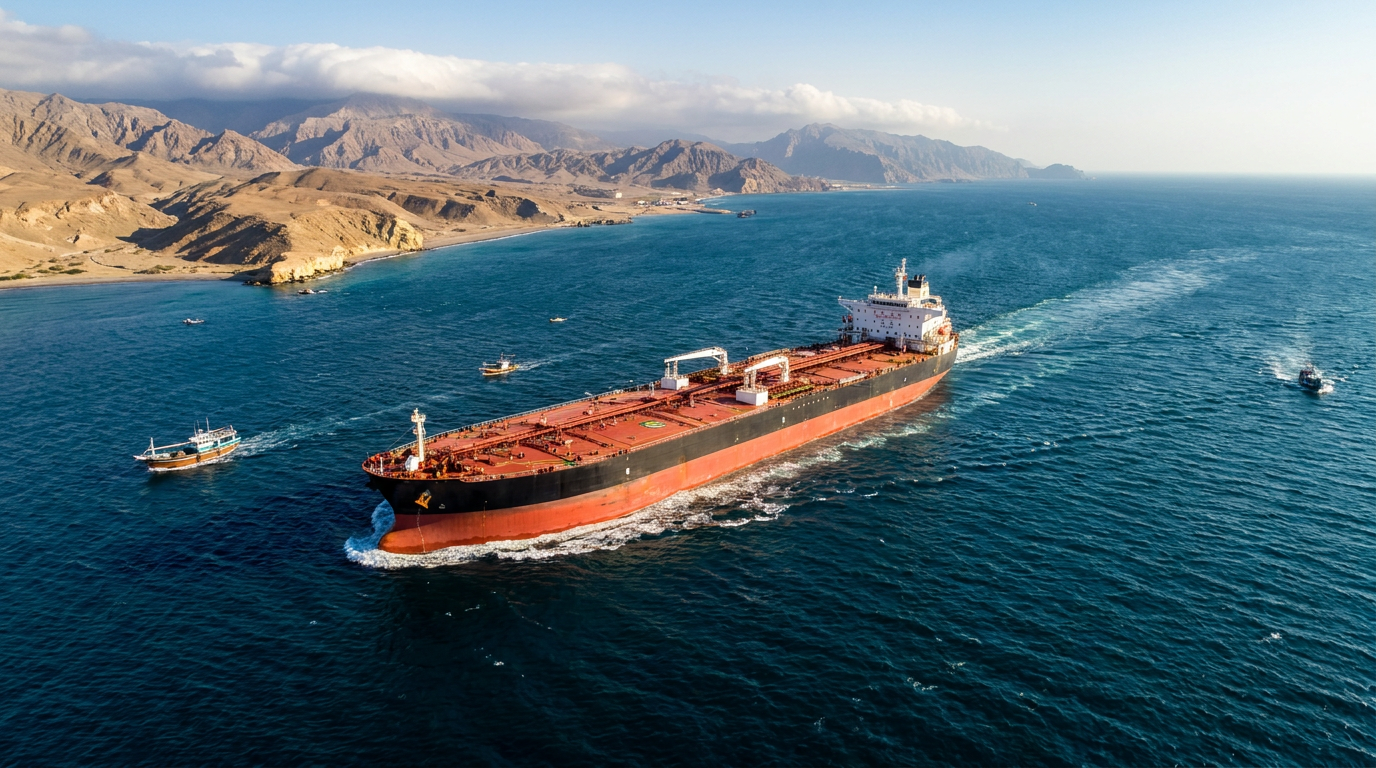
To understand the magnitude of this agreement, one must look at the geography of the Strait of Hormuz. Located between Oman and Iran, it connects the Persian Gulf to the Gulf of Oman and the Arabian Sea, serving as the sole maritime exit for the region's massive petroleum reserves.[8]
At its narrowest point, the strait is just 21 miles wide, but the deep-water shipping lanes that accommodate massive supertankers are only two miles wide in either direction. This geographic bottleneck makes it incredibly vulnerable to military blockades, asymmetric harassment, or diplomatic standoffs.[8]
Historically, roughly 21 million barrels of oil pass through this narrow corridor every single day. That volume represents approximately 20 percent of total global petroleum consumption, making the strait the undisputed jugular vein of the global energy trade.[8]

The newly signed MOU establishes a framework for safe passage, though the exact text remains classified. Diplomatic sources indicate the agreement involves reciprocal guarantees: Washington will ease specific maritime enforcement postures in exchange for Tehran guaranteeing the unhindered transit of internationally flagged commercial vessels.[4]
The newly signed MOU establishes a framework for safe passage, though the exact text remains classified.
In Tehran, officials have publicly framed the agreement as a diplomatic victory. State-aligned media emphasized that the resumption of shipping under the new framework validates Iran's strategic leverage over global energy arteries and secures necessary economic breathing room amid ongoing domestic pressures.[5]
Western financial analysts, meanwhile, are primarily focused on the macroeconomic relief the deal provides. The sudden drop in crude prices below $75 a barrel significantly softens the global inflation outlook, offering central banks more flexibility in their upcoming interest rate decisions.[6]
However, consumers hoping for immediate relief at the grocery store will need to be patient. While the cost of crude oil is a foundational input for the global economy, the supply chain takes time to digest these wholesale price changes.[3]
The cost of diesel fuel, which powers the trucks, trains, and cargo ships that move consumer goods, will decline in the coming weeks. Yet, existing inventories, long-term contracts, and elevated labor costs mean that retail food prices will likely remain sticky for several months before reflecting the energy savings.[3][6]

Despite the market euphoria, seasoned geopolitical analysts urge caution. The MOU is explicitly an interim measure, designed to cool immediate tensions rather than resolve the deep-seated structural conflicts and nuclear disagreements between Washington and Tehran.[7]
Consequently, a "risk premium" remains baked into global oil prices. Traders recognize that while the immediate threat of a closed strait has evaporated, the underlying volatility of the Middle East means that supply disruptions remain a persistent tail risk for the global economy.[7]
The success of the agreement now hinges on implementation. Over the next 90 days, international observers, maritime insurance companies, and naval patrols will closely monitor the waterway to verify that both sides are adhering to the unwritten boundaries of the pact.[4][7]

How we got here
Early 2026
Tensions escalate in the region, leading to severe disruptions in commercial shipping through the Strait of Hormuz.
Spring 2026
Global oil prices surge due to the transit bottleneck, creating a massive supply shock and renewing inflation fears.
May 2026
Backchannel negotiations between US and Iranian officials reportedly begin in an effort to de-escalate maritime tensions.
June 18, 2026
The US and Iran officially sign the interim memorandum of understanding, and commercial shipping resumes.
Viewpoints in depth
Global Energy Consumers
Relief over stabilized prices and the potential cooling of inflation.
For importing nations and global central banks, the reopening of the strait is a massive macroeconomic relief valve. The sudden spike in oil prices earlier in the year threatened to undo months of progress in fighting inflation. By securing the flow of 21 million barrels a day, this agreement allows energy markets to normalize, which will eventually lower the cost of manufacturing, transportation, and consumer goods worldwide.
Iranian Leadership
Viewing the MOU as a validation of their leverage and a path to economic relief.
Tehran views the interim agreement as a successful demonstration of its strategic capability to influence global markets. By proving they can disrupt and then restore the flow of global energy, Iranian officials believe they have strengthened their negotiating position for future talks. Furthermore, the resumption of normalized trade provides essential economic breathing room for a domestic economy heavily burdened by sanctions.
Market Skeptics
Doubting the long-term durability of the pact and maintaining a risk premium.
Geopolitical analysts and commodities traders remain cautious, noting that an MOU is not a binding treaty. Skeptics argue that the underlying conflicts regarding nuclear development and regional influence remain entirely unresolved. Because this agreement could fracture at any moment, these analysts insist that oil prices must continue to carry a 'risk premium' to account for the ever-present threat of future disruptions in the strait.
What we don't know
- The exact enforcement mechanisms if either side accuses the other of violating the unwritten boundaries of the MOU.
- How quickly major maritime insurance companies will fully normalize their risk assessments and premiums for the route.
- Whether this interim agreement will serve as a stepping stone to broader diplomatic negotiations regarding sanctions and nuclear development.
Key terms
- Strait of Hormuz
- A narrow waterway between the Persian Gulf and the Gulf of Oman, serving as the only sea passage from the Persian Gulf to the open ocean.
- Memorandum of Understanding (MOU)
- A formal agreement between two or more parties that establishes a framework for cooperation, often serving as a stepping stone to a more binding treaty.
- Risk Premium
- The extra cost added to the price of an asset, such as crude oil, to compensate buyers and traders for geopolitical uncertainty or potential supply disruptions.
- Chokepoint
- A narrow, strategically significant geographic feature on land or at sea that an armed force or diplomatic entity can block to control transit.
Frequently asked
Will gas prices go down immediately?
Wholesale gasoline prices will likely drop quickly, but it typically takes a few weeks for the full reduction to reach local gas stations as existing inventory is sold off.
Why is the Strait of Hormuz so important?
It is the world's most critical oil transit chokepoint, handling about 21 million barrels of oil per day, which accounts for roughly 20% of global petroleum consumption.
Does this mean US sanctions on Iran are lifted?
No. The MOU is an interim agreement focused specifically on maritime transit and de-escalation; it does not represent a comprehensive lifting of broader economic sanctions.
Sources
Source coverage
8 outlets
3 viewpoints surfaced







[1]BloombergMarket Optimists
Oil Set for Deep Weekly Loss as Hormuz Traffic Starts to Pick Up
Read on Bloomberg →[2]ForbesMarket Optimists
Oil Prices Fall To 3-Month Lows On U.S.-Iran Deal
Read on Forbes →What The U.S.-Iran MOU Really Means For Your Grocery Bill
Read on Forbes →[4]ReutersGeopolitical Skeptics
US, Iran sign interim agreement to restore commercial transit in Strait of Hormuz
Read on Reuters →[5]Al JazeeraIranian State View
Tehran hails 'diplomatic victory' as Hormuz shipping resumes under new framework
Read on Al Jazeera →[6]Financial TimesMarket Optimists
Global inflation outlook softens as crude drops below $75 on US-Iran pact
Read on Financial Times →[7]The Wall Street JournalGeopolitical Skeptics
Oil Markets Breathe Sigh of Relief, But Middle East Risk Premium Remains
Read on The Wall Street Journal →[8]U.S. Energy Information Administration
The Strait of Hormuz is the world's most important oil transit chokepoint
Read on U.S. Energy Information Administration →
Every angle. Every day.
Get business stories with full source coverage and perspective breakdowns delivered to your inbox.