
NWSL shatters mid-season attendance and revenue records as purpose-built stadiums pay off
The National Women's Soccer League has reached unprecedented financial and viewership milestones halfway through its 2026 season, driven by massive investments in dedicated infrastructure.
By Factlen Editorial Team
- Sports Business Analysts
- Focuses on the massive return on investment, soaring franchise valuations, and the lucrative nature of the league's demographic.
- Players & Advocates
- Emphasizes how the financial boom translates into better working conditions, higher salaries, and world-class training facilities.
- Broadcasters & Sponsors
- Highlights the massive year-over-year growth in unique viewership and the premium value of advertising slots during matches.
What's not represented
- · Municipal planners balancing public funding requests for new stadium developments
- · Legacy MLS teams facing new, highly competitive local entertainment options
Why this matters
This milestone proves that women's sports are a highly profitable, standalone entertainment juggernaut when given dedicated infrastructure, fundamentally changing how investors and cities approach stadium development.
Key points
- The NWSL has reached a record-breaking 18,500 average attendance halfway through the 2026 season.
- The financial boom is heavily attributed to clubs moving into their own purpose-built stadiums.
- Mid-season league revenue has surpassed $120 million, driven by ticket sales, sponsorships, and media rights.
- The influx of capital has drastically improved player salaries, training facilities, and global transfer competitiveness.
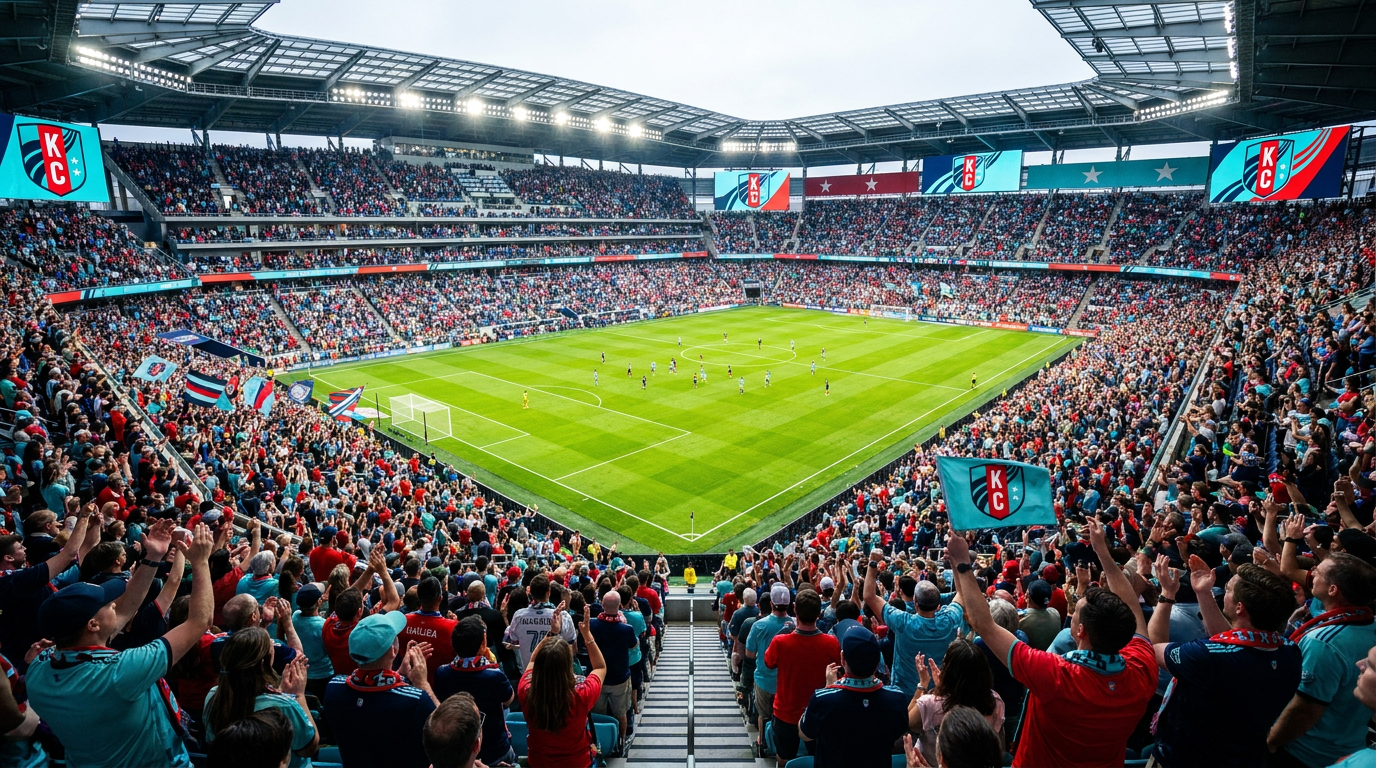
Halfway through the 2026 season, the National Women's Soccer League is not just breaking its own internal records—it is entirely rewriting the modern business model for women's professional sports. After years of incremental growth, the league has experienced a sudden, massive financial acceleration, proving that heavy upfront capital investment in women's athletics yields immediate and lucrative returns. The mid-season data released this week paints a picture of a league that has firmly transitioned from a niche, cause-driven property into a premium, mainstream entertainment juggernaut.[1][4]
The most striking metric in the league's mid-season report is the explosion in live attendance. The NWSL announced that average match attendance has surged to 18,500 fans per game, a staggering 40 percent leap from just two seasons ago. Several clubs are routinely selling out their venues weeks in advance, creating a secondary ticket market that rivals major men's leagues in key metropolitan areas. This surge in foot traffic has transformed match days into sprawling, all-day community events, complete with massive tailgates and local vendor integrations.[1]
Industry analysts point to one primary catalyst for this explosion: the aggressive shift toward purpose-built infrastructure. Following the runaway success of the Kansas City Current's CPKC Stadium—the first stadium in the world built specifically for a women's professional sports team—three more dedicated women's soccer venues opened their doors ahead of the 2026 campaign. These architectural marvels were designed from the ground up to optimize the fan experience for the NWSL's specific demographic, featuring steeper seating bowls for better sightlines and premium hospitality suites.[2][3]

Owning and operating their own venues allows NWSL franchises to control their primary revenue streams, rather than playing second fiddle as tenants in massive, cavernous NFL or MLS stadiums. Clubs now retain 100 percent of their concessions, parking, and premium seating revenue. Furthermore, they control their own scheduling, eliminating the dreaded midweek afternoon kickoffs that historically plagued the league when they were forced to work around men's team schedules. This operational independence has been the key to unlocking the league's true financial potential.[2][4]
Clubs now retain 100 percent of their concessions, parking, and premium seating revenue.
The downstream financial effects of this infrastructure boom have been immediate and profound. Mid-season league revenue has already crossed the $120 million mark, driven by sold-out luxury suites, aggressive local sponsorships, and lucrative stadium naming-rights deals. Franchise valuations have skyrocketed in tandem; early investors who purchased expansion rights for $2 million a decade ago are now seeing team valuations comfortably eclipse the $150 million threshold, attracting a new wave of institutional capital and celebrity ownership groups.[3]
Broadcasters are also reaping the rewards of the league's elevated presentation. The NWSL's fragmented but highly lucrative media rights deal—split across CBS, Prime Video, ESPN, and Scripps Sports—has resulted in a 45 percent year-over-year increase in unique viewers. The pristine, packed stadiums look spectacular on television, creating a vibrant broadcast product that naturally retains channel-surfers. Advertisers are paying premium rates for commercial slots, eager to reach an audience that indexes heavily for young, affluent, and fiercely brand-loyal consumers.[4][6]

For the athletes on the pitch, this influx of cash has translated directly into vastly improved working conditions and professional respect. Salary caps have expanded significantly, and the minimum wage for rookies has finally reached a true living standard, allowing players to focus entirely on their craft without needing off-season second jobs. Furthermore, the new stadiums are attached to state-of-the-art, multi-million-dollar training facilities equipped with elite sports science departments, private chefs, and dedicated recovery centers.[5]
The league's financial stability has also altered the global transfer market. Historically, top American talent would occasionally head to Europe for better pay and Champions League exposure. Now, the NWSL is aggressively importing top-tier international stars in the prime of their careers, outbidding historic European clubs. The combination of elite compensation, world-class facilities, and the sheer competitiveness of the league has made the United States the undisputed premier destination for the world's best players.[2][5]

As the NWSL looks toward its next round of expansion in 2027 and 2028, the conversation among prospective ownership groups has fundamentally shifted. Cities are no longer bidding just to host a team; they are competing to build the next architectural marvel dedicated exclusively to women's sports. The 2026 mid-season numbers have permanently settled the debate: when women's sports are treated as a premium product and backed by serious, dedicated infrastructure, the market responds with overwhelming enthusiasm.[1][3]
How we got here
2022
The NWSL signs a historic collective bargaining agreement, laying the groundwork for higher minimum salaries and better standards.
March 2024
The Kansas City Current open CPKC Stadium, the first venue in the world built specifically for a women's professional sports team.
November 2025
The league finalizes a lucrative, multi-network media rights deal, dramatically expanding its national television footprint.
June 2026
The NWSL releases its mid-season report, confirming record-shattering attendance, revenue, and viewership metrics.
Viewpoints in depth
Sports Business Analysts
Focuses on the massive return on investment and soaring franchise valuations.
Financial analysts view the 2026 NWSL season as the definitive proof of concept for women's sports as a standalone asset class. For years, investors treated women's leagues as long-term, cause-driven plays that required patience. Now, outlets like Forbes and Sports Business Journal report that the ROI is immediate. By controlling their own real estate, NWSL clubs have unlocked the high-margin revenue streams—luxury suites, naming rights, and localized sponsorships—that make men's franchises so valuable. This has caused team valuations to skyrocket, with institutional capital now aggressively trying to buy into the league before expansion fees rise even further.
Players & Advocates
Emphasizes how the financial boom translates into better working conditions and respect.
For the athletes and long-time advocates of the women's game, the revenue milestones are secondary to what the money actually buys: professional dignity. Publications like Equalizer Soccer highlight that the era of players changing in public restrooms or working second jobs to make rent is officially over. The new purpose-built stadiums come with elite, private training facilities, dedicated medical staffs, and expanded salary caps. Advocates argue that this infrastructure doesn't just reward current players; it ensures that the next generation of girls will view professional soccer as a highly lucrative, stable career path.
Broadcasters & Sponsors
Highlights the massive year-over-year growth in unique viewership and demographic reach.
Media executives and brand sponsors are primarily focused on the NWSL's unique audience composition. The league's fragmented broadcast deal across platforms like CBS, ESPN, and Prime Video was initially seen as a risk, but it has successfully captured a wide, digitally native audience. Sponsors are flocking to the league because its viewership indexes incredibly high for progressive, affluent, and brand-loyal consumers who actively support companies that invest in women's sports. Broadcasters note that the pristine, packed stadiums create a premium television product that easily competes with legacy men's sports for weekend viewership.
What we don't know
- Whether the league's massive growth will eventually plateau, or if it can sustain this trajectory to rival the revenues of legacy men's leagues.
- How smaller-market teams without billionaire ownership groups will compete in an increasingly expensive arms race for global talent and infrastructure.
Key terms
- Purpose-built stadium
- A sports venue designed and constructed specifically for a particular team or sport, optimizing sightlines and facilities for that specific audience rather than serving as a multi-purpose rental.
- Naming-rights deal
- A financial transaction in which a corporation pays a sports team or league for the right to name a facility, providing a massive influx of upfront capital.
- Salary cap
- A league-mandated limit on the amount of money a team can spend on player contracts, designed to maintain competitive balance across the league.
Frequently asked
Why is the NWSL building its own stadiums?
Building dedicated stadiums allows clubs to control their own scheduling and retain 100 percent of the revenue from concessions, parking, and premium seating, rather than paying rent to larger MLS or NFL venues.
How much has attendance grown this season?
Average match attendance has reached 18,500 fans per game halfway through the 2026 season, representing a 40 percent increase from just two years prior.
Are NWSL players being paid more as a result?
Yes. The influx of league revenue has led to expanded salary caps and a significantly higher minimum wage, allowing players to focus entirely on soccer without needing off-season jobs.
Sources
Source coverage
6 outlets
3 viewpoints surfaced






[1]ESPNBroadcasters & Sponsors
NWSL mid-season review: Records tumble across the board as attendance surges
Read on ESPN →[2]The AthleticPlayers & Advocates
How purpose-built stadiums permanently changed the NWSL's financial trajectory
Read on The Athletic →[3]ForbesSports Business Analysts
NWSL Team Valuations Soar As 2026 Revenue Hits New Highs
Read on Forbes →[4]Sports Business JournalSports Business Analysts
The business of women's soccer: NWSL's broadcast and sponsorship boom
Read on Sports Business Journal →[5]Equalizer SoccerPlayers & Advocates
Players reap the benefits of the NWSL's financial explosion and world-class facilities
Read on Equalizer Soccer →[6]Front Office SportsSports Business Analysts
Brands flock to NWSL as viewership demographic proves highly lucrative
Read on Front Office Sports →
More in sports
See all 6 stories →Olympic Inclusion
How Cricket is Rewiring Itself for the LA28 Olympics
5 sources
Sports Tech
How 'Super Spikes' Are Rewriting Track and Field History
7 sources

Knicks Championship
Millions Pack NYC's Canyon of Heroes for Knicks' First Championship Parade in 53 Years
6 sources
WTA Tour
Donna Vekic Completes 'Lucky Loser' Cinderella Run to Win Queen's Club Title
6 sources

Every angle. Every day.
Get sports stories with full source coverage and perspective breakdowns delivered to your inbox.