
How On-Device AI and Quantization Are Moving LLMs Out of the Cloud
Advances in small language models and mathematical compression are allowing powerful AI to run locally on personal devices, bypassing the cloud to guarantee privacy and eliminate latency.
By Factlen Editorial Team

- Privacy & Enterprise Advocates
- Value data sovereignty, fixed costs, and offline capabilities above all else.
- Hardware & Platform Ecosystem
- Focus on pushing NPU capabilities, unified memory, and OS-level AI integration.
- Open-Source Developers
- Champion accessible, quantized models that run on consumer hardware without corporate gatekeepers.
What's not represented
- · Cloud Infrastructure Providers
- · Regulatory Compliance Officers
Why this matters
Running AI locally on your own hardware means your sensitive data never leaves your device, protecting your privacy while delivering instant, offline responses without subscription fees.
Key points
- Small Language Models (SLMs) with 3 to 14 billion parameters are achieving performance levels that rival massive cloud models from just a few years ago.
- A compression technique called quantization shrinks model memory requirements by up to 75%, allowing them to run on standard consumer hardware.
- Local inference guarantees absolute data privacy, as prompts and outputs never leave the physical device.
- Tech giants are adopting hybrid architectures, routing simple tasks to local chips while escalating complex reasoning to the cloud.
For the past four years, the artificial intelligence boom has been tethered to massive, energy-hungry data centers. Every time a user asked a chatbot to draft an email or summarize a document, the prompt traveled hundreds of miles to a server rack, processed through models with hundreds of billions of parameters, and beamed back. But in 2026, a quiet revolution is shifting the center of gravity. AI is moving from the cloud to the pocket.[6]
This shift is driven by the rise of "Edge AI" and on-device Small Language Models (SLMs). Rather than relying on constant internet connectivity and expensive API calls, developers and tech giants are deploying highly capable AI directly onto smartphones, laptops, and IoT devices. The appeal is structural: local processing guarantees absolute data privacy, eliminates network latency, and functions perfectly offline.[1][6]
The transition from "bigger is better" to "smarter is better" represents a fundamental paradigm shift in machine learning. Models like Microsoft's Phi-3 and Phi-4 families, or Meta's Llama 3 8B, operate with between 3 billion and 14 billion parameters—a fraction of the size of frontier cloud models. Yet, by training these compact models on highly curated, "textbook quality" synthetic data, researchers have achieved reasoning capabilities that rival the massive cloud models of just a couple of years ago.[1][6]
But building a smaller model is only half the battle. The technical breakthrough that makes on-device AI viable for everyday consumers is a mathematical compression technique called quantization.[4]
In a standard neural network, the "weights"—the numerical values that dictate how the model processes language—are stored as 16-bit floating-point numbers. A 7-billion parameter model at full 16-bit precision requires roughly 14 gigabytes of memory just to load, placing it out of reach for most standard laptops and smartphones.[4]
Quantization solves this by rounding those weights down to lower-precision formats, typically 4-bit or 8-bit integers. This compression acts much like converting a massive, lossless audio file into a compact MP3. At 4-bit quantization, that same 7-billion parameter model shrinks to approximately 4 gigabytes. The memory footprint is slashed by over 70%, with a quality loss so minimal that it is imperceptible for most practical text-generation tasks.[3][4]

This dramatic reduction in size means the bottleneck for local AI is no longer raw computational power, but memory bandwidth and RAM capacity. Because inference speed depends heavily on how fast a device can move model weights from memory to the processor, hardware manufacturers are rapidly adapting their architectures to support these new workloads.[4]
Apple's 2026 rollout of iOS 27 and the next generation of Apple Intelligence perfectly illustrates this hardware pivot. While basic AI features continue to run on older devices, Apple has drawn a hard line for its most powerful new on-device models: they require a minimum of 12GB of unified memory. This strict threshold excludes the base iPhone 17, restricting the advanced local AI to the iPhone 17 Pro, iPhone Air, and M-series Macs and iPads equipped with sufficient RAM.[2]
Apple's 2026 rollout of iOS 27 and the next generation of Apple Intelligence perfectly illustrates this hardware pivot.
For enterprise users and developers, the motivations for running models locally extend far beyond hardware enthusiasm. Privacy and data sovereignty are the primary catalysts. Under strict regulatory frameworks like the EU AI Act and HIPAA, transmitting sensitive patient records, financial data, or proprietary code to a third-party cloud provider carries immense compliance risks.[3][5]
On-device inference structurally eliminates this risk. When a model runs locally, the prompt and the generated output never leave the physical hardware. There are no API calls to intercept, no server logs to secure, and no terms-of-service agreements granting a provider the right to train future models on the user's data.[3]
Latency is the second major driver. Cloud API calls inherently carry the overhead of network round-trips, queue wait times, and server-side batch processing. For a chatbot, a one-second delay is acceptable. But for autonomous robotics, real-time audio translation, or instant code completion, a 500-millisecond delay can break the user experience. A well-configured local model can deliver first-token responses in under 40 milliseconds, providing a fluid, instantaneous interaction.[3][5]
Cost predictability also plays a crucial role for businesses deploying AI at scale. Cloud LLMs operate on token-based billing, meaning costs scale linearly with usage. If an enterprise deploys an AI assistant to 1,000 employees, a sudden spike in usage can cause API bills to balloon unpredictably. Local inference flips this to a fixed-cost model: once the hardware is purchased, generating one token costs exactly the same as generating one million.[3]

The barrier to entry for local AI has also plummeted thanks to a robust open-source ecosystem. Tools like Ollama, LM Studio, and the underlying llama.cpp inference engine have transformed what used to be a complex, multi-day engineering project into a five-minute setup. Today, a developer can download a quantized model and spin up an OpenAI-compatible local API with a single terminal command.[3][4]
Microsoft has similarly leaned into this developer-friendly approach with Azure AI Foundry Local. Designed specifically for edge devices, the platform allows engineers to deploy the Phi-3 and Phi-4 models directly into resource-constrained environments, ensuring that enterprise applications can maintain full functionality even in remote areas without internet connectivity.[1]
Despite these advances, local models are not poised to entirely replace their massive cloud counterparts. Instead, the industry is converging on a "hybrid routing" architecture. In this model, the operating system or application acts as an intelligent traffic cop, evaluating each prompt before deciding where to send it.[5]
Routine, privacy-sensitive, or latency-critical tasks—like summarizing a local document, drafting a text message, or basic coding assistance—are routed to the on-device SLM. However, if a user asks a highly complex reasoning question or requests broad world knowledge that exceeds the local model's capacity, the system seamlessly escalates the query to a frontier cloud model.[2][5]

Apple's Private Cloud Compute and its native integration of Gemini in iOS 27 exemplify this hybrid approach, ensuring users get the speed and privacy of local AI with the boundless capability of the cloud available on demand.[2]
As 2026 progresses, the democratization of machine intelligence is accelerating. By breaking the absolute reliance on centralized data centers, on-device AI is making powerful computing tools faster, cheaper, and fundamentally more private—putting the true potential of artificial intelligence directly into the hands of the user.[6]
How we got here
2023
Cloud-based Large Language Models dominate the AI landscape, requiring massive data centers for all inference.
Early 2024
Open-source tools like llama.cpp and Ollama gain traction, making local AI deployment accessible to developers.
April 2024
Microsoft introduces the Phi-3 family, proving that highly curated training data can make small models punch above their weight.
June 2026
Apple announces iOS 27, setting a new 12GB memory standard for its most advanced on-device AI models.
Viewpoints in depth
Privacy & Enterprise Advocates
For organizations in healthcare, finance, and government, local AI is a structural necessity.
By keeping all data processing on the physical device, enterprises bypass the compliance risks of transmitting sensitive information to third-party cloud providers. This camp views the elimination of API token costs and network latency as secondary benefits to the absolute guarantee of data sovereignty. They argue that as regulatory frameworks like the EU AI Act tighten, local inference will become the default standard for enterprise deployments.
Hardware & Platform Ecosystem
Device manufacturers view local AI as the next major hardware cycle driver.
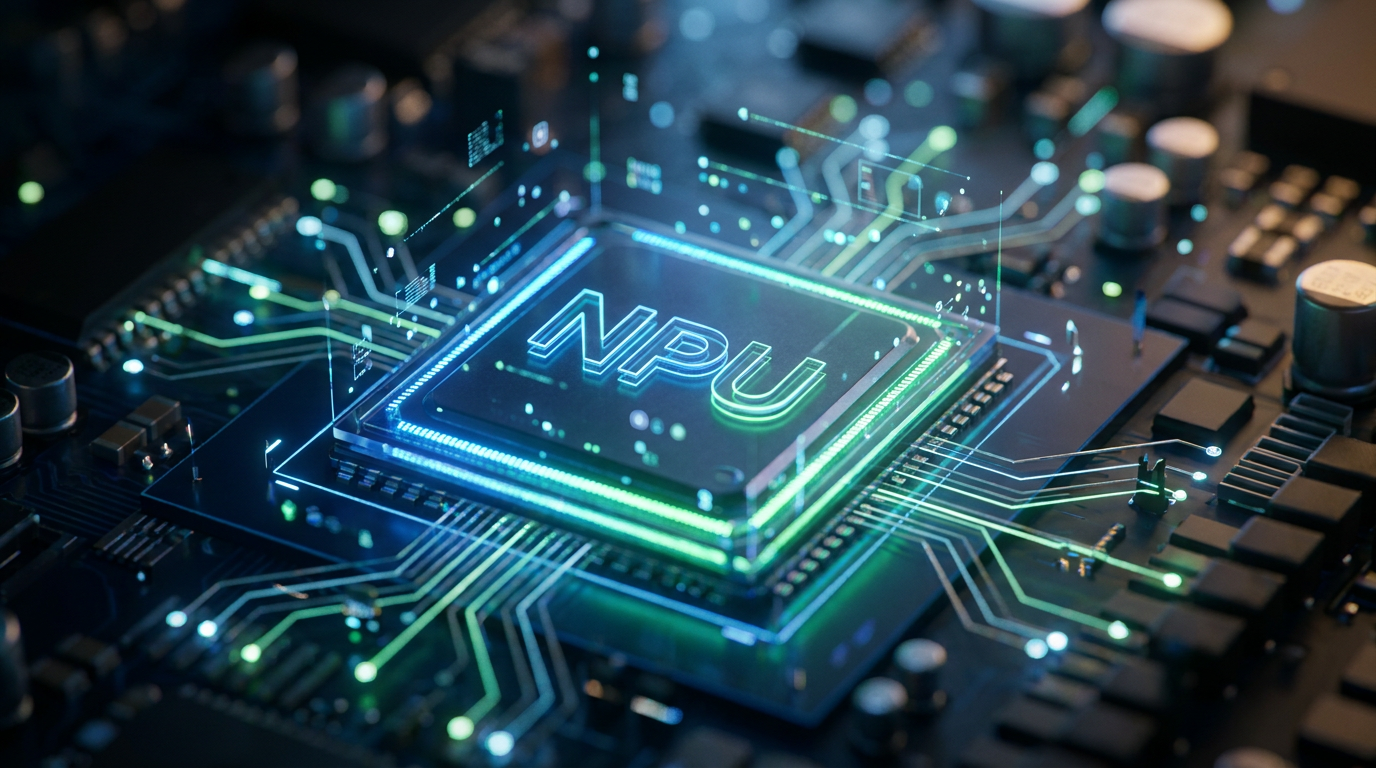
By integrating powerful Neural Processing Units (NPUs) and raising baseline RAM requirements, companies like Apple and Microsoft are embedding AI directly into the operating system layer. Their goal is a seamless hybrid experience where the OS intelligently routes tasks between the local chip and the cloud without the user noticing. This camp believes that hardware upgrades, rather than just software optimization, are the key to unlocking AI's full potential.
Open-Source Developers
The open-source community champions local AI as a democratizing force.
Through aggressive quantization techniques and highly optimized inference engines, this camp focuses on making powerful AI accessible to anyone with a standard laptop. They prioritize transparency, user control, and the ability to run models entirely offline, free from corporate gatekeeping or subscription fees. For these developers, the ability to fine-tune and run models locally is essential for preventing a monopoly by a few massive cloud providers.
What we don't know
- How quickly legacy enterprise software will adapt to support local AI inference natively.
- Whether the memory constraints of mobile devices will force a hard ceiling on the reasoning capabilities of on-device models.
- How cloud providers will adjust their pricing models as a significant portion of routine AI inference moves to the edge.
Key terms
- Small Language Model (SLM)
- A compact AI model, typically between 1 and 14 billion parameters, optimized to run efficiently on personal devices rather than massive cloud servers.
- Quantization
- A mathematical compression technique that reduces the memory footprint of an AI model by lowering the precision of its internal numbers.
- Edge AI
- The practice of processing artificial intelligence algorithms locally on a physical device (the 'edge' of the network) rather than in a centralized cloud.
- Neural Processing Unit (NPU)
- A specialized hardware chip designed specifically to accelerate artificial intelligence tasks efficiently.
- Inference
- The process of a trained AI model generating an output or prediction based on a user's prompt.
Frequently asked
Can I run an AI model on my current phone?
Yes, many modern smartphones can run smaller models (1-3 billion parameters). However, the most advanced on-device features in 2026, like Apple's latest models, require newer hardware with at least 12GB of RAM.
Is a local AI as smart as ChatGPT?
Local models excel at specific, routine tasks like summarizing text, drafting emails, or writing code. For highly complex reasoning or broad world knowledge, massive cloud models still hold an advantage.
Does running AI locally drain my battery?
It can be resource-intensive, but modern devices include dedicated Neural Processing Units (NPUs) designed to run these models efficiently without severely impacting battery life.
What is quantization?
It is a compression technique that reduces the precision of the model's mathematical weights, shrinking the file size by up to 75% so it can fit into standard consumer memory.
Sources
Source coverage
6 outlets
3 viewpoints surfaced






[1]Microsoft Developer BlogsHardware & Platform Ecosystem
Foundry Local: A New Era of Edge AI
Read on Microsoft Developer Blogs →[2]MacRumorsHardware & Platform Ecosystem
Apple's Most Powerful On-Device AI Now Requires iPhone 17 Pro or iPhone Air
Read on MacRumors →[3]TECHSYPrivacy & Enterprise Advocates
Run LLMs Locally 2026: 5-Minute Setup, Any GPU
Read on TECHSY →[4]PromptQuorumOpen-Source Developers
LLM Quantization 2026: Q4_K_M vs Q8_0 VRAM Guide
Read on PromptQuorum →[5]Requesty BlogPrivacy & Enterprise Advocates
The Future of LLM Routing: On-device, Edge AI, and Federated Models
Read on Requesty Blog →[6]Factlen Editorial TeamOpen-Source Developers
Synthesis by Factlen editorial team
Read on Factlen Editorial Team →

More in ai
See all 6 stories →Local AI
The 2026 Guide to Running AI Locally: How Consumer Hardware Caught Up to the Cloud
8 sources

On-Device AI
How Small Language Models Brought AI to Your Phone Without the Cloud
6 sources
Animal Cognition
AI Decodes Sperm Whale 'Phonetic Alphabet,' Revealing Complex Language Parallels
8 sources

Agentic AI
Agentic AI: How Large Action Models Are Automating Digital Chores
7 sources
Every angle. Every day.
Get ai stories with full source coverage and perspective breakdowns delivered to your inbox.