
UK Supreme Court Overturns 'Cheshire West', Redefining Deprivation of Liberty in Care
In a landmark ruling, the UK Supreme Court has scrapped the 2014 'acid test' for deprivation of liberty. The decision immediately alters the legal rights and safeguards for hundreds of thousands of vulnerable adults in care.
By Factlen Editorial Team
- Legal and Governmental Bodies
- Argues the 2014 ruling went too far and that the new multifactorial approach correctly aligns UK law with European human rights standards.
- Healthcare Professionals
- Highlights the clinical difficulty of assessing subjective consent in patients with profound cognitive impairments.
- Patient Advocates
- Expresses concern that removing automatic legal safeguards for compliant patients may leave them without independent oversight.
What's not represented
- · Families of patients currently awaiting DoLS authorisations
- · Local authority funding directors managing the administrative transition
Why this matters
This ruling fundamentally changes how the state oversees the care of people with dementia, autism, and brain injuries. By removing automatic legal safeguards for patients who appear 'happy' with their confinement, it drastically reduces bureaucratic backlogs but raises concerns about the loss of independent advocacy for the compliant and vulnerable.
Key points
- The UK Supreme Court unanimously overturned the 2014 Cheshire West ruling on deprivation of liberty.
- The rigid 'acid test' has been replaced by a broader 'multifactorial approach'.
- Patients lacking legal capacity can now give 'valid consent' if they express happiness with their care.
- Compliant patients will no longer automatically require Deprivation of Liberty Safeguards (DoLS).
- The ruling takes immediate effect, forcing local authorities to urgently review thousands of cases.
- Advocates worry the change strips independent oversight from vulnerable but compliant individuals.
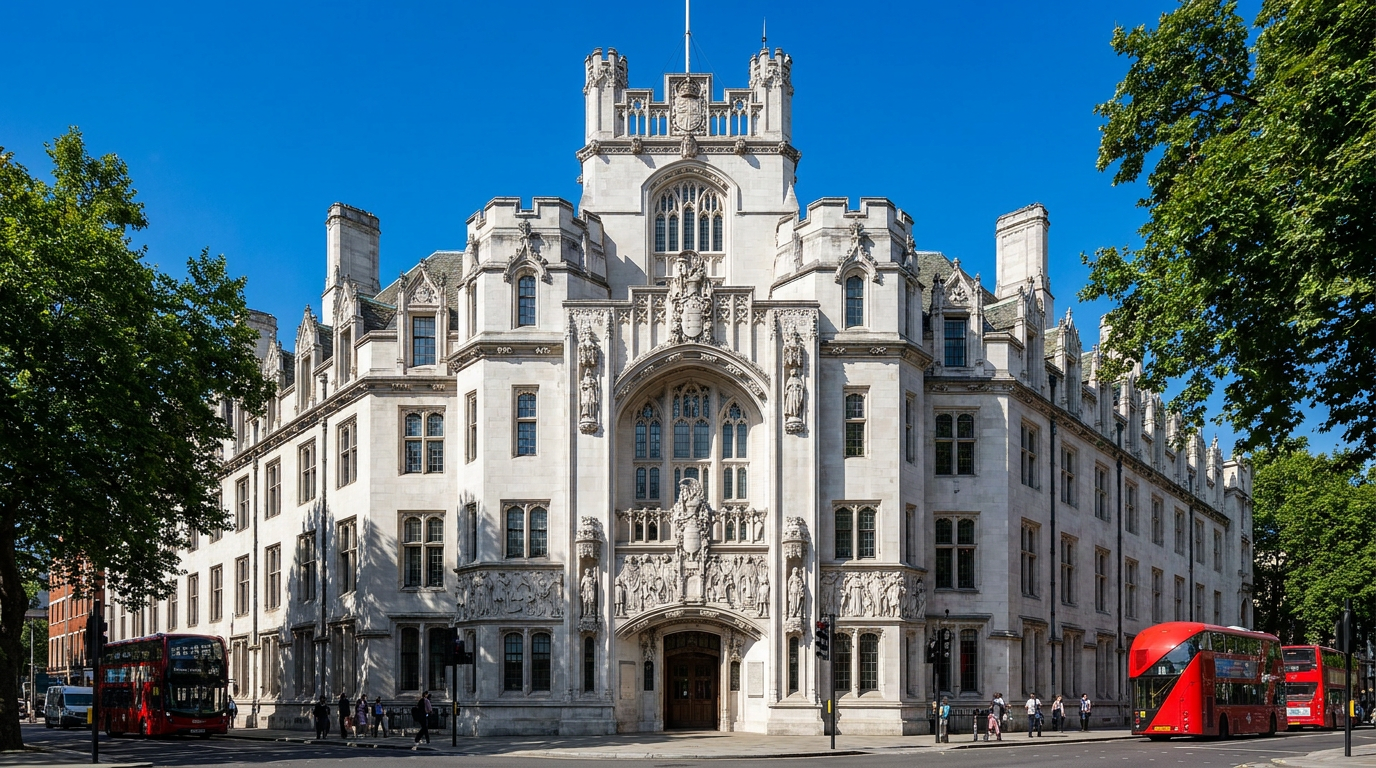
On June 2, 2026, the UK Supreme Court handed down a landmark judgment that fundamentally rewrites the rules governing the care of the nation's most vulnerable adults. In a unanimous decision, a seven-member panel overturned the 2014 Cheshire West ruling, dismantling the widely used "acid test" that determined whether a person was being legally deprived of their liberty in a hospital or care home.[1][5][7]
The ruling carries immediate, sweeping implications for hundreds of thousands of people living with dementia, autism, severe learning disabilities, and acquired brain injuries. For over a decade, the Cheshire West precedent dictated that any incapacitated person under "continuous supervision and control" who was "not free to leave" was legally deprived of their liberty, triggering mandatory independent oversight.[6][7]
That era is now over. The Supreme Court concluded that the 2014 judgment went too far, misinterpreting the European Convention on Human Rights (ECHR). Instead of a rigid acid test, the Court has reinstated a "multifactorial approach," requiring social workers and doctors to evaluate the specific type, duration, and effects of the restrictions placed on an individual.[1][5]

The most profound shift in the 2026 ruling centers on the concept of subjective consent. Under the previous framework, it was assumed that if an individual lacked the legal capacity to make complex decisions about their care under the Mental Capacity Act 2005, they could not possibly consent to their confinement.[1][6]
The Supreme Court has now explicitly decoupled legal capacity from the ability to express acceptance. The justices ruled that if a person is conscious, possesses a basic understanding of their environment, and can express that they are happy or content with their living arrangements, they can provide "valid consent" to those restrictions.[1][5]
If a patient is genuinely content and not actively objecting, they are no longer considered to be deprived of their liberty under Article 5 of the ECHR. Consequently, the heavy administrative apparatus of the Deprivation of Liberty Safeguards (DoLS)—which requires independent assessments and local authority authorisation—will no longer apply to them.[4][7]

To understand the magnitude of this reversal, one must look back to the original 2014 Cheshire West ruling. At the time, Baroness Hale famously declared that "a gilded cage is still a cage," arguing that human rights should apply equally to everyone, regardless of their mental capacity or compliance.[6][7]
To understand the magnitude of this reversal, one must look back to the original 2014 Cheshire West ruling.
While praised by human rights advocates at the time, the 2014 ruling triggered an administrative avalanche. The number of DoLS applications skyrocketed from roughly 13,000 a year to hundreds of thousands, overwhelming local authorities. A massive backlog emerged, leaving many vulnerable people waiting months or years for their care arrangements to be legally authorised.[7]
The 2026 Supreme Court panel found that the 2014 majority had wrongly departed from the established jurisprudence of the European Court of Human Rights in Strasbourg. The justices noted that the difference between a "restriction" of liberty and a "deprivation" of liberty is one of degree and intensity, not nature or substance.[5][6]
Furthermore, the Court emphasized that the setting matters. A person living in a family home or a supported living environment that closely resembles a "normal" life—even with restrictions necessary to keep them safe—is far less likely to be deprived of their liberty than someone in a highly institutionalized, prison-like setting.[5][7]
The judgment takes effect immediately, with no transition or grace period. The UK Department of Health and Social Care, along with devolved bodies like Care Inspectorate Wales, have instructed care providers and responsible bodies to urgently review their current arrangements.[1][3]
For the healthcare sector, the ruling presents a complex clinical challenge. The Royal College of Psychiatrists noted the difficulty of assessing valid consent in practice, particularly for patients with fluctuating mental health conditions or profound communication barriers.[2]

Practitioners must now conduct holistic assessments, reviewing medical notes, speaking with families, and ensuring that a patient's compliance is not simply the result of sedating medication, fear, or institutionalization. If there is "serious doubt" about a person's valid consent, the Supreme Court warned, no conclusion of consent can be drawn.[1][2]
Disability advocacy groups have expressed cautious apprehension. While some welcome the recognition of an incapacitated person's wishes and feelings, organizations like the Prader-Willi Syndrome Association UK note that DoLS provided vital independent scrutiny.[4]
Without the DoLS framework, advocates worry that some individuals might lose access to independent advocates who ensure that restrictions are truly necessary and proportionate. A compliant patient in a "gilded cage" may no longer have an external assessor checking if a less restrictive option is available.[4][7]
The legal and social care sectors are now waiting for updated national guidance to navigate the fallout. The government had previously planned to replace DoLS with a new system called the Liberty Protection Safeguards (LPS), but implementation was indefinitely delayed.[4][7]

Until new statutory codes of practice are published, local authorities face the daunting task of unwinding a decade of Cheshire West jurisprudence. Thousands of existing DoLS authorisations will likely be allowed to lapse, fundamentally reshaping the balance between state protection and individual autonomy in the UK care system.[1][7]
How we got here
2005
The Mental Capacity Act (MCA) is passed, establishing a framework for making decisions on behalf of incapacitated adults.
March 2014
The Supreme Court issues the Cheshire West ruling, establishing the 'acid test' for deprivation of liberty.
October 2025
The Supreme Court hears the Attorney General for Northern Ireland's reference challenging the 2014 definition.
June 2, 2026
The Supreme Court unanimously overrules Cheshire West, restoring a multifactorial approach to assessing liberty.
Viewpoints in depth
Legal and Governmental Bodies
Focuses on correcting a decade of legal overreach and aligning UK law with European standards.
Government agencies and legal analysts argue that the 2014 Cheshire West ruling created an unsustainable bureaucratic nightmare by misinterpreting the European Convention on Human Rights. By applying a rigid 'acid test,' the state was forced to legally authorize the living arrangements of hundreds of thousands of people who were perfectly happy in their care homes or supported living facilities. This camp views the 2026 ruling as a necessary correction that restores common sense, allowing local authorities to focus their limited safeguarding resources on individuals who are actually objecting to their confinement or facing genuinely restrictive, prison-like conditions.
Healthcare Professionals
Highlights the clinical difficulty of assessing subjective consent in patients with profound cognitive impairments.
For doctors, psychiatrists, and social workers on the ground, the ruling introduces significant clinical ambiguity. While the 'acid test' was administratively burdensome, it was clinically straightforward: if a patient was supervised and couldn't leave, they were deprived of liberty. Now, practitioners must determine whether a patient with severe dementia or profound autism is giving 'valid consent' to their environment. Medical professionals warn that distinguishing genuine contentment from institutional compliance, fear, or the effects of sedating medication will require highly skilled, time-intensive holistic assessments that the current workforce may struggle to deliver.
Patient Advocates
Expresses concern that removing automatic legal safeguards for compliant patients may leave them without independent oversight.
Disability rights organizations and patient advocates are approaching the ruling with deep apprehension. The core philosophy of the 2014 ruling was that 'a gilded cage is still a cage'—meaning that even if a vulnerable person is happy, the state still owes them independent scrutiny to ensure their restrictions are proportionate. Advocates fear that by removing DoLS requirements for 'compliant' patients, these individuals will lose access to independent advocates. Without external checks, there is a risk that care providers might default to overly restrictive practices simply because the patient lacks the cognitive ability to actively object.
What we don't know
- How quickly the Department of Health and Social Care will issue updated statutory guidance for practitioners.
- Whether the government will revive the delayed Liberty Protection Safeguards (LPS) to replace the fractured DoLS system.
- How courts will handle edge cases where a patient's 'valid consent' fluctuates day by day due to conditions like dementia.
Key terms
- Deprivation of Liberty Safeguards (DoLS)
- Legal protections ensuring that restrictions placed on people who lack mental capacity are lawful, necessary, and in their best interests.
- Mental Capacity Act 2005 (MCA)
- The legal framework in England and Wales for making decisions on behalf of people who lack the capacity to do so themselves.
- Acid Test
- The 2014 legal standard which stated a person was deprived of liberty if they were under continuous supervision and not free to leave.
- Multifactorial Approach
- The 2026 standard requiring assessors to look at the type, duration, effects, and context of restrictions, rather than a single rigid test.
Frequently asked
Does this mean care homes will remove security measures?
No. Care providers can still implement necessary restrictions to keep vulnerable people safe, but the legal paperwork required to authorize those restrictions has changed.
Will existing DoLS authorisations be cancelled immediately?
The ruling takes immediate effect, meaning local authorities and care providers must review existing authorisations to see if they are still legally required under the new definition.
Can someone with severe dementia give valid consent?
Yes, according to the Supreme Court, if they are conscious, have a basic understanding of their environment, and can express that they are happy with their care arrangements.
Sources
Source coverage
7 outlets
3 viewpoints surfaced







[1]Department of Health and Social CareLegal and Governmental Bodies
Supreme Court 2026 judgment on what constitutes a deprivation of liberty
Read on Department of Health and Social Care →[2]Royal College of PsychiatristsHealthcare Professionals
Supreme Court overrules Cheshire West in landmark Deprivation of Liberty judgment
Read on Royal College of Psychiatrists →[3]Care Inspectorate WalesLegal and Governmental Bodies
Supreme Court judgment on deprivation of liberty
Read on Care Inspectorate Wales →[4]Prader-Willi Syndrome Association UKPatient Advocates
What does the supreme court decision on Deprivation of Liberty Safeguards (DoLS) mean?
Read on Prader-Willi Syndrome Association UK →[5]Hill DickinsonLegal and Governmental Bodies
Supreme Court unanimously overrules Cheshire West
Read on Hill Dickinson →[6]TV EdwardsLegal and Governmental Bodies
Supreme Court ruling on Deprivation of Liberty
Read on TV Edwards →[7]Factlen Editorial Team
Synthesis by Factlen editorial team
Read on Factlen Editorial Team →

More in news politics
See all 8 stories →US-Iran Deal
U.S. and Iran Sign Agreement to End War; Vance Lashes Out at Israeli Critics
7 sources

U.S.-Iran Deal
U.S. and Iran Sign 14-Point Agreement to End War, Sparking Fierce Backlash from Israel
6 sources

U.S.-Iran Relations
Vance Rebukes Israeli Critics of U.S.-Iran Peace Agreement, Warning Against Alienating 'Only Powerful Ally'
8 sources

Cognitive Defense
The Science of 'Prebunking': How Psychological Inoculation is Defeating Misinformation
6 sources

Every angle. Every day.
Get news politics stories with full source coverage and perspective breakdowns delivered to your inbox.