
The Second Brain: How Nutritional Psychiatry and Psychobiotics Are Reshaping Mental Health
Emerging research into the gut-brain axis reveals that the microbiome plays a critical role in regulating mood, leading to a new era of "psychobiotics" and dietary interventions for mental health.
By Factlen Editorial Team
- Nutritional Psychiatrists
- Argue that targeted dietary interventions and psychobiotics are highly effective, underutilized tools for treating mood disorders.
- Clinical Skeptics
- Emphasize that while the gut-brain link is biologically real, microbiome science is too nascent to replace traditional psychiatric medications.
- Public Health Advocates
- Focus on the evolutionary mismatch of the modern Western diet, advocating for broad dietary shifts to prevent mental health crises.
- Integrative Medicine Analysts
- View nutritional psychiatry as a complementary approach that empowers patients to take an active role in their daily mental health care.
What's not represented
- · Patients who have successfully managed psychiatric conditions through diet
- · Agricultural experts discussing the impact of soil health on food nutrient density
Why this matters
For decades, mental health treatment has focused almost exclusively on brain chemistry and therapy. Understanding that the gut microbiome actively produces mood-regulating chemicals empowers individuals to support their mental well-being daily through accessible, evidence-based dietary choices.
Key points
- Nutritional psychiatry uses dietary interventions to treat mental health conditions like depression and anxiety.
- The gut-brain axis connects the digestive system to the brain via the vagus nerve, immune system, and neurotransmitters.
- The gut microbiome heavily influences the body's production of serotonin and dopamine.
- Psychobiotics are specific bacterial strains being researched for their ability to lower stress and improve cognitive performance.
- Experts recommend prioritizing prebiotic fibers and fermented foods over generic probiotic supplements.
The phrase "gut-wrenching" or "butterflies in the stomach" isn't just a metaphor; it is a biological reality reflecting a constant, high-speed dialogue between the digestive system and the brain. For decades, traditional psychiatry has treated mental health conditions primarily from the neck up, focusing on brain chemistry, genetics, and psychological trauma. However, a rapidly growing scientific field known as nutritional psychiatry is fundamentally changing this approach, suggesting that the food on our plates is just as critical to our mental well-being as it is to our physical waistlines.[1][6]
This emerging discipline explores how dietary patterns directly influence the development and severity of cognitive decline, depression, anxiety, and even conditions like ADHD and schizophrenia. It represents a paradigm shift in modern medicine, moving away from the idea that diet only affects cardiovascular health or diabetes, and embracing the concept that the gut is, in fact, our "second brain."[1][4]
At the heart of this connection is the gut-brain axis, a complex, bidirectional communication network linking the emotional and cognitive centers of the brain with peripheral intestinal functions. This network is not merely a passive tube for digesting food; it is a highly active, intelligent system. The enteric nervous system, embedded in the lining of the gastrointestinal tract, contains over 500 million neurons—more than are found in the human spinal cord.[3][6]
Communication along the gut-brain axis occurs through several distinct pathways. The most direct physical link is the vagus nerve, a massive neural highway that runs from the brainstem all the way down to the abdomen. This nerve transmits signals in both directions, allowing the brain to influence intestinal activity and the gut to send sensory information back to the brain, directly impacting the limbic system, which regulates human emotions.[2][3]

Beyond the physical wiring, the gut and brain communicate chemically. The human gastrointestinal tract is home to roughly 100 trillion microorganisms, collectively known as the gut microbiome. These bacteria act as microscopic chemical factories. They produce and modulate a vast array of neurotransmitters, including dopamine, noradrenaline, and gamma-aminobutyric acid (GABA), which controls the delicate balance of neural excitation and inhibition.[5][6]
Perhaps most surprisingly, the gut microbiome heavily influences the body's production of serotonin, a neurotransmitter deeply involved in mood regulation and anxiety levels. When the microbiome is imbalanced—a state known as dysbiosis—the production of these critical mood-regulating chemicals can be disrupted, potentially triggering or exacerbating psychiatric symptoms.[1][5]
The immune system serves as a third critical pathway in the gut-brain axis. A healthy gut lining acts as a secure barrier, but poor diet or chronic stress can cause this barrier to become permeable, allowing inflammatory molecules to leak into the bloodstream. These pro-inflammatory cytokines can travel to the brain, compromising the blood-brain barrier and triggering neuroinflammation. Chronic neuroinflammation is increasingly recognized as a major underlying factor in severe depression and anxiety disorders.[1][2][5]
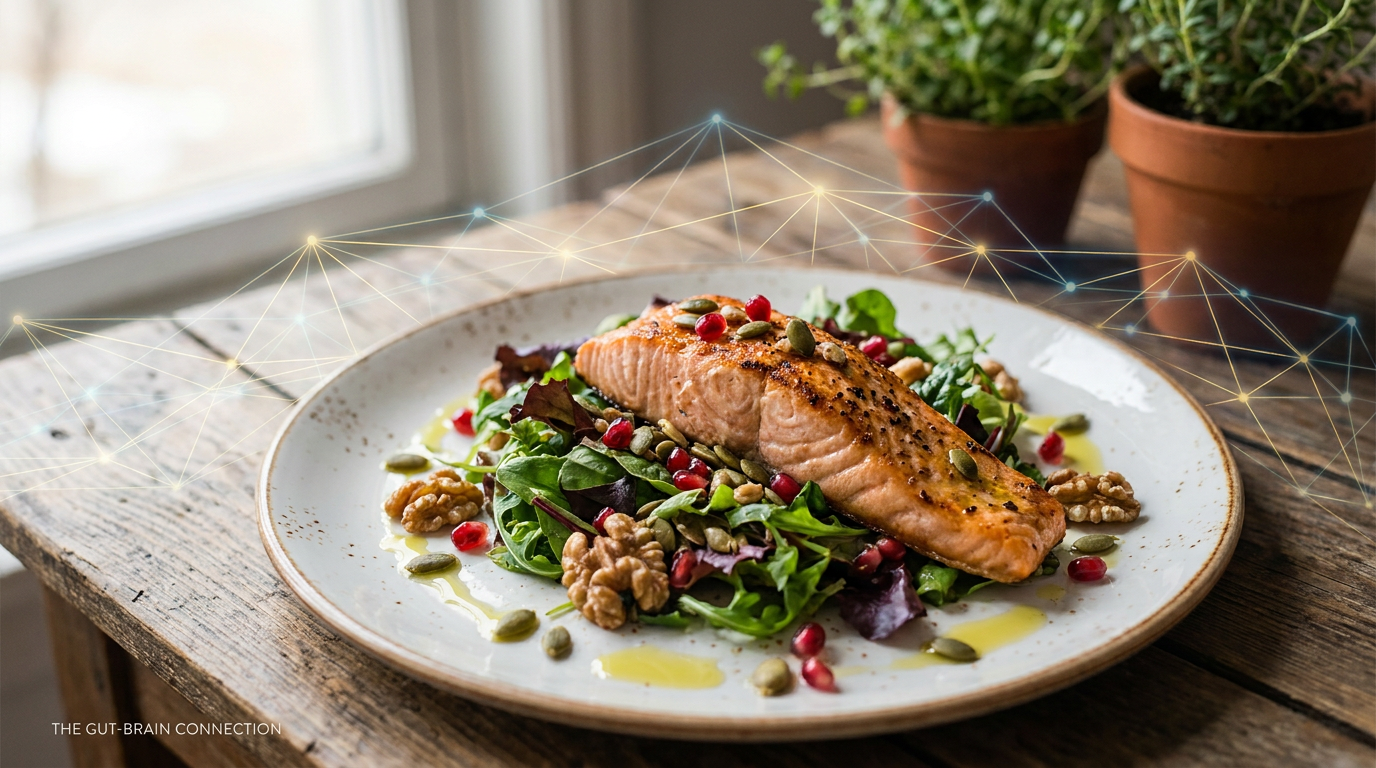
The clinical evidence supporting nutritional psychiatry is rapidly moving from observational correlations to rigorous, randomized controlled trials. One landmark study, known as the SMILES trial, demonstrated that a clinical dietary intervention could effectively treat major depressive episodes. Participants with moderate to severe depression who were guided to switch to a Mediterranean-style diet—rich in vegetables, whole grains, nuts, and fish—experienced significant mood improvements compared to a control group receiving only social support.[1]
The clinical evidence supporting nutritional psychiatry is rapidly moving from observational correlations to rigorous, randomized controlled trials.
Researchers attribute these improvements to the fact that nutrient-dense foods provide the essential building blocks for brain health, reducing systemic inflammation and enhancing neuroplasticity, particularly in the hippocampus. Conversely, the modern Western diet, characterized by high levels of ultra-processed foods, saturated fats, and refined sugars, represents an "evolutionary mismatch" that starves the microbiome of the fiber it needs to thrive, thereby promoting inflammation and anxiety.[1]
As the mechanisms of the gut-brain axis become clearer, scientists are exploring targeted interventions that go beyond general dietary advice. This has given rise to the concept of "psychobiotics"—live bacteria that, when ingested in appropriate amounts, confer a specific mental health benefit by interacting with the host's microbiome.[4][5]
Psychobiotics are essentially probiotics for the brain. Researchers are investigating specific strains, particularly within the Bifidobacterium and Lactobacillus families, for their ability to lower cortisol levels, reduce inflammation, and alleviate symptoms of anxiety and depression. The ultimate goal is to identify precise bacterial strains that can be prescribed to modulate the gut-brain axis, either alongside or potentially in place of traditional psychiatric medications.[2][5]

In clinical trials, the early results have been promising, though complex. For example, studies have shown that administering specific strains of Bifidobacterium longum to human subjects can alter their physiological and psychological responses to stress, improving cognitive performance under pressure. These bacteria appear to work by producing short-chain fatty acids and other metabolites that migrate to the central nervous system to exert calming effects.[2][5]
Despite the excitement, the field of nutritional psychiatry and psychobiotics is still in its infancy, and experts urge caution against oversimplifying the science. The human microbiome is as unique as a fingerprint; a psychobiotic strain that profoundly alleviates anxiety in one individual might have absolutely no effect on another due to their differing baseline gut flora.[4][6]
Furthermore, the commercial supplement industry has quickly capitalized on the trend, marketing generic probiotics as mental health cures without rigorous clinical backing. Researchers emphasize that while targeted psychobiotic supplements hold immense promise, they are not yet a standardized, one-size-fits-all solution. The most effective, evidence-based way to cultivate a healthy, mood-boosting microbiome right now is through whole foods.[2][4]
Nutritionists and psychiatrists increasingly recommend prioritizing prebiotic fibers—found in garlic, onions, asparagus, and whole grains—which serve as the essential "fuel" for beneficial gut bacteria. Additionally, incorporating naturally fermented foods like kefir, sauerkraut, kimchi, and yogurt introduces a diverse array of live microbes into the digestive tract, fostering a resilient ecosystem that isolated supplement capsules struggle to replicate.[4]

The integration of nutrition into mental health care does not mean that traditional psychiatric treatments, such as cognitive behavioral therapy and SSRIs, are obsolete. Instead, nutritional psychiatry offers a powerful, complementary tool that empowers patients to take an active role in their treatment every time they sit down for a meal.[6]
Looking ahead, the future of mental health treatment is likely to be highly personalized. As microbiome sequencing becomes cheaper and more accessible, psychiatrists may soon be able to analyze a patient's gut flora and prescribe a bespoke dietary regimen or specific psychobiotic cocktail tailored to their unique biological makeup.[6]
For now, the message from the scientific community is overwhelmingly positive and actionable. By recognizing the profound connection between the gut and the brain, individuals have a tangible, accessible way to support their mental well-being. Nourishing the microbiome is no longer just about digestive health; it is a fundamental strategy for cultivating a resilient, thriving mind.[1][2]
How we got here
19th Century
Early medical hypotheses emerge regarding a biological link between gastric distress and melancholia.
2015
Major scientific reviews formally establish the microbiome's role in regulating brain chemistry and stress responses.
2017
The landmark SMILES trial publishes findings showing dietary intervention can effectively treat major depressive episodes.
2026
Psychobiotics enter mainstream clinical research as targeted, strain-specific therapies for anxiety and cognitive performance.
Viewpoints in depth
Nutritional Psychiatrists
Advocates for integrating dietary interventions directly into standard mental health care.
This perspective argues that the medical community has historically ignored the biological building blocks of brain health. Nutritional psychiatrists point to robust clinical trials demonstrating that dietary shifts can rival the efficacy of traditional antidepressants for some patients. They advocate for a holistic approach where prescribing a Mediterranean-style diet or specific psychobiotic strains becomes as standard as prescribing an SSRI, emphasizing that food is the most accessible lever patients have to control systemic inflammation.
Clinical Skeptics
Cautions against overhyping early microbiome research before large-scale human trials are complete.
While acknowledging the biological reality of the gut-brain axis, clinical skeptics warn that the science is currently outpacing the clinical applications. They point out that much of the foundational research on psychobiotics was conducted on mice, and human microbiomes are vastly more complex and individualized. This camp expresses concern that vulnerable patients might abandon proven psychiatric medications in favor of unregulated, commercially marketed probiotic supplements that lack rigorous efficacy data.
Public Health Advocates
Focuses on the systemic dietary environment and the 'evolutionary mismatch' of modern food.
Public health experts view the rise in mood disorders through the lens of population-level dietary shifts. They argue that the modern Western diet—heavy in ultra-processed foods and devoid of diverse fibers—has fundamentally altered the human microbiome on a societal scale. From this viewpoint, the mental health crisis cannot be solved solely in the psychiatrist's office; it requires systemic changes to food policy, agricultural subsidies, and public education to make microbiome-friendly whole foods accessible to everyone.
What we don't know
- Exactly which specific strains of bacteria are most effective for different psychiatric conditions.
- How to reliably map an individual's unique microbiome to predict their response to a specific psychobiotic.
- The long-term effects of sustained psychobiotic supplementation on the overall diversity of the gut ecosystem.
Key terms
- Gut-Brain Axis
- The bidirectional biochemical signaling network that takes place between the gastrointestinal tract and the central nervous system.
- Psychobiotics
- Live bacteria that, when ingested in appropriate amounts, might confer a mental health benefit by affecting the host's microbiota.
- Enteric Nervous System
- A mesh-like system of neurons that governs the function of the gastrointestinal tract, often referred to as the body's 'second brain'.
- Dysbiosis
- An imbalance in the microbial communities either in or on the body, particularly in the gut, which can contribute to disease.
- Vagus Nerve
- The longest cranial nerve in the body, acting as the primary neural highway connecting the brainstem to the abdomen and digestive tract.
Frequently asked
Can changing my diet really treat depression?
Yes, clinical evidence like the SMILES trial has shown that switching to a nutrient-dense, Mediterranean-style diet can significantly improve symptoms of moderate to severe depression, though it is often used alongside other treatments.
What exactly are psychobiotics?
Psychobiotics are specific strains of live bacteria (probiotics) that, when ingested, confer a mental health benefit by interacting with the gut microbiome and the gut-brain axis.
Are probiotic supplements enough to improve mood?
While targeted supplements show promise in clinical trials, experts currently recommend prioritizing whole, fermented foods and prebiotic fibers, as the supplement market is largely unregulated and individual microbiomes vary greatly.
How does the gut communicate with the brain?
The gut and brain communicate through the vagus nerve, the immune system, and the production of neurotransmitters like serotonin and dopamine by gut bacteria.
Sources
Source coverage
6 outlets
4 viewpoints surfaced





[1]WikipediaPublic Health Advocates
Nutritional psychiatry
Read on Wikipedia →[2]American Psychological AssociationNutritional Psychiatrists
Microbes and mental health
Read on American Psychological Association →[3]National Institutes of HealthPublic Health Advocates
The gut-brain axis: interactions between enteric microbiota, central and enteric nervous systems
Read on National Institutes of Health →[4]ZOENutritional Psychiatrists
Psychobiotics: Microbes and mental health
Read on ZOE →[5]News-MedicalClinical Skeptics
The Psychological Effects of Psychobiotics
Read on News-Medical →[6]Factlen Editorial TeamIntegrative Medicine Analysts
Synthesis by Factlen editorial team
Read on Factlen Editorial Team →
Every angle. Every day.
Get health stories with full source coverage and perspective breakdowns delivered to your inbox.