
U.S. Women's Soccer Shatters Attendance Records as NWSL and USL Super League Expand
The 2026 season has marked a watershed moment for professional women's soccer in the United States, highlighted by a record 63,004 fans at Denver Summit's inaugural match. Driven by massive expansion fees and the alignment of two Division I leagues, the sport is cementing its status as a premier entertainment industry.
By Factlen Editorial Team
- League Executives & Owners
- Focuses on the massive return on investment, rising franchise valuations, and the push for dedicated infrastructure.
- Sports Business Analysts
- Analyzes the unique dual-league ecosystem and the long-term sustainability of the current growth trajectory.
- Players & Advocates
- Views the attendance boom as the hard-won result of decades of labor organizing and pushing for equal investment.
What's not represented
- · International club executives
- · Youth soccer development directors
Why this matters
The explosive growth of domestic women's soccer proves that the sport has permanently transitioned from a niche cause into a highly lucrative, mainstream entertainment product. For fans and athletes, this means unprecedented access to top-tier competition, better wages, and state-of-the-art facilities across the country.
Key points
- The Denver Summit broke the NWSL attendance record by drawing 63,004 fans to their inaugural home match.
- The NWSL set a new opening-weekend attendance record with 129,202 total fans across eight matches.
- Denver's ownership group paid a record $110 million expansion fee to enter the league.
- The Division I USL Super League announced it will align its calendar with the NWSL starting in 2027.
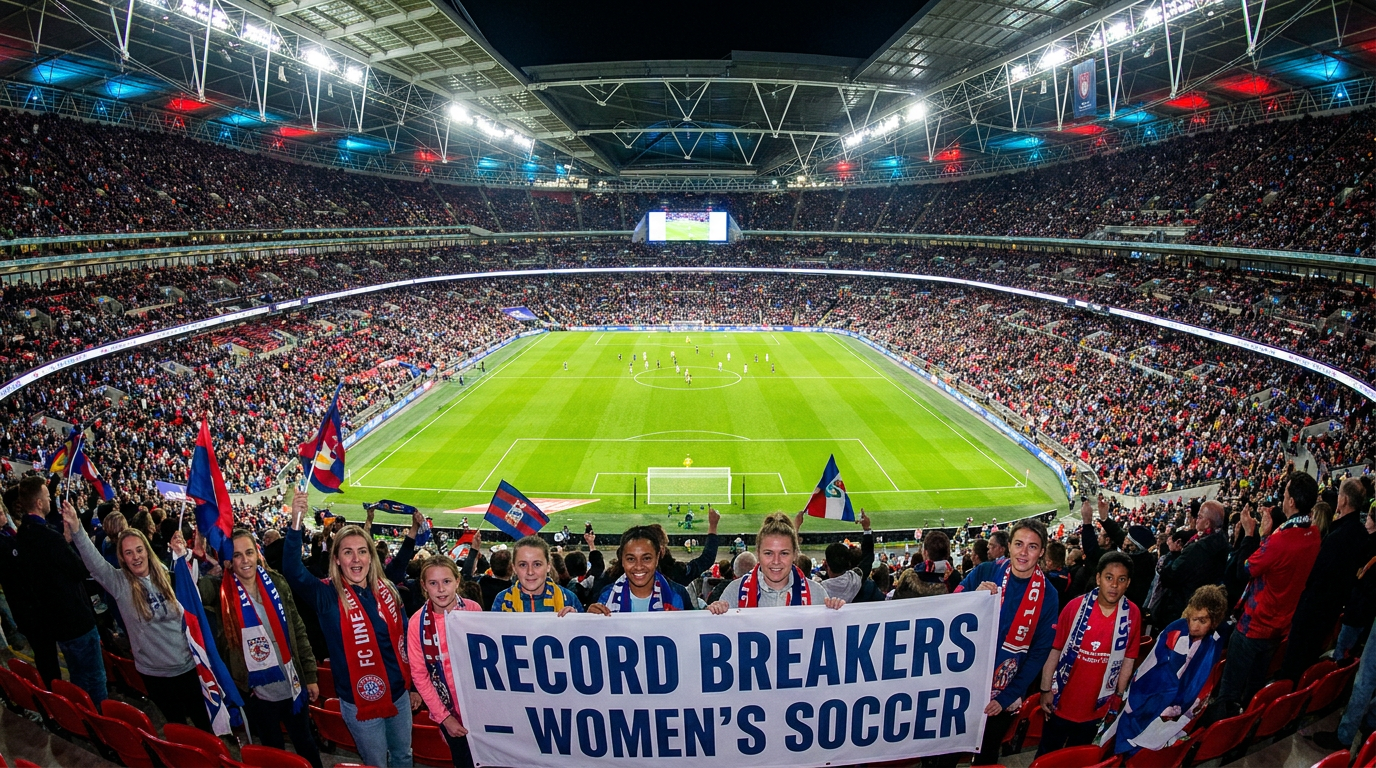
For years, the narrative surrounding women's professional soccer in the United States was one of survival, characterized by modest crowds and cautious investment. In 2026, that narrative has been entirely rewritten. Across the country, the National Women's Soccer League (NWSL) and the rapidly expanding USL Super League are drawing unprecedented audiences, signaling a permanent shift in the American sports landscape. The sheer scale of the crowds turning out for regular-season matches has transformed women's soccer from an emerging market into a premier entertainment juggernaut.[3][5]
The most stunning visual of this new era arrived in late March, when the expansion Denver Summit hosted their inaugural home match against the Washington Spirit. Stepping onto the pitch at Empower Field at Mile High Stadium, the teams were greeted by a roaring crowd of 63,004 fans. The staggering turnout completely shattered the previous NWSL attendance record of 40,091, set just a year prior by Bay FC at Oracle Park in San Francisco.[1][2]
"This is a big deal, and it's very important," noted one fan in attendance, capturing the sentiment of a fanbase that has long demanded greater investment in the sport. The Denver match, which ended in a hard-fought scoreless draw, was widely celebrated not just as a local triumph, but as a milestone for women's sports globally. It proved definitively that in the right markets, with the right marketing, women's club soccer can fill NFL-sized venues.[1]

Denver was not the only expansion side to make a historic splash in 2026. Boston Legacy FC, the league's other new addition for the season, welcomed 30,207 fans to Gillette Stadium in Foxborough for their inaugural match against reigning champions Gotham FC. That figure established a new benchmark for the largest crowd ever to witness a club's first-ever game in NWSL history, underscoring the immediate commercial viability of the league's newest markets.[3][4][6]
These individual milestones contributed to a record-breaking opening weekend that set the tone for the entire 2026 season. Across eight matches, the NWSL drew a combined 129,202 fans, averaging an astonishing 16,150 spectators per game. Seven of those eight matches surpassed the 10,000-fan mark, obliterating the previous opening-weekend record and confirming that the league's growth is distributed across its entire footprint, rather than concentrated in a few legacy markets.[3][4]
These individual milestones contributed to a record-breaking opening weekend that set the tone for the entire 2026 season.
The explosion in attendance is intrinsically linked to the soaring financial valuations of NWSL franchises. The Denver Summit ownership group reportedly paid a record $110 million expansion fee to secure the league's 16th franchise—a staggering leap from the $2 million to $5 million fees seen just a half-decade ago. This influx of institutional capital has allowed clubs to invest heavily in marketing, player acquisition, and world-class facilities.[1]

Infrastructure is rapidly catching up to the fan demand. While the Summit are currently utilizing existing mega-venues like Mile High and Dick's Sporting Goods Park, the club recently closed on land in downtown Denver to construct a dedicated, state-of-the-art women's soccer stadium, slated for completion by the 2028 season. Similar purpose-built facilities have proven that controlling venue revenue is the key to long-term profitability for modern soccer franchises.[1]
The on-field product has benefited immensely from this commercial boom. With higher salary caps and improved working conditions, the NWSL is not only retaining the top American talent but also attracting international stars in their prime. The league's competitive parity remains its strongest selling point; as the 2026 season progresses, the standings reflect a fiercely contested race where expansion sides and legacy clubs routinely trade blows.[6]
Crucially, the NWSL is no longer the only avenue for professional women's soccer in the United States. The USL Super League, which earned Division I sanctioning from U.S. Soccer in 2024, has firmly established itself as a vital pillar of the ecosystem. Operating under the Gainbridge Super League banner, the competition expanded to nine teams for its 2025–2026 campaign, bringing top-tier soccer to markets like Brooklyn, Lexington, and Spokane.[5]

In early June 2026, the Super League announced a strategic shift that will further unify the American women's soccer landscape. After completing its current schedule, the league will play an abridged 14-match fall season before officially transitioning to a spring-to-fall calendar in 2027. This alignment with the NWSL's schedule will streamline the domestic calendar, making it easier for fans to follow the sport and for players to navigate the global transfer market.[5]
The existence of two thriving Division I leagues is a uniquely American phenomenon, creating unprecedented professional opportunities for hundreds of athletes. Where previously a limited number of roster spots forced many talented players into early retirement or overseas moves, the expanded domestic footprint means more players can earn a living wage playing at the highest level in front of passionate local fanbases.[5][6]

As the summer of 2026 heats up, the momentum shows no signs of slowing. The NWSL is pacing toward its highest-ever cumulative seasonal attendance, while the USL Super League prepares for a high-stakes fall sprint. For the millions of fans filling stadiums from Boston to San Diego, the message is clear: the era of women's soccer as a niche endeavor is over, replaced by a booming, highly competitive industry that has finally realized its massive potential.[3][5]
How we got here
January 2025
Denver is awarded the 16th NWSL franchise for a record $110 million expansion fee.
August 2025
The USL Super League kicks off its inaugural season, establishing a second Division I women's league in the US.
March 16, 2026
The NWSL opens its 2026 season, setting a new opening-weekend attendance record with 129,202 total fans.
March 28, 2026
The Denver Summit shatter the single-game NWSL attendance record, drawing 63,004 fans to their home opener.
June 5, 2026
The USL Super League announces a strategic shift to align its calendar with the NWSL starting in 2027.
Viewpoints in depth
League Executives & Owners
Focuses on the massive return on investment, rising franchise valuations, and the push for dedicated infrastructure.
For ownership groups, the 2026 season validates the aggressive financial bets placed on women's soccer over the last five years. Executives point to Denver's $110 million expansion fee and the immediate ability to draw 63,000 fans as proof that the sport is a premium asset. Their primary focus has shifted from mere survival to optimizing revenue streams—specifically through controlling their own venues, securing lucrative local broadcast rights, and attracting blue-chip corporate sponsors who want to align with the league's highly engaged demographic.
Players & Advocates
Views the attendance boom as the hard-won result of decades of labor organizing and pushing for equal investment.
Players and long-time advocates see the packed NFL stadiums not as a sudden miracle, but as the inevitable result of finally marketing the women's game properly. For years, athletes argued that if clubs invested in top-tier facilities, prime-time broadcasting, and robust advertising, the fans would show up. The 2026 numbers vindicate that stance. Furthermore, advocates emphasize that the existence of two Division I leagues (NWSL and USL Super League) provides crucial leverage for players, ensuring better wages, improved working conditions, and more roster spots across the country.
Sports Business Analysts
Analyzes the unique dual-league ecosystem and the long-term sustainability of the current growth trajectory.
Market analysts are closely watching how the United States supports two concurrent Division I women's soccer leagues. While the NWSL commands the highest expansion fees and the largest single-game crowds, the USL Super League's strategic expansion into mid-major markets and its upcoming alignment with the spring-to-fall calendar creates a fascinating dynamic. Analysts suggest that rather than cannibalizing each other, the two leagues are currently expanding the overall pie, capturing different regional markets and building a comprehensive domestic pyramid that rivals the men's game.
What we don't know
- Whether the USL Super League's transition to a spring-to-fall calendar in 2027 will lead to direct competition with the NWSL for broadcast slots and sponsorships.
- How quickly expansion teams like Denver can complete the construction of their dedicated soccer-specific stadiums.
Key terms
- Division I Sanctioning
- The highest level of professional soccer classification granted by the U.S. Soccer Federation, indicating a league meets strict standards for stadium size, financial backing, and market reach.
- Expansion Fee
- The price paid by a new ownership group to buy into a professional sports league, which reached a record $110 million for the NWSL's Denver franchise.
- NWSL Shield
- The trophy awarded annually to the National Women's Soccer League team with the best regular-season record.
- Spring-to-Fall Calendar
- A scheduling format where the season begins in the spring and concludes in the late fall, standard in American soccer leagues like MLS and the NWSL.
Frequently asked
What is the current NWSL attendance record?
The Denver Summit set the all-time NWSL attendance record on March 28, 2026, drawing 63,004 fans to Empower Field at Mile High Stadium for their inaugural home match.
Who are the newest NWSL expansion teams?
The NWSL added two new franchises for the 2026 season: the Denver Summit and Boston Legacy FC, bringing the league total to 16 teams.
What is the USL Super League?
The USL Super League (currently branded as the Gainbridge Super League) is a Division I professional women's soccer league that launched in 2024. It operates alongside the NWSL at the top of the U.S. soccer pyramid.
Why is the USL Super League changing its schedule?
The league announced it will transition to a spring-to-fall calendar in 2027 to align with the NWSL and the broader domestic soccer landscape, making it easier for fans and players to navigate the season.
Sources
Source coverage
7 outlets
3 viewpoints surfaced






[1]The GuardianSports Business Analysts
Denver Summit smash NWSL attendance record with 63,004 fans at Mile High Stadium
Read on The Guardian →[2]Equalizer SoccerPlayers & Advocates
Denver breaks NWSL attendance record
Read on Equalizer Soccer →[3]Just Women's SportsPlayers & Advocates
NWSL Kicks Off 2026 with Season-Opening Attendance Records
Read on Just Women's Sports →[4]NWSLsoccer.comLeague Executives & Owners
NWSL SETS OPENING WEEKEND ATTENDANCE RECORD TO KICK OFF 2026 SEASON
Read on NWSLsoccer.com →[5]USL Super LeagueLeague Executives & Owners
Gainbridge Super League Announces 2026 Fall Season Format, Transition to Spring-to-Fall Calendar in 2027
Read on USL Super League →[6]WikipediaSports Business Analysts
2026 National Women's Soccer League season
Read on Wikipedia →[7]CBS SportsSports Business Analysts
NWSL attendance record broken: Denver Summit draws 63,004 fans in inaugural home match
Read on CBS Sports →

More in sports
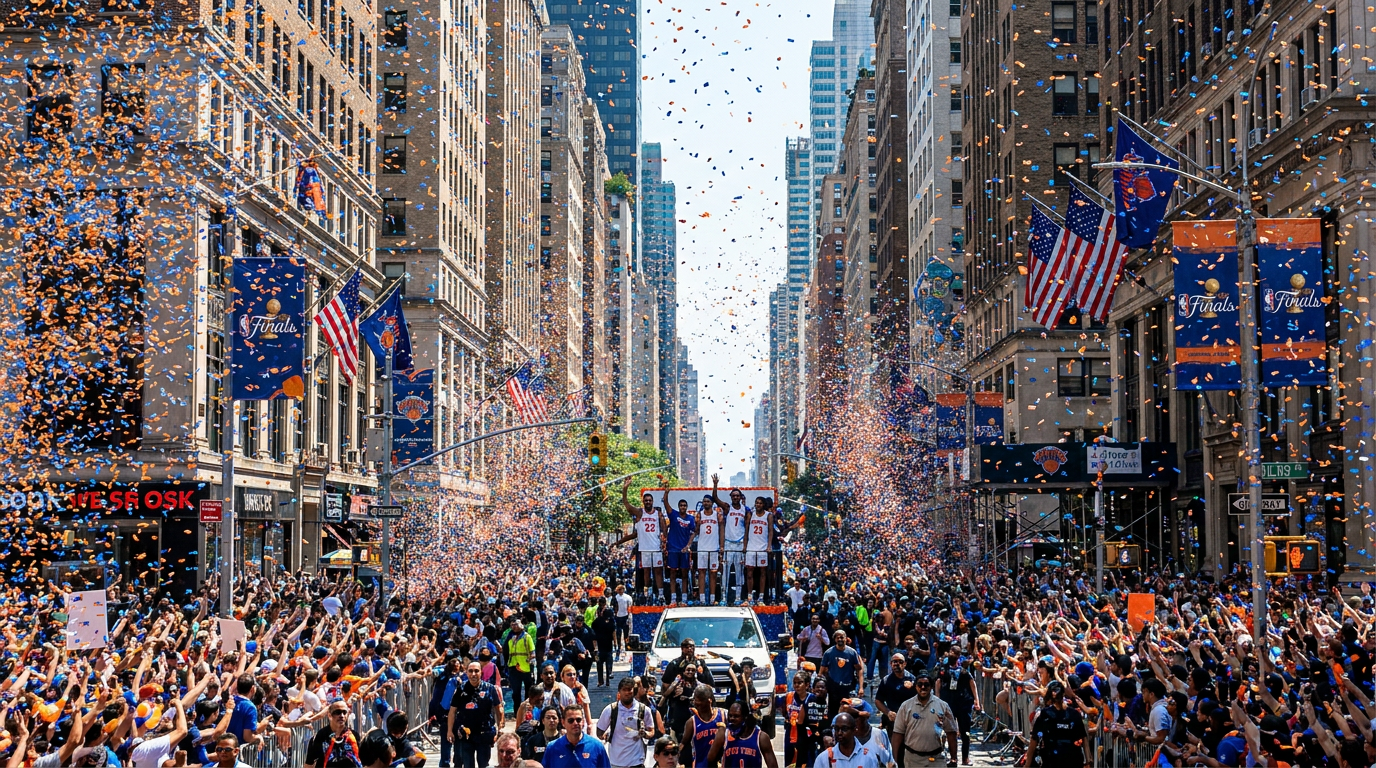
See all 7 stories →Knicks Championship
Millions Throng 'Canyon of Heroes' as Knicks Celebrate First NBA Title in 53 Years
6 sources
Williams Sisters
Serena and Venus Williams to Reunite for Wimbledon Doubles Following Wildcard Entry
6 sources

Women's Sports
How Women's Wrestling Became the NCAA's Fastest-Growing Championship Sport
7 sources

Women's Sports Business
NWSL shatters mid-season attendance and revenue records as purpose-built stadiums pay off
6 sources
Every angle. Every day.
Get sports stories with full source coverage and perspective breakdowns delivered to your inbox.