
New App Lets You Use the 1998 Game Boy Camera on Modern Smartphones
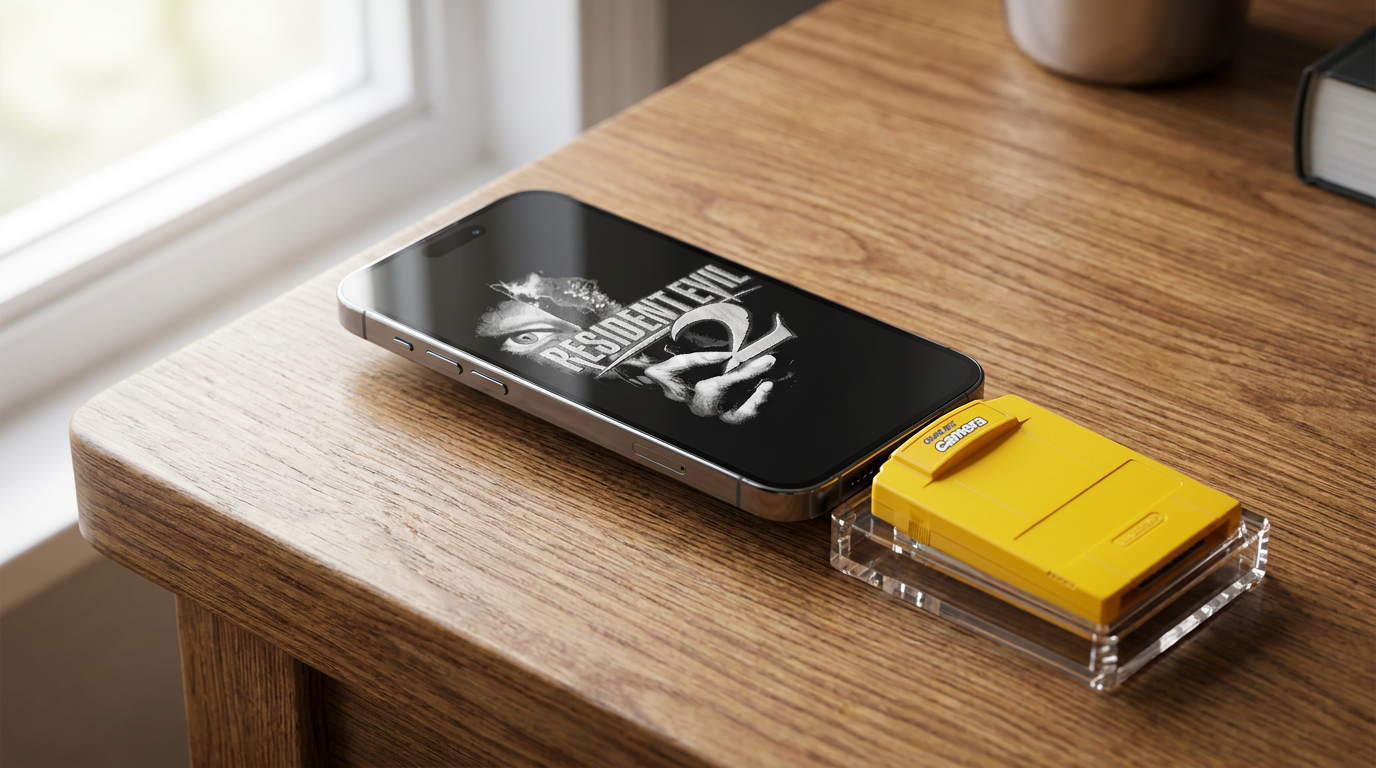
Epilogue has launched Flashback, a new mobile app that connects the original Game Boy Camera to iOS and Android devices via the GB Operator dock. The release allows retro enthusiasts to shoot authentic 16-kilopixel photos and videos, or emulate the iconic four-shade aesthetic using their phone's built-in camera.
By Factlen Editorial Team
- Hardware Purists
- Advocates for using the original physical cartridges to maintain absolute authenticity.
- Software Emulation Advocates
- Supporters of software-only solutions that make the retro aesthetic accessible to everyone.
- Modern Lo-Fi Creators
- Artists using retro limitations to counter the hyper-processed nature of modern photography.
What's not represented
- · Nintendo's official stance on third-party hardware interfacing with their legacy accessories
- · Professional photographers who incorporate vintage digital gear into commercial shoots
Why this matters
This release bridges a 28-year hardware gap, transforming a beloved 1998 toy into a functional tool for modern digital creators. It highlights a growing movement to preserve and repurpose retro technology rather than letting it become e-waste, while offering a lo-fi alternative to AI-processed smartphone photography.
Key points
- Epilogue's Flashback app connects the 1998 Game Boy Camera to iOS and Android devices.
- Users need the $50 GB Operator dock to connect the physical cartridge via USB-C.
- The app features a 'Software Mode' that perfectly emulates the camera for users without the original hardware.
- Photographers can manually adjust original sensor registers like shutter speed and gain.
- The release coincides with a broader resurgence in retro lo-fi photography apps like Delta Camera.
In an era where smartphone manufacturers race to integrate artificial intelligence for pixel-perfect photography, a new mobile application is inviting users to step back into the late 1990s. Epilogue, a company known for its retro gaming hardware, has released "Flashback," an app that allows users to connect an original Game Boy Camera directly to their modern iOS or Android devices. The release bridges a nearly three-decade technological gap, turning a beloved vintage toy into a fully functional tool for modern digital creators who are looking for something entirely different from the standard smartphone camera experience.[1][3]
The physical bridge between the 28-year-old Nintendo accessory and a modern smartphone is the GB Operator, a $50 USB-C dock originally designed to let users play and back up Game Boy cartridges on their computers. By plugging the GB Operator directly into a phone or tablet and inserting the vintage camera cartridge, the Flashback app instantly transforms the device's high-resolution OLED screen into a massive, modern viewfinder for the retro lens. It is a striking juxtaposition of hardware, marrying the pinnacle of modern display technology with one of the earliest consumer digital sensors.[1][5]
Released in 1998, the Game Boy Camera was briefly recognized as the world's smallest consumer digital camera. By modern standards, its specifications are almost comically limited: it captures images at a resolution of 128 by 112 pixels—roughly 16 kilopixels in total—and relies on a highly restrictive palette of just four shades of gray. Yet, it is exactly these severe hardware constraints that have fostered a dedicated cult following among photographers, artists, and hardware tinkerers who appreciate the unique, heavily dithered aesthetic that the camera produces.[7]

For years, extracting photos from the Game Boy Camera required convoluted workarounds, such as printing them on thermal paper via the original Game Boy Printer or using custom-built Arduino rigs and HDMI capture cards. Epilogue began streamlining this extraction process in 2021 with the launch of the GB Operator, and in 2024, the company released a software update that allowed the cartridge to function as a beautifully pixelated, low-resolution webcam for PC video calls. The community response to these updates proved that there was a massive appetite for modernizing the camera's workflow.[5][6]
The new Flashback app represents the final step in untethering the retro camera from desktop computers and bringing it into the mobile era. In its dedicated "Hardware Mode," the app requires no complex Bluetooth pairing or network setup; it automatically detects the connected M64282FP image sensor and immediately begins pulling a live feed. Users can capture both still photos and live videos, saving the grainy, dithered files directly to their smartphone's camera roll for easy sharing on modern social media platforms.[2]
The new Flashback app represents the final step in untethering the retro camera from desktop computers and bringing it into the mobile era.
Recognizing that original Game Boy Camera cartridges are becoming increasingly rare, expensive, and prone to hardware failure, Epilogue also included a "Software Mode" in the Flashback app. This mode requires no external hardware whatsoever, instead using the smartphone's built-in camera to faithfully recreate the exact processing pipeline of the 1998 accessory. It applies the same dithering algorithms and four-color grayscale limitations in real-time, allowing anyone to experiment with the iconic aesthetic even if they do not own the physical Nintendo cartridge or the GB Operator dock.[2][3]

What elevates the Flashback app beyond a simple novelty social media filter is its deep commitment to technical authenticity. The application offers manual controls that interface directly with the original sensor's hardware registers. Photographers can adjust the shutter speed, gain, exposure, and sharpness using proper decibel and timing values, rather than relying on decorative, meaningless sliders. Every captured photo is stamped with its specific hardware settings, allowing users to precisely replicate their favorite lo-fi looks across different shooting environments.[2]
Epilogue is not alone in recognizing the surging demand for this specific brand of digital nostalgia. Riley Testut, the developer behind the popular Delta retro game emulator, recently launched a closed beta for "Delta Camera" on iOS. Much like Flashback's software mode, Delta Camera meticulously emulates the monochromatic style of the Game Boy Camera, but it also adds modern conveniences like multi-shot panoramas and support for the iPhone 16's physical Camera Control button, blending retro visuals with cutting-edge smartphone hardware.[4][7]
Testut's application even replicates the quirky, pixelated software interface that Nintendo designed almost three decades ago, complete with a virtual directional pad and chunky menus. While it currently lacks the bizarre, surreal mini-games that shipped on the original 1998 cartridge, the app provides a highly accessible entry point into retro photography for users who do not want to carry external dongles. It highlights a growing trend of developers treating classic software interfaces with the same reverence usually reserved for vintage physical hardware.[4][7]

The simultaneous emergence of these retro tools highlights a broader cultural shift in how people approach digital photography today. As computational photography increasingly relies on machine learning to artificially sharpen edges, perfectly balance lighting, and automatically erase blemishes, a growing subset of creators is actively seeking out digital imperfections. The Game Boy Camera's severe limitations strip away all modern safety nets, forcing users to focus entirely on fundamental photography principles like composition, lighting, and contrast, rather than relying on software to rescue a poorly framed shot.[1][3]
Furthermore, projects like the GB Operator serve an increasingly important role in the realm of hardware preservation and environmental sustainability. By building modern software bridges to legacy media, developers ensure that millions of manufactured cartridges do not simply become obsolete e-waste sitting in landfills. They allow aging hardware to find new life and utility in modern creative workflows that its original engineers in the 1990s could never have possibly imagined. This approach champions the idea that old technology can still be highly relevant if given the right modern interface.[5][6]
Ultimately, whether achieved through a physical cartridge plugged into a USB-C port or a meticulously coded software emulator, the revival of the Game Boy Camera proves that the pursuit of a hyper-realistic, perfect image is not the only valid form of photography. Sometimes, stepping away from artificial intelligence and embracing 16 kilopixels and four shades of gray is exactly what a moment requires to be truly memorable. It is a celebration of the flawed, the pixelated, and the beautifully constrained.[1][2]
How we got here
1998
Nintendo releases the Game Boy Camera, which briefly holds the record for the world's smallest consumer digital camera.
2021
Epilogue launches the GB Operator, a USB dock designed to play and back up original Game Boy cartridges on PC.
July 2024
A software update for the GB Operator allows the Game Boy Camera to function as a low-resolution PC webcam.
June 2026
Epilogue releases the Flashback mobile app, bringing full Game Boy Camera functionality to iOS and Android devices.
Viewpoints in depth
Hardware Purists
Advocates for using the original physical cartridges to maintain absolute authenticity.
For hardware purists, the appeal lies in the tactile reality of the 1998 cartridge. They argue that true retro photography requires the original M64282FP sensor, complete with its physical quirks, light leaks, and authentic hardware-level dithering. To this camp, the GB Operator is a vital preservation tool that keeps aging electronics out of landfills by giving them modern utility.
Software Emulation Advocates
Supporters of software-only solutions that make the retro aesthetic accessible to everyone.
Emulation advocates point out that original Game Boy Camera cartridges are becoming increasingly rare, expensive, and prone to hardware failure. They champion tools like Epilogue's 'Software Mode' and Riley Testut's Delta Camera for democratizing the 8-bit aesthetic. By perfectly recreating the processing pipeline in software, they argue, developers can introduce a new generation to lo-fi photography without the barrier of tracking down 28-year-old hardware.
Modern Lo-Fi Creators
Artists using retro limitations to counter the hyper-processed nature of modern photography.
This camp views the Game Boy Camera not merely as a nostalgic toy, but as a distinct artistic medium. In an era where smartphone cameras use artificial intelligence to automatically sharpen edges, balance lighting, and erase imperfections, these creators actively seek out the severe limitations of 16 kilopixels. They argue that having only four shades of gray forces a photographer to focus entirely on fundamental composition, contrast, and lighting, resulting in more intentional and striking art.
What we don't know
- Whether Nintendo will take any legal or protective action against apps that closely emulate their classic interfaces.
- How battery-intensive the physical hardware connection will be for modern smartphones during extended photo sessions.
Key terms
- Game Boy Camera
- A 1998 Nintendo accessory that allowed users to take low-resolution, grayscale digital photos.
- GB Operator
- A USB-C dock created by Epilogue that reads original Game Boy cartridges on modern computers and smartphones.
- Dithering
- A technique used in low-resolution graphics to create the illusion of color depth by strategically placing pixels of different shades.
- Kilopixel
- A unit of resolution equal to one thousand pixels; the Game Boy Camera shoots at roughly 16 kilopixels.
Frequently asked
Do I need the original Game Boy Camera to use the app?
No. While the app supports the original cartridge via the GB Operator dock, it also includes a 'Software Mode' that faithfully emulates the retro aesthetic using your phone's built-in camera.
Does the Flashback app work on both iPhone and Android?
Yes, Epilogue has made the Flashback app available for iOS, iPadOS, and Android devices.
Can I record video with this setup?
Yes, the app allows users to capture both photos and live video in the classic 128x112 grayscale format.
Sources
Source coverage
7 outlets
3 viewpoints surfaced







[1]The VergeModern Lo-Fi Creators
You can now use the Game Boy Camera with your phone
Read on The Verge →[2]EpilogueSoftware Emulation Advocates
Flashback turns the Game Boy Camera into a viewfinder on your phone
Read on Epilogue →[3]NewsBytesModern Lo-Fi Creators
Epilog releases Flashback app to transfer Game Boy Camera photos
Read on NewsBytes →[4]9to5MacSoftware Emulation Advocates
Delta's creator built a full-featured Game Boy Camera app for the iPhone
Read on 9to5Mac →[5]Tom's HardwareHardware Purists
This Game Boy cartridge dock will give a second wind to your 26-year-old toy camera
Read on Tom's Hardware →[6]GalaxusHardware Purists
Who needs razor-sharp quality in video calls? Soon you'll be able to turn the Game Boy Camera into a beautifully pixelated low-res webcam
Read on Galaxus →[7]How-To GeekSoftware Emulation Advocates
Delta Camera Emulates the Game Boy Camera on Your iPhone
Read on How-To Geek →
More in technology
See all 5 stories →

Every angle. Every day.
Get technology stories with full source coverage and perspective breakdowns delivered to your inbox.