
U.S. and Iran Sign Agreement to End War; Vance Lashes Out at Israeli Critics
The Trump administration and Iran have finalized a memorandum of understanding to end their four-month war, reopening the Strait of Hormuz. The deal has sparked a fierce rift with Israel, prompting Vice President JD Vance to issue an extraordinary public rebuke of Israeli leadership.
By Factlen Editorial Team
- Trump Administration
- Argues the deal successfully ends the war, reopens global shipping, and forces Iran to negotiate its nuclear program.
- Israeli Security Establishment
- Views the deal as a strategic disaster that leaves Iran's nuclear infrastructure intact and rewards Tehran financially.
- Iranian Leadership
- Frames the agreement as a diplomatic victory that secures the end of the blockade and a pathway to sanctions relief.
- Geopolitical Analysts
- Notes that the agreement exposes a severe rift between the U.S. and Israel, leaving Netanyahu politically isolated.
What's not represented
- · Lebanese Government
- · Iranian Citizens
- · Gulf State Leaders
Why this matters
The agreement halts a major Middle Eastern war and immediately stabilizes global energy markets by reopening the Strait of Hormuz. However, the unprecedented public rupture between the U.S. and Israel signals a historic realignment in Middle Eastern geopolitics, potentially leaving Israel to confront Iran's nuclear ambitions alone.
Key points
- The U.S. and Iran signed a 14-point memorandum of understanding to end their four-month war.
- The agreement immediately lifted the U.S. naval blockade, allowing 12.5 million barrels of oil through the Strait of Hormuz.
- A 60-day negotiation period will now begin in Switzerland to finalize details on Iran's nuclear program and sanctions relief.
- Israeli officials strongly oppose the deal, arguing it leaves Iran's nuclear infrastructure intact and limits Israel's military freedom.
- Vice President JD Vance publicly rebuked Israeli critics, warning them against attacking the Trump administration over the agreement.
The United States and Iran have officially signed a sweeping memorandum of understanding to end their nearly four-month war, lifting a crippling U.S. naval blockade and reopening the Strait of Hormuz to global shipping. The 14-point agreement, known as the Islamabad Memorandum and brokered with the diplomatic assistance of Pakistan, marks a sudden and dramatic halt to hostilities that had threatened to engulf the entire Middle East. Digitally signed by President Donald Trump and Iranian President Masoud Pezeshkian, the framework establishes an immediate ceasefire and sets the stage for complex negotiations over the future of Tehran's nuclear ambitions. The abrupt pivot from military confrontation to diplomatic engagement has sent shockwaves through the international community, fundamentally altering the strategic calculus in the region and immediately stabilizing volatile global energy markets.[1][2][5]
The immediate effects of the agreement were felt on the water, where the U.S. military rapidly dismantled its maritime chokehold. Vice President JD Vance announced during a White House press briefing on Thursday that the U.S. Navy has already allowed more than a dozen commercial ships to pass safely through to Iranian ports. Vance highlighted the economic relief the deal brings to the global economy, noting that a staggering 12.5 million barrels of oil flowed through the critical Strait of Hormuz shipping channel on Wednesday night alone. Framing the resumption of oil traffic as an early and tangible victory for the administration, Vance argued that the United States is honoring its end of the military de-escalation while forcing Iran to the negotiating table under the weight of severe economic exhaustion.[4]

But the diplomatic breakthrough has triggered an unprecedented and highly public rupture between the Trump administration and Israel. Israeli officials, who had heavily lobbied for and championed the joint military campaign against Tehran that began in February, found themselves largely sidelined during the final stages of the secret negotiations. The Israeli security establishment views the resulting ceasefire not as a victory, but as a strategic disaster that prematurely relieves the pressure on the Islamic Republic. For decades, Israeli Prime Minister Benjamin Netanyahu built his political identity on his ability to influence Washington and confront Iran, but analysts note that this agreement exposes a widening chasm between U.S. and Israeli priorities, leaving Netanyahu politically isolated and facing intense domestic pressure.[3][7]
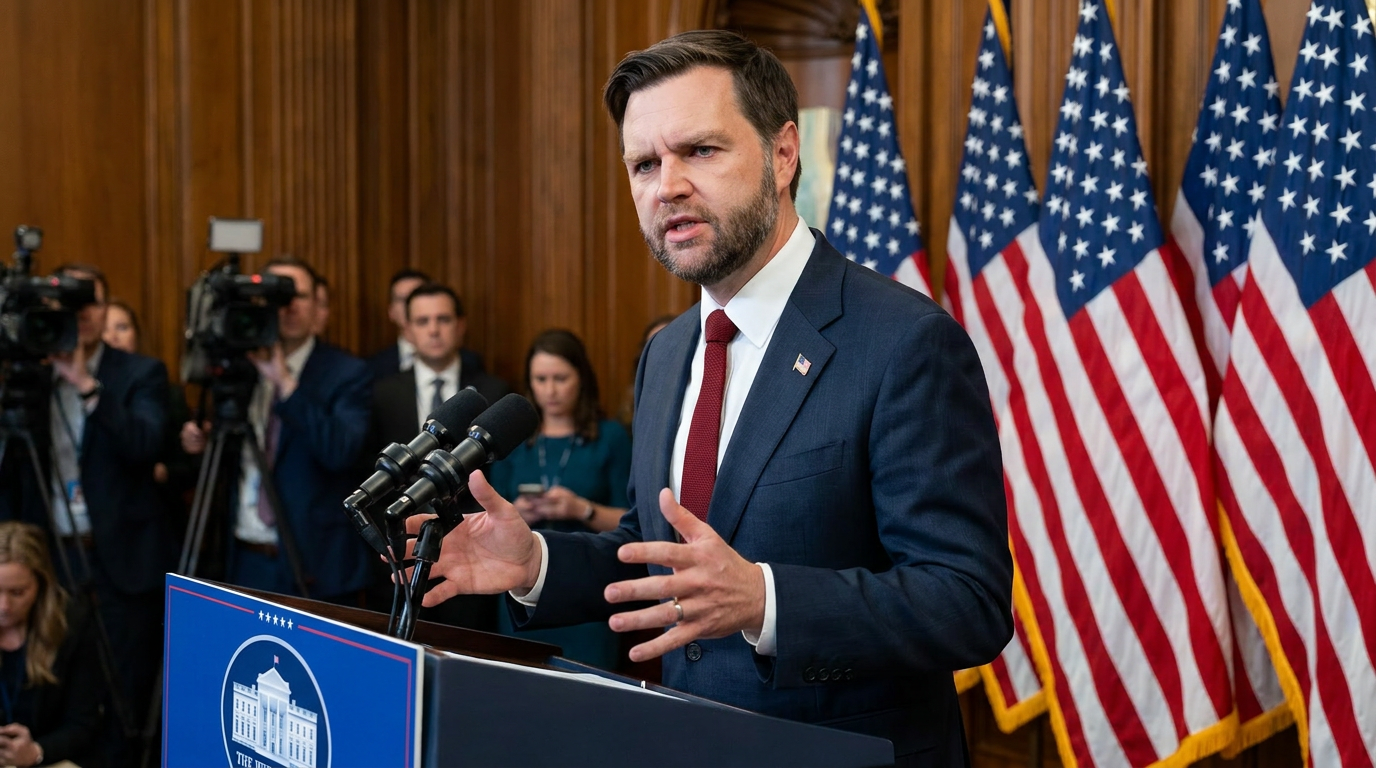
The simmering tensions exploded into open hostility on Thursday when Vice President Vance used the White House podium to issue an extraordinary rebuke of Israeli leadership. Responding to the chorus of complaints from Jerusalem, Vance lashed out at Israeli critics, bluntly telling them to "wake up and smell the reality" of their growing international isolation. He warned Israeli leaders against attacking the "only powerful ally" they have left, emphasizing that President Trump remains uniquely sympathetic to their nation despite the current friction. Vance's harsh rhetoric underscored the administration's frustration with Israel's refusal to embrace the ceasefire, signaling that the White House is willing to publicly discipline its closest Middle Eastern partner to protect the fragile peace agreement with Tehran.[1]
Behind closed doors, the relationship appears equally fractured. Prime Minister Netanyahu reportedly informed President Trump directly that Israel will not consider itself bound by the terms of the U.S.-Iran agreement. Israel's defense apparatus, including Defense Minister Israel Katz and IDF Chief of Staff Lt. Gen. Eyal Zamir, fears the deal leaves Iran's deeply buried nuclear infrastructure largely intact while granting Tehran significant economic breathing room to rebuild its military capabilities. Senior Israeli cabinet members are operating under the baseline assumption that the United States has lost interest in a prolonged military conflict, forcing Israel to prepare for the daunting prospect of confronting Iran's nuclear program and its network of regional proxies entirely alone in the years to come.[3][5]

Behind closed doors, the relationship appears equally fractured.
A major point of contention threatening to unravel the broader regional peace is a specific provision in the memorandum that calls for an end to fighting on all regional fronts, explicitly including Lebanon. Israel has maintained a heavy military presence and conducted extensive operations in southern Lebanon to combat the Iran-backed militant group Hezbollah. Iranian officials have firmly stated that any continued Israeli military operations in Lebanese territory would be considered a direct violation of the U.S.-Iran understanding. However, Israeli officials have signaled they have no intention of withdrawing their forces or halting their campaign against Hezbollah, setting the stage for a dangerous proxy standoff that could test the limits of Washington's ability to enforce the terms of its new agreement.[5][6]
With the military phase of the conflict officially paused, the memorandum triggers a high-stakes 60-day negotiation period to resolve the core disputes that sparked the war. Delegations from Washington and Tehran are expected to convene in Switzerland in the coming days to hammer out the final, binding details of Iran's nuclear program. A central focus of these technical talks will be the fate of Iran's highly enriched uranium stockpile, much of which is currently buried under the rubble of nuclear facilities destroyed by U.S. and Israeli airstrikes. The United States is demanding that the International Atomic Energy Agency (IAEA) be granted immediate access to supervise the extraction and dilution of this fissile material, a demand Iran has historically resisted.[1][2]
In exchange for verifiable nuclear concessions, the upcoming negotiations will address massive financial incentives designed to pull Iran's economy back from the brink of collapse. If Tehran meets specific, stringent benchmarks during the 60-day window, the deal outlines a phased unfreezing of billions of dollars in Iranian assets held in foreign banks and broad relief from crippling secondary sanctions. Most controversially, the framework includes discussions regarding the potential establishment of a $300 billion international reconstruction fund to help rebuild the country's war-torn infrastructure. The Trump administration insists that no financial relief will be granted until Iran fully complies with the nuclear provisions, but critics argue the mere promise of such vast sums emboldens the regime.[2]

The sweeping agreement faces intense scrutiny and skepticism in Washington, where lawmakers from both parties are demanding greater transparency. Skeptical Republican senators, usually staunch allies of the president, have demanded the White House release the full, unredacted text of the memorandum of understanding. Lawmakers are raising pointed questions about how the administration plans to independently verify Iranian compliance, particularly regarding the hidden nuclear sites, and how it will prevent the proposed financial relief from being funneled to regional militant groups. The administration faces an uphill battle in Congress to sell the deal as a definitive victory rather than a temporary pause that merely kicks the can down the road.[2]
For now, the guns have fallen silent across the Persian Gulf, and global energy markets are breathing a collective sigh of relief as oil tankers resume their vital routes. Yet the long-term strategic landscape of the Middle East has been fundamentally and perhaps permanently altered. The United States has decisively pivoted toward diplomacy, prioritizing global economic stability and military disengagement over the total capitulation of the Iranian regime. In doing so, Washington has exposed a historic rift with Jerusalem, leaving an increasingly isolated Israel to navigate a hostile region and a resilient Iran without the unconditional military backing it has relied upon for decades.[6][7]
How we got here
February 2026
The U.S. and Israel launch a joint military campaign against Iran.
April 8, 2026
A temporary ceasefire goes into effect, halting major combat operations.
June 16, 2026
The U.S. and Iran announce a 14-point memorandum of understanding to end the war.
June 17, 2026
12.5 million barrels of oil flow through the reopened Strait of Hormuz.
June 18, 2026
The 60-day negotiation period officially begins, alongside public U.S.-Israel friction.
Viewpoints in depth
Trump Administration
Argues the agreement successfully ends a costly war, reopens global shipping lanes, and forces Iran to negotiate from a position of economic weakness.
The administration views the Islamabad Memorandum as a pragmatic victory that achieves core U.S. objectives without the burden of a prolonged occupation. By lifting the naval blockade and allowing 12.5 million barrels of oil to flow, the White House claims it has stabilized global energy markets. Officials emphasize that the 60-day negotiation window places the burden of proof on Tehran, insisting that no sanctions relief or reconstruction funds will be released until the IAEA verifies the destruction of Iran's highly enriched uranium stockpile.
Israeli Security Establishment
Views the deal as a strategic capitulation that rewards Tehran financially while leaving its nuclear infrastructure and proxy networks intact.
Israeli defense officials, including Defense Minister Israel Katz, argue the ceasefire prematurely relieves the military pressure that was bringing the Iranian regime to the brink of collapse. They are particularly alarmed by provisions that attempt to restrict Israeli operations in Lebanon and by the prospect of a $300 billion reconstruction fund that could eventually finance Hezbollah and Hamas. The establishment's baseline assumption is that the U.S. has lost the political will to fight, forcing Israel to prepare for unilateral military action to prevent Iran from obtaining a nuclear weapon.
Iranian Leadership
Frames the agreement as a diplomatic triumph achieved under "mutual respect," securing the end of the blockade and a pathway to economic recovery.
Iranian President Masoud Pezeshkian and the parliamentary leadership have presented the memorandum to their domestic audience as a victory of national resilience. By successfully demanding the reopening of the Strait of Hormuz and the lifting of the U.S. naval blockade upfront, Tehran secured immediate relief from crippling economic strangulation. The leadership views the 60-day negotiation period as an opportunity to unfreeze billions in foreign assets and secure international investment, while maintaining that their nuclear program remains strictly for civilian purposes.
What we don't know
- Whether Iran will grant the IAEA full access to supervise the dilution of its highly enriched uranium.
- How Israel will respond militarily if it feels the final agreement fails to neutralize Iran's nuclear threat.
- Whether the proposed $300 billion reconstruction fund will survive intense scrutiny from skeptical U.S. lawmakers.
Key terms
- Islamabad Memorandum
- The 14-point agreement brokered with Pakistan's help that outlines the end of the U.S.-Iran war.
- Strait of Hormuz
- A crucial maritime chokepoint between the Persian Gulf and the Gulf of Oman, through which a significant portion of the world's oil passes.
- IAEA
- The International Atomic Energy Agency, the United Nations watchdog responsible for monitoring Iran's nuclear program.
- Secondary Sanctions
- U.S. economic penalties applied to third-party countries or foreign companies that do business with Iran.
Frequently asked
Does this agreement permanently end the war?
The memorandum establishes a permanent end to hostilities and lifts the U.S. naval blockade, but it triggers a 60-day negotiation period to finalize a permanent treaty regarding Iran's nuclear program.
Why is Israel opposed to the deal?
Israeli leaders believe the agreement leaves Iran's nuclear infrastructure intact, provides Tehran with massive financial relief, and attempts to limit Israel's military operations against Hezbollah in Lebanon.
What happens during the 60-day negotiation window?
U.S. and Iranian officials will meet in Switzerland to negotiate the destruction of highly enriched uranium, the unfreezing of Iranian assets, and the potential creation of a $300 billion reconstruction fund.
Sources
Source coverage
7 outlets
4 viewpoints surfaced






[1]The Washington PostTrump Administration
Vance warns Israel against criticizing US-Iran deal
Read on The Washington Post →[2]The GuardianIranian Leadership
Skeptical Republicans demand details of US-Iran outline peace deal
Read on The Guardian →[3]The Times of IsraelIsraeli Security Establishment
Iran MOU would cap self-defeating ceasefire for Trump, marks huge problem for Israel
Read on The Times of Israel →[4]Global NewsTrump Administration
Vance says US Navy lifted blockade as part of Iran agreement
Read on Global News →[5]Anadolu AgencyIsraeli Security Establishment
Israel's Netanyahu tells Trump he will not be bound by Iran-US deal: Report
Read on Anadolu Agency →[6]Council on Foreign RelationsGeopolitical Analysts
In the U.S.-Iran agreement, Israelis fear they will lose the peace
Read on Council on Foreign Relations →[7]DawnGeopolitical Analysts
US-Iran deal a 'political nightmare' for Netanyahu, analysts say
Read on Dawn →

More in news politics
See all 8 stories →Strait of Hormuz
U.S. Lifts Blockade on Iranian Ports as 60-Day Window Opens for Final Peace Deal
8 sources

U.S.-Israel Relations
Vice President Vance Rebukes Israeli Critics of U.S.-Iran Peace Agreement
6 sources
U.S.-Iran Deal
U.S. and Iran Sign 14-Point Agreement to End War, Sparking Fierce Backlash from Israel
6 sources

U.S.-Iran Relations
Vance Rebukes Israeli Critics of U.S.-Iran Peace Agreement, Warning Against Alienating 'Only Powerful Ally'
8 sources
Every angle. Every day.
Get news politics stories with full source coverage and perspective breakdowns delivered to your inbox.