
The Science of Resistant Starch: How Cooling Your Carbs Transforms Their Nutritional Value
A simple kitchen technique—cooking and cooling starchy foods like rice, pasta, and potatoes—alters their molecular structure, turning them into gut-friendly prebiotics that lower blood sugar spikes.
By Factlen Editorial Team
- Metabolic Health Experts
- Focus on blood sugar control and insulin sensitivity.
- Microbiome Researchers
- Focus on gut bacteria, fermentation, and butyrate production.
- Culinary Nutritionists
- Focus on practical kitchen applications, satiety, and sustainable eating habits.
What's not represented
- · Agricultural scientists studying high-resistant-starch crop breeding
- · Food manufacturers developing commercial resistant starch additives
Why this matters
By simply changing how you store and reheat everyday carbohydrates, you can lower their caloric impact, prevent blood sugar crashes, and actively improve your gut health. This zero-cost kitchen habit allows you to enjoy staple foods like rice and pasta while transforming them into functional, disease-fighting prebiotics.
Key points
- Cooking and cooling starchy foods like rice and potatoes changes their molecular structure into resistant starch.
- Resistant starch bypasses digestion in the small intestine, significantly reducing post-meal blood sugar spikes.
- In the large intestine, resistant starch acts as a prebiotic, feeding beneficial bacteria that produce butyrate.
- Gently reheating the cooled carbohydrates does not destroy the newly formed resistant starch structure.
- Consuming resistant starch yields fewer calories per gram and increases feelings of fullness after meals.
To understand the transformation, it helps to look at the chemistry of a standard carbohydrate. Normal starches, such as those found in a freshly baked potato or a steaming bowl of white rice, are composed of long, complex chains of glucose molecules. When these foods are eaten warm, the digestive enzymes in the human small intestine easily and rapidly break these chemical bonds apart. The resulting glucose is then quickly absorbed into the bloodstream, which provides an immediate burst of energy but can also cause a swift, undesirable rise in blood sugar followed by a subsequent crash.[1][4]
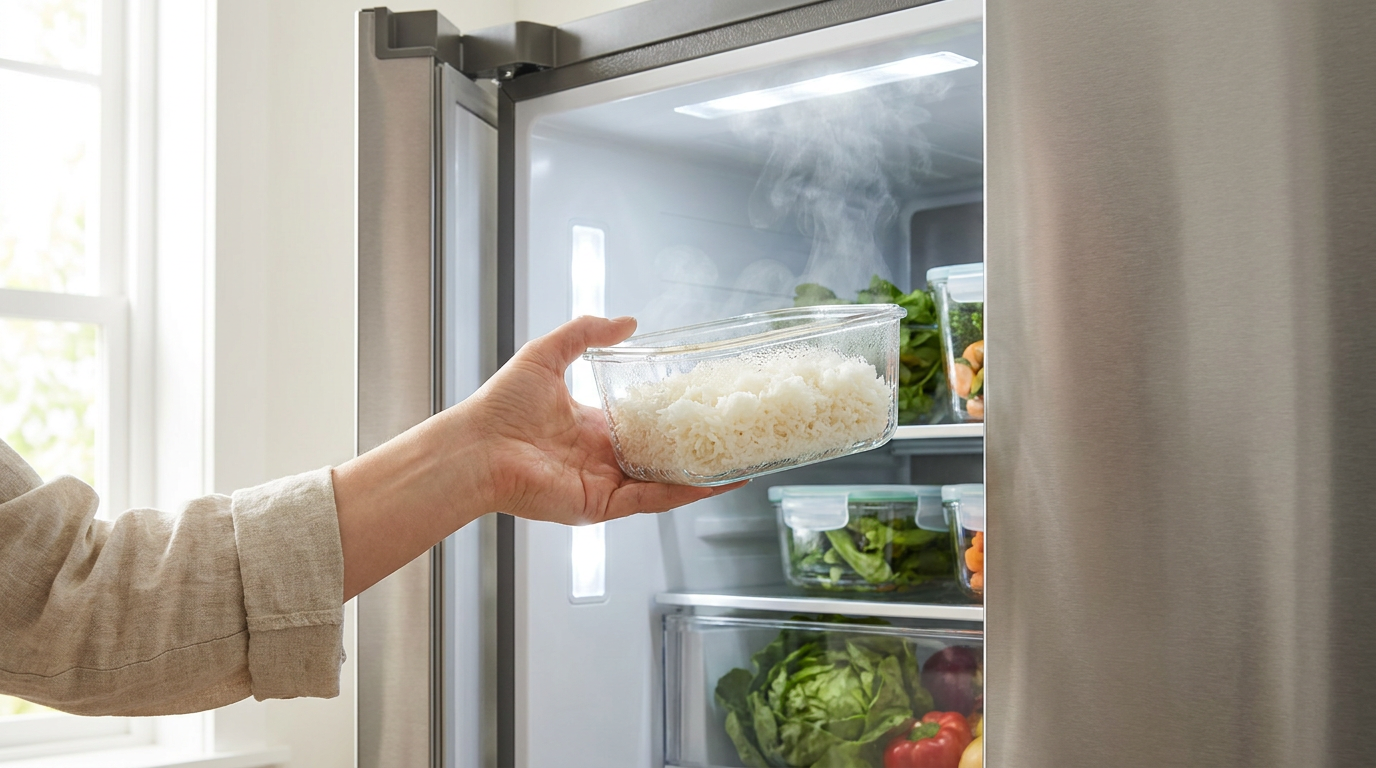
However, when these starchy foods are cooked in water and then allowed to cool in a refrigerator for at least 12 hours, a fascinating chemical process called 'retrogradation' occurs. As the temperature of the food drops, the swollen starch molecules begin to reorganize and pack themselves tightly together into a new, crystallized structure. This newly formed, rigid structure physically resists the digestive enzymes in the small intestine—hence the scientific name 'resistant starch.' The carbohydrate has fundamentally changed its form, transitioning from a rapidly digestible sugar source into a complex, fibrous matrix.[2][5]
The most practical and appealing aspect of this chemical shift for everyday home cooks is its durability. Once the resistant starch is formed through the cooling process, it does not disappear if the food is subsequently reheated. Diners do not have to endure eating cold rice, chilled pasta, or icy potatoes to reap the metabolic benefits. Gently warming the leftovers the next day preserves the retrograded starch structure, making routine meal-prepping an effortless and highly effective way to optimize carbohydrate intake without sacrificing the comfort of a hot meal.[1][5]

Because resistant starch successfully bypasses digestion in the small intestine, its impact on human metabolic health is profound. Without the rapid enzymatic breakdown into simple glucose, the body experiences a much slower, steadier absorption of energy. Clinical data and continuous glucose monitor readings consistently show that consuming cooled and reheated starches results in significantly lower post-meal blood glucose spikes compared to eating freshly cooked starches of the exact same portion size. This blunted glycemic response provides a smoother energy curve and prevents the lethargy often associated with a heavy carbohydrate meal.[4][5]
This stabilized glycemic response makes the cook-cool method an incredibly valuable tool for individuals managing type 2 diabetes, insulin resistance, or general metabolic health. In fact, rigorous nutritional research indicates that consuming 15 to 30 grams of resistant starch daily can actively lower fasting insulin levels and improve the body's overall insulin sensitivity over time. This means that the body's cells become more efficient at clearing sugar from the blood, reducing the long-term strain on the pancreas and mitigating one of the primary drivers of metabolic syndrome.[4][5]
But the physiological benefits of resistant starch extend far beyond mere blood sugar control; its true biological magic happens when it finally reaches the large intestine. Because it arrives in the lower digestive tract largely intact and undigested, resistant starch acts as a potent prebiotic. It serves as a premium, highly fermentable food source for the trillions of symbiotic microorganisms that make up the human gut microbiome, fostering a diverse and robust bacterial ecosystem that is essential for overall health.[3][6]

Because it arrives in the lower digestive tract largely intact and undigested, resistant starch acts as a potent prebiotic.
When the beneficial bacteria in the colon ferment this undigested starch, they produce highly beneficial metabolic byproducts known as short-chain fatty acids (SCFAs). The most notable and extensively studied of these is butyrate. Butyrate serves as the primary and preferred energy source for colonocytes, the specialized cells that line the large intestine. By keeping these cells well-nourished, butyrate plays a critical role in maintaining the structural integrity of the gut barrier, preventing the leakage of toxins into the bloodstream.[3][6]
The localized production of butyrate through resistant starch fermentation has been linked to a remarkable cascade of systemic health benefits. It actively reduces inflammation within the gut tissue and lowers the overall pH of the colon, creating an acidic environment that is highly inhospitable to pathogenic, disease-causing bacteria. Furthermore, gastroenterologists and oncologists are heavily researching butyrate for its potential to protect against colorectal cancer, as it helps regulate cell turnover and suppresses the growth of malignant cells in the bowel.[3][6]
Furthermore, swapping regular, rapidly digestible starch for resistant starch can significantly aid in weight management and appetite control. Because the human digestive system cannot extract glucose from resistant starch, the carbohydrate yields far fewer usable calories to the body. While regular starch provides roughly 4 calories per gram, resistant starch delivers only about 2.5 calories per gram. This allows individuals to consume the same physical volume of food while absorbing a fraction of the caloric energy. Over time, this subtle reduction in caloric density can contribute to sustainable weight loss without the need for strict portion restriction.[7]

The fermentation process in the lower gut also triggers the release of specific satiety hormones, such as GLP-1 and PYY, which send powerful signals to the brain indicating that the body is full and nourished. Clinical studies have consistently shown that meals rich in resistant starch leave diners feeling significantly fuller for longer periods. This enhanced satiety reduces the likelihood of overeating during the meal and curbs the desire for sugary snacks between meals, making it easier to maintain a balanced diet.[5][7]
Nutritionists generally categorize resistant starch into four main types based on their source and structure. Type 1 is found in whole grains and seeds where the starch is physically trapped within fibrous, indigestible cell walls. Type 2 occurs naturally in raw, compact foods like unripe green bananas and raw potatoes. Type 4 is chemically modified by food scientists and used as an additive in processed foods. The cook-cool method specifically creates Type 3 resistant starch, which is widely considered the most accessible, natural, and practical form for everyday home cooking.[7][8]
To maximize the formation of Type 3 resistant starch, culinary experts recommend cooking staple carbohydrates like oats, barley, white rice, pasta, or potatoes, and moving them to the refrigerator as soon as they stop steaming. The cooling process should last for at least 12 to 24 hours to allow the starches sufficient time to fully retrograde and crystallize. While freezing the carbohydrates can also increase the resistant starch content in certain foods, standard refrigeration is highly effective on its own and generally preserves the food's texture better.[2][8]

While the cook-cool method is undeniably a powerful nutritional hack, dietitians are careful to emphasize that it does not render carbohydrates entirely 'calorie-free' or negate the fundamental need for portion control. Instead, it is best viewed as a simple, cost-free, and highly accessible way to upgrade the quality of the carbohydrates already present in a balanced diet. By leveraging the science of retrogradation, anyone can transform everyday comfort foods into functional medicine that supports metabolic stability and long-term gut health.[1][8]
Viewpoints in depth
Metabolic Health Experts
Focusing on the glycemic benefits of resistant starch for blood sugar control.
Endocrinologists and diabetes educators view resistant starch as a powerful tool for glycemic management. Because the retrograded starch is not broken down into glucose in the small intestine, it significantly blunts the post-meal blood sugar spike that typically follows a carbohydrate-heavy meal. Over the long term, consistent consumption of resistant starch has been shown to lower fasting insulin levels and improve overall insulin sensitivity, offering a dietary intervention for those managing prediabetes or metabolic syndrome without requiring them to eliminate carbohydrates entirely.
Microbiome Researchers
Emphasizing the role of resistant starch as a prebiotic fuel for gut bacteria.
For gastroenterologists and microbiome scientists, the true value of resistant starch lies in the large intestine. By bypassing early digestion, it arrives intact to serve as a premium fermentation substrate for beneficial gut bacteria. This fermentation process yields short-chain fatty acids, primarily butyrate, which act as the main energy source for colon cells. Researchers emphasize that this mechanism not only strengthens the intestinal barrier and reduces localized inflammation but also plays a critical role in long-term colorectal cancer prevention.
Culinary Nutritionists
Highlighting the practical, everyday applications of the cook-cool method.
Dietitians and culinary experts champion the cook-cool method for its accessibility and sustainability. Rather than relying on expensive supplements or restrictive low-carb diets, this approach allows people to optimize affordable, culturally significant staple foods like rice, oats, and potatoes. Nutritionists also point out that meal-prepping large batches of carbohydrates for the week naturally facilitates this cooling process, simultaneously reducing food waste, saving time, and upgrading the nutritional profile of the meals.
What we don't know
- The exact percentage of starch that converts to resistant starch varies widely depending on the specific crop variety, cooking time, and cooling temperature.
- While short-chain fatty acids like butyrate show promise in preventing colorectal cancer, long-term human trials are still needed to quantify the exact risk reduction provided by resistant starch.
- It remains unclear exactly how different individual microbiome compositions affect the efficiency of resistant starch fermentation from person to person.
Key terms
- Resistant Starch
- A type of carbohydrate that resists digestion in the small intestine and ferments in the large intestine, acting like dietary fiber.
- Retrogradation
- The chemical process where starch molecules reorganize and crystallize into a tighter, digestion-resistant structure as they cool.
- Butyrate
- A short-chain fatty acid produced when gut bacteria ferment resistant starch, known for reducing inflammation and nourishing colon cells.
- Prebiotic
- A type of dietary fiber that serves as a food source for the beneficial bacteria living in the gut microbiome.
- Glycemic Index
- A system that ranks foods based on how quickly and significantly they cause blood sugar levels to rise after eating.
Frequently asked
Do I have to eat the food cold to get the benefits?
No. Once the resistant starch is formed during the cooling process, it remains intact even if you gently reheat the food the next day.
Does freezing the food work better than refrigerating?
Freezing can create slightly more resistant starch in certain foods, but standard refrigeration for 12 to 24 hours is highly effective and easier for meal prep.
Which foods work best for the cook-cool method?
White and brown rice, potatoes, pasta, oats, and barley all respond well to the cooling process, converting a portion of their regular starch into resistant starch.
Does this mean I can eat unlimited amounts of carbs?
No. While cooling increases the fiber-like resistant starch and lowers the glycemic impact, the food still contains digestible calories and should be eaten in moderation.
Sources
Source coverage
8 outlets
3 viewpoints surfaced








[1]Harvard Health PublishingMetabolic Health Experts
Resistant Starch: A possible ally for better blood sugar control
Read on Harvard Health Publishing →[2]National GeographicCulinary Nutritionists
Why freezing your carbs might actually make them healthier
Read on National Geographic →[3]CSIROMicrobiome Researchers
Resistant starch: The challenge of bowel cancer
Read on CSIRO →[4]LevelsMetabolic Health Experts
What is resistant starch and how does it impact glucose?
Read on Levels →[5]Diabetes CanadaMetabolic Health Experts
Resistant Starch: A Simple Cooking Trick to Lower Blood Glucose Levels
Read on Diabetes Canada →[6]UCLA HealthMicrobiome Researchers
Resistant starch is a carbohydrate that resists digestion
Read on UCLA Health →[7]WebMDCulinary Nutritionists
What to Know About Resistant Starches
Read on WebMD →[8]Factlen Editorial TeamCulinary Nutritionists
Synthesis by Factlen editorial team
Read on Factlen Editorial Team →
Every angle. Every day.
Get food drink stories with full source coverage and perspective breakdowns delivered to your inbox.