
The Science of a Happy Home: How Neuroaesthetics is Rewiring Interior Design
A new intersection of neuroscience and architecture reveals that our brains have measurable biological responses to room layouts, lighting, and textures. By designing for the subconscious, neuroaesthetics is transforming homes and offices into active tools for mental health.
By Factlen Editorial Team
- Scientific Researchers
- Focuses on gathering biometric data to prove how environments alter human biology.
- Architectural Practitioners
- Focuses on applying neurological findings to create healing and functional spaces.
- Institutional Planners
- Focuses on the measurable benefits of neuroaesthetics in workplaces, schools, and hospitals.
What's not represented
- · Low-income housing developers balancing neuroaesthetic principles with strict budget constraints
- · Renters who have limited control over their architectural environments
Why this matters
We spend over 80% of our lives indoors, yet most spaces are designed purely for visual appeal or basic function. Understanding how environments trigger stress or calm can help you optimize your own home to lower blood pressure, improve focus, and actively support your nervous system.
Key points
- Neuroaesthetics is an emerging field that measures how the brain and nervous system physically respond to interior design and architecture.
- Optimized spaces can trigger the parasympathetic nervous system, lowering heart rates and reducing stress hormones by up to 20 percent.
- Biophilic design, which incorporates natural light and organic textures, has been shown to boost productivity and accelerate healing.
- Curvilinear shapes and tactile materials activate the brain's comfort centers, while sharp angles and clutter can induce low-grade stress.
The moment you step into a room, your brain is already processing its emotional landscape. Before you consciously register the color of the walls or the shape of the sofa, your autonomic nervous system has taken a reading. Every second, the human brain receives roughly 11 million bits of sensory information, though we are only conscious of a tiny fraction of it. The vast majority of our spatial experience is processed entirely subconsciously. The brain instinctively asks a primal question: is this space safe and calming, or chaotic and threatening? These immediate assessments are governed by the limbic system, the emotional and memory center of the brain, which reacts to environmental stimuli within milliseconds.[7]
For decades, interior design was treated primarily as a visual art—a matter of taste, shifting trends, and superficial aesthetics. Designers relied heavily on intuition and trained eyes to create beautiful rooms. But a rapidly growing field known as neuroaesthetics is proving that our responses to our environments are not just matters of preference; they are hardwired into our biology. By examining how the environments we live in affect us on a physical and emotional level, this discipline is fundamentally changing how we approach the spaces we inhabit.[1]
Neuroaesthetics sits at the intersection of cognitive science, psychology, and architecture. It uses advanced brain-scanning technology, such as functional magnetic resonance imaging (fMRI), to measure exactly how humans respond to spatial stimuli in real-time. Researchers can now observe brain activity, track hormone releases, and measure cardiovascular changes when a person encounters different design elements. These clinical findings are shifting interior design from an intuitive art form into an evidence-based wellness practice, proving that design is a scientifically grounded tool for improving quality of life.[2][3]
The biological mechanisms at play are profound and highly measurable. When a person enters a thoughtfully designed, harmonious space, distinct physiological changes occur almost immediately. Heart rates slow down, blood pressure drops, and the brain increases its production of serotonin, a key neurotransmitter associated with mood regulation and well-being. The environment acts as an active participant in the body's internal chemistry, signaling to the nervous system that it is safe to relax and restore.[3]

Conversely, spaces with harsh lighting, sharp angles, and cluttered layouts can trigger the sympathetic nervous system, elevating cortisol levels and inducing a state of low-grade, chronic stress. Visual clutter overloads the brain's processing capacity, acting as a constant drain on cognitive resources. Research indicates that environments optimized for the human brain—those that minimize these subliminal incongruences—can reduce stress hormones by 15 to 20 percent, offering a powerful form of preventive mental healthcare.[3]
A core pillar of neuroaesthetic design is "cognitive biophilia"—the brain's deep-seated evolutionary preference for natural systems and environments. Because humans spent hundreds of thousands of years evolving outdoors, our fundamental neurological wiring still expects and thrives on natural inputs. When we are deprived of these inputs in sterile, enclosed environments, our cognitive faculties can suffer, leading to increased fatigue, heightened anxiety, and diminished focus. Reintegrating these natural cues is essential for baseline nervous system regulation.[5][7]
Incorporating biophilic design goes far beyond simply adding a few houseplants to a room. It involves a holistic integration of natural light, organic textures like wood and stone, and fractal patterns that mimic nature's inherent geometry. The impact of these elements on human performance is substantial. Studies have shown that employees working in biophilic office environments report a 15 percent increase in productivity and significantly lower rates of mental fatigue compared to those in standard offices.[6]

Incorporating biophilic design goes far beyond simply adding a few houseplants to a room.
Interestingly, the brain does not always require these natural elements to be genuine to reap the biological benefits. Architectural illusions of nature—such as high-resolution artificial skylights or realistic representations of natural landscapes—can successfully co-opt spatial memory and depth perception. These representations trigger the exact same restorative physiological responses as the real thing, offering a vital, evidence-based solution for enclosed commercial interiors or subterranean spaces that lack access to genuine outdoor views.[5]
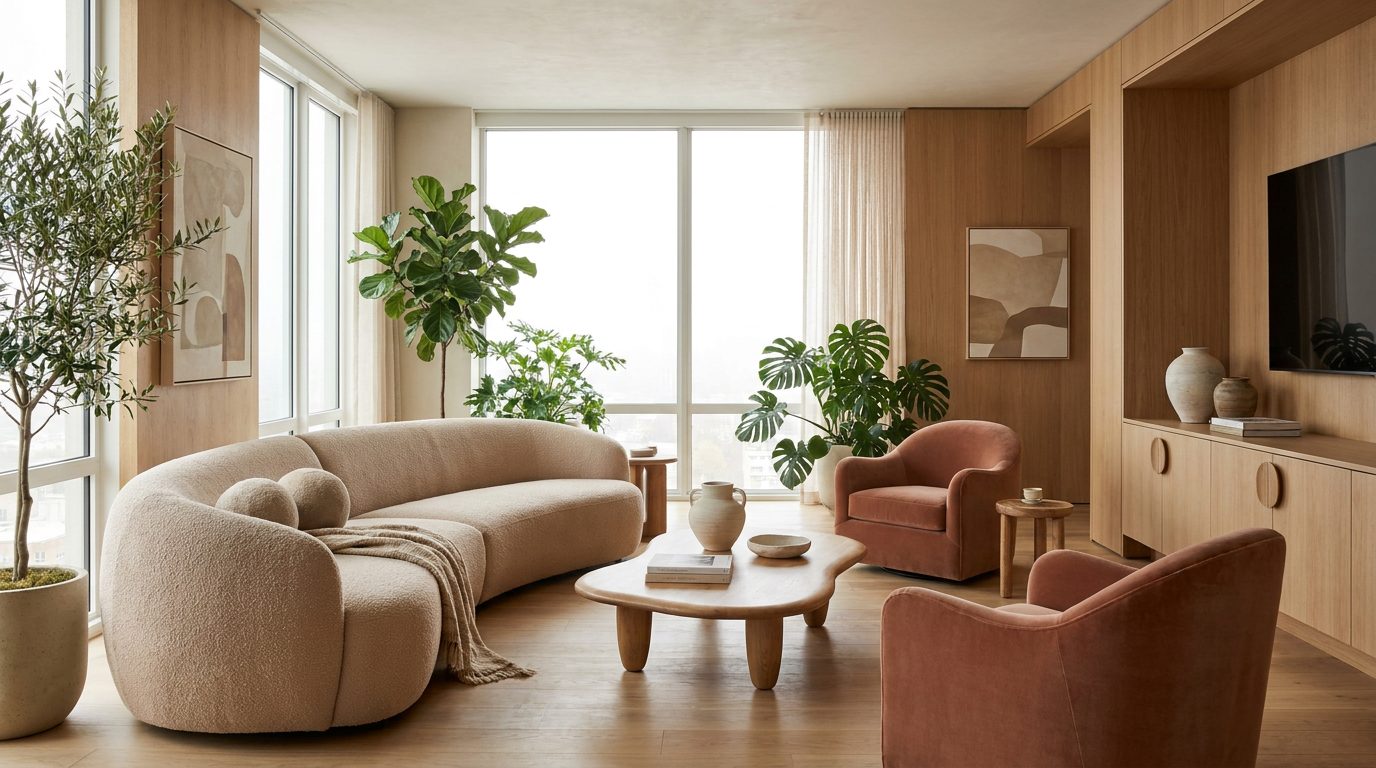
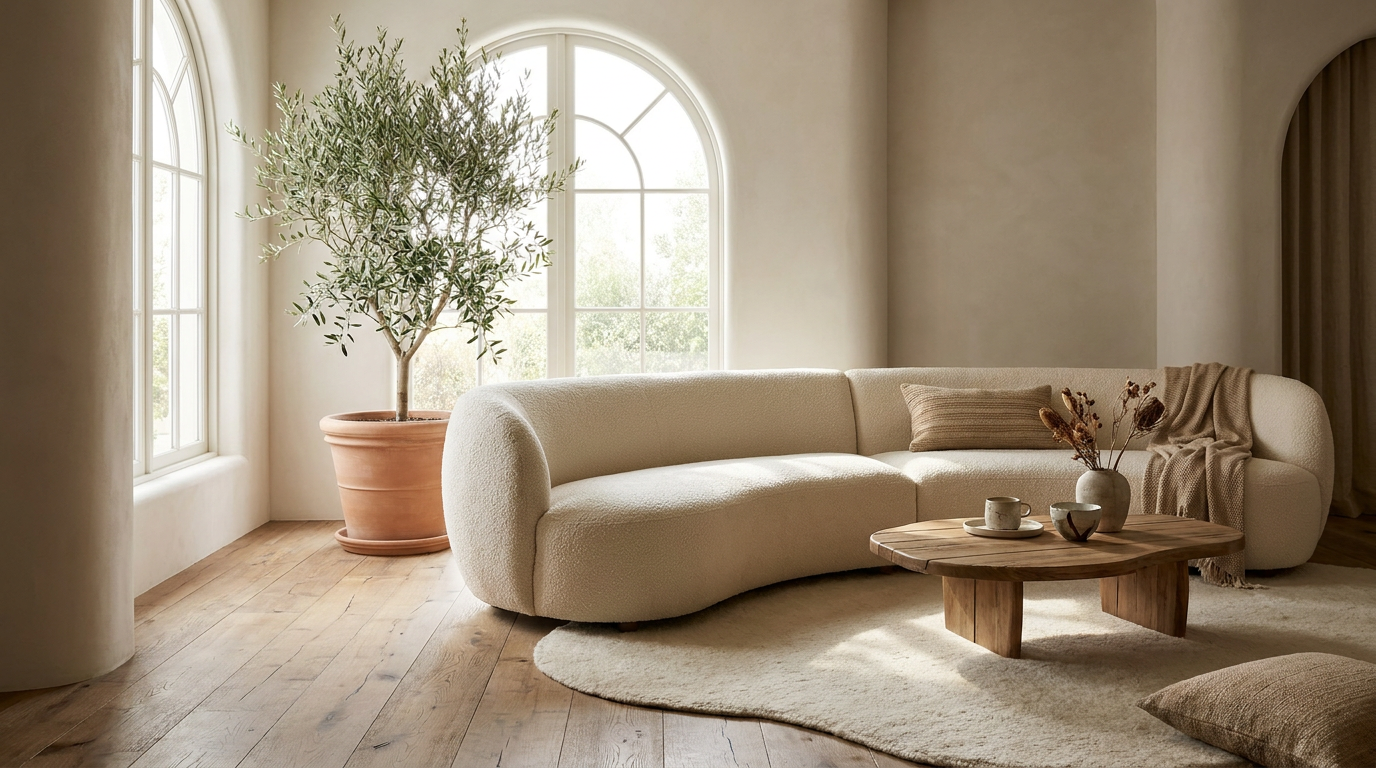
Shape and geometry also play a critical role in how a room feels to the human nervous system. Functional imaging studies reveal that curvilinear spaces, rounded furniture, and soft architectural arches actively stimulate the brain's pleasure and comfort centers. Sharp, jagged edges and severe right angles, on the other hand, can subtly signal danger to the amygdala, the brain's primary threat-detection center, keeping the nervous system on a low-level, subconscious alert that drains energy over time.[1][7]
Texture is another vital component, engaging the brain's somatosensory cortex. Humans naturally gravitate toward tactile materials like woven fabrics, soft rugs, and natural wood grain. These textures stimulate feelings of belonging, grounding, and physical security. This neurological preference helps explain why "warm minimalism"—which pairs clean lines with rich, organic textures—has become so deeply satisfying to modern homeowners, standing in stark contrast to the sterile, high-gloss modernism of previous decades.[2][7]

Lighting is perhaps the most immediate and powerful neurological trigger in any interior space. Natural daylight regulates our circadian rhythms, directly impacting sleep quality, energy levels, and overall mood. When natural light is unavailable, neuroaesthetic design relies on layered, warm-toned artificial lighting to mimic the sun's natural progression throughout the day, avoiding the harsh blue-white glare that strains the optic nerve and disrupts melatonin production.[4][7]
The concept of "mirror neurons" also factors heavily into spatial design and our emotional experience of a room. These specialized brain mechanisms allow us to empathize and subconsciously "feel into" our surroundings, absorbing the overarching atmosphere of a space. A room that feels balanced, intentional, and harmonious encourages the human mind to mirror that exact state of equilibrium, fostering a deep sense of internal calm and reducing the mental friction of daily life.[4]
The applications of this science extend far beyond luxury residential homes. In the healthcare sector, hospitals designed with neuroaesthetic principles—maximizing natural daylight, reducing acoustic noise, and providing direct visual access to healing gardens—have been shown to measurably accelerate patient recovery times. These optimized clinical environments also provide crucial psychological comfort to visiting families and significantly reduce the daily cognitive fatigue experienced by doctors and nursing staff.[2]

In the realm of education, the impact of neuroaesthetics is equally transformative. Classrooms optimized for cognitive function through dynamic lighting, acoustic balance, and warm tactile finishes have been proven to improve student concentration, knowledge absorption, and emotional stability. In these thoughtfully designed settings, the built environment becomes an active, supportive participant in the learning process rather than a passive, easily ignored backdrop, helping students regulate their own nervous systems while they study.[2][7]
Ultimately, neuroaesthetics invites us to decorate from the inside out, prioritizing how a space feels over how it looks on a screen. It empowers individuals to view their homes not as static showrooms designed to impress guests, but as dynamic psychological tools. By aligning our physical spaces with our biological needs, we can create environments that actively care for our nervous systems in an increasingly overstimulated world.[1][7]
How we got here
1990s
Neurobiologist Semir Zeki discovers that perceiving beauty activates specific, consistent areas of the brain, laying the groundwork for neuroaesthetics.
2000s
Brain scanning technology like fMRI advances, allowing researchers to measure real-time physiological responses to architectural spaces.
2015
Major studies confirm that biophilic design in classrooms and offices significantly boosts cognitive performance and lowers fatigue.
Post-2020
The pandemic accelerates residential interest in neuroaesthetics as people spend unprecedented time indoors and prioritize mental health at home.
Viewpoints in depth
Neuroscientists & Researchers
Focuses on the measurable biological and cognitive responses to spatial stimuli.
For cognitive scientists, interior design is a mechanism for neurological intervention. Using fMRI scans and biometric tracking, researchers in this camp measure how specific wavelengths of light, fractal patterns, and spatial geometries alter brainwave activity and hormone production. They argue that aesthetics are not subjective luxuries, but evolutionary imperatives that directly dictate nervous system regulation and cognitive load.
Architects & Interior Designers
Focuses on translating clinical data into functional, beautiful, and emotionally resonant spaces.
Design practitioners view neuroaesthetics as a bridge between intuition and evidence. While they have long known anecdotally that certain rooms 'feel right,' they now use scientific principles to justify design choices to clients. This camp emphasizes the practical application of the science—sourcing tactile materials, manipulating natural light, and utilizing curvilinear furniture to create environments that actively support the occupants' mental health without sacrificing style.
Commercial & Institutional Planners
Focuses on the return on investment (ROI) of well-being in public and corporate spaces.
For developers, hospital administrators, and corporate leaders, neuroaesthetics is a tool for optimizing human performance and recovery. This perspective highlights the economic and societal value of the science: biophilic offices that reduce employee turnover and boost productivity, hospitals that accelerate patient healing times, and schools that improve student focus. They advocate for integrating these principles into building codes and institutional budgets.
What we don't know
- How the long-term neurological benefits of artificial biophilia (like digital skylights) compare to genuine outdoor exposure over decades.
- The precise degree to which individual cultural backgrounds and personal memories override universal biological responses to certain shapes and colors.
Key terms
- Neuroaesthetics
- The scientific study of how the brain and nervous system respond to beauty, art, and spatial environments.
- Cognitive Biophilia
- The brain's evolutionary preference for and positive physiological response to natural systems, patterns, and materials.
- Limbic System
- The part of the brain involved in our behavioral and emotional responses, which reacts to a room's atmosphere in milliseconds.
- Somatosensory Cortex
- The region of the brain that processes tactile information, stimulated by interacting with textured materials like wood and natural fabrics.
- Mirror Neurons
- Brain cells that react both when a particular action is performed and when it is only observed, allowing humans to subconsciously 'feel into' the mood of a space.
Frequently asked
What is the difference between neuroaesthetics and feng shui?
While both aim to create spatial harmony, neuroaesthetics is rooted in clinical neuroscience and biology, using tools like fMRI scans to measure how the brain and nervous system physically react to environmental stimuli.
Do I need to buy expensive furniture to apply neuroaesthetics?
No. The core principles rely on optimizing natural light, reducing visual clutter to lower cognitive load, and introducing natural textures or plants—changes that can be made on any budget.
How does artificial lighting affect the brain?
Harsh, blue-toned artificial light can strain the optic nerve and disrupt circadian rhythms. Neuroaesthetics recommends warm, layered lighting that mimics the natural progression of the sun to support healthy sleep cycles.
Why do curved shapes feel better than sharp angles?
Evolutionarily, sharp edges can subconsciously signal danger to the brain's amygdala. Curvilinear shapes and rounded furniture activate the brain's pleasure and comfort centers, promoting a sense of safety.
Sources
Source coverage
7 outlets
3 viewpoints surfaced







[1]LivingetcArchitectural Practitioners
Neuroaesthetics Explains How Your Home Makes You Feel
Read on Livingetc →[2]ArchDailyArchitectural Practitioners
Neuroesthetics: The Influence of Design on Human Experience
Read on ArchDaily →[3]Science in DesignScientific Researchers
Neuroaesthetics for Interior Designers
Read on Science in Design →[4]BIFMAInstitutional Planners
Designing for the Mind: How Neuroaesthetics is Reshaping the Built Environment
Read on BIFMA →[5]Sky Factory ResearchInstitutional Planners
Turning a New Leaf with Neuroaesthetics
Read on Sky Factory Research →[6]Journal of Environmental PsychologyScientific Researchers
The impact of biophilic design on human physiological and psychological well-being
Read on Journal of Environmental Psychology →[7]Factlen Editorial TeamScientific Researchers
Synthesis by Factlen editorial team
Read on Factlen Editorial Team →

More in home
See all 33 stories →HVAC Tech
How to Optimize Your Heat Pump for Maximum Efficiency and Lower Bills
8 sources

Home Electrification
The Economics and Mechanics of the Zero-Emission Home Retrofit
6 sources

Appliance Tech
How Induction Cooking Works: The Science and Stakes Behind the Kitchen Transition
8 sources

Neuroaesthetics
The Science of the 'Sensory Sanctuary': How Interior Design Literally Rewires Your Brain
6 sources
Every angle. Every day.
Get home stories with full source coverage and perspective breakdowns delivered to your inbox.