
The Road to the French Alps: The 2030 Winter Olympics Qualification Cycle Begins
With the Milan-Cortina Games concluded, the four-year race to the 2030 French Alps Winter Olympics has officially started, featuring new discipline bids, rising teenage stars, and historic national debuts.
By Factlen Editorial Team
- Traditional Winter Federations
- Argue for keeping the games strictly focused on snow and ice, opposing the inclusion of summer crossover sports.
- Expansion Advocates
- Push for new disciplines like freeride skiing and 3x3 hockey to modernize the games and attract younger audiences.
- Emerging Winter Nations
- Focus on breaking into the Winter Olympics from non-traditional or tropical climates to expand the sport's global reach.
What's not represented
- · Local French environmental groups
- · Veteran athletes nearing retirement
Why this matters
The start of the Olympic cycle sets the stage for the next four years of winter sports, determining which new disciplines will reach the global stage and which young athletes will become household names in 2030.
Key points
- The four-year qualification cycle for the 2030 French Alps Winter Olympics has officially begun.
- The IOC has ruled out the inclusion of summer 'crossover' sports like cross-country running for the 2030 Games.
- Freeride skiing and 3x3 ice hockey are actively campaigning to be added as new disciplines.
- Rising stars who missed the 2026 Games due to age restrictions are now prime contenders for 2030.
- Indonesia is campaigning to qualify its first-ever Winter Olympian, 13-year-old snowboarder Zazi Betari Landman.
The Olympic flame has barely been extinguished in Verona following the 2026 Milan-Cortina Games, but the race to the 2030 Winter Olympics in the French Alps is already underway. For athletes, national federations, and entirely new sports disciplines, the four-year qualification cycle has officially begun, setting the stage for a new era of winter competition.[1]
Scheduled to run from February 1 to 17, 2030, the French Alps Games will utilize a multi-venue, country-wide structure stretching from Lake Geneva to the Mediterranean Sea. The competitions will be divided across four main clusters: Haute-Savoie, Savoie, Briançon, and Nice. As the host nation, France has automatically secured qualification spots across all core sports, giving local athletes an early target to aim for.[1][5]
French alpine skier Cyprien Sarrazin and World Cup winner Nils Allègre are already pointing their skis toward the home-snow advantage. The Hautes-Alpes region, particularly the resorts of Serre Chevalier and Montgenèvre, will host the freestyle and snowboard disciplines, setting the stage for a massive local turnout and a significant home-field edge.[5]
But before individual athletes can book their tickets, the sports themselves must qualify for the final Olympic program. In May 2026, the International Olympic Committee (IOC) made a definitive ruling on the shape of the 2030 Games, officially rejecting the inclusion of "crossover" summer sports.[2]

World Athletics President Sebastian Coe had heavily lobbied for cross-country running to be added to the Winter program. Coe argued that moving the discipline to the Winter Games would alleviate the extreme heat issues faced in summer events and open the door for African nations to win Winter Olympic medals for the first time. Cyclocross and trail running were also mooted as potential additions.[2][3]
However, IOC President Kirsty Coventry confirmed that the 2030 Games will remain strictly on snow and ice. "For 2030, we have taken the decision, no crossover sports, no summer sports," Coventry stated. Winter sports federations strongly opposed the crossover proposals, arguing that bringing in summer sports would dilute the traditional brand of the Winter Olympics.[2]
However, IOC President Kirsty Coventry confirmed that the 2030 Games will remain strictly on snow and ice.
With summer sports out, the race for new discipline inclusion is focused on winter staples. Freeride skiing and snowboarding—rooted in steep, natural terrain and cliff drops—are making a major push for 2030. Under the oversight of the International Ski and Snowboard Federation (FIS), freeride organizers have been working to standardize global judging and qualification systems to meet Olympic requirements.[4]
"The biggest thing is that we just have to have a global consistent judging platform," explained Wallace Casper, a freeride leader. "You can't have the South American comps doing their own thing, while North America is doing our own thing." If approved, freeride would bring its high-stakes, mountain-town culture to the global stage, elevating athletes who have spent decades building the sport.[4]

The International Ice Hockey Federation is also preparing a bid for the inclusion of 3x3 ice hockey, a fast-paced discipline that has been featured in the Winter Youth Olympics since 2020. The final IOC vote on the exact disciplines for the seven core sports is scheduled for June 2026, which will lock in the exact number of medals and quota spots available.[1][2]
On the athlete side, the 2030 qualification cycle is a beacon for teenage prodigies who missed the 2026 Games due to age restrictions. Japanese figure skater Shimada Mao, a three-time world junior champion, was ineligible for Milan-Cortina but is now a prime contender to dominate the ice in Nice, where the 2030 skating events will be held.[1]
Similarly, 19-year-old Albanian alpine skier Lara Colturi and 20-year-old Slovenian ski jumper Nika Prevc—who picked up three medals in 2026—are using the upcoming World Cup seasons to cement their status as the faces of the 2030 Games. For these young stars, the qualification process is about maintaining peak form over a grueling four-year stretch.[1]
The qualification road is also paving the way for historic national debuts. Indonesia, a tropical nation with zero Winter Olympic history, is actively campaigning to qualify its first-ever athlete for the French Alps, demonstrating the expanding global footprint of winter sports.[6]

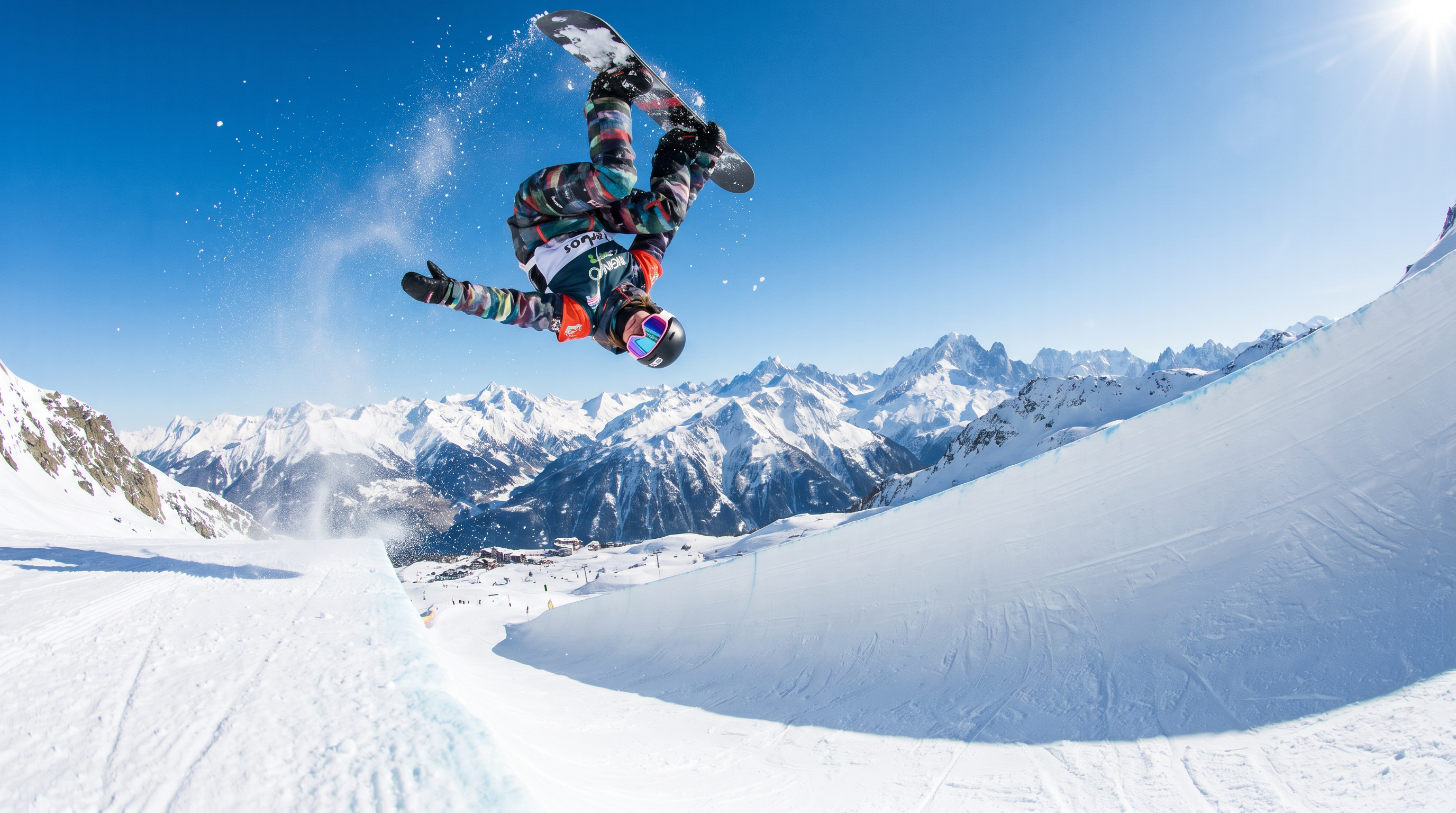
Thirteen-year-old snowboarder Zazi Betari Landman, born in Jakarta and training in Europe, has been officially registered with the FIS by the Indonesian Olympic Committee. Competing in the halfpipe, her journey over the next three years of qualifying events will be closely watched. "Zazi is an extraordinary young talent – a symbol of what is possible for Indonesia," said Raja Sapta Oktohari, President of the Indonesian Olympic Committee.[6]
Over the next 40 months, athletes across all disciplines will traverse the globe on the World Cup circuits, accumulating the FIS points and international rankings required to meet the Olympic quota allocations. While the opening ceremony in the French Alps is still years away, the battle to be there has already begun.[1][6]
How we got here
Nov 2023
The French Alps are nominated as the preferred host candidate by the IOC.
Jan 2024
The Gangwon Winter Youth Olympics successfully showcases 3x3 ice hockey.
Jun 2024
The IOC proposes the seven core sports for the 2030 program.
Feb 2026
The Milan-Cortina Games conclude, officially kicking off the 2030 Olympic cycle.
May 2026
The IOC officially rules out summer crossover sports for the 2030 Winter Games.
Jun 2026
The final IOC vote is scheduled to determine the specific disciplines included in the French Alps.
Viewpoints in depth
Traditional Winter Federations' View
Opposed the inclusion of summer sports like cross-country running and cyclocross, arguing that the Winter Olympics must preserve its unique identity.
Traditionalists within the winter sports ecosystem successfully lobbied the IOC to block crossover sports for 2030. They argue that the Winter Olympics derives its prestige from its exclusive focus on snow and ice, and that introducing summer disciplines would dilute the brand. Furthermore, they cite logistical concerns about integrating non-winter sports into alpine environments already facing climate challenges.
Expansion Advocates' View
Believe the Winter Games need to evolve to maintain youth engagement and global relevance.
Proponents of expansion champion the inclusion of action sports like freeride skiing and fast-paced formats like 3x3 ice hockey. They argue these disciplines bring in new audiences, sponsor interest, and align with the IOC's broader goal of modernizing the Games. While they lost the battle for cross-country running in 2030, they continue to push for winter-specific innovations that reflect contemporary mountain culture.
Emerging Nations' View
See the 2030 Games as a frontier to break the European and North American dominance of winter sports.
For nations without a winter sports pedigree, the qualification cycle is about proving that passion and international training can overcome geographical limitations. By supporting athletes training abroad—such as Indonesia's Zazi Betari Landman—these nations hope to use the French Alps as a launchpad to inspire domestic interest and secure funding for non-traditional sports programs.
What we don't know
- Which specific new disciplines (like freeride or 3x3 hockey) will win the final IOC vote in June 2026.
- Whether teenage prodigies currently dominating the junior circuits will maintain their form and avoid injury over the four-year cycle.
- How many quota spots will ultimately be allocated to emerging winter nations like Indonesia.
Key terms
- FIS
- The International Ski and Snowboard Federation, the global governing body responsible for standardizing qualification points and judging.
- Freeride
- A skiing and snowboarding discipline performed on natural, un-groomed terrain, judged on line choice, fluidity, and tricks.
- Crossover Sports
- Summer or all-season sports, like cross-country running, that were proposed for inclusion in the Winter Olympics.
- Olympic Quota
- The specific number of athlete spots allocated to a country in a given sport, earned through international competition results.
- Halfpipe
- A U-shaped snow structure used in freestyle snowboarding and skiing where athletes perform aerial tricks.
Frequently asked
When and where are the 2030 Winter Olympics?
The 2030 Games will be held in the French Alps from February 1 to 17, 2030, utilizing venues across four main clusters.
Will cross-country running be in the 2030 Olympics?
No. The IOC ruled out all summer and 'crossover' sports for the 2030 Games to maintain the focus on snow and ice.
What new sports might be added for 2030?
Freeride skiing, freeride snowboarding, and 3x3 ice hockey are actively campaigning for inclusion, with a final vote expected in June 2026.
How do athletes qualify for the Winter Olympics?
Athletes earn points by competing in World Cup events over the four-year cycle, securing quota spots for their national federations.
Sources
Source coverage
6 outlets
3 viewpoints surfaced






[1]Olympics.comEmerging Winter Nations
Rising stars to watch at French Alps 2030 Winter Olympics
Read on Olympics.com →[2]The Straits TimesTraditional Winter Federations
IOC rules out inclusion of summer sports at the 2030 Winter Olympics
Read on The Straits Times →[3]CBC SportsExpansion Advocates
Sebastian Coe would love to see cross-country running at 2030 Winter Games
Read on CBC Sports →[4]Explore Big SkyExpansion Advocates
Big Sky's freeride leaders eye 2030 winter Olympics in French Alps
Read on Explore Big Sky →[5]Hautes-Alpes Tourism
In 2030, the Hautes-Alpes will be more freestyle than ever
Read on Hautes-Alpes Tourism →[6]Zazi.netEmerging Winter Nations
Zazi Betari Landman: Indonesia's First Winter Olympic Dream
Read on Zazi.net →
More in sports
See all 397 stories →Women's Sports
How Women's Wrestling Became the Fastest-Growing Collegiate Sport in America
8 sources
Engine Regulations
The 2026 Formula 1 Engine Revolution: How Sustainable Fuel and a 50/50 Hybrid Split Are Changing the Sport
8 sources
MLB Milestones
Brewers' Jacob Misiorowski Throws Historic 15-Strikeout, One-Hit Shutout
7 sources

Pitching Milestone
Jacob Misiorowski Throws Historic 15-Strikeout, One-Hit Complete Game in Brewers Win
7 sources

Every angle. Every day.
Get sports stories with full source coverage and perspective breakdowns delivered to your inbox.