
The Rise of the 'Cozy Web': How Users Are Reclaiming the Internet from Algorithms
Millions of users are retreating from public, algorithm-driven social media feeds to build 'digital gardens' and private communities. This shift marks a new era of intentional, high-trust internet culture.
By Factlen Editorial Team
- Digital Minimalists
- Advocates for retreating from algorithmic feeds to protect mental health and foster genuine connection.
- Knowledge Curators
- Focuses on building personal 'digital gardens' to cultivate ideas outside the pressure of chronological feeds.
- Brand & Media Strategists
- Concerned with the collapse of organic reach and how to reach audiences in private spaces.
- Public Web Advocates
- Warns that retreating to private spaces fragments the internet and harms serendipitous discovery.
What's not represented
- · Legacy Social Media Executives
- · Algorithmic Feed Developers
Why this matters
As legacy social media feeds become increasingly saturated with ads and AI-generated content, understanding the 'Cozy Web' empowers you to reclaim your digital agency. By shifting toward intentional, private digital spaces, you can protect your mental well-being while fostering deeper, more genuine online connections.
Key points
- Global social media usage remains high, but users are increasingly abandoning public posting for private, high-trust spaces.
- The 'Cozy Web' encompasses invite-only communities like Discord, WhatsApp channels, and niche newsletters.
- Users are building 'digital gardens'—personal, non-linear websites designed for slow, contextual learning rather than viral reach.
- Algorithm fatigue and the collapse of organic reach (now at 3-4%) are driving this migration away from legacy platforms.
- While empowering for individuals, this shift makes content discovery harder and threatens the shared public square.
In 2026, the internet presents a fascinating paradox. Global social media usage has hit an all-time high of 5.79 billion people, yet the public square has never felt more empty. While total account numbers continue to climb, the actual human connection that once defined the internet is quietly slipping away from the main stage.[4]
Users are quietly logging off the main feeds. According to recent industry polling, nearly a third of social media users are posting less than they did a year ago, and roughly 40% of Gen Z users report deleting at least one major legacy app. The era of broadcasting every thought to a massive, invisible audience is coming to a close.[5][7]
Where did everyone go? They haven't abandoned the internet; they have simply gone underground. Welcome to the "Cozy Web"—a rapidly expanding ecosystem of private, high-trust digital spaces that prioritize genuine connection over algorithmic performance. This shift represents a profound reclamation of digital life.[2][7]

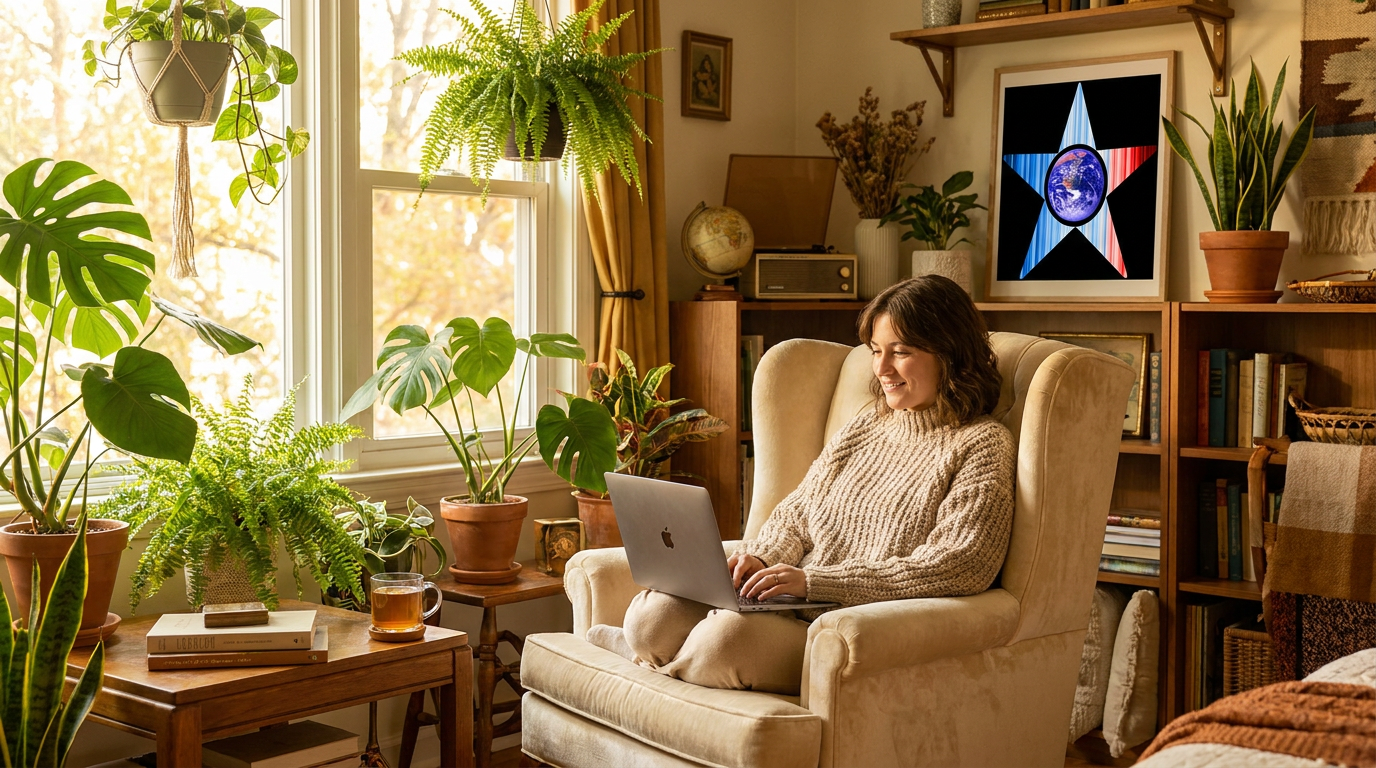
The concept of the Cozy Web describes the gatekeeper-bounded spaces users now retreat to: Discord servers, WhatsApp channels, Telegram groups, and niche newsletters. In these environments, success is measured by the depth of a conversation rather than the viral reach of a post.[2][6]
To understand why this migration is happening, internet historians point to the "Dark Forest" theory. The public web has become a dark forest overrun by predators—in this case, AI-generated slop, engagement-baiting algorithms, and relentless brand advertisements. In such a hostile environment, it is no longer safe or rewarding to be authentic in public.[7]
"Rising generations are not anti-digital; they're anti-exhaustion," notes Emily Safian-Demers, a consumer insights expert. Users are suffering from profound algorithm fatigue, exhausted by feeds engineered for emotional velocity rather than personal value. They are actively seeking out digital spaces that feel more human.[2]
In response, the internet is shifting from the "Engagement Era" to the "Intentionality Era." Instead of broadcasting their lives to thousands of strangers, users are curating intimate digital living rooms where they can be vulnerable without the pressure of a permanent, public record.[5][6]

This retreat is fundamentally changing the mechanics of online socializing. On legacy platforms, the implicit contract of following someone has broken down. Organic reach for creators and brands has plummeted to a mere 3% to 4%, creating a "pay-to-play" environment that users find deeply uninspiring.[7]
This retreat is fundamentally changing the mechanics of online socializing.
Alongside the rise of private group chats, another phenomenon is taking root: the "Digital Garden." If the Cozy Web is where we socialize, the Digital Garden is where we think. It is a quiet resurgence of the personal website, built for the creator rather than the algorithm.[1]
A digital garden is a rethink of the chronological blog or social media feed. It is a non-linear, continuously evolving personal space where ideas can grow organically, unconstrained by the pressure of immediate audience approval or chronological decay.[1]
Unlike a post that disappears into the ether after 24 hours, a digital garden is designed for "learning in public." Creators plant "seeds" of ideas—notes on a book, a recipe, a coding problem—and tend to them over time, linking them together in a web of contextual knowledge.[1]

This movement represents a powerful reclamation of digital agency. By building their own spaces, users are ignoring the algorithms that prioritize shocking content and instantaneous consumption, opting instead for a slower, more deliberate internet.[1][5]
However, the Cozy Web and digital gardens come with significant trade-offs. The primary challenge is discovery. When everyone retreats into private, walled-off communities, the serendipity of stumbling upon a new idea or a different perspective is severely diminished.[1][3]
Furthermore, the fragmentation of the internet raises concerns about a shared reality. While major news organizations once relied on social media as a primary distribution channel, referral traffic from legacy platforms has plummeted by nearly 70% in recent years, leaving many users disconnected from broader global events.[3]

How we got here
1998
Mark Bernstein introduces the concept of the 'hypertext garden,' prioritizing delight over commodity.
2010s
The 'Engagement Era' peaks, with major platforms optimizing algorithmic feeds for maximum user retention and ad delivery.
2019
Writer Yancey Strickler introduces the 'Dark Forest' theory of the internet, comparing the public web to a predator-filled space.
2022–2024
Algorithm fatigue sets in; users begin migrating to Discord, Telegram, and Substack for niche, high-trust communities.
2025–2026
Organic reach on legacy platforms plummets to single digits, accelerating the mainstream adoption of the 'Cozy Web' and digital gardens.
Viewpoints in depth
The Digital Minimalist View
Advocates for retreating from algorithmic feeds to protect mental health and foster genuine connection.
For digital minimalists, the legacy social media model is fundamentally broken. They argue that platforms optimized for 'engagement' inevitably prioritize outrage, comparison, and exhaustion. By migrating to the Cozy Web—private group chats, Discord servers, and chronological feeds—users can reclaim their psychological safety. This camp views the abandonment of public broadcasting not as a loss of connection, but as a necessary boundary-setting exercise against an extractive attention economy.
The Knowledge Curator View
Focuses on building personal 'digital gardens' to cultivate ideas outside the pressure of chronological feeds.
Knowledge curators believe the internet's original promise was personal expression, not performative broadcasting. They champion 'digital gardens'—interlinked, continuously updated personal wikis where ideas are allowed to develop slowly. Unlike the ephemeral nature of a 24-hour social media story, these spaces are designed for 'learning in public.' Curators argue that removing the metrics of likes and shares allows for deeper, more nuanced intellectual growth.
The Public Web Advocate View
Warns that retreating to private spaces fragments the internet and harms serendipitous discovery.
While acknowledging the toxicity of legacy platforms, public web advocates worry about the consequences of a fully fragmented internet. If everyone retreats to gated communities and private Discords, the serendipity of stumbling upon diverse viewpoints is lost. Furthermore, this camp highlights the danger to journalism and shared reality; as referral traffic from major platforms plummets, it becomes increasingly difficult to establish a common baseline of facts across society.
What we don't know
- How independent creators and journalists will reliably build new audiences if the public web is largely abandoned for private spaces.
- Whether legacy social media giants will successfully pivot to privacy-first features, or if they will double down on AI-generated entertainment feeds.
- How the fragmentation of the internet into 'cozy' silos will impact political polarization and the sharing of critical news.
Key terms
- Cozy Web
- Private, gatekeeper-bounded digital spaces like group chats, Discord servers, and niche newsletters where users retreat from public algorithms.
- Digital Garden
- A personal, non-chronological website where ideas are cultivated and interlinked over time, rather than posted once to a feed.
- Dark Forest Theory
- The concept that the public internet is overrun by predatory bots, trolls, and engagement bait, forcing authentic users to hide in private spaces.
- Algorithm Fatigue
- The exhaustion users experience when their feeds are engineered for emotional velocity and ad delivery rather than personal value.
Frequently asked
Are people actually leaving social media?
Not entirely. While global user numbers remain at an all-time high, active public posting is declining as users migrate their conversations to private, smaller networks.
What is the difference between a blog and a digital garden?
Blogs are chronological and audience-focused, while digital gardens are non-linear, constantly evolving knowledge spaces designed primarily for the creator's own learning.
How do creators build an audience on the Cozy Web?
Discovery is harder in private spaces. Creators often use public platforms as a 'front door' to funnel interested followers into high-trust, private communities like Substack or Discord.
Sources
Source coverage
7 outlets
4 viewpoints surfaced







[1]The ClarionKnowledge Curators
Digital gardens: The internet's new personal renaissance
Read on The Clarion →[2]Beauty IndependentDigital Minimalists
Why Consumers Are Leaving Public Feeds For The 'Cozy Web'
Read on Beauty Independent →[3]MorningstarPublic Web Advocates
Most people now get their news from social media. But many say they dislike it and are tuning out.
Read on Morningstar →[4]DemandSageBrand & Media Strategists
How Many People Use Social Media (2026 Updated Stats)
Read on DemandSage →[5]MeyocksDigital Minimalists
2026 Digital Marketing Trends: The Rise of the Intentional Internet
Read on Meyocks →[6]ArtistRackBrand & Media Strategists
Beyond TikTok: 5 Emerging Social Media Platforms to Watch in 2026
Read on ArtistRack →[7]Factlen Editorial TeamPublic Web Advocates
Synthesis by Factlen editorial team
Read on Factlen Editorial Team →
Every angle. Every day.
Get culture stories with full source coverage and perspective breakdowns delivered to your inbox.