
Complex Life on Earth May Survive 500 Million Years Longer Than Previously Thought
Advanced 3D climate models suggest Earth's natural thermostats and cloud dynamics will protect the biosphere from the expanding Sun for up to 1.5 billion years, significantly extending our planet's habitable window.
By Factlen Editorial Team
- Climate Modelers & Astrophysicists
- Focus on the mechanics of 3D climate simulations and how cloud dynamics and ocean currents delay planetary warming.
- Astrobiologists
- Emphasize how Earth's extended habitability window increases the probability of finding complex life on exoplanets.
- Earth Scientists
- Highlight the geological mechanisms, specifically the silicate weathering thermostat, that regulate the planet's carbon cycle over deep time.
What's not represented
- · Philosophers and ethicists considering the long-term moral implications of humanity's ultimate extinction.
- · Space exploration advocates focused on the timeline for relocating Earth's biosphere to other star systems.
Why this matters
Understanding exactly how Earth regulates its climate against a brightening star doesn't just predict our home planet's ultimate fate—it fundamentally expands the number of exoplanets across the galaxy that could currently harbor complex life.
Key points
- The Sun's luminosity naturally increases by roughly 1 percent every 100 million years as it fuses hydrogen into helium.
- Earth regulates this increasing heat through a geological thermostat called silicate weathering, which pulls CO2 from the atmosphere.
- Older models predicted this process would starve plants of CO2 or boil the oceans within one billion years.
- New 3D climate models show that cloud dynamics and ocean currents will protect the biosphere for an additional 500 million years.
- This extended timeline drastically increases the probability of finding complex life on exoplanets across the galaxy.
When we think about the end of the world, popular imagination usually jumps to the Sun's dramatic death. In roughly five billion years, our star will exhaust the hydrogen fuel in its core, swell into a massive red giant, and physically engulf the inner planets, likely including Earth.[5]
But for biologists and planetary scientists, the physical destruction of the planet is an afterthought. The actual expiration date for complex life on Earth arrives much sooner, driven not by the Sun's death, but by its steady, relentless maturation.[4]
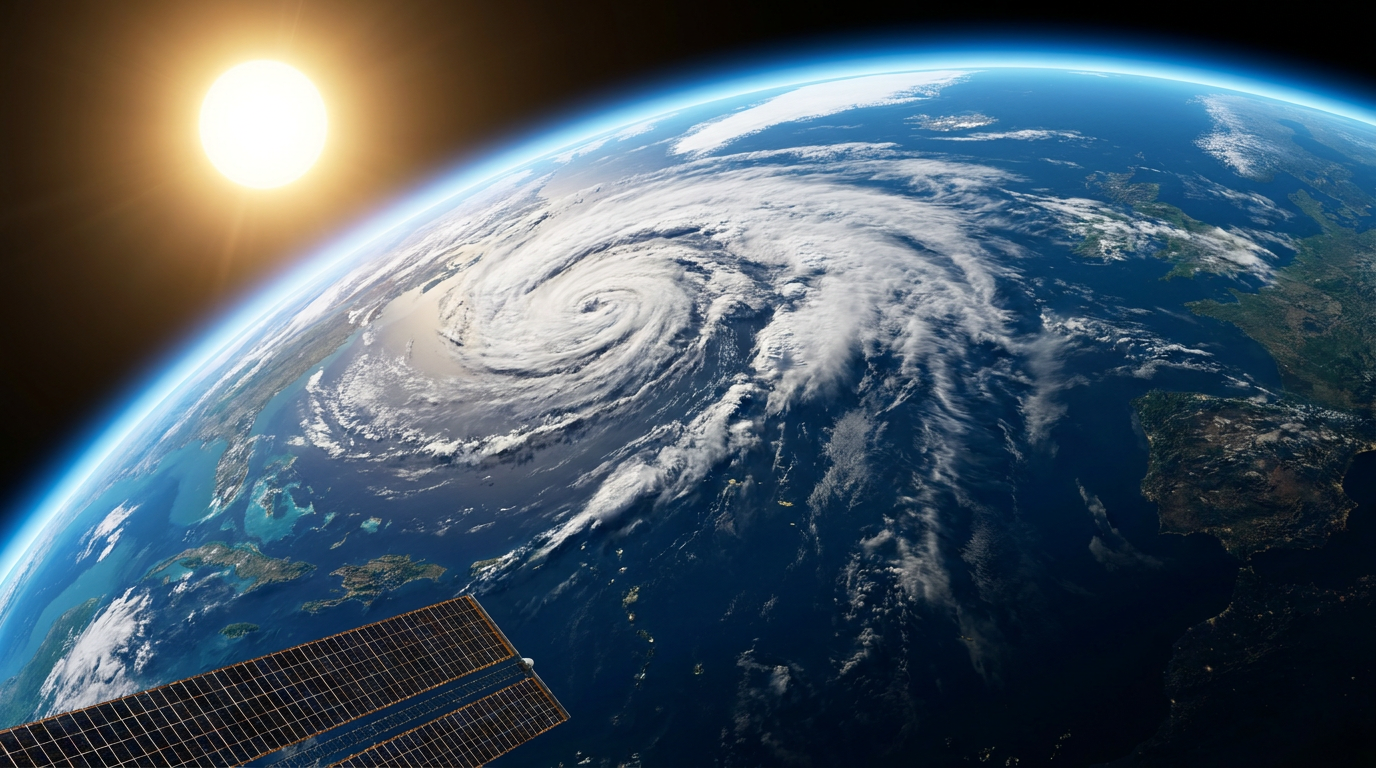
For decades, the scientific consensus held that Earth had roughly one billion years left before the oceans boiled away or the food web collapsed. Now, a new wave of advanced 3D climate modeling suggests our planet is far more resilient than we gave it credit for.[1][3]
According to recent simulations, the complex interplay of Earth's cloud cover, ocean currents, and geological recycling could extend the window for complex life by an additional 500 million years.[1][6]

To understand why Earth is on a ticking clock, we have to look at the physics of main-sequence stars. As the Sun fuses hydrogen into helium, the resulting "helium ash" builds up in its core. This increases the core's density and temperature, causing the fusion reactions to burn hotter and faster.[5]
The result is a slow but inevitable brightening. The Sun's luminosity increases by roughly 1 percent every 100 million years. While imperceptible on human timescales, this steady increase in solar radiation acts as a slowly tightening vice on Earth's climate.[2][5]
If Earth were a static rock, this increasing heat would have sterilized the planet long ago. But Earth has a built-in planetary thermostat: the silicate weathering cycle.[4]
As the planet warms, evaporation increases, leading to more rainfall. This rain, naturally slightly acidic, weathers silicate rocks on land. The chemical reaction pulls carbon dioxide out of the atmosphere, washing it into the oceans where it eventually settles on the seafloor as carbonate rock.[2][4]
As the planet warms, evaporation increases, leading to more rainfall.
This geological mechanism perfectly counteracts the brightening Sun. As solar heat increases, weathering speeds up, pulling more greenhouse gases out of the air and cooling the planet back down. It is the reason Earth has remained habitable for four billion years.[3]

However, this thermostat has a fatal flaw. Eventually, to compensate for a Sun that is 10 percent brighter, the weathering process will have to pull almost all the carbon dioxide out of the atmosphere.[4]
When CO2 levels drop below 150 parts per million, the vast majority of plant life—which relies on C3 and C4 photosynthesis—will starve. Without plants, the food web collapses, and complex animal life quickly follows. Older 1D models predicted this CO2 starvation would hit in about 500 million to one billion years.[1][4]
Alternatively, if the thermostat fails to keep up, Earth faces a "moist greenhouse" scenario. Temperatures rise enough that water vapor—a potent greenhouse gas itself—saturates the upper atmosphere. There, solar radiation splits the water molecules, allowing the hydrogen to escape into space, permanently bleeding the oceans dry.[3][5]
The new optimism comes from replacing those older, simplified 1D models with the kind of sophisticated 3D climate simulations used to predict modern climate change.[1][3]
When researchers modeled the entire globe—accounting for the uneven distribution of continents, the circulation of deep ocean currents, and the dynamic behavior of clouds—Earth's defenses proved much more robust.[3][6]

High-altitude clouds, in particular, act as a vital shield. As the oceans warm, increased cloud cover reflects a significant portion of the incoming solar radiation back into space, effectively buying the planet more time before the moist greenhouse effect can take hold.[1][3]
Furthermore, the new models suggest that atmospheric pressure will slowly drop as nitrogen and oxygen are sequestered into the crust. A thinner atmosphere traps less heat, providing another buffer against the brightening Sun.[4][6]
The combination of these factors pushes the timeline back significantly. While the continents will eventually desertify and life will be forced to migrate toward the poles, complex ecosystems could hold on for up to 1.5 billion years.[1][2]

Even after the last animals and plants perish, Earth will not be dead. Microbial life, which ruled the planet for its first three billion years, will inherit it once again, surviving in deep subterranean aquifers and isolated salty pools for another billion years after that.[4]
Beyond giving humanity a longer ultimate lease on our home world, this 500-million-year extension has profound implications for astronomy. If Earth's natural systems can maintain habitability this effectively, the "habitable zones" around other stars are likely much wider and more forgiving than we previously calculated.[2][6]
How we got here
4.5 Billion Years Ago
Earth forms, and the Sun enters its main-sequence phase, burning roughly 30% dimmer than it does today.
Present Day
The Sun continues its gradual brightening, increasing its luminosity by about 1% every 100 million years.
+500 Million to 1 Billion Years
Previous 1D climate models predicted the collapse of complex life due to CO2 starvation or runaway heating.
+1.5 Billion Years
New 3D models suggest complex life will finally succumb to the brightening Sun, leaving only microbial life.
+5 Billion Years
The Sun exhausts its hydrogen, expanding into a red giant and physically engulfing the inner planets.
Viewpoints in depth
The Climate Modeling View
How advanced 3D simulations changed our understanding of planetary resilience.
For decades, scientists relied on 1D models that treated Earth as a uniform sphere to calculate the effects of a brightening Sun. Modern climate modelers argue these older systems missed the crucial, dynamic defenses of a living planet. By incorporating 3D variables like high-altitude cloud reflectivity, deep ocean circulation, and shifting atmospheric pressure, modelers have demonstrated that Earth's climate system is far more self-correcting than previously believed, capable of shielding the surface from lethal solar radiation for an extra half-billion years.
The Astrobiology Perspective
What Earth's extended timeline means for the hunt for alien life.
Astrobiologists view Earth's timeline not just as our own history, but as a template for the cosmos. If a rocky planet can maintain a stable, life-supporting climate for 1.5 billion years longer than its star's raw energy output would suggest, the 'habitable zone' around every star is effectively wider. This perspective argues that the new models drastically increase the mathematical probability that complex, multicellular life has had the time to evolve and survive on exoplanets across the Milky Way.
The Geological View
The deep-time mechanics of the silicate weathering thermostat.
Earth scientists focus on the ground beneath our feet, emphasizing that the planet's survival is dictated by the carbon cycle. As the Sun heats the Earth, increased rainfall weathers silicate rocks faster, pulling CO2 out of the air and trapping it in the seafloor. While this mechanism brilliantly cools the planet, geologists point out its tragic irony: to save the Earth from boiling, the thermostat will eventually have to pull so much CO2 from the air that it starves the plant life it is trying to protect.
What we don't know
- Whether future technological interventions, such as giant space sunshades, could artificially extend Earth's habitability even further.
- Exactly how the gradual drop in atmospheric pressure will alter the evolutionary paths of surviving animal species.
- Whether the Sun's mass loss during its later stages might allow Earth's orbit to drift outward, potentially sparing it from physical engulfment.
Key terms
- Main-Sequence Star
- The primary life phase of a star, like our Sun, during which it generates energy by fusing hydrogen into helium in its core.
- Moist Greenhouse Effect
- A climate scenario where a planet gets so hot that water vapor reaches the upper atmosphere, where solar radiation breaks it apart, causing the oceans to slowly escape into space.
- Silicate Weathering
- The chemical breakdown of silicate rocks by rain, which acts as a natural carbon sink by pulling CO2 out of the atmosphere.
- Habitable Zone
- The orbital region around a star where temperatures are just right for a planet to maintain liquid water on its surface.
Frequently asked
Will the Sun eventually swallow the Earth?
Yes, but not for about 5 billion years. When the Sun exhausts its hydrogen fuel, it will expand into a red giant, likely engulfing Mercury, Venus, and Earth.
Why is the Sun getting brighter?
As the Sun fuses hydrogen into helium, its core becomes denser and hotter. This causes the fusion reactions to burn faster, increasing the Sun's luminosity by about 1% every 100 million years.
What is the silicate weathering thermostat?
It is a geological process where acidic rain breaks down rocks, pulling carbon dioxide from the atmosphere and storing it in the ocean floor. This naturally cools the planet as the Sun gets hotter.
Why will plants eventually die out?
To counteract the brightening Sun, the weathering process will pull almost all the carbon dioxide out of the air. Eventually, CO2 levels will drop too low for most plants to perform photosynthesis.
Sources
Source coverage
6 outlets
3 viewpoints surfaced






[1]New ScientistClimate Modelers & Astrophysicists
Complex life on Earth may last 500 million years longer than expected
Read on New Scientist →[2]Factlen Editorial TeamEarth Scientists
Synthesis by Factlen editorial team
Read on Factlen Editorial Team →[3]NASA Goddard Institute for Space StudiesClimate Modelers & Astrophysicists
3D Climate Modeling of Planetary Habitability
Read on NASA Goddard Institute for Space Studies →[4]AstrobiologyAstrobiologists
Revised Estimates for the Lifespan of the Earth's Biosphere
Read on Astrobiology →[5]arXivEarth Scientists
Solar Evolution and the Long-Term Stability of Earth's Climate
Read on arXiv →[6]Blue Marble Space Institute of ScienceAstrobiologists
Planetary Resilience and the Future of the Biosphere
Read on Blue Marble Space Institute of Science →
Every angle. Every day.
Get science stories with full source coverage and perspective breakdowns delivered to your inbox.