
US and Iran Reach Tentative Peace Agreement to Secure Strait of Hormuz
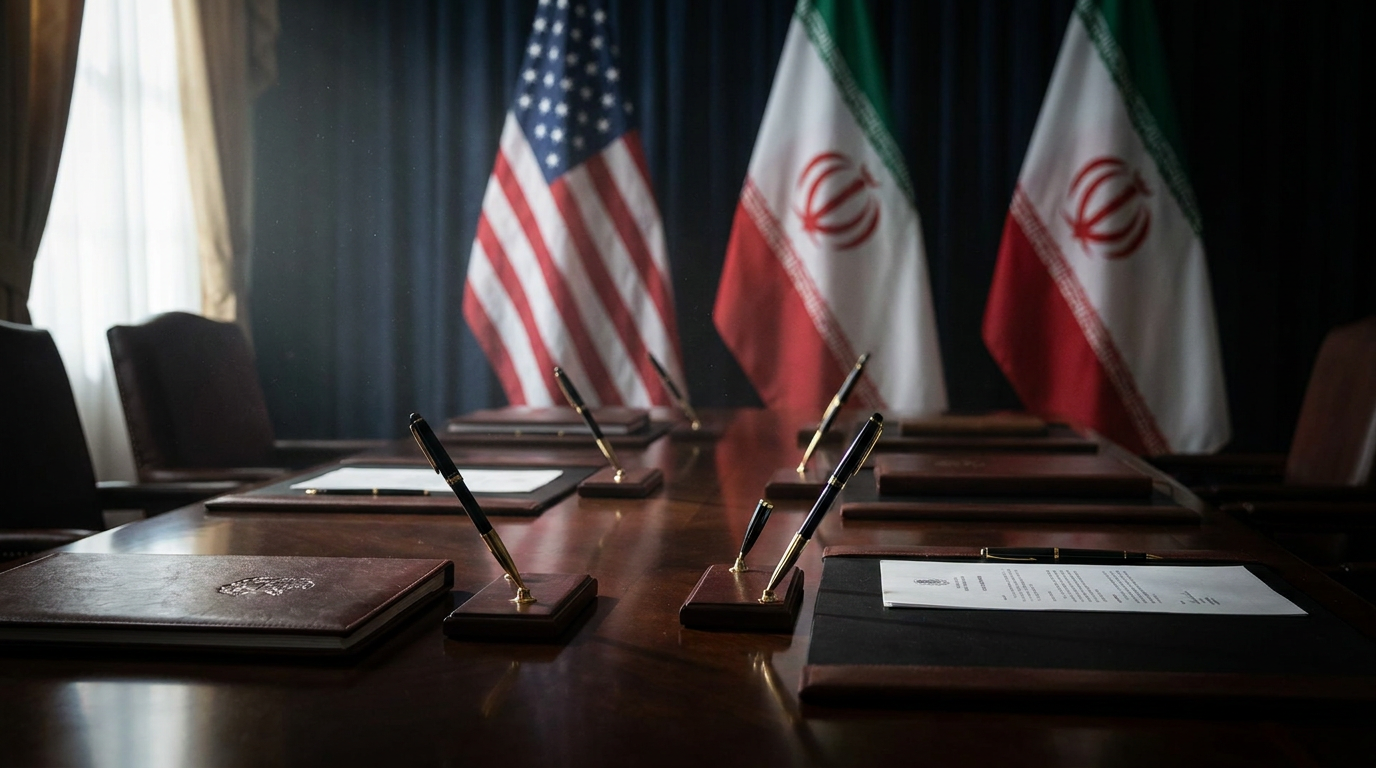
The United States and Iran have reached a preliminary memorandum of understanding to de-escalate military tensions and secure commercial shipping in the Middle East. The framework caps Iran's nuclear enrichment and halts naval harassment in exchange for a reduced American military footprint, sparking intense domestic debate over the geopolitical costs.
By Factlen Editorial Team
- Pragmatic De-escalation Advocates
- Argue that securing global energy markets and preventing a wider regional war justifies the diplomatic concessions made to Tehran.
- National Security Hawks
- View the agreement as a dangerous capitulation that rewards Iranian aggression and funds future terrorism by easing economic pressure.
- Iranian State Establishment
- Frames the U.S. willingness to negotiate and scale back military presence as a historic victory for Iran's strategy of resistance.
- Skeptical Observers
- Question the long-term viability of the deal and highlight the immense, seemingly unredeemed human cost of the preceding conflict.
What's not represented
- · Israeli Defense Officials
- · Gulf Arab State Leaders
- · Iranian Civilian Opposition Groups
Why this matters
This agreement directly impacts global energy markets by securing the Strait of Hormuz, through which a fifth of the world's oil flows. For American citizens, it signals a definitive pivot away from direct military engagement in the Middle East, though critics warn the concessions may embolden a historic adversary and trigger future instability.
Key points
- The U.S. and Iran have agreed to a 14-point memorandum of understanding to halt direct military conflict.
- Iran agrees to stop harassing commercial shipping in the Strait of Hormuz to stabilize global energy markets.
- The U.S. will transition its naval forces to an 'over-the-horizon' posture, reducing immediate friction.
- The framework caps Iran's uranium enrichment at current levels rather than forcing a rollback.
- Conservative U.S. lawmakers strongly oppose the deal, calling it a capitulation that empowers the regime.
- Iranian leadership claims the agreement is a strategic victory, though domestic economic challenges remain severe.
The United States and Iran have forged a preliminary diplomatic understanding aimed at halting years of escalating conflict, marking a profound and controversial pivot in Middle Eastern geopolitics. The framework, negotiated under the auspices of the Trump administration, seeks to establish a lasting agreement concerning Iran's advancing nuclear program and the critical commercial shipping lanes of the Strait of Hormuz. After months of back-channel discussions and indirect signaling, the two nations have reportedly agreed to a 14-point memorandum of understanding. This document serves as the foundation for what European diplomats hope will become a formalized peace treaty, effectively pausing a kinetic war that has disrupted global markets and reshaped regional alliances over the past year.[1][4]
This diplomatic breakthrough follows a period of intense, direct military confrontation that began in earnest in 2025. For years, the relationship between Washington and Tehran was defined by a "maximum pressure" campaign of crushing economic sanctions, punctuated by proxy skirmishes across Iraq, Syria, and Yemen. However, the escalation into direct state-on-state strikes fundamentally altered the calculus for both capitals. The new memorandum represents a stark departure from those years of kinetic exchanges, signaling a mutual exhaustion with a conflict that threatened to spiral into a broader regional conflagration. Analysts note that the shift from missile strikes to diplomatic memorandums underscores the severe economic and political toll the war has exacted on both nations.[3][4]
At the core of the new agreement is the security of the Strait of Hormuz, a narrow maritime chokepoint through which approximately one-fifth of the world's daily oil supply flows. Under the tentative framework, Iran has reportedly agreed to cease the harassment and seizure of commercial vessels by its Islamic Revolutionary Guard Corps (IRGC) naval units. This concession is designed to immediately stabilize global energy markets, which have been gripped by volatility and soaring insurance premiums for shipping companies. In exchange, the United States is expected to scale back its carrier strike group presence in the immediate vicinity of the Persian Gulf, transitioning to an "over-the-horizon" monitoring posture that reduces the daily friction between the two militaries.[1][6]

The nuclear component of the understanding remains the most complex and closely guarded aspect of the negotiations. While full technical details remain classified, European diplomats familiar with the talks indicate that the framework caps Iranian uranium enrichment at its current, highly elevated levels, rather than forcing a complete rollback to the strict parameters of the 2015 Joint Comprehensive Plan of Action (JCPOA). Furthermore, International Atomic Energy Agency (IAEA) inspectors would reportedly regain partial, monitored access to key nuclear facilities. This compromise effectively acknowledges Iran's status as a threshold nuclear state while attempting to freeze any further weaponization efforts, a pragmatic but deeply controversial concession by the American negotiating team.[1]
In Washington, the announcement of the agreement has ignited fierce, bipartisan domestic backlash, exposing deep rifts over American grand strategy. Conservative lawmakers, led by figures such as Senator Ted Cruz, have sounded the alarm, characterizing the diplomatic framework as a dangerous capitulation. Cruz and allied critics argue that the deal effectively hands billions of dollars in indirect economic relief to the Iranian regime by loosening the enforcement of existing oil sanctions. They warn that the administration negotiated from a position of perceived weakness, abandoning long-held red lines in a rush to secure a foreign policy victory ahead of domestic political deadlines.[2]
In Washington, the announcement of the agreement has ignited fierce, bipartisan domestic backlash, exposing deep rifts over American grand strategy.
The Trump administration and its defenders have forcefully pushed back against these criticisms, framing the pact as a pragmatic necessity that prioritizes American lives and domestic economic stability over endless Middle Eastern entanglements. Proponents argue that securing the unhindered flow of oil through the Strait of Hormuz without committing thousands of American ground troops fulfills a core, long-standing campaign promise to extract the United States from foreign wars. From the administration's perspective, the agreement is an exercise in realpolitik—acknowledging the limits of American military power to force regime change while securing the vital national interest of global macroeconomic stability.[4]

International observers and diplomatic historians view the deal through a highly critical lens, interpreting the concessions as a significant geopolitical realignment. European analysts suggest the agreement is a tacit, unavoidable admission that the United States could not achieve its maximalist goals—namely, the dismantling of the Iranian regime or its nuclear infrastructure—through military force alone. The erasure of previous American "red lines" has led some commentators to compare the diplomatic setting to Versailles, framing the memorandum not as a triumph of negotiation, but as a strategic retreat that diminishes American hegemonic influence in the Middle East.[4]
Within Iran, the regime's leadership is aggressively projecting the understanding as a definitive, historic victory. Having survived the direct military confrontations and targeted strikes of the past year, the Iranian establishment believes the deal leaves them in a substantially stronger regional position than before the conflict began. State media has heavily emphasized the U.S. naval repositioning and the de facto acceptance of Iran's nuclear advancements as proof that their strategy of "strategic patience" and asymmetric resistance has ultimately broken American resolve.[5]
However, the domestic reality inside Iran remains deeply precarious, contrasting sharply with the regime's triumphant rhetoric. While the government claims a massive geopolitical win, the Iranian economy is severely scarred by years of compounding sanctions, hyperinflation, and recent wartime expenditures. The regime's next, and perhaps most difficult, challenge will be translating this diplomatic pause into tangible, immediate economic relief for an increasingly restless and impoverished population. If the promised economic dividends of the peace deal fail to materialize quickly, the government could face renewed waves of domestic unrest.[5]

The immense human and economic toll of the preceding conflict casts a long, somber shadow over the ongoing peace talks. Veteran war correspondents and human rights observers note that while the kinetic fighting has paused, an inescapable question remains regarding what the immense cost in lives, infrastructure, and resources ultimately achieved. For the families of those lost in the conflict, the realization that the Iranian regime has emerged seemingly empowered and internationally recognized is a bitter pill, prompting deep national soul-searching about the purpose and execution of the war.[3]
European allies, who have long advocated for a diplomatic off-ramp to avoid a regional catastrophe, are watching the implementation phase with a mixture of cautious optimism and deep anxiety. They view the immediate stabilization of the Strait of Hormuz as a critical win for global supply chains and inflation control. However, European capitals remain highly skeptical about Iran's long-term adherence to the nuclear caps, fearing that the current agreement merely delays, rather than prevents, a future nuclear crisis. They are quietly urging Washington to maintain a robust sanctions architecture as leverage.[1]

The transition from a fragile memorandum of understanding to a binding, verifiable treaty will require months of grueling technical negotiations. The immediate, real-world test of the agreement will be the behavior of Iranian naval units in the Persian Gulf over the coming weeks. If commercial shipping proceeds unhindered and IAEA inspectors are granted their promised access, the administration will have the political capital to push the treaty forward. However, any skirmish in the Strait, or any obfuscation at nuclear sites, could instantly collapse the framework, plunging the region back into the unpredictable chaos of conflict.[1][4]
How we got here
2015
The JCPOA nuclear agreement is signed, placing strict limits on Iran's nuclear program in exchange for sanctions relief.
2018
The United States unilaterally withdraws from the JCPOA and institutes a 'maximum pressure' sanctions campaign.
2025
Years of proxy skirmishes escalate into direct state-on-state military confrontation between the U.S. and Iran.
June 2026
The two nations reach a 14-point memorandum of understanding to pause hostilities and secure shipping lanes.
Viewpoints in depth
The U.S. Administration's View
The deal is a necessary, pragmatic step to secure global markets and end foreign entanglements.
Proponents within the administration argue that the United States cannot afford an endless, kinetic war in the Middle East while managing larger geopolitical challenges elsewhere. By securing the Strait of Hormuz, the administration claims it has protected the American consumer from devastating energy shocks. They view the nuclear caps, while imperfect, as a realistic acknowledgment of facts on the ground, preferring a frozen conflict over an escalating regional war.
Congressional Critics
The framework abandons critical red lines and rewards Iranian aggression with de facto economic relief.
Hawkish lawmakers and national security analysts argue that the administration negotiated from a position of weakness, eager for a political win. They contend that by allowing Iran to maintain its advanced enrichment levels and by loosening the enforcement of oil sanctions, the U.S. is effectively funding the very regime that initiated the conflict. Critics warn this perceived appeasement will only invite further aggression from Tehran and its proxy networks in the future.
The Iranian Regime
The agreement is proof that Iran's strategy of asymmetric resistance successfully outlasted American military pressure.
For the establishment in Tehran, the memorandum is being broadcast as a historic triumph. Having survived direct U.S. military strikes, the regime points to the American naval repositioning as evidence of a strategic retreat. However, behind the triumphant rhetoric, Iranian officials are acutely aware that their domestic legitimacy hinges on quickly translating this diplomatic pause into tangible economic relief for a population devastated by years of hyperinflation and sanctions.
European Allies
A welcome de-escalation that protects global trade, though long-term nuclear concerns remain unresolved.
European capitals are breathing a sigh of relief at the prospect of stabilized shipping lanes and a halt to the fighting. They have long urged Washington to find a diplomatic off-ramp. Yet, European diplomats remain deeply anxious about the nuclear concessions. They fear that capping enrichment at near-weapons grade merely kicks the can down the road, leaving Iran dangerously close to nuclear breakout capability once the immediate crisis fades.
What we don't know
- Whether the Iranian Revolutionary Guard Corps (IRGC) will fully comply with orders to cease naval harassment.
- The exact technical parameters and enforcement mechanisms of the nuclear enrichment caps.
- How quickly, if at all, indirect economic relief will reach the Iranian civilian population.
- Whether the preliminary memorandum can survive the intense domestic political pressure in Washington to become a binding treaty.
Key terms
- Strait of Hormuz
- A narrow waterway between the Persian Gulf and the Gulf of Oman through which roughly 20% of the world's oil supply is transported.
- Memorandum of Understanding (MOU)
- A formal agreement between two or more parties that establishes a framework for future negotiations, though it is often not legally binding.
- Uranium Enrichment
- The process of increasing the concentration of the U-235 isotope in uranium, which can be used for civilian nuclear power or, at high levels, nuclear weapons.
- Over-the-horizon posture
- A military strategy where forces are stationed outside the immediate conflict zone but remain capable of rapid deployment or remote strikes if necessary.
Frequently asked
Does this agreement end all U.S. sanctions on Iran?
No. The preliminary framework reportedly loosens enforcement on certain oil exports to stabilize markets, but the broader architecture of U.S. economic sanctions remains in place.
Will Iran dismantle its nuclear program?
The current understanding caps uranium enrichment at its existing elevated levels rather than forcing a complete rollback, though it does grant IAEA inspectors renewed access.
Is this a finalized peace treaty?
Not yet. It is a 14-point 'memorandum of understanding' that serves as a framework. Translating it into a binding treaty will require months of technical negotiations.
Sources
Source coverage
6 outlets
4 viewpoints surfaced





[1]NYTPragmatic De-escalation Advocates
Iran and the U.S. Have an Understanding. Will It Lead to a Deal?
Read on NYT →[2]Fox NewsNational Security Hawks
WATCH: Cruz sounds alarm on Trump Iran deal, warns against handing billions to 'theocratic lunatics'
Read on Fox News →[3]BBCSkeptical Observers
Bowen: US-Iran deal raises inescapable question of what the war was for
Read on BBC →[4]The GuardianPragmatic De-escalation Advocates
Iran peace deal makes clear how far US has been forced to retreat since 2025
Read on The Guardian →Why Iran believes deal with US leaves it stronger than before
Read on BBC Persian →[6]U.S. Department of State
U.S. Relations With Iran: Diplomatic Updates
Read on U.S. Department of State →
More in news politics
See all 6 stories →Second Amendment
Supreme Court Unanimously Strikes Down Federal Gun Ban for Marijuana Users
7 sources
Iran Deal
Trump's $300 Billion Iran Deal Sparks Senate GOP Backlash and Diplomatic Rift with Israel
9 sources
US-Iran Relations
US and Iran Reach Ceasefire MoU Anchored by $300 Billion Financial Agreement
8 sources
US-Iran Agreement
US and Iran Sign Preliminary Agreement to End War and Reopen Strait of Hormuz
8 sources
Every angle. Every day.
Get news politics stories with full source coverage and perspective breakdowns delivered to your inbox.