
Supreme Court Unanimously Strikes Down Federal Gun Ban for Marijuana Users
In a 9-0 decision, the Supreme Court ruled that the federal government cannot automatically strip Americans of their Second Amendment rights solely for being unlawful users of controlled substances.
By Factlen Editorial Team
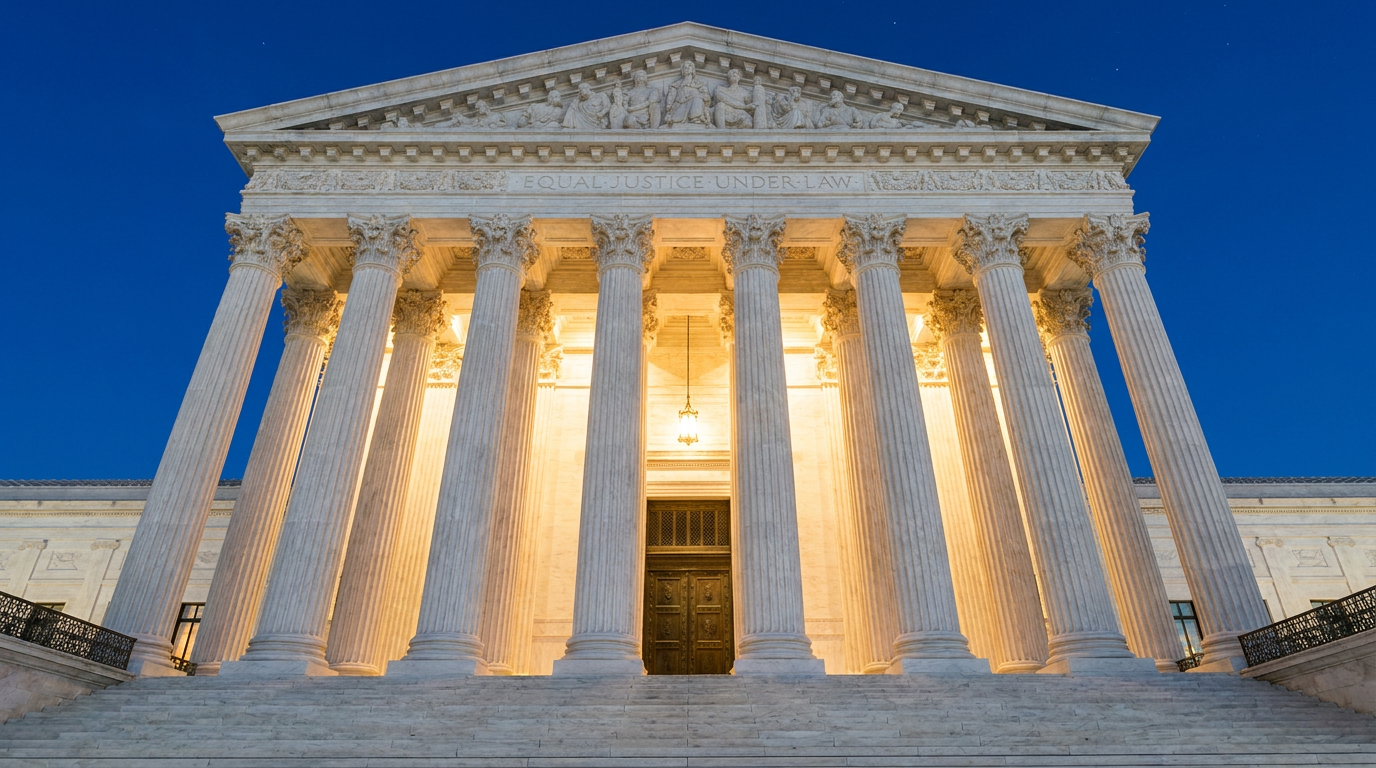
- Judicial Consensus
- Concludes that the government cannot automatically strip Second Amendment rights based solely on the status of being a drug user without proving active impairment or danger.
- Civil Liberties & Gun Rights Advocates
- Argue that status-based bans violate the Second Amendment and unfairly strip millions of non-violent marijuana users of their right to self-defense.
- Gun Control Advocates
- Express concern that the ruling weakens federal firearms regulations and makes it harder to disarm potentially dangerous individuals before violence occurs.
What's not represented
- · Individuals previously incarcerated under the voided statute
- · State-level law enforcement officials navigating the conflict between state and federal law
Why this matters
This unanimous ruling fundamentally alters federal gun control enforcement, protecting millions of Americans who use marijuana in compliance with state laws from federal felony charges and a lifetime loss of their Second Amendment rights.
Key points
- The Supreme Court unanimously struck down a federal law banning unlawful drug users from possessing firearms.
- The 9-0 decision found that stripping gun rights based solely on a person's status as a drug user violates the Second Amendment.
- The ruling protects millions of Americans who use marijuana in compliance with state laws from federal felony charges.
- The Court noted the government can still disarm individuals who are actively intoxicated or demonstrably dangerous.
- The voided statute was the same law used to convict Hunter Biden in 2024.
The Supreme Court unanimously ruled on Thursday that the federal government cannot automatically strip Americans of their Second Amendment rights simply because they use marijuana, dealing a major blow to a longstanding provision of the 1968 Gun Control Act.[1][2]
In a 9-0 decision authored by Justice Neil Gorsuch, the Court struck down the enforcement framework of 18 U.S.C. § 922(g)(3) as it was applied to a Texas man, Ali Danial Hemani. The statute made it a federal felony, punishable by up to 15 years in prison, for any "unlawful user" of a controlled substance to possess a firearm.[1][4]
"When the government crosses the line from permissible regulation into unconstitutional infringement, courts have a duty to say so," Gorsuch wrote for the unanimous Court. The justices concluded that affording the government the broad power to designate an entire class of people as categorically dangerous based solely on their status as drug users would risk allowing it to "quickly swallow" the Second Amendment.[2][4][5]
The ruling resolves a simmering legal conflict that has pitted the federal prohibition on cannabis against the reality that nearly half of all U.S. states have legalized the drug for recreational or medical use. It also unites an unusual coalition of civil libertarians, gun rights advocates, and cannabis legalization groups, all of whom argued the federal ban was overly broad and ahistorical.[3][6][7]

The case began in August 2022 when federal law enforcement agents searched the Dallas-area home of Ali Hemani, a dual citizen of the United States and Pakistan, under suspicion of terrorism-related activities. Hemani was fully cooperative during the search: he surrendered a Glock 19 9mm pistol he kept in a closet, pointed agents to a small amount of marijuana on the property, and admitted in an interview that he used the drug "about every other day."[1][4]
Investigators found no evidence of terrorism or drug trafficking, and no charges were filed related to the initial suspicion. However, more than six months later, federal prosecutors used Hemani's admission of marijuana use to indict him for knowingly possessing a firearm while being an unlawful user of a controlled substance.[1][4]
Hemani's legal team moved to dismiss the indictment, arguing that the law violated his fundamental right to self-defense. Both the U.S. District Court for the Eastern District of Texas and the Fifth Circuit Court of Appeals agreed, prompting the Trump administration's Justice Department to appeal the case to the Supreme Court.[1][3][4]
During oral arguments and in the final opinion, the government argued that regular users of illegal drugs pose an inherent risk to public safety when armed, attempting to compare modern cannabis users to historical prohibitions against "habitual drunkards."[4][5]
The Court firmly rejected that comparison. Gorsuch noted that historical laws regarding intoxication typically disarmed individuals only while they were actively impaired or if they had demonstrated actual dangerousness, rather than imposing a lifetime ban based on private, off-duty consumption.[5][6]

"Whatever one thinks of these developments, the federal government has not just tolerated them; it helped fuel them," Gorsuch wrote, referencing the widespread state-level legalization of marijuana. "All of which leaves it awkwardly positioned to suggest that the millions of Americans who now regularly use marijuana are categorically and unusually dangerous."[7]
"All of which leaves it awkwardly positioned to suggest that the millions of Americans who now regularly use marijuana are categorically and unusually dangerous."
The decision is a notable defeat for the Trump administration, which had vigorously defended the 1968 law even as it pushed to expand gun rights in other arenas and recently moved to reclassify medical marijuana as a less-dangerous drug.[3]
The ruling also casts a long shadow over one of the most high-profile prosecutions under the statute: the 2024 conviction of Hunter Biden. The son of former President Joe Biden was found guilty in Delaware of purchasing a firearm while addicted to cocaine, a conviction secured under the exact legal provision struck down Thursday. Though he was later pardoned by his father, the Supreme Court's reasoning mirrors the constitutional arguments Biden's defense team made during his trial.[2][3]
Despite the sweeping nature of the 9-0 decision, the justices carefully delineated the limits of their ruling. The Court did not strike down the entirety of the federal background check system, nor did it invalidate laws that disarm convicted felons or individuals subject to domestic violence restraining orders.[2]
Furthermore, Gorsuch explicitly noted that the government retains the authority to disarm individuals who are actively intoxicated while handling a firearm, or those whose drug use is proven to render them an immediate danger to themselves or others. "We do not address efforts to ban addicts, or those presently intoxicated, from possessing a firearm," the opinion stated.[2][7]

For federal prosecutors, the decision forces a significant pivot in enforcement strategy. The Justice Department estimates that roughly 300 people are charged annually under the unlawful user provision, though the charge is most frequently used as an add-on offense in broader criminal indictments rather than as a standalone prosecution.[2][3][4]
Civil liberties groups celebrated the decision as a victory against government overreach. The American Civil Liberties Union, which filed an amicus brief in support of Hemani alongside the National Rifle Association, praised the Court for curbing the government's ability to impose arbitrary and discriminatory penalties on millions of Americans.[2][3][6]
"This ruling carries immediate, profound implications for millions of Americans who use medical or recreational cannabis under state frameworks," the Cato Institute noted following the decision, emphasizing that it removes the threat of federal criminal liability for peaceful gun ownership.[6]
How we got here
August 2022
FBI agents search Ali Hemani's Texas home; he surrenders a firearm and admits to regular marijuana use.
February 2023
Hemani is indicted under 18 U.S.C. § 922(g)(3) for possessing a gun as an unlawful drug user.
February 2024
A federal district court dismisses the indictment, ruling the law unconstitutional as applied to Hemani.
January 2025
The Fifth Circuit Court of Appeals affirms the lower court's dismissal.
March 2026
The Supreme Court hears oral arguments in United States v. Hemani.
June 18, 2026
The Supreme Court unanimously strikes down the federal ban as applied to Hemani.
Viewpoints in depth
Civil Liberties & Gun Rights Advocates
An unusual coalition arguing against government overreach.
Organizations as politically diverse as the ACLU, the NRA, and the Cato Institute united behind Ali Hemani. They argued that the 1968 Gun Control Act's provision was a blunt instrument that violated the Second Amendment by stripping a fundamental right based purely on a person's status, rather than their actions. These advocates emphasized that millions of Americans responsibly use cannabis in compliance with state laws, and that permanently disarming them without due process or proof of violent behavior constitutes a severe constitutional violation.
Federal Law Enforcement
Defending the statute as a necessary tool to prevent armed violence.
The Justice Department, under both the Biden and Trump administrations, defended the law by arguing that regular users of illegal drugs are inherently more likely to engage in dangerous behavior. Prosecutors relied on historical analogues, comparing modern drug users to 'habitual drunkards' who were disarmed in the 18th and 19th centuries. They argued that the federal government must have the proactive authority to disarm individuals who engage in chronic illegal drug use before that behavior escalates into armed violence.
Gun Control Advocates
Concerned about the erosion of federal firearms regulations.
Gun violence prevention groups have watched the Supreme Court's post-Bruen jurisprudence with growing alarm. While acknowledging the changing cultural and legal status of marijuana, these advocates worry that striking down the 'unlawful user' provision removes a critical tool for law enforcement to disarm potentially volatile individuals. They caution that forcing prosecutors to prove active intoxication or immediate dangerousness in every case sets an impossibly high bar, potentially leaving firearms in the hands of individuals struggling with severe substance abuse.
What we don't know
- How lower courts will define 'active impairment' or 'immediate dangerousness' in future federal firearms prosecutions.
- Whether individuals previously convicted under 18 U.S.C. § 922(g)(3) will successfully appeal and overturn their convictions.
- How the Justice Department will adjust its enforcement strategy and background check forms in response to the ruling.
Key terms
- 18 U.S.C. § 922(g)(3)
- A provision of the 1968 Gun Control Act that makes it a federal felony for an 'unlawful user' of a controlled substance to possess a firearm.
- Second Amendment
- The constitutional provision protecting the right of Americans to keep and bear arms for self-defense.
- Bruen Test
- A legal standard established by the Supreme Court in 2022 requiring modern gun laws to have a well-established historical analogue to be considered constitutional.
- As-Applied Challenge
- A legal claim arguing that a law is unconstitutional specifically in how it was used against the defendant, rather than being unconstitutional in all circumstances.
Frequently asked
Can anyone who uses drugs now legally own a gun?
The ruling protects users who are not actively intoxicated while carrying a firearm and who have not been proven to be dangerous. The Court noted the government can still disarm individuals if their drug use makes them an immediate threat.
Does this decision legalize marijuana federally?
No. Marijuana remains a controlled substance under federal law, though the Trump administration recently reclassified medical marijuana as a less-dangerous drug.
How does this affect Hunter Biden's 2024 conviction?
Hunter Biden was convicted under this exact statute for purchasing a gun while addicted to cocaine. While he was subsequently pardoned by President Joe Biden, the Supreme Court's ruling validates the constitutional arguments his defense team made during his trial.
Does this ruling strike down all federal background checks?
No. The Supreme Court explicitly stated that this ruling does not impact other federal firearms restrictions, such as laws that disarm convicted felons or individuals subject to domestic violence restraining orders.
Sources
Source coverage
7 outlets
3 viewpoints surfaced







[1]Supreme Court of the United StatesJudicial Consensus
United States v. Hemani
Read on Supreme Court of the United States →[2]CBS NewsJudicial Consensus
Supreme Court strikes down federal gun ban for marijuana users in unanimous ruling
Read on CBS News →[3]The GuardianGun Control Advocates
Supreme court sides with Texas marijuana user who wants to legally own a gun
Read on The Guardian →[4]Fox 4 NewsCivil Liberties & Gun Rights Advocates
Supreme Court strikes down federal gun ban for unlawful drug users
Read on Fox 4 News →[5]The TraceGun Control Advocates
Supreme Court Limits Federal Gun Ban for Drug Users
Read on The Trace →[6]Cato InstituteCivil Liberties & Gun Rights Advocates
Expert Available: Supreme Court Strikes Down Federal Gun Ban for Cannabis Users
Read on Cato Institute →[7]Los Angeles TimesCivil Liberties & Gun Rights Advocates
Drug users don't lose their gun rights, Supreme Court rules
Read on Los Angeles Times →
Every angle. Every day.
Get news politics stories with full source coverage and perspective breakdowns delivered to your inbox.