
The Science of 'Calm Alertness': How L-Theanine and Caffeine Synergy Works in Tea
Matcha and green tea offer a unique cognitive lift distinct from coffee. The secret lies in the pharmacological synergy between caffeine and L-theanine, an amino acid that modulates brain waves to promote focus without the jitters.
By Factlen Editorial Team
- Cognitive Neuroscientists
- Focuses on measurable brain wave changes, fMRI data, and the precise neurochemical mechanisms of attention.
- Integrative Health Clinicians
- Emphasizes the practical application of these compounds for managing stress, ADHD, and daily cognitive wellness.
- Traditional Tea Practitioners
- Values the historical context, cultivation methods, and holistic experience of consuming shade-grown matcha.
What's not represented
- · Coffee industry advocates
- · Individuals with severe caffeine sensitivity
Why this matters
Understanding how these compounds interact allows you to intentionally optimize your daily caffeine intake for sustained mental clarity, avoiding the anxiety and energy crashes often associated with high-dose coffee consumption.
Key points
- L-theanine and caffeine create a pharmacological synergy that enhances focus while reducing anxiety.
- L-theanine increases alpha brain waves, promoting a state of 'relaxed alertness'.
- Clinical studies show the combination improves task-switching accuracy and reduces mind-wandering.
- Because the whole leaf is consumed, matcha provides a much higher dose of L-theanine than steeped green tea.
- Shading tea plants before harvest prevents L-theanine from converting into bitter catechins.
The contrast between a morning cup of coffee and a bowl of matcha is stark and immediately noticeable to anyone who regularly consumes both. While coffee often delivers a sharp, sudden jolt of energy that can leave you feeling wired or anxious, matcha provides a smooth, sustained lift. This phenomenon, often described by enthusiasts as a state of "calm alertness," isn't just folklore or the result of a mindful preparation ritual. It is deeply rooted in neurochemistry, specifically the way the compounds within the tea leaf interact with the human brain.
The secret behind this unique cognitive experience lies in a remarkable pharmacological synergy between two primary compounds found in Camellia sinensis, the plant from which all true teas are derived. These two compounds are caffeine, a widely understood central nervous system stimulant, and L-theanine, a unique and highly specialized amino acid. While each compound has distinct and well-documented effects on the human body when consumed in isolation, their combination creates an entirely different physiological profile that enhances cognitive performance while actively suppressing the negative side effects of stimulation.[8]
Caffeine is by far the world's most popular psychoactive substance, relied upon by billions of people daily to jumpstart their mornings and push through afternoon slumps. It works primarily by acting as an antagonist to adenosine receptors in the brain. Adenosine is a chemical that naturally builds up during waking hours, gradually signaling to the body that it is time to sleep. By blocking these receptors, caffeine effectively prevents the onset of tiredness while simultaneously increasing cholinergic and dopaminergic activity, leading to heightened alertness and a temporary boost in mood.[7]
However, the mechanism that makes caffeine so effective is also responsible for its well-known drawbacks. Because caffeine alone can trigger the sympathetic nervous system—the body's "fight or flight" response—high doses frequently lead to jitteriness, an elevated heart rate, and heightened anxiety. Furthermore, because caffeine only masks the accumulation of adenosine rather than clearing it, the eventual metabolization of the stimulant often results in a severe energy crash. This is the exact physiological rollercoaster that the compounds in green tea and matcha naturally circumvent.[8]

Enter L-theanine, a non-protein amino acid that was first discovered by Japanese scientists in 1949. Unlike caffeine, which is found in a wide variety of plants including coffee beans and cacao, L-theanine is found almost exclusively in the leaves of the tea plant, alongside a few species of mushrooms. Historically, the presence of this compound is what allowed Zen Buddhist monks to drink green tea before long meditation sessions, granting them the ability to remain perfectly still and relaxed without falling asleep on their cushions.[3][4]
From a physiological standpoint, L-theanine is uniquely equipped to influence brain function because of its specific molecular structure. When consumed, it is absorbed through the intestinal tract and is able to readily cross the blood-brain barrier. Research indicates that this process is highly efficient, with the compound reaching the brain and beginning to exert its neurophysiological effects within 30 to 40 minutes of consumption. Once inside the brain, L-theanine acts as a powerful modulator of several key neurotransmitters, fundamentally altering the brain's chemical environment.[1]
One of the primary ways L-theanine exerts its calming influence is by increasing the production of gamma-aminobutyric acid, commonly known as GABA. GABA is the brain's primary inhibitory neurotransmitter, meaning its main job is to slow down or block specific signals in the central nervous system. By boosting GABA levels, L-theanine actively promotes a state of deep relaxation and helps to attenuate the sympathetic nervous system's response to stress, effectively lowering heart rate and reducing the secretion of stress hormones like cortisol.[1][7]
Beyond its impact on GABA, L-theanine also supports the production of dopamine and serotonin, neurotransmitters that are heavily involved in regulating mood, motivation, and feelings of well-being. Simultaneously, it balances glutamate activity by blocking the binding of L-glutamic acid to glutamate receptors. Because glutamate is an excitatory neurotransmitter, reducing its activity helps to prevent excessive neuronal firing. This delicate balancing act is what allows L-theanine to reduce anxiety and stress without causing the heavy sedation or drowsiness typically associated with pharmaceutical anxiolytics or sleep aids.[1]
The most measurable and fascinating impact of L-theanine on the human brain is its ability to stimulate the production of alpha brain waves. Brain waves are electrical patterns created by synchronized neural activity, and alpha waves, which operate at a frequency of 8 to 13 Hertz, sit right between the slower theta waves of deep relaxation and the faster beta waves of active, anxious thinking. An increase in alpha wave activity is universally associated with a state of "relaxed alertness"—the exact mental state achieved by experienced meditators.[1][2]

The most measurable and fascinating impact of L-theanine on the human brain is its ability to stimulate the production of alpha brain waves.
When L-theanine and caffeine are consumed together, as they naturally occur in tea, they create a genuine pharmacological synergy. This means that their combined effect is not merely additive; they interact in a way that produces an outcome entirely different from the sum of their individual parts. The L-theanine effectively smooths out the jagged edges of the caffeine stimulation. It prevents the rapid spike in heart rate and the subsequent jitteriness, while the caffeine prevents the L-theanine from inducing a state that is too relaxed for productive work.[6][8]
The scientific community has rigorously tested this synergy. A landmark 2008 double-blind, placebo-controlled randomized trial published in Nutritional Neuroscience investigated the combined effects of the two compounds on young adults. The researchers found that the combination of L-theanine and caffeine significantly improved accuracy during demanding task-switching exercises and increased self-reported alertness. Crucially, the combination outperformed either compound when administered alone, providing concrete evidence that the two substances work together to focus attention and enhance cognitive endurance during mentally taxing activities.[4][5]
Modern neuroimaging techniques have provided even deeper insights into how this combination alters brain function. Functional magnetic resonance imaging (fMRI) studies have shown that when healthy adults consume L-theanine and caffeine together, they exhibit quicker reaction times to visual stimuli. More importantly, the fMRI scans revealed that the combination actually reduces the brain's response to distractor stimuli in regions associated with visual attention. This indicates a measurable decrease in mind-wandering, allowing individuals to maintain a highly focused state on their primary task.[7]
Furthermore, cerebral blood flow studies have highlighted another critical aspect of this synergy. Caffeine is a known vasoconstrictor, meaning it narrows blood vessels and restricts blood flow in the brain, which is why caffeine withdrawal often triggers severe headaches. However, research utilizing near-infrared spectroscopy has demonstrated that L-theanine can attenuate this vasoconstrictive effect. By helping to maintain healthy, normalized cerebral blood flow even in the presence of caffeine, L-theanine ensures that the brain continues to receive optimal oxygenation during periods of high cognitive demand.[6]
The clinical implications of this synergy are currently being explored for a variety of cognitive challenges, including attention deficit hyperactivity disorder (ADHD). A proof-of-concept neuroimaging study involving children with ADHD found that a specific ratio of L-theanine and caffeine improved total cognition scores and enhanced inhibitory control. While caffeine or L-theanine alone sometimes worsened reaction times in these subjects, the combination successfully reduced task-related mind-wandering. This suggests that the synergy could offer a natural, complementary approach to managing attention deficits and improving executive function.[7]

Despite these promising findings, there is a significant dosage gap between the amounts used in clinical studies and the amounts found in a standard cup of brewed tea. Many of the most compelling clinical trials utilize a concentrated dose of 100 to 200 milligrams of L-theanine paired with 40 to 160 milligrams of caffeine. These specific ratios are carefully calibrated to maximize the cognitive-enhancing outcomes while minimizing any potential side effects, creating an optimal environment for sustained mental clarity and focus.[2][7]
In contrast, a standard cup of brewed green or black tea might only contain 20 to 30 milligrams of L-theanine, depending on the specific variety and brewing method. While this amount is enough to provide a mild calming effect, it falls short of the therapeutic doses used in clinical settings. To reach the levels of cognitive enhancement observed in the research, an individual would need to consume multiple cups of brewed tea throughout the day, which can be impractical for many people.[4]
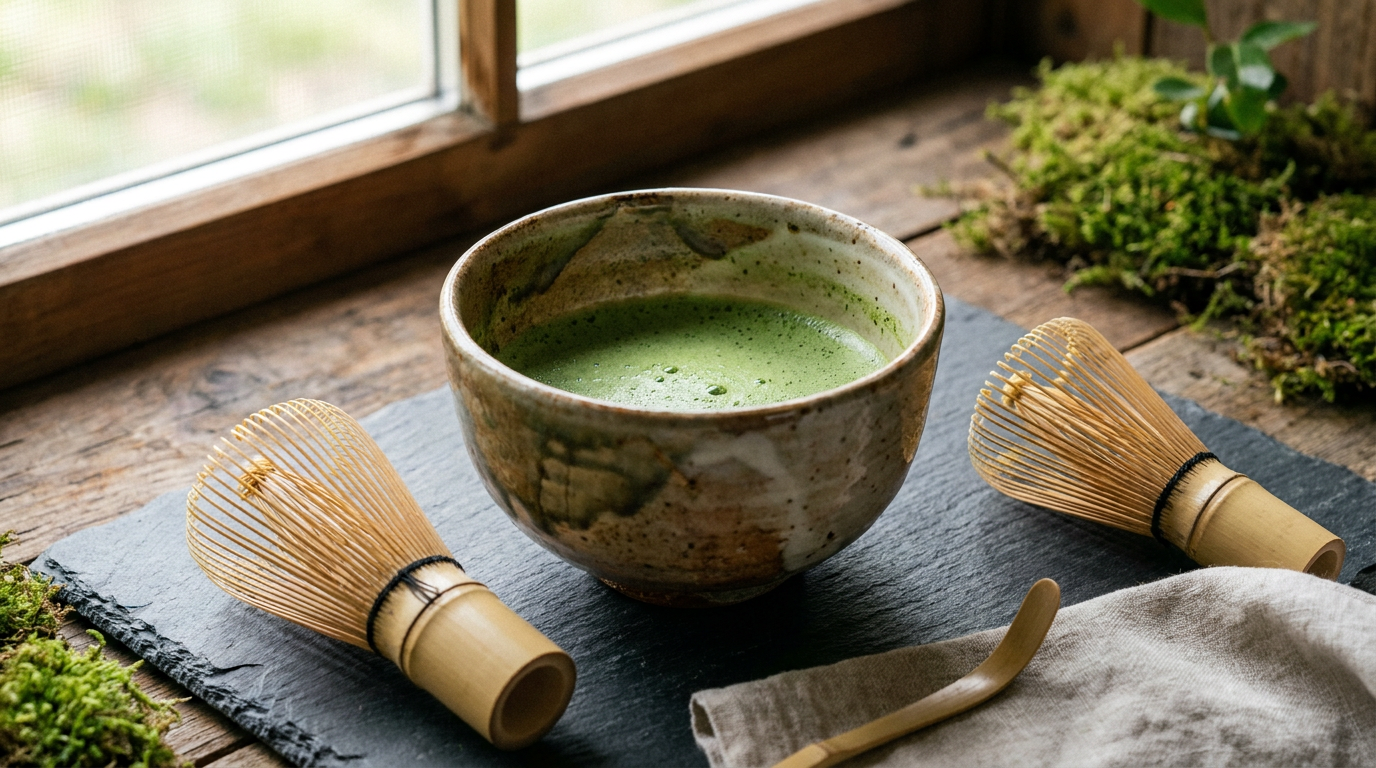
This is precisely where matcha stands out as a uniquely powerful cognitive tool. Unlike traditional teas where the leaves are steeped in hot water and then discarded, matcha involves consuming the entire tea leaf, which has been meticulously ground into a fine, vibrant green powder. Because you are ingesting the whole leaf, matcha delivers a significantly higher concentration of all the plant's active compounds, including antioxidants, caffeine, and, most importantly, L-theanine, bridging the gap between casual consumption and clinical efficacy.[4]
The high L-theanine content in matcha is not an accident; it is the direct result of a highly specialized cultivation technique. Approximately three to four weeks before harvest, matcha tea plants are covered with heavy shade cloths to block out direct sunlight. This shading process forces the plant to overproduce chlorophyll and prevents the existing L-theanine from converting into catechins, which are the bitter compounds found in standard green tea. This meticulous process maximizes the accumulation of L-theanine in the final product.[4]

As a result of this unique cultivation and preparation method, a standard two-gram serving of high-quality ceremonial matcha can contain between 60 and 80 milligrams of caffeine, alongside a robust and highly concentrated dose of L-theanine. This brings the ratio of the two compounds much closer to the therapeutic levels observed in clinical trials. It provides a substantial, sustained energy lift that can last for several hours, completely free from the sharp peaks and valleys associated with high-dose coffee consumption.[4]
While researchers continue to map the long-term neuroprotective benefits of these compounds, the immediate cognitive advantages are abundantly clear. The ancient practice of whisking powdered tea, once reserved for samurai warriors and meditating monks, offers a scientifically validated blueprint for modern mental endurance. By understanding the neurochemical synergy between L-theanine and caffeine, individuals can intentionally optimize their daily routines, achieving a state of calm alertness that supports both rigorous intellectual work, creative problem-solving, and overall psychological well-being in an increasingly distracting world.[8]
How we got here
1924
Hans Berger discovers the alpha brain wave rhythm, linking it to deep relaxation.
1949
Japanese scientists discover the non-protein amino acid L-theanine in green tea leaves.
2008
A landmark double-blind RCT confirms that L-theanine and caffeine synergistically improve attention and task-switching.
2020s
fMRI studies demonstrate that the combination reduces brain responses to distractor stimuli, improving focus.
Viewpoints in depth
Cognitive Neuroscientists
Focuses on measurable brain wave changes, fMRI data, and the precise neurochemical mechanisms of attention.
For neuroscientists, the value of L-theanine and caffeine lies in their measurable impact on brain function. Researchers point to functional MRI scans showing decreased blood flow to regions associated with mind-wandering when the two compounds are combined. They emphasize that the synergy is not merely subjective; it produces statistically significant improvements in reaction times, task-switching accuracy, and inhibitory control in randomized controlled trials. This camp is particularly interested in isolating the exact optimal ratios of the two compounds to develop targeted interventions for cognitive decline and attention deficit disorders.
Integrative Health Clinicians
Emphasizes the practical application of these compounds for managing stress, ADHD, and daily cognitive wellness.
Integrative health practitioners view the L-theanine and caffeine synergy as a powerful, natural tool for managing the demands of modern life. Rather than focusing solely on peak cognitive performance, they highlight L-theanine's ability to modulate cortisol levels and increase GABA production. For this camp, the combination is a safer, more sustainable alternative to high-dose stimulants or pharmaceutical anxiolytics. They often recommend matcha or L-theanine supplements to patients struggling with caffeine-induced anxiety, sleep disturbances, or mild attention deficits, framing it as a holistic approach to nervous system regulation.
Traditional Tea Practitioners
Values the historical context, cultivation methods, and holistic experience of consuming shade-grown matcha.
Traditional tea practitioners and growers emphasize that the benefits of matcha cannot be entirely reduced to isolated chemical compounds. They argue that the meticulous cultivation process—specifically the weeks of shading that force the plant to struggle and produce higher levels of L-theanine and chlorophyll—is integral to the final product's quality. This perspective honors the historical use of matcha by Zen monks and samurai, viewing the preparation and consumption of the tea as a mindful ritual that contributes to the state of 'calm alertness' just as much as the neurochemistry itself.
What we don't know
- The exact optimal ratio of L-theanine to caffeine for every individual, as genetic differences in caffeine metabolism can alter the effects.
- Whether long-term daily consumption of high-dose L-theanine provides permanent neuroprotective benefits against age-related cognitive decline.
Key terms
- L-theanine
- A non-protein amino acid found almost exclusively in tea plants that promotes relaxation without drowsiness.
- Alpha brain waves
- Electrical patterns in the brain (8-13 Hz) associated with a state of calm, alert focus.
- GABA
- An inhibitory neurotransmitter in the brain that blocks specific signals in the central nervous system, producing a calming effect.
- Adenosine
- A chemical in the central nervous system that regulates sleep and wakefulness; caffeine works by blocking its receptors.
- Pharmacological synergy
- When two or more compounds interact in a way that produces an effect greater than or different from the sum of their individual effects.
Frequently asked
Does matcha have more caffeine than coffee?
A standard 2-gram serving of matcha contains about 60 to 80 mg of caffeine, which is generally less than an 8-ounce cup of brewed coffee (95-120 mg).
Can I just take an L-theanine supplement with my coffee?
Yes, many people take a 100-200 mg L-theanine supplement alongside their morning coffee to smooth out the jitters and replicate the synergistic effects found in tea.
Why is matcha shaded before harvest?
Shading the tea plants for three to four weeks before harvest prevents sunlight from converting L-theanine into catechins, resulting in a sweeter flavor and higher L-theanine concentration.
Sources
Source coverage
8 outlets
3 viewpoints surfaced







[1]Dr. OracleCognitive Neuroscientists
L-theanine mechanism of action alpha waves
Read on Dr. Oracle →[2]Mind Lab ProIntegrative Health Clinicians
L-Theanine Benefits for the Brain
Read on Mind Lab Pro →[3]NutraIngredientsTraditional Tea Practitioners
The therapeutic potential of matcha tea and L-Theanine
Read on NutraIngredients →[4]SipspaTraditional Tea Practitioners
Does matcha improve focus? L-theanine and alpha brain waves
Read on Sipspa →[5]PubMed CentralCognitive Neuroscientists
The combined effects of L-theanine and caffeine on cognitive performance and mood
Read on PubMed Central →A double-blind, placebo-controlled study evaluating the effects of caffeine and L-theanine both alone and in combination on cerebral blood flow
Read on PubMed Central →[7]Philadelphia Integrative PsychiatryIntegrative Health Clinicians
How L-Theanine and Caffeine Improve Cognitive Function
Read on Philadelphia Integrative Psychiatry →[8]Factlen Editorial TeamTraditional Tea Practitioners
Synthesis by Factlen editorial team
Read on Factlen Editorial Team →
Every angle. Every day.
Get food drink stories with full source coverage and perspective breakdowns delivered to your inbox.