
The U.S.-Iran Ceasefire Deal: What the 14-Point Memorandum Actually Does
The United States and Iran have signed a preliminary 14-point agreement to halt a 110-day war, lift naval blockades, and reopen the Strait of Hormuz. The deal sets a 60-day window for direct negotiations on Iran's nuclear program and a massive reconstruction package, though significant hurdles remain.
By Factlen Editorial Team
- U.S. Administration
- Focuses on reopening the Strait of Hormuz, securing global energy markets, and forcing Iran to the table under maximum pressure.
- Iranian Pragmatists
- Sees the deal as a necessary step to save the economy, secure the $300B reconstruction fund, and lift the crippling naval blockade.
- International Monitors
- Prioritizes the immediate cessation of hostilities and the rapid resumption of nuclear verification protocols.
- Iranian Hardliners
- Views the deal as a capitulation to the West and strongly opposes the inclusion of Lebanon in the ceasefire terms.
What's not represented
- · Lebanese civilians affected by the ceasefire
- · Global shipping companies navigating the Strait
Why this matters
This agreement pauses a devastating regional conflict that choked global energy markets and cost thousands of lives. If finalized, it could fundamentally reshape Middle Eastern security, stabilize oil prices, and introduce unprecedented economic investment into Iran—but a collapse could trigger an immediate return to war.
Key points
- The U.S. and Iran signed a 14-point memorandum to halt a 110-day regional war.
- The agreement establishes a 60-day ceasefire and mandates an end to military operations, including in Lebanon.
- The U.S. will lift its naval blockade within 30 days, while Iran reopens the Strait of Hormuz toll-free for 60 days.
- A $300 billion reconstruction plan for Iran is proposed, contingent on a final nuclear settlement.
- Sanctions relief requires Iran to verifiably down-blend its highly enriched uranium under IAEA supervision.
- Supreme Leader Mojtaba Khamenei authorized direct talks with the U.S., sparking backlash from Iranian hardliners.
After 110 days of devastating regional conflict, the United States and Iran have signed the "Islamabad Memorandum of Understanding," a preliminary 14-point framework designed to halt hostilities and reopen global trade routes. Brokered primarily by Pakistan, the agreement was signed remotely by U.S. President Donald Trump and Iranian President Masoud Pezeshkian. The deal establishes a fragile 60-day ceasefire window to negotiate a permanent settlement, addressing everything from maritime blockades to nuclear enrichment. The agreement marks a sudden and dramatic pause to a war that has choked global energy markets and threatened to engulf the broader Middle East in a prolonged military confrontation.[4][7]
The most immediate mechanism of the agreement is a mutual cessation of military operations. Paragraph 1 of the memorandum explicitly requires both nations and their allies to permanently terminate military actions on all fronts. Crucially, the text specifically names Lebanon, effectively requiring Tehran to rein in Hezbollah forces that have been engaged in the conflict. U.S. officials noted during a briefing that while Iran must halt its proxy attacks, Israel retains the right to strike back if Hezbollah violates the ceasefire. This inclusion represents a significant diplomatic concession, tying the broader regional proxy war directly to the bilateral negotiations between Washington and Tehran.[4][9]
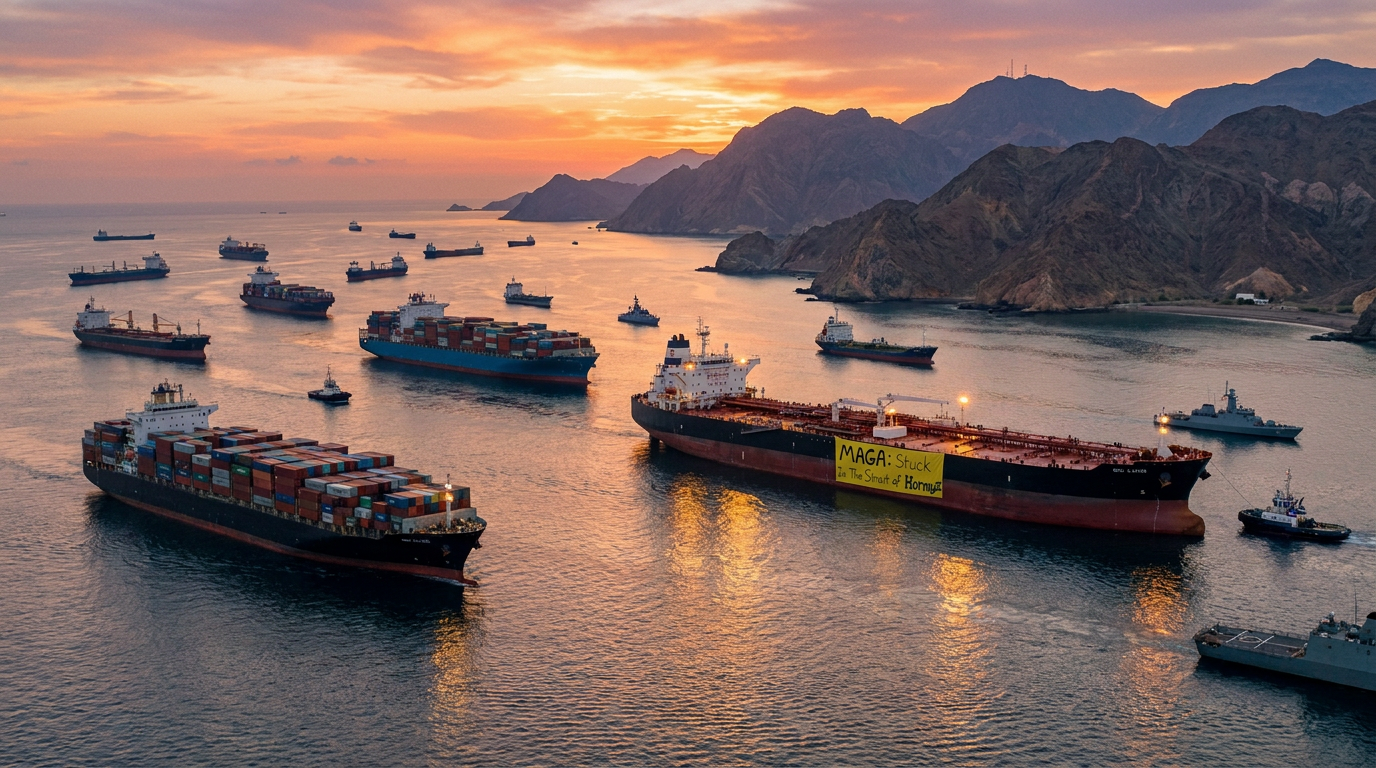
Reopening the seas is the second major pillar of the framework. Prior to the deal, the U.S. Navy had enforced a strict blockade on Iranian ports, while Iran had effectively closed the Strait of Hormuz—a critical maritime chokepoint that handles roughly one-fifth of global oil trade. Under the new terms, the United States must fully lift its naval blockade within 30 days, pulling its forces back from the immediate proximity of the Islamic Republic. In exchange, Iran is required to ensure toll-free passage for commercial vessels through the Strait for 60 days, allowing global energy markets to begin stabilizing after months of severe disruption.[2][4][7]

However, the long-term status of the Strait remains a volatile point of friction. While the U.S. and Arab Gulf states seek permanent free navigation, Iranian leadership views the waterway as a sovereign asset. Iranian Parliament Speaker Mohammad Bagher Ghalibaf stated on state television that Tehran intends to charge ships a toll after the initial 60-day fee-free period expires. Ghalibaf asserted that the waterway will not return to pre-war conditions, setting up a major clash for the upcoming final negotiations. U.S. officials have preemptively countered that Gulf states would never agree to a long-term arrangement that charges for maritime access.[4]
To incentivize a permanent peace, the memorandum outlines an unprecedented economic package. Paragraph 6 commits the United States and its regional partners to develop a mutually agreed reconstruction and economic development plan for Iran worth at least $300 billion. The mechanism for this massive fund must be finalized within the 60-day window. Furthermore, the U.S. agreed to grant all necessary licenses, waivers, and permissions to facilitate these financial transactions, provided a final deal is reached. This massive influx of capital is designed to rebuild an Iranian economy crippled by years of sanctions and the recent 110-day military conflict.[7][9]

To incentivize a permanent peace, the memorandum outlines an unprecedented economic package.
Sanctions relief, however, is strictly tethered to Iran's nuclear program. U.S. officials emphasized that the paragraphs detailing sanctions removal and nuclear compliance use intertwined language, ensuring that one cannot happen without the other. Iran will not receive broad sanctions relief simply for signing the ceasefire; it must first perform on the nuclear front. The core requirement is that Iran's stockpile of highly enriched uranium must be down-blended—diluted to a lower, non-weapons-grade concentration—under international supervision. The memorandum requires Iran to maintain the status quo of its nuclear program during the 60-day window while technical negotiations proceed.[4][5]
The International Atomic Energy Agency (IAEA) will oversee this critical verification process. IAEA Director General Rafael Mariano Grossi welcomed the memorandum, noting that the indispensable role of the UN watchdog was formally recognized in the text. Grossi stated that technical work must now begin to formulate concrete steps for monitoring Iran's facilities, acknowledging that the agency's current access is not at the level it needs to be. The IAEA's ability to verify the down-blending of uranium and ensure Iran is not covertly advancing its nuclear capabilities will be the linchpin of any final agreement.[6]

In a historic shift, Iranian Supreme Leader Mojtaba Khamenei—who assumed power after his father, Ali Khamenei, was killed earlier in the conflict—has formally authorized direct negotiations with the United States. In a statement read on state television and published on his Telegram channel, Khamenei endorsed the upcoming face-to-face talks, marking a significant departure from decades of Iranian policy. However, he cautioned his domestic audience that negotiating does not mean accepting the enemy's point of view. This authorization provides the Iranian delegation with the necessary political cover to engage directly with American envoys in Switzerland.[1][2][3]
The decision to engage directly with Washington has triggered severe backlash from Iranian hardliners. Factions such as the Paydari Front, which advocates a strict ideological vision of the Islamic Republic, view the memorandum as a dangerous capitulation. Prominent hardline lawmakers have protested the inclusion of Lebanon in the ceasefire terms and oppose any deal that compromises Iran's nuclear leverage or its broader Axis of Resistance. These domestic pressures mean the Iranian negotiating team will face intense scrutiny from within their own government as they attempt to hammer out a final deal over the next two months.[8]
On the American side, the timeline for formalizing the agreement has seen slight logistical delays. Vice President JD Vance, who is expected to lead the U.S. delegation alongside envoys Steve Witkoff and Jared Kushner, postponed a planned trip to a ceremonial signing in Switzerland. Vance indicated during a White House briefing that the trip would likely happen over the weekend, acknowledging that the uncertain timeline could make it harder for the administration to sell the deal to skeptical congressional Republicans who view the framework as too favorable to Tehran.[2][7]

The stakes for the next 60 days are existential. The memorandum explicitly states that either side can walk away at any time if negotiations collapse, meaning the ceasefire is highly fragile. President Trump has publicly warned that any Iranian violation of the terms would result in an immediate resumption of the U.S. military campaign, telling reporters that the military would go right back to dropping bombs. Conversely, if the talks succeed, the agreement could fundamentally reshape the security and economic architecture of the Middle East, ending decades of hostility and integrating Iran into the regional economy.[4][7]
How we got here
April 2025
Nuclear negotiations break down, setting the stage for future conflict.
February 2026
Israel and the U.S. launch strikes, igniting a 110-day regional war.
June 14, 2026
U.S. and Iranian representatives digitally sign the preliminary memorandum.
June 17, 2026
President Trump and President Pezeshkian remotely sign the Islamabad MOU.
June 18, 2026
Supreme Leader Mojtaba Khamenei publicly authorizes direct negotiations with the U.S.
Viewpoints in depth
The U.S. Administration's View
The White House views the deal as a successful use of maximum pressure to secure global energy markets.
For the U.S. administration, the primary victory of the Islamabad Memorandum is the immediate reopening of the Strait of Hormuz and the stabilization of global energy markets. Officials argue that the crippling naval blockade forced Tehran to the negotiating table. By tying any future sanctions relief and the $300 billion reconstruction package directly to verifiable nuclear compliance, the administration believes it has maintained maximum leverage while pausing a costly regional war.
Iranian Pragmatists' View
Iranian leadership sees the ceasefire as a necessary step to rescue a devastated economy.
Pragmatic elements within the Iranian government, backed by Supreme Leader Mojtaba Khamenei's unprecedented authorization of direct talks, view the agreement as an economic lifeline. Facing a severe domestic crisis exacerbated by the U.S. naval blockade, pragmatists argue that securing the $300 billion reconstruction fund and lifting sanctions are existential priorities. They emphasize that negotiating does not mean ideological surrender, but rather a tactical pause to rebuild the nation's infrastructure and stabilize the regime.
Iranian Hardliners' View
Hardline factions view the memorandum as a dangerous capitulation to Western demands.
Groups like the Paydari Front strongly oppose the framework, arguing that it compromises the core tenets of the 1979 revolution. Hardliners are particularly incensed by the explicit inclusion of Lebanon in the ceasefire, which they view as an unacceptable constraint on Hezbollah and Iran's broader Axis of Resistance. They fear that down-blending uranium and granting the IAEA expanded access will permanently neuter Iran's strategic deterrent without guaranteeing long-term sanctions relief from an unpredictable U.S. administration.
International Monitors' View
Global watchdogs and mediators prioritize the resumption of nuclear oversight and the end of hostilities.
For the United Nations and the IAEA, the ceasefire provides a critical window to re-establish visibility into Iran's nuclear program. Director General Rafael Grossi has emphasized that the technical work of verifying uranium down-blending must begin immediately, as the agency currently lacks sufficient access to Iranian facilities. Mediators like Pakistan and the Arab Gulf states share this urgency, viewing the 60-day window as a fleeting opportunity to lock in a permanent peace before the fragile consensus collapses.
What we don't know
- Whether Iran will actually follow through on down-blending its highly enriched uranium.
- How the $300 billion reconstruction fund will be financed and distributed.
- If Hezbollah and other proxy groups will fully adhere to the ceasefire in Lebanon.
Key terms
- Islamabad Memorandum of Understanding
- The 14-point preliminary framework agreement signed by the U.S. and Iran to halt the 2026 war.
- Strait of Hormuz
- A critical maritime chokepoint between the Persian Gulf and the Gulf of Oman, through which roughly a fifth of the world's oil passes.
- Uranium Down-blending
- The process of diluting highly enriched uranium to a lower concentration, making it unsuitable for nuclear weapons.
- Paydari Front
- A hardline Iranian political faction that strongly opposes engagement with the West and views the ceasefire as a capitulation.
Frequently asked
What triggered the 2026 U.S.-Iran war?
The conflict ignited after a breakdown in nuclear negotiations in early 2025 led to Israeli strikes and a broader regional war involving the U.S. and Iran.
Is the Strait of Hormuz open to shipping now?
Yes, under the agreement, Iran must allow toll-free passage for commercial vessels for 60 days, though Tehran has signaled it may charge fees afterward.
Did the U.S. agree to pay Iran $300 billion?
Not directly. The U.S. and regional partners agreed to develop a mutually agreed plan for at least $300 billion in reconstruction, which is contingent on finalizing a permanent deal.
Will Hezbollah stop fighting Israel?
The memorandum explicitly includes Lebanon, requiring Iran to halt allied military operations there, though Israel retains the right to respond if attacked.
Sources
Source coverage
9 outlets
4 viewpoints surfaced









[1]AxiosIranian Pragmatists
Iran's supreme leader says he authorized deal, direct talks with U.S.
Read on Axios →[2]PBSU.S. Administration
U.S. lifts blockade of Iran and Iranian supreme leader endorses direct talks with American officials
Read on PBS →[3]Middle East EyeIranian Pragmatists
Iranian supreme leader says direct talks with US do 'not mean accepting its views'
Read on Middle East Eye →[4]The GuardianInternational Monitors
US-Iran deal takeaways: reopening the strait of Hormuz, waived oil sanctions and Lebanon
Read on The Guardian →[5]CSISInternational Monitors
U.S. and Iran Reach Deal to Extend Ceasefire and Open Strait
Read on CSIS →[6]UN NewsInternational Monitors
US-Iran deal: technical work can begin, says atomic energy agency
Read on UN News →[7]Military TimesU.S. Administration
Read the 14-point memorandum of understanding between the United States and Iran
Read on Military Times →[8]Iran InternationalIranian Hardliners
Hardliners protest the deal
Read on Iran International →[9]Al ArabiyaInternational Monitors
Senior US officials share text of draft US-Iran memorandum of understanding
Read on Al Arabiya →

More in news politics
See all 8 stories →Care Law
UK Supreme Court Overturns 'Cheshire West', Redefining Deprivation of Liberty in Care
7 sources

Global Demographics
Don't Blame the iPhone: The Real Economics Driving the Global Baby Bust
7 sources

US-Iran Deal
U.S. and Iran Sign 'Islamabad Memorandum' to End War and Reopen Strait of Hormuz
7 sources

Labor Law
House Passes Faster Labor Contracts Act, Mandating Timelines and Binding Arbitration for First Union Deals
8 sources
Every angle. Every day.
Get news politics stories with full source coverage and perspective breakdowns delivered to your inbox.