
Cricket Injury Report: Triumphant Returns and Squad Resilience in June 2026
From ahead-of-schedule recoveries at the Women's T20 World Cup to international captains returning to the crease, June's cricket injury updates highlight remarkable athletic resilience.
By Factlen Editorial Team
- Medical & Sports Science
- Prioritizes conservative injury management and long-term athlete welfare.
- Team Management
- Focuses on squad depth, tactical reshuffles, and maintaining tournament momentum.
- Player Advocates
- Highlights the psychological resilience required to overcome severe injuries.
What's not represented
- · The specific rehabilitation specialists and physical therapists working behind the scenes.
- · Domestic club coaches who lose their star players to international duty injuries.
Why this matters
Injuries are an inevitable part of elite sports, but how teams and individuals respond to them defines championship runs and careers. These stories of ahead-of-schedule recoveries and seamless tactical adjustments highlight the incredible resilience of modern cricketers and the sophisticated sports science keeping them on the field.
Key points
- Ireland's Jane Maguire made a triumphant, ahead-of-schedule return from a knee injury to join the Women's T20 World Cup squad.
- England captain Nat Sciver-Brunt will miss two group matches with a calf strain, allowing Charlie Dean to step up as leader.
- Australia overcame the absence of injured stars Phoebe Litchfield and Ashleigh Gardner to comfortably defeat Bangladesh.
- India is awaiting scan results for Shreyanka Patil after the spinner was stretchered off with an ankle injury.
- In the men's game, Australian T20 captain Mitch Marsh successfully returned from an ankle injury to lead his side against Bangladesh.
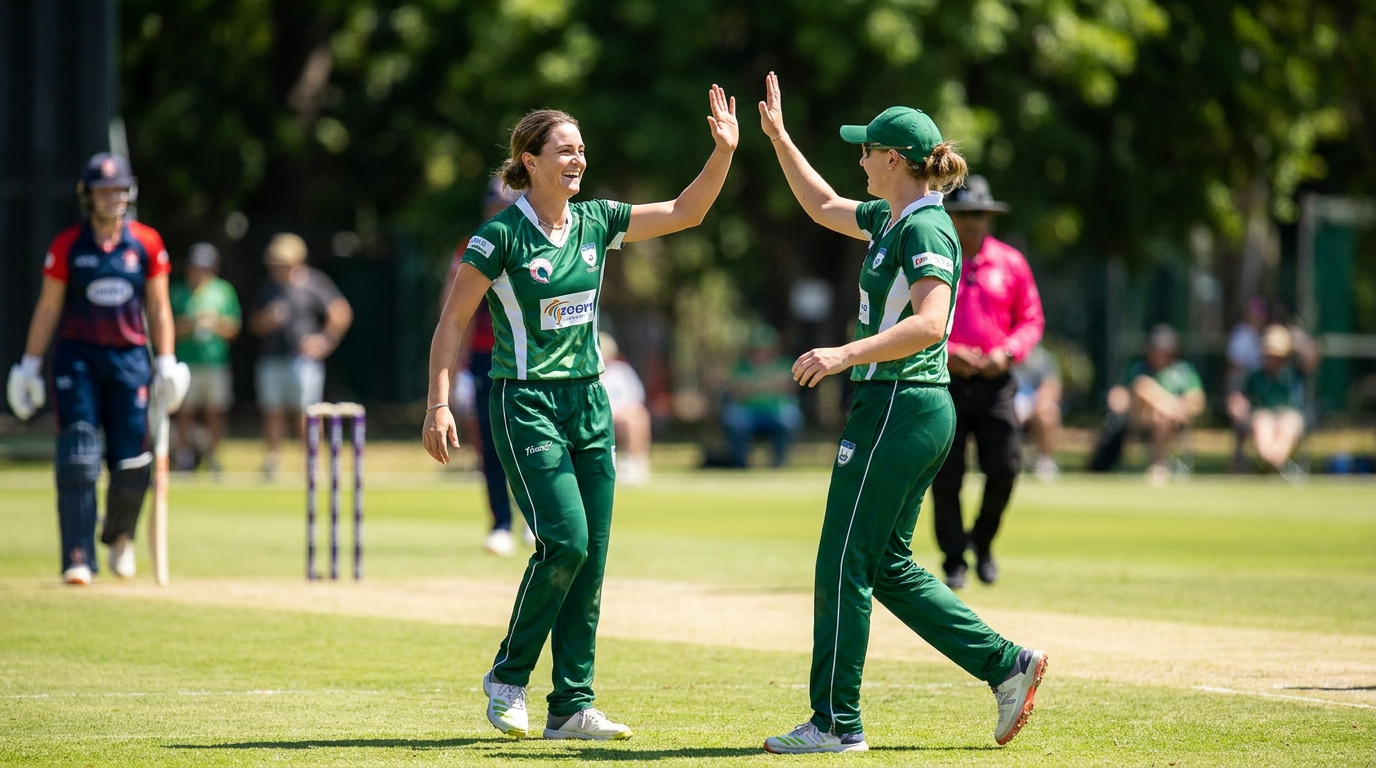
The 2026 ICC Women's T20 World Cup in England has reached a critical juncture, with the physical toll of the intense, fast-paced schedule beginning to severely test the world's top cricketing nations. As the group stages progress and the pressure mounts, a wave of high-profile injuries has forced championship contenders to shuffle their lineups and rely heavily on their bench strength. However, rather than derailing campaigns and leading to pessimistic outlooks, these medical setbacks are highlighting the remarkable depth of the competing squads and paving the way for inspiring, against-the-odds returns to the international stage. The tournament is rapidly becoming a global showcase of athletic resilience, where the ability of medical staff to manage workloads and the capacity of players to adapt to sudden roster changes are proving just as vital as on-field execution. [1][2][1][2]
Perhaps the most uplifting narrative of the tournament thus far belongs to Ireland's Jane Maguire, whose journey to the World Cup is a profound testament to dedicated rehabilitation and mental fortitude. Earlier this week, the tournament's official technical committee formally approved Maguire as an injury replacement for fast bowler Ava Canning, who was unfortunately ruled out of the competition after scans revealed a stress fracture in her back. Canning's absence was acutely felt during Ireland's recent hard-fought fixture against England, but Maguire's sudden addition brings a much-needed emotional and tactical boost to the squad as they prepare for their crucial upcoming match against New Zealand. [1][1]
Maguire's presence in the World Cup squad is nothing short of a medical triumph. The talented bowler was initially ruled completely out of selection consideration after sustaining a severe knee injury during domestic duty in early May. Following an intensive, ahead-of-schedule recovery program overseen by dedicated physiotherapists, Maguire has not only regained her full match fitness but has now triumphantly joined her sister, Aimee Maguire, in the national squad. The rare opportunity for the sisters to compete together on the sport's biggest international stage provides a significant, heartwarming morale boost for an Irish team that is still fiercely hunting for their historic first victory in the competition's history. [1][1]
Meanwhile, host nation England is navigating its own sudden leadership transition following a concerning injury to talismanic captain Nat Sciver-Brunt. During England's successful run chase against Ireland in Southampton, Sciver-Brunt looked in imperious form, effortlessly moving to 48 runs before abruptly retiring out with just nine runs required for victory. The captain walked off the ground unassisted, initially describing the move to the media as purely precautionary. However, subsequent medical evaluations and scans confirmed a left calf muscle strain in a similar location to a previous injury, forcing the England medical team to officially rule her out of the upcoming group matches against Scotland and the West Indies. [1][4][1][4]

While losing a player of Sciver-Brunt's world-class caliber is an undeniable blow to the host nation, the English camp remains highly optimistic about their structural depth and tactical flexibility. Vice-captain Charlie Dean has been handed the leadership reins, presenting a prime opportunity for the young spinner to showcase her tactical acumen and calm demeanor on home soil. The reshuffle is also expected to open the door for dynamic batter Sophia Dunkley to return to the top of the batting order, with Amy Jones likely sliding into the crucial number three spot. The team's ability to seamlessly reconfigure their lineup underscores exactly why they are considered heavy favorites to reach the tournament finals. [1][4][1][4]
The defending champions, Australia, are facing a remarkably similar test of their formidable roster depth after being dealt a double injury blow in the group stages. Rising star Phoebe Litchfield, who played a pivotal role in Australia's opening victory over South Africa with a blistering 24-ball 50, suffered an acute quad injury during the match. The 23-year-old had been closely managing 'awareness' in the same leg prior to the tournament and is now expected to miss at least three matches. Medical staff remain highly hopeful, however, that her dedicated rehabilitation will allow her to return for the blockbuster showdown against India at Lord's on June 28. [2][2]
The defending champions, Australia, are facing a remarkably similar test of their formidable roster depth after being dealt a double injury blow in the group stages.
Compounding Australia's immediate challenges, star all-rounder Ashleigh Gardner was also sidelined with an acute ankle inversion sprain, an injury that requires careful daily monitoring. The simultaneous loss of two crucial T20I assets forced a significant rejig of the batting and bowling order ahead of their high-stakes clash with Bangladesh at Headingley. Yet, the defining hallmark of this era of Australian women's cricket is an almost bottomless talent pool. Veterans Megan Schutt and Grace Harris seamlessly slotted into the playing XI, with superstar Ellyse Perry shifting up to the number three position to confidently anchor the innings. [2][2]
The sheer quality of Australia's replacements was immediately evident the moment they stepped onto the field. Completely unfazed by the roster disruptions, the revamped bowling attack executed their tactical plans flawlessly, suffocating the opposition and restricting Bangladesh to a meager 77 for 8 in their allotted 20 overs. The comfortable, clinical victory reinforced the prevailing narrative that Australia's bench players are more than capable of dominating international fixtures, ensuring the team's momentum remains entirely unbroken as their primary stars focus entirely on rehabilitation and recovery behind the scenes. [2][2]

India, currently undefeated and sitting comfortably near the top of Group 1, also faced a highly concerning moment during their dominant 95-run victory over the Netherlands in Leeds. Early in the Dutch innings, off-spinning all-rounder Shreyanka Patil chased a ball clipped to the leg side, bent low to gather it, and rolled her right ankle as she attempted to turn and throw. The injury looked innocuous in real-time but immediately left Patil clutching the joint in visible pain, completely unable to put any weight on it. She was eventually stretchered off the field after receiving heavy strapping from the rushing medical staff. [3][4][3][4]
The Board of Control for Cricket in India (BCCI) quickly released a brief statement confirming the nature of the injury and expressing hopes for a speedy recovery while they await the definitive results of comprehensive medical scans. Despite the sudden, unsettling loss of their premier spinner during the match, India's remaining bowlers stepped up magnificently to dismantle the Netherlands lineup. As the tournament heads toward the high-stakes knockout stages, the narrative has firmly shifted from pure dominance to squad resilience. The teams that can successfully manage these physical hurdles, integrate returning players, and trust their bench depth are the ones best positioned to lift the trophy. [3][4][3][4]
The overarching theme of athletic resilience and triumphant returns extends well beyond the Women's T20 World Cup. In the men's game, Australian T20 captain Mitch Marsh made a highly anticipated and successful return to the national side this week. After suffering a frustrating ankle injury at the back end of the Indian Premier League season in May, Marsh completed a rigorous, multi-week rehabilitation program to lead his team in the T20 series opener against Bangladesh in Chattogram. His commanding return to the top of the order alongside Josh Inglis provides a massive psychological and tactical boost for an Australian side looking to rebound from recent ODI series losses. [2][2]

Similarly, the Australian domestic circuit is currently celebrating the steady, highly encouraging recovery of 20-year-old tearaway fast bowler Mahli Beardman. The Western Australian quick suffered a devastating lumbar stress fracture during his debut international series against Pakistan five months ago, an injury that often derails promising careers. However, late last week, Beardman received the official all-clear from medical staff to reintroduce running into his training program. Working closely with WA Cricket staff, he is tracking beautifully toward a full-strength return, drawing immense inspiration from the similar early-career injury struggles of current Australian captain Pat Cummins. [5][5]
Meanwhile, veteran off-spinner Nathan Lyon continues his grueling, meticulous rehabilitation following surgery for a severely torn hamstring sustained during the Ashes. Initially described as being in a 'shattered' state by coach Andrew McDonald, Lyon has shown immense, characteristic determination to fight his way back into the Test side. With Australia's next major Test series against Bangladesh and India on the horizon, the 38-year-old's unwavering commitment to his recovery timeline serves as a powerful reminder of the grit required to survive at the pinnacle of the sport. Across both the men's and women's formats, these inspiring stories of recovery underscore the relentless resilience that defines modern elite cricket. [6][6]
How we got here
Late 2025
Nathan Lyon undergoes surgery for a torn hamstring sustained during the Ashes, beginning a long road to recovery.
January 2026
Mahli Beardman suffers a severe lumbar stress fracture during his debut international series against Pakistan.
May 2026
Jane Maguire sustains a knee injury on domestic duty, initially ruling her out of World Cup contention.
June 17, 2026
The ICC technical committee officially approves Maguire's miraculous return to the Ireland squad.
June 18, 2026
Mitch Marsh makes his return from an ankle injury to captain Australia against Bangladesh.
Viewpoints in depth
Medical Staff & Physiotherapists
Focusing on long-term athlete welfare over immediate tournament results.
Medical teams emphasize that conservative management of muscle strains and stress fractures is non-negotiable, even during World Cups. The decision to pull Nat Sciver-Brunt and Phoebe Litchfield from immediate fixtures reflects a modern sports science approach that prioritizes a player's career longevity and availability for knockout stages over risking catastrophic tears in group matches.
Team Management & Selectors
Viewing injuries as opportunities to test bench strength and build future depth.
For coaches and selectors, tournament injuries are the ultimate stress test of a nation's domestic pathways. Australia's ability to seamlessly insert Grace Harris and Megan Schutt into a World Cup match without a drop in performance validates their extensive investment in 'A' tours and domestic leagues. It shifts the narrative from crisis management to showcasing a squad's overall resilience.
The Players' Perspective
Balancing the devastation of missing matches with the motivation to return stronger.
For athletes like Jane Maguire and Mahli Beardman, the psychological toll of a long-term injury often outweighs the physical pain. The grueling, isolated hours of rehabilitation require immense mental fortitude. Their successful returns to the pitch are celebrated not just as medical clearances, but as profound personal triumphs that galvanize the entire locker room.
What we don't know
- The exact severity of Shreyanka Patil's ankle injury and whether she will be ruled out for the remainder of the World Cup.
- Whether Phoebe Litchfield will fully recover in time for Australia's highly anticipated clash against India on June 28.
Key terms
- Stress fracture
- A tiny crack in a bone caused by repetitive stress or force, common in fast bowlers due to the physical impact of their delivery stride.
- Calf muscle strain
- A tear or overstretching of the muscles at the back of the lower leg, requiring careful management to prevent re-injury.
- Ankle inversion sprain
- An injury that occurs when the ankle rolls outward and the foot turns inward, stretching or tearing the outer ligaments.
- Technical committee
- The governing body at a tournament responsible for approving official squad changes, such as medical replacements.
Frequently asked
Why was Nat Sciver-Brunt ruled out of England's upcoming matches?
The England captain suffered a left calf muscle strain during a match against Ireland and is being rested for the next two games as a precaution.
Who replaced Ava Canning in the Ireland squad?
Jane Maguire was approved as an injury replacement after making an ahead-of-schedule recovery from a knee injury she sustained in May.
How did Australia perform without Phoebe Litchfield and Ashleigh Gardner?
Despite missing both players due to injury, Australia's depth shone through as they comfortably restricted Bangladesh to 77/8 to secure a victory.
What is the status of Australian fast bowler Mahli Beardman?
Beardman has been cleared to resume running as he recovers from a lumbar stress fracture suffered five months ago, marking a major step in his rehabilitation.
Sources
Source coverage
6 outlets
3 viewpoints surfaced






[1]ICCMedical & Sports Science
Injury forces change in Ireland's T20 World Cup squad
Read on ICC →[2]Cricket AustraliaTeam Management
Australia dealt double injury blow ahead of Bangladesh clash
Read on Cricket Australia →[3]SportsAddaPlayer Advocates
Shreyanka Patil stretchered off with an ankle injury as India await scans
Read on SportsAdda →[4]CREXTeam Management
Nat Sciver-Brunt Officially Ruled Out Of England's T20 World Cup Matches
Read on CREX →[5]The West AustralianMedical & Sports Science
Rising Australia quick Mahli Beardman tracking to return to full strength after injury
Read on The West Australian →[6]SA Cricket MagPlayer Advocates
'Shattered' Lyon faces long recovery
Read on SA Cricket Mag →

Every angle. Every day.
Get sports stories with full source coverage and perspective breakdowns delivered to your inbox.