
How Deep Sleep Washes the Brain: The Science of the Glymphatic System
Emerging research reveals that slow-wave sleep acts as a critical biological dishwasher, clearing metabolic waste from the brain. Understanding and optimizing this process offers a powerful, accessible tool for protecting long-term cognitive health.
By Factlen Editorial Team
- Neurobiologists
- Focus on the cellular mechanisms of the glymphatic system and its role in preventing neurodegenerative diseases.
- Clinical Sleep Specialists
- Emphasize actionable sleep hygiene practices and behavioral interventions to improve patient outcomes.
- Sleep Tech Researchers
- Investigate how acoustic stimulation and environmental modifications can actively manipulate brain waves.
- Factlen Editorial
- Synthesizes the scientific consensus into actionable, empowering takeaways for the general public.
What's not represented
- · Shift workers who struggle to align sleep with natural circadian rhythms
- · Individuals with chronic insomnia navigating behavioral interventions
Why this matters
Optimizing deep sleep isn't just about feeling rested; it is one of the most effective, scientifically proven ways to actively protect your brain against cognitive decline and improve daily focus.
Key points
- The brain actively cleans itself during deep sleep via the glymphatic system.
- Brain cells shrink by up to 60% during slow-wave sleep, allowing fluid to wash away toxins.
- This process clears amyloid-beta, a protein linked to cognitive decline.
- Cooling your bedroom to 60-67°F is one of the most effective ways to trigger deep sleep.
- Listening to 'pink noise' can help synchronize brain waves and enhance the cleaning cycle.
We spend roughly a third of our lives unconscious, yet for decades, science viewed sleep primarily as a passive state of rest—a time when the body simply powered down to conserve energy. If you woke up feeling refreshed, it was assumed your "batteries" were recharged. But recent breakthroughs in neurobiology have completely upended this passive model, revealing that sleep is actually a period of intense, highly choreographed biological labor.[7]
The paradigm shift began with the discovery of the glymphatic system, a macroscopic waste clearance network in the brain. Unlike the rest of the body, which relies on the lymphatic system to clear out cellular byproducts, the brain is locked inside the skull, isolated by the blood-brain barrier. For years, researchers were puzzled by how the brain managed to rid itself of the toxic metabolic waste generated by billions of firing neurons.[1]
The answer, it turns out, lies in a specialized plumbing system that only fully activates when we are in the deepest stages of slumber. During waking hours, the brain is too busy processing information to clean itself. But when we transition into deep, slow-wave sleep, the brain initiates a spectacular biological washing cycle that literally flushes toxins away.[1][6]
The mechanics of this process are elegantly simple yet profound. As we enter slow-wave sleep, specialized cells in the brain called glial cells actually shrink in size. This shrinkage increases the interstitial space—the gaps between brain cells—by up to 60 percent, opening up wide channels throughout the brain tissue.[1][2]

Once these channels are open, cerebrospinal fluid (CSF)—the clear liquid that surrounds the brain and spinal cord—rushes in. Driven by the rhythmic pulsing of blood vessels, the CSF washes through the brain tissue like a power washer cleaning city streets at night. It sweeps up metabolic byproducts, including amyloid-beta proteins, and flushes them out into the circulatory system to be processed by the liver.[2]
This flushing mechanism is heavily dependent on slow-wave sleep (SWS), the deepest phase of non-REM sleep. During SWS, the brain's electrical activity synchronizes into large, slow, rolling waves. Researchers have discovered that these slow electrical oscillations perfectly coordinate with the pulses of cerebrospinal fluid. Every time a slow wave sweeps across the brain, a wave of cleaning fluid follows closely behind.[2][7]
When we fail to get enough slow-wave sleep, this cleaning process is severely truncated. The glial cells do not shrink sufficiently, the channels remain narrow, and the cerebrospinal fluid cannot penetrate deeply into the brain tissue. As a result, metabolic waste begins to accumulate. Over years and decades, this buildup of proteins like amyloid-beta and tau is strongly associated with cognitive decline and neurodegenerative conditions.[6]
When we fail to get enough slow-wave sleep, this cleaning process is severely truncated.
However, the most uplifting aspect of this research is that slow-wave sleep is not a fixed genetic trait; it is highly responsive to behavioral and environmental interventions. By understanding what triggers and sustains these deep sleep cycles, anyone can actively enhance their brain's nightly cleaning process.[3][7]

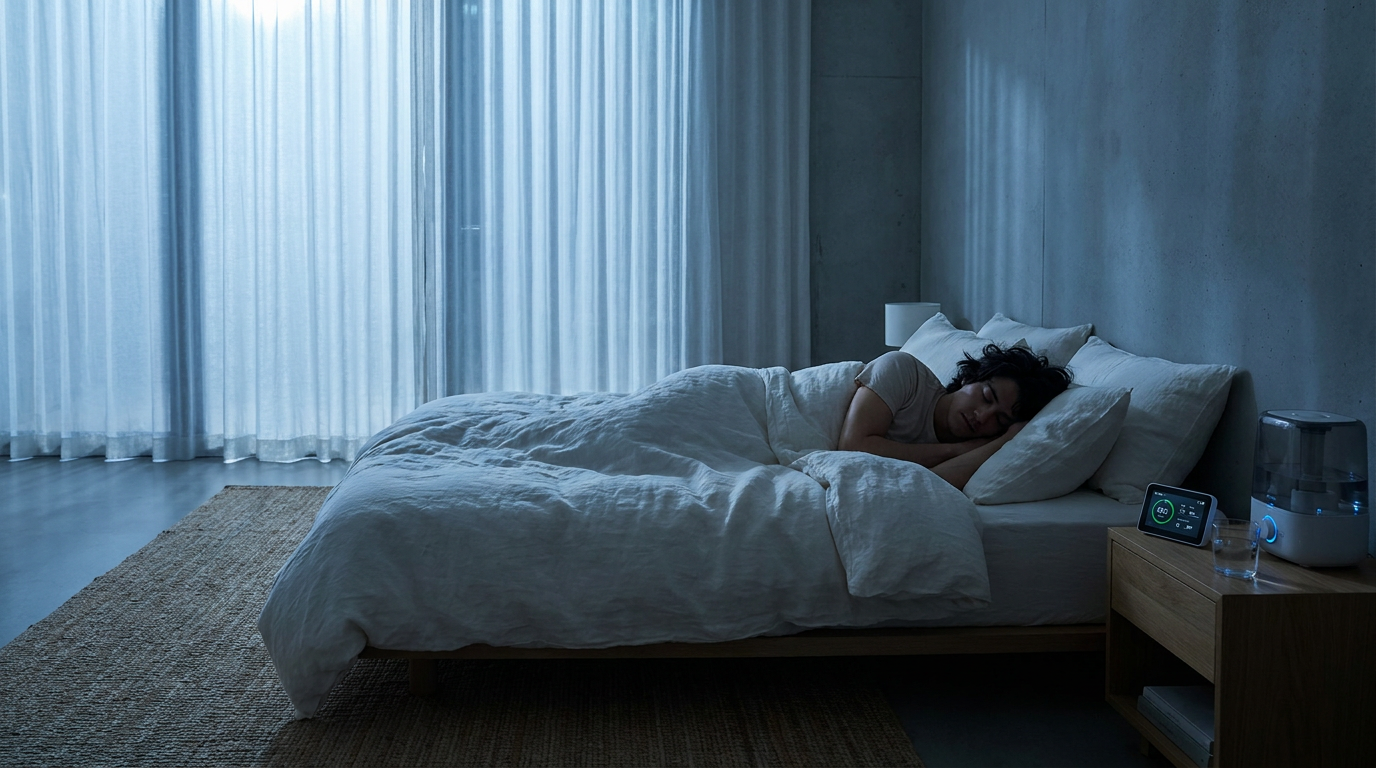
Temperature regulation is one of the most powerful levers we have for deepening sleep. The brain needs to drop its core temperature by about 2 to 3 degrees Fahrenheit to initiate and maintain slow-wave sleep. Sleeping in a cool room—ideally between 60 and 67 degrees—and taking a warm bath an hour before bed (which draws blood to the skin and rapidly cools the core) can significantly increase the duration of SWS.[3][5]
Acoustic stimulation is another emerging frontier in sleep enhancement. Sleep scientists have found that playing specific frequencies of sound, known as "pink noise," can actually coax the brain into producing more slow waves. Pink noise, which sounds like a steady rainfall or a rushing river, has a frequency spectrum that mirrors the brain's own slow-wave electrical patterns.[4]
In clinical trials, when pulses of pink noise were timed to match the exact rhythm of a person's brain waves during sleep, participants experienced deeper, more robust slow-wave oscillations. This acoustic enhancement not only improved memory consolidation overnight but also theoretically boosted the efficiency of the glymphatic clearance process.[4][7]
Light exposure timing also plays a crucial role in setting the biological clock that governs sleep architecture. Viewing bright, natural sunlight within the first hour of waking anchors the circadian rhythm, ensuring a strong release of melatonin—the sleep-initiating hormone—roughly 14 to 16 hours later. Conversely, blocking blue light from screens in the evening prevents the suppression of this vital hormone.[3][5]

Physical exercise, particularly cardiovascular exertion during the day, has been consistently shown to increase the amplitude and duration of slow waves at night. The brain essentially demands deeper recovery sleep to repair the physiological stress of exercise, resulting in a more thorough glymphatic wash.[5]
While consumer wearables like smartwatches and rings have made people more aware of their sleep stages, experts caution that wrist-based devices can only estimate deep sleep based on heart rate and movement. They cannot measure the actual electrical brain waves or fluid dynamics that define the glymphatic process. Therefore, waking up feeling mentally sharp remains the best subjective indicator of a successful brain-wash.[7]
We are still learning exactly how much deep sleep is required for optimal brain health, and how the glymphatic system interacts with other bodily functions. But the core message from the scientific community is overwhelmingly positive: we have more control over our cognitive longevity than previously thought.[6][7]

Viewing sleep not as a surrender to exhaustion, but as an active, vital investment in brain health changes the way we approach our evenings. By prioritizing the conditions that foster slow-wave sleep, we are quite literally washing away the day's stress and protecting our minds for the future.[5][7]
How we got here
2012
Researchers first identify and name the 'glymphatic system' in mice, revealing how the brain clears waste.
2013
Science publishes a landmark study showing that brain cells shrink during sleep to allow fluid to wash through.
2019
Human studies confirm that slow electrical brain waves perfectly synchronize with pulses of cerebrospinal fluid.
2023
Clinical trials demonstrate that targeted acoustic stimulation (pink noise) can actively enhance slow-wave sleep in adults.
Viewpoints in depth
Neurobiologists
Focus on the cellular mechanisms of the glymphatic system and its role in preventing neurodegenerative diseases.
For neurobiologists, the discovery of the glymphatic system represents a fundamental shift in understanding brain health. They view slow-wave sleep not merely as a restorative pause, but as a critical physiological defense mechanism. Their research focuses on how the failure of this system over decades allows toxic proteins like amyloid-beta and tau to accumulate, forming the plaques and tangles associated with Alzheimer's and other dementias. To this camp, protecting the glymphatic process is the ultimate preventative medicine for the aging brain.
Clinical Sleep Specialists
Emphasize actionable sleep hygiene practices and behavioral interventions to improve patient outcomes.
Clinicians take the complex neurobiology of the glymphatic system and translate it into practical protocols for patients. They emphasize that while we cannot consciously control our brain fluid, we can control our environment. This camp advocates heavily for strict sleep hygiene—temperature control, light management, and consistent schedules—as the most reliable way to ensure the brain gets the 1.5 to 2 hours of slow-wave sleep it needs to perform its nightly maintenance.
Sleep Tech Researchers
Investigate how acoustic stimulation and environmental modifications can actively manipulate brain waves.
Operating at the intersection of technology and biology, this group looks for ways to actively hack the sleep cycle. Rather than just relying on good habits, they study how external stimuli—like playing specific frequencies of pink noise timed to a person's brain waves—can artificially deepen slow-wave sleep. They argue that as our understanding of brain wave synchronization improves, non-invasive acoustic and thermal technologies will become standard tools for cognitive enhancement.
What we don't know
- Whether artificially enhancing slow-wave sleep with technology provides the exact same long-term cognitive benefits as naturally occurring deep sleep.
- How exactly the glymphatic system interacts with the brain's immune cells (microglia) during the waste clearance process.
- The precise threshold at which sleep deprivation causes irreversible damage to the brain's clearance pathways.
Key terms
- Glymphatic System
- The brain's macroscopic waste clearance system that utilizes cerebrospinal fluid to flush out metabolic byproducts during sleep.
- Slow-Wave Sleep (SWS)
- The deepest phase of non-REM sleep, characterized by slow, synchronized electrical brain waves and profound physical restoration.
- Cerebrospinal Fluid (CSF)
- The clear, watery fluid that surrounds and protects the brain and spinal cord, acting as the cleaning agent in the glymphatic process.
- Amyloid-beta
- A metabolic waste protein produced by normal brain activity that, if not cleared properly, can clump together and is associated with Alzheimer's disease.
- Pink Noise
- A type of background noise that emphasizes lower frequencies, which has been shown in studies to help synchronize and enhance slow brain waves.
Frequently asked
How much deep sleep do I actually need?
Most healthy adults need roughly 1.5 to 2 hours of deep (slow-wave) sleep per night, which typically makes up 15% to 25% of total sleep time.
Does REM sleep clean the brain too?
No. REM (Rapid Eye Movement) sleep is crucial for emotional processing and memory consolidation, but the physical flushing of the glymphatic system occurs almost exclusively during deep, non-REM slow-wave sleep.
Can I 'catch up' on deep sleep on the weekends?
While the brain will prioritize deep sleep after a period of deprivation (a phenomenon called sleep rebound), chronic daily restriction prevents the glymphatic system from keeping up with daily waste production.
What is the difference between white noise and pink noise?
White noise contains all frequencies at equal intensity, which can sound harsh. Pink noise has more power in the lower frequencies, sounding deeper and more natural (like rushing water), which better aligns with slow brain waves.
Sources
Source coverage
7 outlets
4 viewpoints surfaced







[1]NatureNeurobiologists
The glymphatic system in central nervous system health and disease
Read on Nature →[2]National Institutes of HealthNeurobiologists
How sleep clears the brain of metabolic waste
Read on National Institutes of Health →[3]Harvard Medical SchoolClinical Sleep Specialists
Optimizing deep sleep for long-term cognitive health
Read on Harvard Medical School →[4]Sleep Research SocietySleep Tech Researchers
Acoustic enhancement of slow-wave sleep and its impact on memory and clearance
Read on Sleep Research Society →[5]Mayo ClinicClinical Sleep Specialists
Sleep hygiene: 6 steps to better rest and cognitive longevity
Read on Mayo Clinic →[6]The Lancet NeurologyNeurobiologists
Glymphatic impairment and neurodegenerative disease progression
Read on The Lancet Neurology →[7]Factlen Editorial TeamFactlen Editorial
Synthesis by Factlen editorial team
Read on Factlen Editorial Team →

More in health
See all 8 stories →Dementia Research
The Shingles Vaccine Is Emerging as a Powerful Shield Against Dementia
7 sources

Exercise Mimetics
The Science of 'Exercise in a Pill': How New Longevity Drugs Mimic Physical Activity
7 sources
Longevity Science
The Postbiotic Promise: How Urolithin A Recycles Aging Cells
6 sources
Vaccine Research
Shingles Vaccine Linked to 24% Lower Risk of Dementia in Major New Study
7 sources
Every angle. Every day.
Get health stories with full source coverage and perspective breakdowns delivered to your inbox.