
Earth's Natural Thermostat Will Keep Complex Life Alive 500 Million Years Longer Than Expected
A new 3D climate model reveals that Earth's geological carbon cycle will aggressively counteract the brightening Sun, pushing the expiration date for complex life back to 1.5 billion years from now.
By Factlen Editorial Team
- Planetary Climatologists
- Focus on the mechanics of the 3D models and how the carbonate-silicate cycle acts as a long-term planetary thermostat.
- Astrobiologists
- Emphasize how this extended timeline broadens the search parameters for finding life on older exoplanets.
- Science Communicators
- Highlight the existential relief of the timeline extension and the sheer resilience of the Earth system.
What's not represented
- · Paleoclimatologists studying past greenhouse events
Why this matters
While the end of the world is a billion years away, this discovery fundamentally changes how we understand planetary resilience. It proves that active geology is just as important as distance from a star for sustaining life, dramatically widening the net for where we might find alien ecosystems.
Key points
- Older 1D climate models predicted Earth would become uninhabitable in 1 billion years due to the brightening Sun.
- A new 3D model shows Earth's water and rock cycles will aggressively scrub CO2 from the air to cool the planet.
- This natural thermostat will keep surface temperatures viable for complex life for 1.5 billion years.
- The ultimate end for complex life will be CO2 starvation, as levels drop too low for plants to perform photosynthesis.
- The findings suggest older exoplanets with active geology may remain habitable much longer than previously thought.
It is the ultimate existential deadline: as our Sun ages, it burns hotter and brighter, slowly pushing Earth toward a future where the oceans boil and the surface becomes a sterilized wasteland. For decades, the scientific consensus held that complex life on Earth had roughly one billion years left before this thermal runaway took hold. But a new generation of climate modeling has just revised that timeline, and the forecast is surprisingly optimistic.[1][6]
According to a breakthrough study published this month, Earth's built-in geological thermostat is far more robust than previously understood. By simulating the planet's future in three dimensions, researchers found that Earth will actively fight back against the brightening Sun, buying complex life an additional 500 million years of viability.[1][3]
This pushes the expiration date for the vegetative biosphere—and the animal food webs that rely on it—to roughly 1.5 billion years from now. To put that half-billion-year extension into perspective: 500 million years ago, the first primitive animals were only just beginning to evolve in the Cambrian oceans. We have just been handed an entire evolutionary epoch of extra time.[2][6]
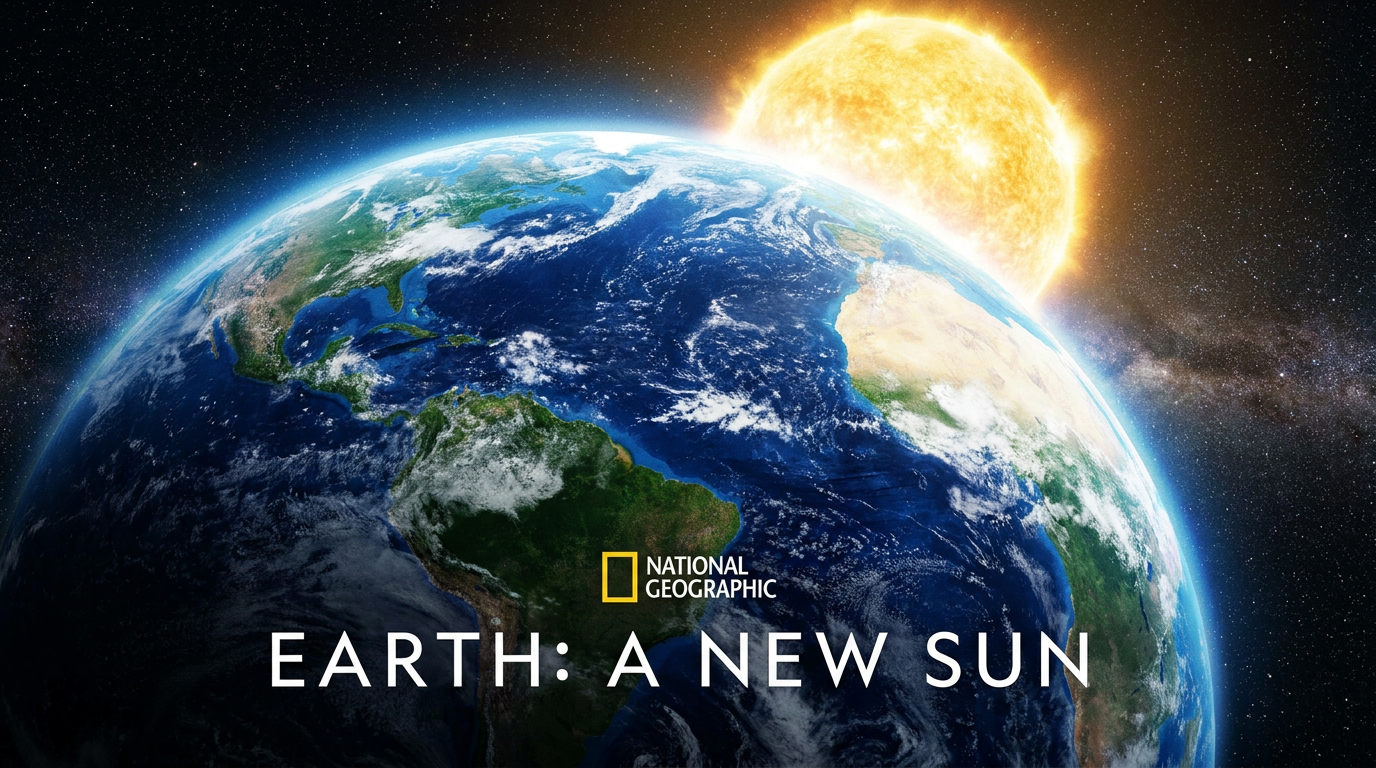
To understand how Earth pulls off this survival trick, we first have to look at the star trying to kill it. The Sun is a main-sequence star, meaning it generates energy by fusing hydrogen atoms into helium in its core. As this helium "ash" builds up, the core becomes denser and hotter, which in turn accelerates the fusion process. The result is a slow, relentless increase in solar luminosity.[5]

Since the birth of the solar system 4.5 billion years ago, the Sun has become about 30 percent brighter. Over the next billion years, it will brighten by another 10 percent. Eventually, in about 5 billion years, it will exhaust its hydrogen entirely, swelling into a red giant that will likely engulf Mercury, Venus, and Earth. But long before that fiery finale, the sheer output of solar radiation was expected to trigger a "moist greenhouse" effect, evaporating the oceans into space.[4][5]
Older, one-dimensional climate models predicted this catastrophic tipping point would arrive in about one billion years. Those models, however, treated the Earth as a simplified, uniform sphere. They missed the intricate, life-saving mechanics of the planet's carbon cycle.[3]
Earth regulates its long-term climate through a mechanism called the carbonate-silicate cycle. Carbon dioxide in the atmosphere dissolves in rainwater to form weak carbonic acid. When this rain falls on silicate rocks, it weathers them, washing carbon-rich minerals into the oceans. There, marine organisms use the carbon to build shells, which eventually settle on the seafloor. Plate tectonics then drag this rock into the mantle, where it melts, eventually returning the CO2 to the atmosphere via volcanic eruptions.[4][6]
This cycle acts as a planetary thermostat. When Earth gets too hot, the hydrologic cycle speeds up. More rain falls, weathering more rock, which pulls more CO2 out of the atmosphere, cooling the planet down. When the planet gets too cold, weathering slows, allowing volcanic CO2 to build up and trap heat.[4]

More rain falls, weathering more rock, which pulls more CO2 out of the atmosphere, cooling the planet down.
Researchers Jacob Haqq-Misra of the Blue Marble Space Institute of Science and Eric Wolf of the University of Colorado Boulder wanted to see how this thermostat would handle the aging Sun. They deployed an advanced 3D general circulation model—the same kind used to predict modern anthropogenic climate change—to simulate Earth's far future.[2][3]
Their 3D model captured variables that older models ignored: the movement of ocean currents, the formation of specific cloud decks that reflect sunlight, and the regional distribution of rainfall over continents. What they found was a planet that refuses to go down without a fight.[1][3]
As the Sun brightens in the simulation, Earth's temperature does rise, but the accelerated water cycle kicks the silicate weathering process into overdrive. The planet aggressively scrubs CO2 from its own atmosphere to offset the increasing solar heat. The 3D model showed that this feedback loop is highly efficient, preventing the oceans from boiling away for at least 1.5 billion years.[1][3]
However, this survival mechanism comes with a fatal catch. By constantly pulling CO2 out of the air to keep the temperature down, the Earth will eventually starve its own biosphere. Plants rely on atmospheric carbon dioxide for photosynthesis. As the CO2 levels plummet to compensate for the glaring Sun, the flora will begin to suffocate.[2][6]

The researchers calculate that in roughly 1 billion to 1.5 billion years, CO2 concentrations will drop below the minimum threshold required for C3 photosynthesis, the metabolic pathway used by the vast majority of trees and crops today. When the C3 plants die off, the oxygen they produce will also decline.[3][4]
A hardier class of flora, which uses C4 photosynthesis (like certain grasses and corn), can survive at much lower CO2 levels. They will inherit the Earth for a time, clinging to life in a warm, low-carbon environment. But eventually, even the C4 plants will succumb to carbon starvation. Once the plants are gone, the animal food web will collapse, leaving the planet to the microbes.[3][6]
While this is still a story with an ending, pushing the timeline back by 500 million years is a monumental shift in our understanding of planetary lifespans. It proves that habitability is not just about a planet's distance from its star; it is equally dependent on the planet's internal geology and its ability to self-regulate.[1][5]
This revelation has profound implications for astrobiologists hunting for life outside our solar system. When astronomers look at exoplanets in the "habitable zone" of other stars, they often write off older planets orbiting brightening stars, assuming they have already boiled over into Venus-like hellscapes.[5][6]

The new 3D models suggest we need to widen our search parameters. An older exoplanet with active plate tectonics and a functioning water cycle could maintain a temperate climate long after a simpler model would predict its demise. The "temporal habitable zone"—the window of time a planet remains viable—is much wider than we thought.[2][5]
For humanity, the 1.5-billion-year deadline is so distant it borders on the abstract. Homo sapiens have only existed for about 300,000 years. If any descendants of humanity are still around a billion years from now, they will have had ample time to master planetary engineering, build solar shades, or relocate entirely.[2][6]
How we got here
4.5 Billion Years Ago
The Sun and Earth form; the Sun is roughly 30% dimmer than it is today.
Today
The Sun continues its main-sequence phase, gradually increasing in luminosity by about 1% every 100 million years.
+1 Billion Years
The point at which older 1D climate models predicted Earth's oceans would begin to boil away.
+1.5 Billion Years
Earth's thermostat pulls CO2 below the threshold for photosynthesis, leading to the collapse of the complex biosphere.
+5 Billion Years
The Sun exhausts its hydrogen core and expands into a red giant, engulfing the inner solar system.
Viewpoints in depth
Planetary Climatologists
Focuses on the mechanics of the 3D models and how the carbonate-silicate cycle acts as a long-term planetary thermostat.
For climatologists modeling deep time, the shift from 1D to 3D modeling is a watershed moment. Older models treated the Earth as a uniform sphere, which overestimated how quickly the planet would succumb to thermal runaway. By incorporating regional rainfall, cloud albedo effects, and ocean currents, researchers can now see the full power of the carbonate-silicate cycle. They argue that Earth is not a passive victim of its star, but a highly reactive system that will aggressively alter its own atmospheric chemistry to maintain thermal equilibrium, right up until it runs out of carbon dioxide.
Astrobiologists
Emphasizes how this extended timeline broadens the search parameters for finding life on older exoplanets.
Astrobiologists view these findings through the lens of the galaxy at large. When scanning the cosmos for habitable worlds, astronomers rely on the concept of the 'habitable zone'—the orbital distance where liquid water can exist. However, this study proves that a planet's internal geology is just as critical as its orbit. Exoplanet hunters argue that we should not discount older planets orbiting brightening stars. If an alien world possesses active plate tectonics and a robust water cycle, it could maintain a temperate, life-sustaining climate for billions of years longer than a geologically dead world in the exact same orbit.
What we don't know
- Whether future evolutionary adaptations could allow plants to photosynthesize at even lower CO2 levels than currently predicted.
- How the gradual slowing of Earth's rotation over the next billion years will impact the 3D climate models and weather patterns.
- If any future intelligent species could artificially inject CO2 or deploy solar shades to extend the timeline even further.
Key terms
- Carbonate-silicate cycle
- Earth's long-term climate thermostat, where carbon dioxide is drawn from the atmosphere into rocks by rain, and eventually returned via volcanic eruptions.
- Luminosity
- The total amount of energy emitted by a star, which steadily increases in our Sun as it ages.
- Habitable zone
- The orbital region around a star where a rocky planet receives the right amount of heat to maintain liquid water on its surface.
- C3 and C4 photosynthesis
- Different metabolic pathways plants use to convert CO2 into food; C4 plants (like grasses) can survive at much lower CO2 concentrations than C3 plants (like trees).
- Main-sequence star
- A star in the primary phase of its life, generating energy by fusing hydrogen into helium in its core.
Frequently asked
Will the Sun eventually swallow the Earth?
Yes. In about 5 billion years, the Sun will exhaust its hydrogen fuel and expand into a red giant, likely engulfing the inner planets, including Earth.
Why does the Sun get brighter as it ages?
As the Sun fuses hydrogen into helium, its core becomes denser and hotter. This increases the rate of nuclear fusion, causing the star to emit more energy over time.
What will eventually kill complex life on Earth?
Paradoxically, a lack of carbon dioxide. As Earth's thermostat pulls CO2 out of the air to counteract the heating Sun, levels will eventually drop too low for plants to perform photosynthesis, collapsing the food web.
Could humans survive this far into the future?
The 1.5-billion-year timeline is vastly longer than human existence. Any descendants of humanity would have hundreds of millions of years to develop planetary engineering or relocate to other star systems.
Sources
Source coverage
6 outlets
3 viewpoints surfaced






[1]New ScientistAstrobiologists
Complex life on Earth may last 500 million years longer than expected
Read on New Scientist →[2]Ars TechnicaScience Communicators
Good news—we have extra time before the Sun ends life on Earth
Read on Ars Technica →[3]The Astrophysical JournalPlanetary Climatologists
Maximum Lifetime of the Vegetative Biosphere
Read on The Astrophysical Journal →[4]Blue Marble Space Institute of SciencePlanetary Climatologists
Research: Earth's Long-Term Habitability
Read on Blue Marble Space Institute of Science →[5]NASA Exoplanet ExplorationAstrobiologists
The Habitable Zone and Stellar Evolution
Read on NASA Exoplanet Exploration →[6]Factlen Editorial TeamScience Communicators
Synthesis by Factlen editorial team
Read on Factlen Editorial Team →
Every angle. Every day.
Get science stories with full source coverage and perspective breakdowns delivered to your inbox.