
How Open-Source Intelligence is Empowering Citizens to Track Environmental Crimes
Once the exclusive domain of state spy agencies, open-source intelligence (OSINT) tools are now being used by journalists, NGOs, and citizen investigators to expose illegal deforestation, wildlife poaching, and maritime dumping.
By Factlen Editorial Team
- Citizen Investigators & NGOs
- View OSINT as a democratizing force that empowers civil society to hold powerful corporate and state actors accountable for environmental and human rights abuses.
- Legal & Academic Experts
- Focus on the rigorous validation of open-source data, ensuring that digital evidence meets the strict evidentiary standards required for international courts.
- State Intelligence & Customs
- Treat OSINT as a vital force-multiplier, integrating public data with classified intelligence to track smuggling, secure borders, and enforce international law.
- Privacy & Ethics Advocates
- Warn that the unregulated scraping of public data can lead to information overload, misidentification, and violations of individual privacy rights.
What's not represented
- · Corporate entities accused of environmental crimes
- · Local communities living in heavily surveilled regions
Why this matters
The democratization of intelligence gathering means that corporate polluters, illegal fishing fleets, and wildlife traffickers can no longer hide behind remote geography. Everyday citizens and NGOs now possess the tools to hold bad actors legally accountable on a global scale.
Key points
- Open-source intelligence (OSINT) allows citizens and NGOs to track environmental crimes using public data.
- Satellite imagery and ship transponder data are exposing illegal logging and unauthorized fishing fleets.
- Wildlife traffickers are being tracked through their digital footprints on social media and online marketplaces.
- OSINT is increasingly providing legally actionable evidence for international human rights courts.
- The barrier to entry is lowering, with free toolkits and AI automation making investigations accessible to non-experts.
- Ethical concerns remain regarding data privacy, information overload, and the risk of misidentification.
For decades, the ability to monitor the globe from above and intercept digital communications was locked behind the classified doors of state security agencies. Today, the tools of global surveillance have quietly slipped into the public domain. Open-source intelligence (OSINT)—the practice of collecting and analyzing publicly available data—has evolved from a niche military discipline into a global "investigative commons" empowering citizens, journalists, and non-governmental organizations [1][7].[1][7]
This democratization of intelligence is fundamentally altering how environmental crimes are tracked and prosecuted. Armed with commercial satellite imagery, ship transponder data, and social media scraping tools, decentralized networks of investigators are exposing abuses that previously went undocumented [2][6]. The shift represents a massive transfer of investigative power, allowing civil society to act as a global watchdog over remote and vulnerable ecosystems [7].[2][6][7]
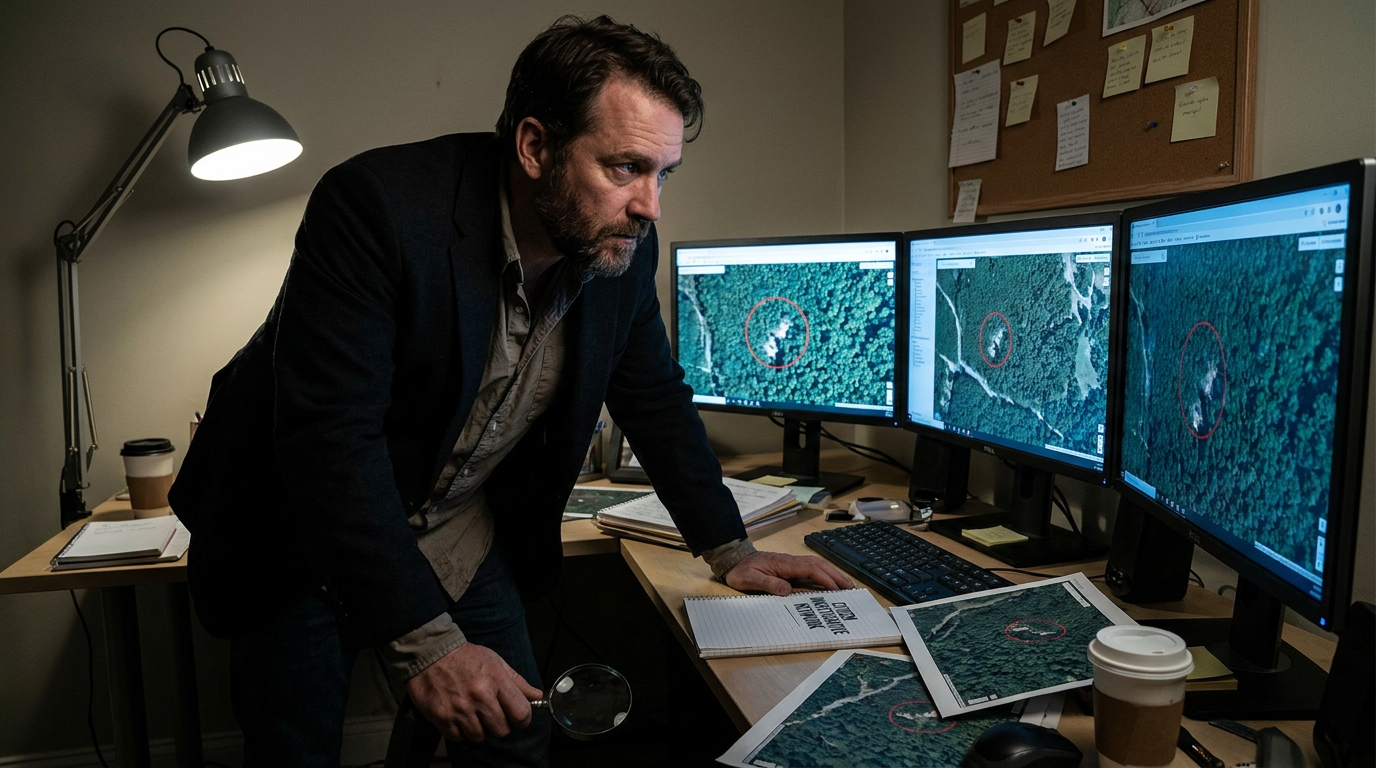
The evidence supporting OSINT's efficacy in environmental protection is robust and growing. At the University of California, Berkeley, the Digital Investigations Network developed the "OSINT Forest Area Tracker" to monitor ecological destruction. Hosted on the Google Earth engine, the tool utilizes data from the Sentinel-2 satellite, capturing near-infrared and shortwave infrared bands to detect minute changes in forest health and identify illegal logging roads long before heavy machinery arrives [2].[2]

This capability is critical in regions like the Brazilian Amazon, where the UC Network notes that 795 Indigenous land defenders were killed between 2019 and 2022. By utilizing OSINT tools, investigators can thoroughly document the ways in which land and communities are impacted by extractive practices, providing a layer of digital protection and accountability that physical patrols cannot achieve alone [2].[2]
The oceans, historically a black box for law enforcement due to their vastness, are also being illuminated by open-source data. Everyday citizens are now equipped to unmask threats to marine environments by tracking the Automatic Identification System (AIS) transponders of global shipping fleets [6]. When a vessel turns off its transponder—a practice known as "going dark"—OSINT analysts can correlate the ship's last known location with commercial satellite imagery to detect illegal fishing, unauthorized shipbreaking, or toxic chemical dumping [6].[6]
Maritime intelligence experts note that addressing ocean threats requires exactly this kind of collaborative approach. By enabling regular citizens to piece together satellite imagery, vessel tracking, and social media analysis, international authorities can focus their limited resources on the actual enforcement of maritime laws rather than the arduous task of initial detection [6].[6]
Wildlife poaching networks are similarly being dismantled by digital footprints. Traffickers increasingly rely on social media platforms, encrypted messaging apps, and online marketplaces to sell illicit products like ivory, rhino horn, and pangolin scales [5]. OSINT investigators monitor these platforms to identify sellers, map buyer networks, and trace transaction patterns, turning the traffickers' own digital convenience into actionable intelligence [5].[5]

Wildlife poaching networks are similarly being dismantled by digital footprints.
In Tanzania, conservationists have successfully used satellite imagery to track deforestation and poaching activities in the Selous Game Reserve. Intelligence analysis of these images revealed key poaching zones, leading to targeted, highly effective law enforcement action [5]. Furthermore, platforms like WildLeaks use OSINT and digital forensic analysis to investigate anonymous tips, recently helping authorities uncover a massive ivory smuggling operation in Africa [5].[5]
The impact of these citizen-led investigations extends far beyond public shaming; OSINT is increasingly providing legally actionable evidence. Legal and human rights professionals are routinely using open-source information to document violations and provide concrete evidence in international court cases [1]. Scholars and international organizations have even published standardized guidelines on how to handle digitally derived evidence to ensure it meets the rigorous standards of international law [1].[1]
State agencies are recognizing the value of this public intelligence apparatus. The World Customs Organization (WCO) has actively integrated OSINT into its enforcement processes. Customs administrations leverage publicly available information to monitor borders in real-time, identify high-risk cargo, and track the smuggling of environmentally sensitive goods [3]. The WCO notes that the collaborative nature of OSINT allows state agencies to partner with private sector entities, logistics companies, and data brokers to vastly enhance their analytical capabilities [3].[3]
Crucially, the barrier to entry for conducting these investigations is lowering. The OSINT tools market, projected to reach $29.19 billion by 2026, has shifted from specialized software used by a small group of experts into user-friendly platforms accessible to the general public [7]. Artificial intelligence and machine learning are now standard features, automating pattern detection, entity resolution, and data correlation [7].[7]
To help navigate this rapidly expanding ecosystem, organizations like Bellingcat—a global investigative nonprofit—have launched comprehensive resources like the Online Investigation Toolkit. Designed with input from dozens of users, the toolkit provides guides on how to use specific tools, descriptions of their limitations, and collaborative updates [4]. The resource currently sees more than 1,000 unique visitors per day, underscoring the massive public appetite for investigative capability [4].[4]
However, the practice is not without significant challenges and uncertainties. Experts warn of "information overload," where the sheer volume of available data can obscure the truth rather than reveal it [1]. OSINT is often described by practitioners as a deeply human and messy process—less like an exact science and more like assembling a shattered mirror in poor lighting [7]. The real value lies not just in data collection, but in rigorous, unbiased interpretation [1][7].[1][7]

Ethical and regulatory considerations also present a complex frontier. Data protection regulations, such as the GDPR, strictly govern how information about individuals can be handled, even when that data is publicly available [7]. Investigators must maintain clear boundaries between public information and private communications, ensuring that their methods do not cross the line into invasive surveillance or violate terms of service [7].[7]
Despite these hurdles, the trajectory is clear: the monopoly on intelligence gathering has been broken. As environmental regulations tighten globally—such as the EU's Corporate Sustainability Due Diligence Directive, which mandates full visibility of environmental risks in corporate supply chains—the demand for transparent, open-source verification will only accelerate [7].[7]
By transforming raw data into actionable intelligence, a decentralized network of citizens, academics, and journalists is building a new architecture of accountability. In the fight against environmental degradation and human rights abuses, the most powerful weapon may no longer be a state secret, but a public internet connection [1][7].[1][7]
How we got here
2022
Russia's invasion of Ukraine significantly raises the global profile of OSINT as citizens track military movements via public data.
2023
The UC Digital Investigations Network receives funding to expand OSINT support for frontline environmental defenders.
Fall 2024
Bellingcat launches its Online Investigation Toolkit to help journalists navigate the rapidly changing open-source landscape.
2026
The OSINT tools market approaches $30 billion, driven by AI integration and widespread adoption by civil society.
Viewpoints in depth
Citizen Investigators & NGOs
Civil society views OSINT as a vital tool for democratizing accountability.
For non-governmental organizations and independent journalists, OSINT represents a massive leveling of the playing field. Historically, exposing a multinational corporation's illegal logging operation or a state-sponsored illegal fishing fleet required immense resources, physical proximity to danger, and access to classified leaks. Today, a single analyst with a laptop can correlate Sentinel-2 satellite imagery with corporate registry databases to prove environmental ecocide from thousands of miles away. This camp argues that making these tools widely available is essential for protecting vulnerable ecosystems and human rights defenders who are often ignored by local authorities.
Legal & Academic Experts
Scholars emphasize the need for rigorous methodology to ensure digital evidence holds up in court.
While academics celebrate the proliferation of OSINT, they caution that raw data is not the same as intelligence. Legal professionals stress that for open-source findings to be admissible in international courts, the chain of custody for digital evidence must be flawless. This camp focuses on establishing standardized protocols for archiving web pages, verifying the metadata of social media images, and preventing confirmation bias. They argue that without strict methodological rigor, the 'investigative commons' risks devolving into digital vigilantism, where innocent parties could be misidentified and legitimate cases thrown out on technicalities.
State Intelligence & Customs
Government agencies view public OSINT as a critical force-multiplier for law enforcement.
Customs enforcement and border security agencies have fully embraced the OSINT revolution. Rather than viewing citizen investigators as amateurs, state actors increasingly rely on the public intelligence ecosystem to generate 'seed intelligence'—initial tips that warrant formal investigation. The World Customs Organization notes that integrating public data with classified intelligence allows authorities to track high-risk cargo, map transnational smuggling routes, and enforce sanctions much more efficiently. For state agencies, OSINT is a collaborative bridge between public vigilance and official law enforcement.
What we don't know
- How effectively international courts will handle the massive influx of open-source digital evidence in upcoming environmental trials.
- Whether new data privacy regulations will inadvertently restrict the ability of journalists to track corporate bad actors.
- How the rise of AI-generated deepfakes and synthetic satellite imagery will impact the reliability of open-source investigations in the future.
Key terms
- OSINT
- Open-Source Intelligence; the collection and analysis of data gathered from open, publicly available sources.
- AIS (Automatic Identification System)
- A tracking system used on ships that transmits a vessel's location, speed, and heading, which investigators use to monitor maritime activity.
- Sentinel-2
- An Earth observation mission developed by the European Space Agency that provides high-resolution optical imagery used to track deforestation and environmental changes.
- Geolocation
- The process of identifying the real-world geographic location of an object, person, or event shown in a digital image or video.
- Seed Intelligence
- An initial piece of public information—such as a single social media post or anomalous satellite pixel—that triggers a larger, in-depth investigation.
Frequently asked
What is Open-Source Intelligence (OSINT)?
OSINT is the practice of collecting, evaluating, and analyzing information that is publicly available—such as satellite imagery, public records, and social media posts—to generate actionable intelligence.
How does OSINT help the environment?
Investigators use satellite data and ship transponders to detect illegal logging, unauthorized toxic dumping, and illegal fishing fleets in remote areas that are difficult to patrol physically.
Is open-source evidence admissible in court?
Yes. Legal and human rights professionals increasingly use rigorously verified OSINT to document violations and provide concrete evidence in international court cases.
Are there privacy concerns with OSINT?
Yes. Because OSINT relies heavily on scraping public data and social media, ethical advocates warn that investigators must navigate strict data protection laws like the GDPR to avoid invasive surveillance.
Sources
Source coverage
7 outlets
4 viewpoints surfaced







[1]European Journal of International SecurityLegal & Academic Experts
The spread of OSINT: Information, digital literacy and security expertise
Read on European Journal of International Security →[2]UC Berkeley Digital Investigations NetworkLegal & Academic Experts
The Use of Open Source Investigative Methods in Tracking Environmental Harms
Read on UC Berkeley Digital Investigations Network →[3]World Customs OrganizationState Intelligence & Customs
Open-Source Intelligence (OSINT) for Customs
Read on World Customs Organization →[4]Nieman ReportsCitizen Investigators & NGOs
Building a Toolkit for Open-Source Investigations
Read on Nieman Reports →[5]Artemis LegacyCitizen Investigators & NGOs
The Role of OSINT in Countering Wildlife Poaching
Read on Artemis Legacy →[6]Authentic8Citizen Investigators & NGOs
Citizens use OSINT to unmask threats to oceans
Read on Authentic8 →[7]Factlen Editorial TeamPrivacy & Ethics Advocates
Synthesis by Factlen editorial team
Read on Factlen Editorial Team →
Every angle. Every day.
Get defense security stories with full source coverage and perspective breakdowns delivered to your inbox.