
Trump's $300 Billion Iran Deal Sparks Senate GOP Backlash and Diplomatic Rift with Israel
The Trump administration's 14-point agreement to end hostilities with Iran has triggered a fierce domestic and international backlash. Vice President JD Vance publicly rebuked Israeli officials for their 'panic' over the deal, while top Senate Republicans warned the financial concessions surrender U.S. leverage.
By Factlen Editorial Team
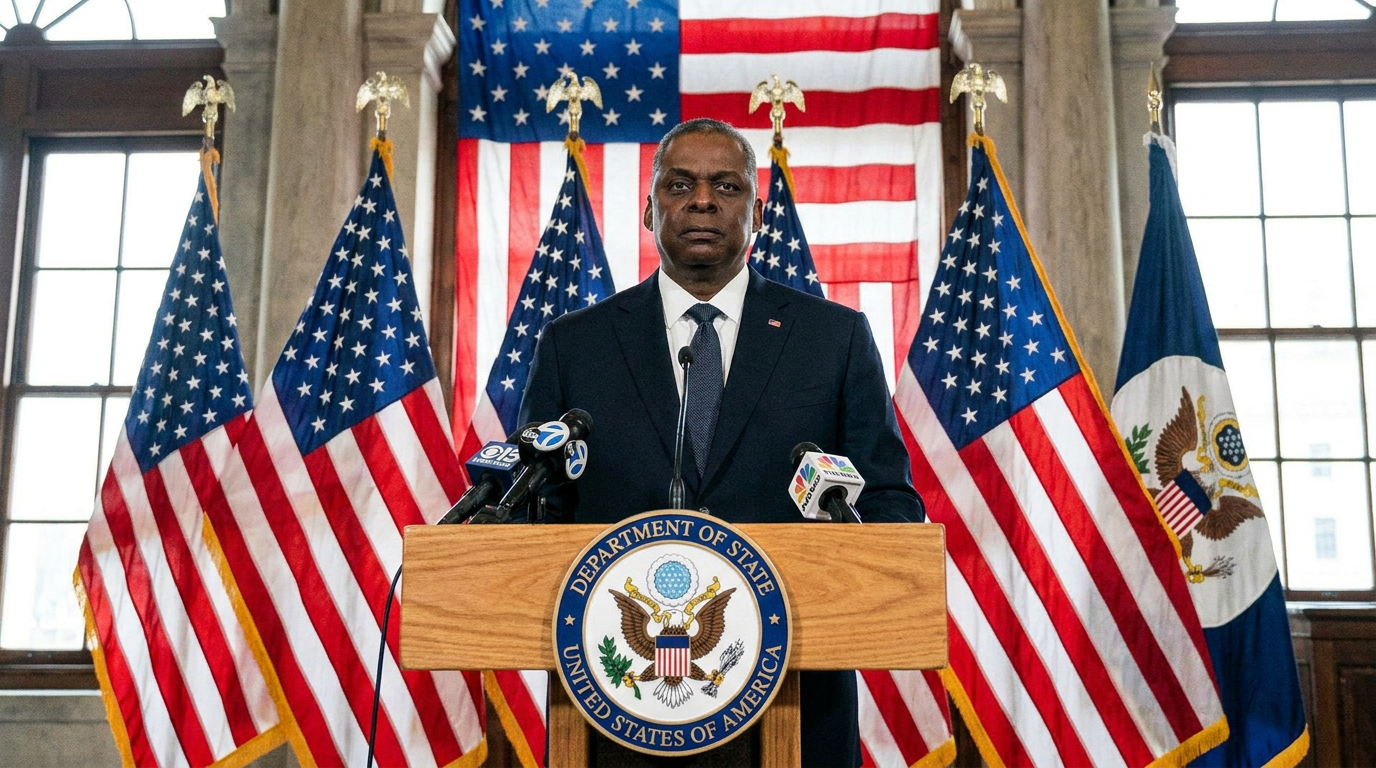
- Trump Administration
- Argues the deal is a historic victory that ends a regional war and halts Iran's nuclear program.
- Senate Republicans
- Argues the financial concessions are too high and surrender vital U.S. leverage.
- Israeli Government
- Views the agreement as a dangerous capitulation that leaves Iranian proxy threats intact.
- International Observers
- Focuses on the geopolitical shift and the mechanics of the 60-day ceasefire window.
What's not represented
- · Iranian domestic opposition groups
- · European Union diplomats
Why this matters
The agreement represents a massive shift in Middle Eastern geopolitics and U.S. foreign policy, ending a major conflict while unfreezing billions in Iranian assets. The resulting political fracture between the White House, Senate Republicans, and Israel could reshape domestic conservative politics and the future of the U.S.-Israel alliance.
Key points
- The U.S. and Iran signed a 14-point MoU to end hostilities and establish a 60-day ceasefire.
- The deal includes a proposed $300 billion reconstruction fund financed by regional partners.
- Senate Republicans fiercely criticized the financial concessions as a surrender of U.S. leverage.
- VP JD Vance rebuked Israeli officials for their 'panic' over the agreement.
- Israeli ministers fired back, arguing the deal fails to dismantle Iran's proxy network.
The Trump administration has signed a sweeping 14-point Memorandum of Understanding with Iran aimed at ending regional hostilities, but the landmark agreement has immediately ignited a fierce political firestorm in Washington and Jerusalem. The deal, designed to halt the ongoing war and reopen critical global shipping lanes, has exposed deep fractures between the White House, its traditional Republican allies in the Senate, and the Israeli government.[1][5][6]
At the core of the agreement is a 60-day ceasefire window during which the United States will lift its naval blockade on Iranian ports and issue waivers allowing Tehran to export crude oil. In exchange, Iran has committed to halting its nuclear weapons program and restraining its network of regional proxy militias, including Hezbollah in Lebanon. President Donald Trump heralded the pact at the G7 summit as a historic victory that achieves everything the administration set out to accomplish and averts a worldwide economic depression.[3][5]
However, the financial concessions required to secure the ceasefire have triggered intense domestic backlash. The memorandum outlines a multinational plan, backed by Gulf regional partners, to establish a $300 billion reconstruction and economic development fund for Iran. The agreement also paves the way for unfreezing billions of dollars in Iranian assets that were previously locked under international sanctions.[3][4][5][8]

The sheer scale of the financial incentives has provoked an open rebellion among defense-minded Republicans. Senate Armed Services Chair Roger Wicker issued a blistering critique of the administration's diplomacy, arguing that the $300 billion figure dwarfs the sanctions relief provided by the Obama administration's 2015 nuclear accord. Wicker and other conservative critics contend that the White House has negotiated away hard-won American leverage for temporary promises.[1][8]
The administration has aggressively pushed back against the domestic criticism. President Trump dismissed reports that U.S. taxpayer dollars would directly finance the reconstruction fund as "fake news," emphasizing that payouts from Gulf states would be strictly conditional on Iran's verifiable good behavior. He also warned that if Tehran fails to comply with the terms during the 60-day window, the U.S. military is prepared to resume bombing campaigns.[3][4][5]
The administration has aggressively pushed back against the domestic criticism.
The friction over the deal extends far beyond Capitol Hill, deeply straining the U.S.-Israel alliance. Israeli officials across the political spectrum have expressed profound alarm, warning that the agreement leaves Iran's ballistic missile program intact and fails to permanently dismantle the threat posed by Hezbollah on Israel's northern border.[6][7]
In a blunt effort to tamp down the international criticism, Vice President JD Vance delivered a sharp rebuke to the Israeli government during an interview with The New York Times. Vance characterized the reaction in Jerusalem as a "weird panic" and a "freakout" rooted in misplaced mistrust. He insisted that the United States would not release sanctions if Iran continued to fund designated terrorist organizations.[6][7]

Vance specifically targeted hardline Israeli ministers who have publicly attacked the memorandum. "What is your exact proposal? You're a country of nine million people. You can't just kill your way out of solving every single national security problem that you have," Vance stated, urging Israeli leadership to give the United States credit for destroying Iran's nuclear ambitions.[6][7]
The Vice President's remarks drew immediate and furious responses from Israeli leadership. National Security Minister Itamar Ben-Gvir fired back at Vance, declaring that Israel's strategy is to deal with the "Nazis of the 21st century, just as the United States dealt with the Nazis of the 20th century." The public sparring marks a rare and severe diplomatic breach between a Republican administration and the Israeli right wing.[2][7]
Beyond the high-stakes political rhetoric, the practical implementation of the MoU remains highly fragile. Residents in southern Lebanon and regional analysts have expressed deep skepticism that the agreement will bring lasting calm to the border, given the entrenched nature of the proxy conflicts. As the 60-day clock begins ticking, the Trump administration faces the dual challenge of enforcing strict compliance from Tehran while managing an unprecedented revolt from its own party and its closest Middle Eastern ally.[1][6][9]
How we got here
2015
The Obama administration signs the Joint Comprehensive Plan of Action (JCPOA) with Iran, providing sanctions relief for nuclear limits.
2018
The Trump administration withdraws from the JCPOA and reimposes strict economic sanctions on Tehran.
Early 2026
A regional war escalates, leading to U.S. naval blockades and Iranian closures of the Strait of Hormuz.
June 17, 2026
The U.S. and Iran agree to a 14-point Memorandum of Understanding to end hostilities and open a 60-day negotiation window.
June 18, 2026
VP JD Vance publicly criticizes Israeli opposition to the deal, sparking a diplomatic row with hardline ministers.
Viewpoints in depth
Trump Administration
The White House views the agreement as a historic diplomatic victory that averts global economic disaster.
Administration officials, led by President Trump and VP JD Vance, argue that the deal successfully halts Iran's nuclear program and ends a costly regional war. They emphasize that the $300 billion reconstruction fund will be financed by Gulf partners, not U.S. taxpayers, and that sanctions relief is strictly contingent on Iran abandoning its support for terrorist proxies.
Senate Republicans
Conservative lawmakers argue the deal surrenders U.S. leverage for temporary promises.
Defense-minded Republicans, including Senate Armed Services Chair Roger Wicker, view the financial concessions as a dangerous capitulation. They argue that unfreezing billions in assets and establishing a massive reconstruction fund dwarfs the controversial 2015 Obama-era nuclear deal, effectively rewarding Tehran without permanently dismantling its ballistic missile capabilities.
Israeli Government
Israeli leadership views the pact as an existential threat that leaves Iran's proxy network intact.
Officials across the Israeli political spectrum are alarmed by the 60-day ceasefire, which they believe allows Hezbollah and other Iranian proxies to regroup. Hardline ministers like Itamar Ben-Gvir argue that diplomatic agreements cannot neutralize the ideological threat posed by Tehran, leading to unprecedented public friction with the U.S. administration.
What we don't know
- Whether Iran will fully comply with the nuclear and proxy-restraint terms during the 60-day window.
- Which specific Gulf nations have committed capital to the $300 billion reconstruction fund.
- How the diplomatic rift between the Trump administration and the Israeli government will affect ongoing military coordination.
Key terms
- Memorandum of Understanding (MoU)
- A formal agreement between two or more parties that establishes a framework for future negotiations, though often not legally binding.
- Strait of Hormuz
- A crucial maritime chokepoint between the Persian Gulf and the Gulf of Oman, through which a significant portion of the world's oil supply passes.
- Sanctions Waivers
- Specific exemptions granted by the U.S. government allowing certain countries or companies to purchase Iranian oil without facing financial penalties.
Frequently asked
Is the U.S. paying $300 billion to Iran?
No. According to the administration, the $300 billion reconstruction fund will be financed by regional Gulf partners, not U.S. taxpayers.
What does Iran have to do under the deal?
Iran must halt its nuclear weapons program, restrain its regional proxy militias, and allow the reopening of the Strait of Hormuz.
Why is Israel opposed to the agreement?
Israeli officials argue the deal leaves Iran's ballistic missile program intact and provides financial relief that could eventually be funneled to groups like Hezbollah.
Sources
Source coverage
9 outlets
4 viewpoints surfaced








[1]Fox NewsSenate Republicans
Top Senate Republican rips into Trump's Iran deal, says $300 billion makes Obama deal look like 'a pittance'
Read on Fox News →[2]Al JazeeraInternational Observers
JD Vance tells Israel ‘you can’t kill your way out’ of security problems
Read on Al Jazeera →[3]PBSTrump Administration
A senior U.S. official shared with reporters Wednesday what's in the agreement the U.S. and Iran are expected to sign
Read on PBS →[4]ForbesTrump Administration
Iran could have access to up to $300 billion in reconstruction funds if it adheres to a peace agreement
Read on Forbes →[5]The GuardianInternational Observers
Donald Trump has signed a 14-point agreement with Iran
Read on The Guardian →[6]The Times of IsraelIsraeli Government
Vance slams Israeli 'freakout' over Iran deal: 'You can't just kill your way out of solving' problems
Read on The Times of Israel →[7]The Jerusalem PostIsraeli Government
'Can't kill your way out of every problem': JD Vance spars with Ben-Gvir, Smotrich over Iran deal
Read on The Jerusalem Post →[8]AxiosSenate Republicans
Breaking down Iran's potential windfall from Trump deal
Read on Axios →Southern Lebanon residents doubt US-Iran agreement will bring lasting calm
Read on Al Jazeera →
Every angle. Every day.
Get news politics stories with full source coverage and perspective breakdowns delivered to your inbox.