
How Retrieval-Augmented Generation (RAG) is Fixing AI Hallucinations
By allowing large language models to look up facts in real time rather than relying on their training memory, a framework called RAG is making artificial intelligence dramatically more reliable.
By Factlen Editorial Team
- Enterprise AI Architects
- Value RAG as a cost-effective way to deploy secure, domain-specific AI without the massive expense of retraining models.
- AI Reliability Researchers
- Focus on RAG's ability to ground model outputs in verifiable facts, reducing hallucinations and enabling source citations.
- Data Engineers
- Focus on the underlying infrastructure of RAG, including vector databases, embedding models, and data chunking pipelines.
What's not represented
- · End-users of AI chatbots
- · Legal compliance officers
Why this matters
As AI is integrated into healthcare, law, and corporate infrastructure, the risk of models fabricating information poses a massive liability. RAG solves this by forcing AI to cite its sources, making the technology safe enough for high-stakes, real-world use.
Key points
- Standard AI models rely on static training data, leading to fabricated answers known as hallucinations.
- RAG solves this by intercepting user queries and searching external databases for factual context before generating an answer.
- The system converts text into numerical 'embeddings' stored in vector databases, allowing for semantic searches based on meaning.
- RAG is highly cost-effective because it allows companies to update their AI's knowledge base without expensive model retraining.
Large language models (LLMs) are incredibly articulate, but they suffer from a fundamental flaw: they are essentially taking a closed-book exam. When you ask a standard generative AI model a question, it relies entirely on the static information it memorized during its initial training. If it doesn't know the answer, or if the information is outdated, the model will often guess, confidently fabricating a response. In the AI industry, this phenomenon is known as a "hallucination," and it remains the single biggest barrier to deploying AI in high-stakes environments like healthcare, law, and enterprise business.[1][4]
Retraining a massive AI model every time new information emerges is financially and computationally impossible. Fine-tuning—the process of updating a model's internal weights with new data—is similarly expensive and doesn't entirely solve the hallucination problem. The solution that has rapidly become the industry standard is a framework called Retrieval-Augmented Generation, or RAG. First introduced in a 2020 research paper, RAG fundamentally changes how AI answers questions by turning the closed-book exam into an open-book test.[2][5]
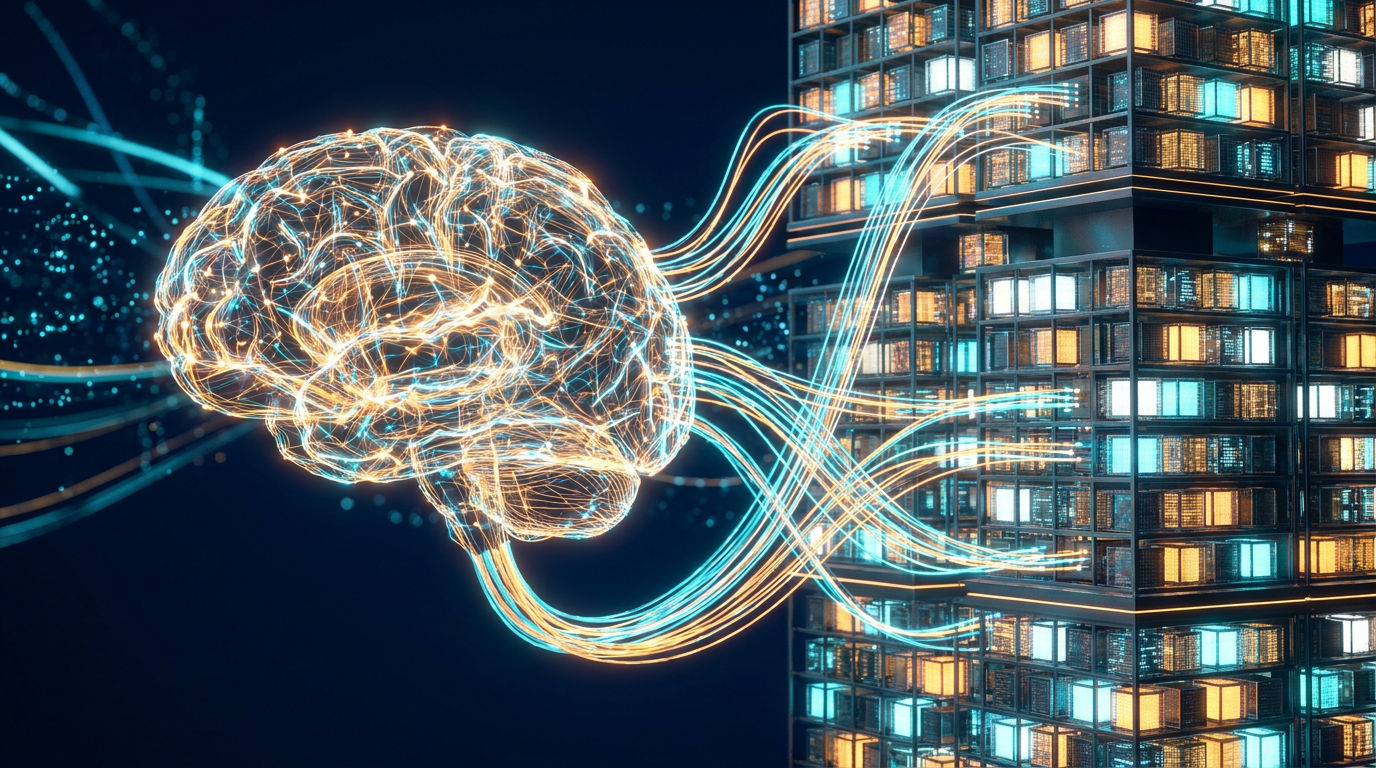
Instead of forcing the AI to rely on its internal memory, a RAG system intercepts the user's question and first acts as a highly advanced search engine. It dives into a designated, trusted library of external data—such as a company's internal HR documents, a hospital's medical records, or a live database of financial regulations. It retrieves the exact paragraphs relevant to the user's query, bundles those facts together, and hands them to the language model with a new instruction: "Answer the user's question using only this provided text."[1][3]
The result is a dramatic reduction in fabricated information. Because the language model is simply summarizing and synthesizing the retrieved documents, its output is grounded in verifiable reality. Furthermore, because the system knows exactly which documents it pulled the information from, it can provide footnotes and citations. If an AI assistant tells an employee how many vacation days they have left, RAG allows the system to link directly to the specific page in the employee handbook that proves it.[4][5]

To understand how RAG achieves this, it is necessary to look under the hood at the data processing pipeline. The first step is ingestion and "chunking." A company cannot simply dump thousands of massive PDF reports into a language model; the model's working memory, known as its context window, is limited. Instead, data engineers use automated tools to break large documents down into smaller, digestible chunks, typically around 100 to 200 words each.[2][6]
Once the text is chunked, it must be translated into a language that computers can search with mathematical precision. This is done using an "embedding model." Embeddings are numerical representations of text that capture semantic meaning. For example, the words "feline" and "cat" look completely different in plain text, but an embedding model understands they mean the same thing and assigns them similar numerical coordinates. These coordinates are plotted in a high-dimensional mathematical space.[2][6]
These numerical coordinates are stored in a specialized piece of infrastructure called a vector database. Unlike traditional databases that search for exact keyword matches, vector databases search by proximity in that mathematical space. When a user asks a question, the RAG system converts the question into its own numerical embedding. The vector database then calculates which stored chunks of information are mathematically closest to the question's embedding.[1][2]
These numerical coordinates are stored in a specialized piece of infrastructure called a vector database.
This semantic search capability is what makes RAG so powerful. If a user asks, "What is the policy on bringing pets to the office?", the vector database doesn't just look for the word "pets." It understands the concept and might retrieve a chunk of the HR manual that discusses "domesticated animals in the workplace," even if the word "pets" is never explicitly used. The top three or four most relevant chunks are instantly retrieved and sent to the language model to generate the final, plain-English answer.[1][6]

The adoption of RAG architectures has exploded across the tech sector. According to recent industry surveys, over 60 percent of organizations are currently developing AI-powered retrieval tools to personalize outputs using their own internal data. Cloud providers like Amazon Web Services (AWS) and IBM have built dedicated enterprise services designed specifically to help companies connect their proprietary data lakes to foundation models without exposing their private information to the public internet.[1][3]
For enterprise architects, RAG solves a critical security and privacy dilemma. Companies are rightfully hesitant to upload their proprietary codebases or financial forecasts into public AI models. With a RAG architecture, the foundation model can be hosted securely, and the vector database acts as a secure firewall. The AI only gets access to the specific snippets of data retrieved for a single query, and that data is never used to train the underlying model.[2][4]
Despite its massive advantages, RAG is not a silver bullet, and AI reliability researchers are quick to point out its limitations. The most obvious vulnerability is the quality of the underlying data. If a company's internal documents are outdated, contradictory, or poorly written, the RAG system will retrieve bad information, and the AI will confidently generate a wrong answer. In the AI engineering world, this is known as the "garbage in, garbage out" principle.[5][6]
Another challenge is the "lost in the middle" phenomenon. When a RAG system retrieves too many chunks of information and feeds a massive wall of text to the language model, the AI sometimes struggles to weigh the information equally. Research shows that language models tend to pay close attention to the very beginning and the very end of the provided context, but often ignore crucial facts buried in the middle of the retrieved documents.[6]

To combat these limitations, the industry is already moving toward "Advanced RAG" techniques. One emerging solution is Graph RAG, which combines traditional vector databases with knowledge graphs. Instead of just looking at the mathematical similarity of text chunks, Graph RAG maps out the relationships between different entities—understanding, for example, that "Company A" is a subsidiary of "Company B," and both are regulated by "Agency C." This allows the AI to answer highly complex, multi-step questions that require connecting the dots across dozens of different documents.[6]
Another advancement is "Hybrid Search," which combines the semantic understanding of vector embeddings with the exact-match precision of traditional keyword searches. This ensures that if a user searches for a highly specific serial number or an exact legal statute, the system doesn't accidentally retrieve something that is merely "conceptually similar" but factually distinct.[6]
Ultimately, Retrieval-Augmented Generation represents a maturation of the artificial intelligence industry. The initial hype cycle of generative AI was driven by the sheer novelty of chatbots that could write poetry or generate code from scratch. But as the technology transitions from a novelty to a piece of core enterprise infrastructure, the focus has shifted from creativity to reliability.[3][6]

By separating the AI's reasoning capabilities from its knowledge base, RAG allows organizations to harness the linguistic power of modern language models while maintaining strict control over the facts. It is the mechanism that is finally allowing artificial intelligence to graduate from a fascinating experiment into a trustworthy tool for the modern economy.[1][2]
How we got here
2020
The term Retrieval-Augmented Generation is formally introduced in an academic research paper.
2023
Major cloud providers like AWS and IBM launch dedicated enterprise RAG services to meet corporate demand.
2026
Over 60% of organizations report developing AI-powered retrieval tools to personalize outputs using internal data.
Viewpoints in depth
Enterprise AI Architects
Focused on the cost-efficiency and security of deploying AI.
For enterprise IT leaders, the primary appeal of RAG is economic and architectural. Training a foundation model from scratch costs tens of millions of dollars, and even fine-tuning an open-source model requires specialized talent and expensive cloud computing resources. RAG circumvents this by treating the LLM as a static reasoning engine and the vector database as a swappable hard drive. This allows companies to update their AI's knowledge base instantly just by uploading a new PDF, all while keeping proprietary data safely behind the corporate firewall.
AI Reliability Researchers
Focused on mitigating hallucinations and ensuring factual grounding.
Safety researchers view RAG as a crucial bridge toward trustworthy AI. Because standard LLMs are 'black boxes' that cannot explain how they arrived at a specific conclusion, they are inherently risky in fields like medicine or law. RAG introduces an auditable trail. By forcing the AI to cite the specific chunks of text it used to generate an answer, researchers and end-users can manually verify the output, transforming AI from an unpredictable oracle into a transparent research assistant.
Data Engineers
Focused on the mechanics of data pipelines and retrieval accuracy.
From a data engineering perspective, the success of a RAG system has very little to do with the language model itself and everything to do with the data pipeline. Engineers emphasize that 'garbage in equals garbage out.' If a company's documents are poorly formatted, or if the chunking strategy splits a crucial sentence in half, the vector database will fail to retrieve the right context. For this camp, the frontier of AI isn't building bigger language models, but building smarter ingestion pipelines and hybrid search algorithms.
What we don't know
- How to completely eliminate the 'lost in the middle' phenomenon where AI ignores facts buried in the center of retrieved documents.
- The long-term legal implications of RAG systems retrieving and synthesizing copyrighted or highly regulated data.
Key terms
- Retrieval-Augmented Generation (RAG)
- An AI framework that retrieves facts from an external database to ground a language model's answers in verifiable data.
- Hallucination
- When an AI model confidently generates incorrect, fabricated, or nonsensical information because it lacks factual grounding.
- Vector Database
- A specialized database that stores data as numerical coordinates, allowing for searches based on meaning rather than exact keywords.
- Embeddings
- Numerical representations of text that capture the semantic meaning of words and sentences.
- Fine-tuning
- The expensive process of retraining an AI model on new data to update its internal knowledge.
Frequently asked
Does RAG completely eliminate AI hallucinations?
No. While RAG drastically reduces hallucinations by grounding the AI in facts, the model can still generate incorrect answers if the retrieved data is outdated, contradictory, or poorly formatted.
Is RAG the same thing as fine-tuning a model?
No. Fine-tuning bakes new knowledge directly into the model's internal memory, which is expensive and permanent. RAG leaves the model unchanged and simply looks up information dynamically at the time of the query.
What kind of data can a RAG system use?
RAG can process almost any unstructured text, including PDFs, emails, HR manuals, and medical records, provided the data is properly chunked and converted into vector embeddings.
Sources
Source coverage
6 outlets
3 viewpoints surfaced






[1]IBMAI Reliability Researchers
What is retrieval-augmented generation (RAG)?
Read on IBM →[2]Amazon Web ServicesEnterprise AI Architects
What is RAG? - Retrieval-Augmented Generation Explained
Read on Amazon Web Services →[3]DatabricksEnterprise AI Architects
What is Retrieval Augmented Generation (RAG)?
Read on Databricks →[4]ZoomEnterprise AI Architects
What is Retrieval-Augmented Generation (RAG)?
Read on Zoom →[5]WikipediaAI Reliability Researchers
Retrieval-augmented generation
Read on Wikipedia →[6]Factlen Editorial TeamData Engineers
Synthesis by Factlen editorial team
Read on Factlen Editorial Team →
Every angle. Every day.
Get meta stories with full source coverage and perspective breakdowns delivered to your inbox.