
The End of App Blockers: How 'Mindful Friction' is Curing the Doomscroll
A new wave of digital wellness apps is abandoning strict screen-time limits in favor of 'mindful friction'—intentional delays that interrupt the dopamine loop of doomscrolling.
By Factlen Editorial Team
- Digital Wellness Developers
- Advocate for user autonomy and sustainable habits over strict restriction.
- Behavioral Psychologists
- Focus on the neurological drivers of doomscrolling and the need to break automatic reflexes.
- Digital Minimalists
- Argue that software interventions are insufficient and advocate for hardware changes.
What's not represented
- · Social Media Platform Designers
- · Teenagers and Adolescents
Why this matters
Traditional app blockers fail because they rely on willpower and restriction. Mindful friction apps treat the root cause—unconscious scrolling—by forcing users to make an active choice, helping millions reclaim hours of lost time without giving up their devices.
Key points
- Traditional app blockers often fail because they rely on willpower, leading users to bypass limits.
- A new trend called 'mindful friction' introduces 5-to-30-second delays before opening distracting apps.
- These brief pauses interrupt the brain's automatic reflex, forcing users to make a conscious choice.
- The digital wellness market is shifting from strict restriction toward behavioral intervention and autonomy.
You know the drill. You tell yourself you are just going to check your phone for a minute. You open an app, start swiping, and suddenly an hour has vanished. In response, you might try the nuclear options: setting strict screen-time limits, turning your phone to grayscale, or downloading aggressive app blockers. Yet, a few days later, you find yourself mindlessly typing in the passcode to bypass your own limits.[4]
When the weekly screen time report arrives showing five hours of daily social media use, the natural response is guilt. But behavioral experts are increasingly pointing out that this is not a willpower problem; it is a system problem. The platforms are engineered to capture attention, and fighting them with sheer self-control is a losing battle.[4]
Enter a new wave of digital wellness tools that are abandoning strict limits entirely. This week, a startup called Mivo launched a new application that takes a radically different approach to managing screen time. Instead of locking users out of their favorite platforms, Mivo and its contemporaries are embracing a concept known as "mindful friction."[1]
This shift represents a major evolution in the digital wellness market, which industry analysts project will reach $9.2 billion by the end of 2026. For years, the market was dominated by tracking dashboards and rigid blockers. Now, the focus is pivoting toward behavioral intervention—treating the root cause of mindless scrolling rather than just policing the symptoms.[2]

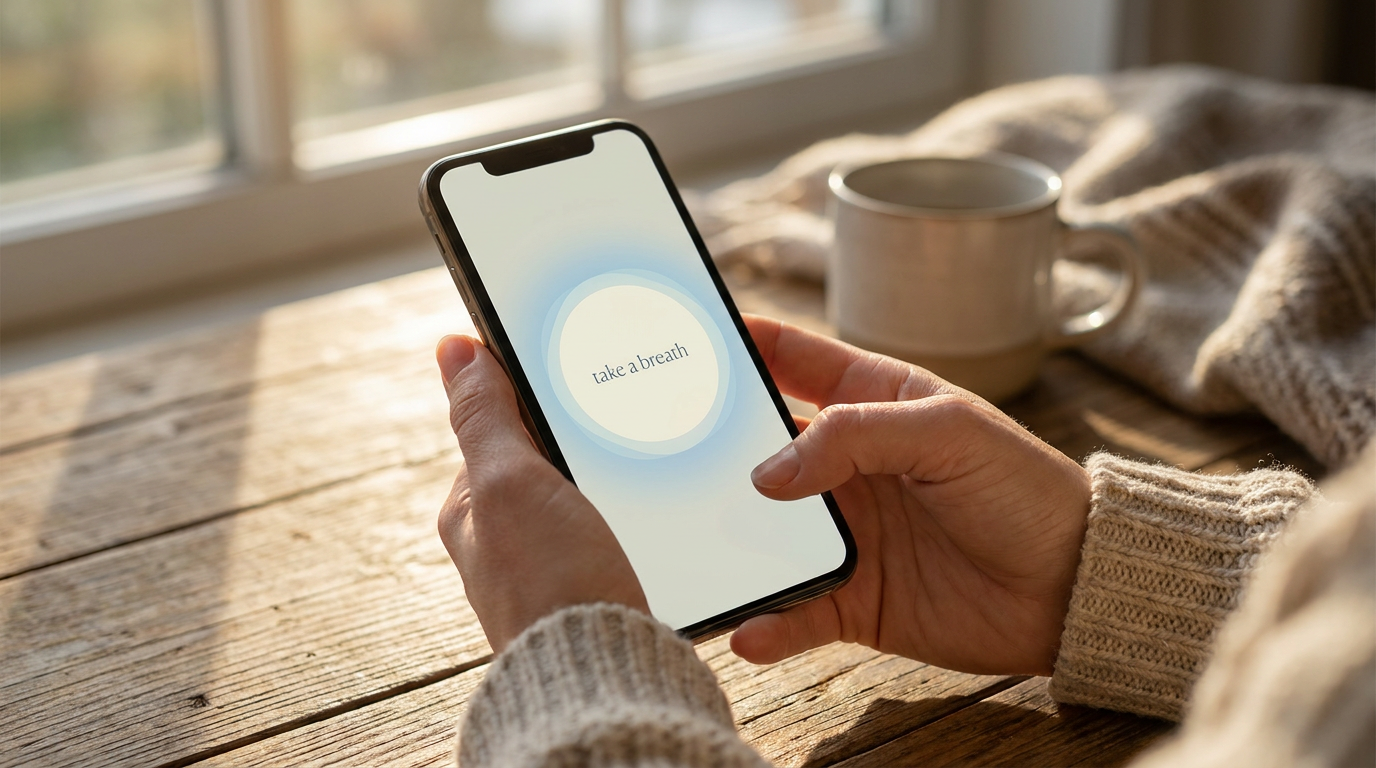
The mechanics of mindful friction are deceptively simple. Instead of blocking access to an app like Instagram or TikTok, these tools introduce a subtle, intentional delay. When a user taps the app icon, they are greeted not with an instant feed, but with a pause—typically lasting between 5 and 30 seconds.[3]
Apps like ScreenZen and Pavlov utilize this technique to great effect. During the delay, the screen might display a calming breathing animation, or prompt the user with a simple question: "Is this necessary right now?" The user can still access the app, but the friction makes the process just annoying enough to deter unconscious use.[3][4]
To understand why such a minor inconvenience is so effective, it helps to look at the psychology of the scroll. Social media platforms are meticulously designed as dopamine-driven feedback loops. They mimic the variable reward systems of slot machines—every swipe is a pull of the lever, offering the chance of an entertaining video or a distressing headline.[5][7]
This design preys on a biological mechanism known as the negativity bias. Evolutionarily, human brains are hardwired to pay closer attention to threats and bad news, a trait that kept our ancestors alive. Today, that same survival instinct keeps us glued to our screens, endlessly searching for the next piece of information in a phenomenon dubbed "doomscrolling."[5][6]
This design preys on a biological mechanism known as the negativity bias.
Crucially, the act of opening a social media app is rarely a conscious decision. It is an automatic reflex triggered by boredom, anxiety, or decision fatigue. Because it is a reflex, the action completely bypasses the prefrontal cortex—the part of the brain responsible for logical thinking and impulse control.[6]

This is exactly where mindful friction intercepts the behavior. A five-second loading screen acts as a cognitive speed bump. It stops the automatic reflex in its tracks, forcing the brain to wake up and process what is happening.[3]
One digital minimalist famously referred to this as the "5-second revelation." In those brief moments of lag, the user is forced to stare at a loading screen and confront their own impulse. The behavior shifts from an unconscious habit to an active, deliberate choice.[8]
Developers have realized that modern users do not actually want to be controlled; they want awareness. Hard blockers create an adversarial relationship between the user and their device, leading to frustration and eventual abandonment. Mindful friction, by contrast, restores a sense of autonomy.[2]
However, behavioral psychologists warn that friction alone is not a complete cure. Breaking a deeply ingrained habit requires replacing it. If the brain is seeking a quick dopamine hit or a distraction from stress, simply denying that urge leaves a void that needs to be filled.[4]
This realization has led to the integration of replacement strategies within the digital wellness ecosystem. Some apps now pair their friction delays with microlearning opportunities, prompting users to read a bite-sized educational article or practice a language skill instead of defaulting to a social feed.[4]

For some users, software interventions are still too easy to circumvent. This has sparked a parallel trend in hardware, driving a resurgence of "dumb phones" and minimalist devices. These phones offer essential tools like maps and messaging but strip away the high-definition color screens that make endless scrolling so visually addictive.[8]
Devices featuring e-ink displays enforce friction at the hardware level. The slow refresh rate and black-and-white interface physically prevent the snappy, instant gratification that modern smartphones deliver, making the act of scrolling inherently unappealing.[8]
Ultimately, the goal of these interventions is not to banish technology or force users to disconnect from the modern world. It is about repairing neuroplasticity. By consistently interrupting the doomscrolling loop, users can slowly rewire their neural pathways and reduce their baseline anxiety.[6][7]
How we got here
Early 2010s
Social media platforms introduce infinite scroll and algorithmic feeds, maximizing user engagement.
2018
Apple and Google introduce native Screen Time and Digital Wellbeing tools focused on tracking and hard limits.
2020–2022
The pandemic accelerates 'doomscrolling' as users compulsively check devices for news, leading to a spike in digital burnout.
2024–2025
Psychological studies confirm that strict app blockers largely fail due to willpower depletion and easy bypass mechanisms.
May 2026
A new wave of apps, including Mivo, launches with a focus on 'mindful friction' rather than restriction.
Viewpoints in depth
Behavioral Psychologists
Focus on the neurological drivers of doomscrolling and the need to break automatic reflexes.
Psychologists emphasize that doomscrolling is not a moral failing but a biological vulnerability. Social media algorithms exploit the brain's evolutionary negativity bias and dopamine-driven reward systems. From this perspective, strict app blockers fail because they rely on the prefrontal cortex—the brain's logical center—which is already fatigued by decision-making. Mindful friction is effective because it acts as a neurological speed bump, interrupting the unconscious reflex and giving the brain a moment to re-engage its executive function.
Digital Wellness Developers
Advocate for user autonomy and sustainable habits over strict restriction.
The creators of apps like Mivo and ScreenZen argue that traditional screen-time limits create an adversarial relationship between users and their devices. When software acts as a strict parent, users inevitably find ways to rebel or bypass the rules. Developers in this camp believe that technology should empower rather than restrict. By using intentional delays and breathing prompts, they aim to foster self-awareness, allowing users to keep their favorite apps while fundamentally changing how they interact with them.
Digital Minimalists
Argue that software interventions are insufficient and advocate for hardware changes.
For digital minimalists, software-based friction is merely a band-aid on a deeper structural problem. They argue that as long as a user is holding a device with a high-definition color screen optimized for infinite scrolling, the temptation will always win out. This camp advocates for hardware-level friction, such as switching to 'dumb phones' or devices with e-ink displays. By removing the snappy, visually stimulating elements of modern smartphones, they believe users can permanently break the cycle of digital addiction.
What we don't know
- Whether mindful friction apps can maintain their effectiveness over years, or if users will eventually become desensitized to the delays.
- How major social media platforms will adapt their algorithms if intentional friction becomes a mainstream default on smartphones.
Key terms
- Doomscrolling
- The act of endlessly consuming negative or mindless content on social media, driven by a dopamine feedback loop.
- Mindful Friction
- Intentional delays or micro-tasks added to software interfaces to interrupt automatic behaviors and force conscious decision-making.
- Negativity Bias
- The psychological tendency to pay more attention to and dwell on negative information, an evolutionary trait exploited by algorithms.
- Neuroplasticity
- The brain's ability to reorganize itself by forming new neural connections, which can be altered by repetitive digital habits.
- Prefrontal Cortex
- The part of the brain responsible for logical thinking and impulse control, which is bypassed during unconscious scrolling.
Frequently asked
Why don't traditional app blockers work for most people?
Traditional blockers rely on strict restriction and willpower. When users hit a hard limit, they often feel frustrated and simply bypass the block or delete the app entirely.
How does a 5-second delay stop doomscrolling?
A small pause interrupts the automatic, reflex-driven action of opening an app. This brief window gives the brain's prefrontal cortex time to engage and make a conscious choice.
Do I need to delete my social media apps to reduce screen time?
No. The mindful friction approach allows you to keep your apps but changes how you access them, promoting intentional use rather than mindless consumption.
What is the 'replacement strategy' in digital wellness?
Because the brain craves stimulation, simply blocking an app leaves a void. Replacement strategies offer a healthier alternative during the friction period, such as reading a short article or doing a breathing exercise.
Sources
Source coverage
8 outlets
3 viewpoints surfaced








[1]TechCrunchDigital Wellness Developers
Mivo’s new app takes a mindful approach to managing screen time
Read on TechCrunch →[2]Ecosistema StartupDigital Wellness Developers
Mivo lanza app de screen time: $9.2B en bienestar digital 2026
Read on Ecosistema Startup →[3]Trend HunterDigital Wellness Developers
Mindful Screen Time Apps: Pavlov Helps Users Reduce Impulsive Scrolling
Read on Trend Hunter →[4]HeadwayDigital Wellness Developers
12 Best Apps to Stop Doomscrolling in 2026
Read on Headway →[5]Psychology TodayBehavioral Psychologists
Doomscrolling: Why Can't We Stop?
Read on Psychology Today →[6]Middle Georgia State UniversityBehavioral Psychologists
Inside the Psychology of Doomscrolling: Why It Happens And How to Stop
Read on Middle Georgia State University →[7]FreedomBehavioral Psychologists
There's a Psychological Reason Why You Can't Stop Doom Scrolling
Read on Freedom →[8]Digital Feng ShuiDigital Minimalists
I Switched to a Dumb Phone for a Year. Here's What Nobody Tells You.
Read on Digital Feng Shui →

Every angle. Every day.
Get technology stories with full source coverage and perspective breakdowns delivered to your inbox.