
How Mycelium Leather is Scaling to Reshape Sustainable Fashion
Next-generation biomaterials grown from the root structures of fungi are moving from the laboratory to commercial scale, offering a biodegradable alternative to both animal hides and plastic synthetics.
By Factlen Editorial Team
- Bio-Design Researchers
- Scientists focused on optimizing substrates and fermentation techniques to make biomaterials economically viable at scale.
- Fashion Industry & Brands
- Luxury houses and sportswear giants investing in biomaterials to meet ESG goals and upcoming environmental regulations.
- Environmental & Circularity Advocates
- Sustainability advocates championing grown materials as the ultimate exit ramp from extractive agriculture and plastic pollution.
What's not represented
- · Fast Fashion Manufacturers
- · Cattle Farmers
Why this matters
As the European Union rolls out strict environmental transparency laws for apparel, the shift toward grown biomaterials offers a blueprint for how consumers can access durable, high-quality fashion without contributing to deforestation or plastic pollution.
Key points
- Traditional leather and petroleum-based synthetic leathers carry massive environmental footprints, driving the search for sustainable alternatives.
- Mycelium leather is cultivated from the root-like network of fungi, grown on agricultural waste in vertical farming facilities.
- The material requires up to 99 percent less water and emits 95 percent less carbon dioxide than conventional bovine leather.
- Recent breakthroughs in paste-based substrates have accelerated growth times to just 7 to 14 days, enabling commercial-scale production.
- While currently priced as a premium material, impending EU transparency regulations are accelerating its adoption by major luxury and sportswear brands.
For decades, the fashion industry has been trapped in a binary dilemma when it comes to leather. On one side sits traditional animal agriculture, an industry heavily criticized for its massive water consumption, greenhouse gas emissions, and reliance on toxic tanning chemicals like chromium. On the other side sits conventional "vegan" leather, which, despite its cruelty-free label, is typically manufactured from petroleum-derived plastics such as polyurethane or polyvinyl chloride. These synthetic alternatives can take centuries to break down, shedding microplastics into the environment and exacerbating the global waste crisis.[1][5][6]
But in 2026, a third pathway has moved from experimental laboratories to mainstream commercial runways. Next-generation biomaterials, specifically mycelium leather, are fundamentally redefining how the fashion industry sources its most coveted textiles. By harnessing the biological processes of fungi, material scientists and designers are literally growing premium fabrics that rival the look, feel, and durability of calfskin, all while operating within a closed-loop, regenerative system.[1][7]
To understand this material revolution, one must look beneath the forest floor. Mycelium is the sprawling, microscopic root-like network of fungi that supports the visible mushroom fruit. Composed of billions of branching threads called hyphae, mycelium acts as nature's ecological connective tissue, breaking down organic matter and binding it together. When cultivated under highly controlled conditions, these interlocking hyphae form a dense, flexible three-dimensional structure that closely mirrors the collagen fibers found in animal skin.[4][6]
The mechanism of producing mycelium leather is a masterclass in biomimicry and circular engineering. The process begins not in a pasture or a petrochemical plant, but in vertical farming facilities. Agricultural waste products—such as sawdust, hemp hurd, or corn stalks—are gathered to serve as a nutrient-rich substrate. This organic waste is sterilized and placed into large, lasagna-like trays, providing the foundational food source for the fungi.[4][7]

Mushroom spores are then introduced to the substrate. Over a remarkably short period of just seven to fourteen days, the mycelium consumes the organic waste, rapidly expanding and knitting itself into a thick, uniform mat across the surface of the tray. Growth conditions, including humidity, temperature, and oxygen levels, are meticulously managed to ensure the resulting tissue is structurally sound and consistent.[6][7]
Once the mycelial mat reaches the desired thickness, the growth process is halted. The raw material is then harvested and subjected to a green chemistry tanning process. Unlike traditional leather production, which often relies on heavy metals, mycelium tanning utilizes plant-based dyes and chromium-free treatments. The final product emerges as a soft, supple, and highly durable textile that can be embossed, stitched, and finished exactly like conventional leather.[5][7]
The environmental evidence supporting mycelium leather is striking. Cultivating fungal leather requires up to 99 percent less water than raising cattle for bovine hides. Furthermore, the process generates approximately 95 percent fewer carbon dioxide emissions. Because the primary input is agricultural waste, the production cycle actively diverts organic matter from landfills, transforming it into a high-value commodity.[7][8]

The environmental evidence supporting mycelium leather is striking.
Crucially, mycelium leather solves the end-of-life problem that plagues synthetic vegan leathers. Because it is composed entirely of organic matter and processed without toxic chemicals, the material is fully biodegradable. At the end of a garment's lifecycle, it can be composted, returning safely to the earth within a matter of months rather than lingering for centuries as plastic pollution.[2]
Despite these profound benefits, scaling mycelium leather to meet the immense volume demands of the global fashion industry has historically been the primary bottleneck. Early iterations were expensive, time-consuming to produce in large continuous sheets, and struggled to achieve the uniform tensile strength required for footwear and heavy-duty accessories.[5][8]
However, recent breakthroughs in biotechnology have systematically dismantled these scaling barriers. Researchers at the University of Colorado Denver recently developed a novel paste-based substrate that significantly accelerates the cultivation process. By optimizing the nutrient delivery system, this paste allows rapid-fruiting species like the pink oyster mushroom and the medicinal reishi mushroom to colonize the substrate faster and more uniformly.[3][5]

This innovation in liquid-state and paste-based surface fermentation allows manufacturers to harvest larger, more consistent mycelium mats with greater ease. Concurrently, studies published by the National Institutes of Health have confirmed the material's commercial viability. Rigorous thermogravimetric analysis demonstrated that specific mycelium strains retain exceptional thermal stability, proving they can withstand the high-heat pressing and finishing techniques required by luxury fashion houses.[2][8]
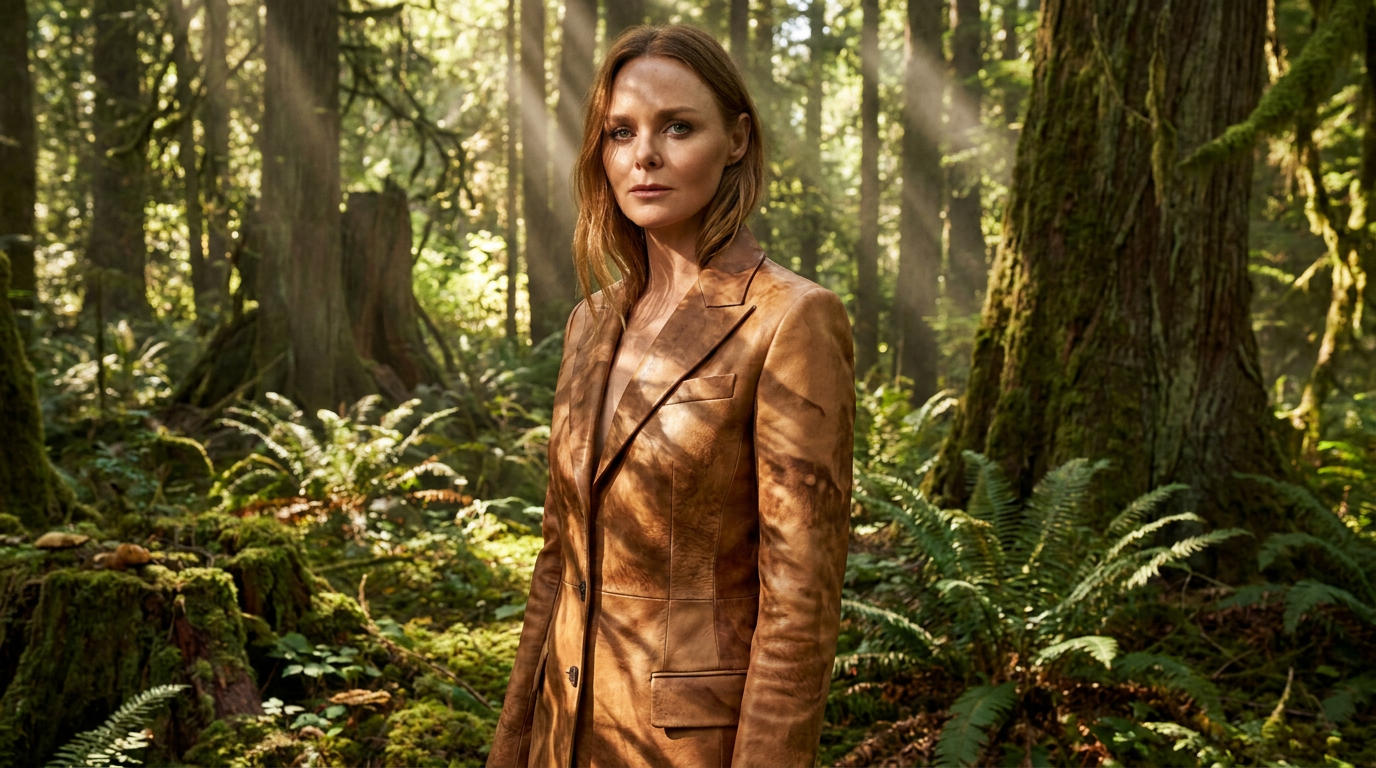
These scientific advancements have catalyzed a wave of commercial adoption in 2026. Material science companies like Bolt Threads, the creators of Mylo, and Ecovative have successfully transitioned to commercial-scale production facilities. Their bio-fabricated leathers are no longer confined to prototype showcases; they are being integrated into the supply chains of major global brands, including Stella McCartney, Adidas, Lululemon, and Kering.[7]
Yet, the transition to grown materials is not without its uncertainties and limitations. One ongoing challenge is color fastness and variety. Natural mycelium readily accepts earth tones and muted dyes, but achieving the vibrant, saturated colors demanded by certain fashion trends without resorting to heavy chemical dyes remains an active area of research.[6]

Cost parity also remains a hurdle. While the price of mycelium leather is dropping by an estimated 30 to 40 percent annually as production scales, it currently remains positioned as a premium material, costing two to four times more than standard conventional leather. Industry analysts project that true price parity may not be achieved until the end of the decade, temporarily limiting its accessibility for mass-market fast fashion.[1][7]
Nevertheless, regulatory pressures are accelerating the shift. The European Union's rollout of Digital Product Passports requires brands to transparently disclose the exact environmental footprint and lifecycle of their materials. Under this intense regulatory scrutiny, the extraordinary sustainability metrics of mycelium leather provide a massive competitive advantage for brands willing to invest in the transition.[1][7]
Ultimately, the rise of mycelium leather represents a profound philosophical shift in how humanity clothes itself. Instead of asking how to extract more resources from an overburdened planet, material scientists are asking how to collaborate with nature's existing regenerative systems. By turning to the quiet, invisible networks beneath the forest floor, the fashion industry is finally growing a sustainable future.[6]
How we got here
2018
Bolt Threads debuts Mylo, an early mycelium leather prototype, launching a limited-edition bag on Kickstarter.
2021
Stella McCartney showcases the first garments made from Mylo mushroom leather, and Hermès unveils a prototype Victoria bag.
2024
Researchers at CU Denver publish breakthroughs in paste-based substrates, significantly accelerating mycelium growth rates.
2025
Major biomaterial facilities in California and Europe reach commercial-scale production capabilities.
2026
Mycelium leather enters mainstream luxury and sportswear lines as brands prepare for upcoming EU environmental transparency mandates.
Viewpoints in depth
Bio-Design Researchers
Scientists view the challenge of next-generation materials as a biological engineering puzzle.
The primary focus for bio-design researchers is optimizing the nutrient substrates—often utilizing agricultural waste like hemp hurd or sawdust—to accelerate the growth of fungal hyphae. By experimenting with rapid-fruiting species like the pink oyster mushroom and developing novel paste-based media, researchers aim to increase the yield and tensile strength of mycelium mats. Their goal is to prove that bio-fabricated textiles can be scaled efficiently without relying on extractive agricultural practices.
Fashion Industry & Brands
For luxury houses and sportswear giants, mycelium leather represents a strategic solution to mounting regulatory pressures.
Brands are investing heavily in biomaterials to future-proof their supply chains against upcoming transparency laws, such as the EU's Digital Product Passports. While they acknowledge that mycelium currently carries a premium price tag and faces limitations in vibrant color dyeing, they view the material as a vital asset for maintaining luxury appeal while meeting aggressive corporate sustainability targets.
Environmental & Circularity Advocates
Sustainability advocates champion grown materials as the ultimate exit ramp from the fashion industry's binary dilemma.
Advocates argue that traditional leather drives deforestation and relies on toxic tanning chemicals, while synthetic "vegan" leathers perpetuate fossil fuel extraction and microplastic pollution. For this camp, mycelium's greatest triumph is its true circularity—the ability to grow a high-performance textile from waste and, at the end of its lifecycle, compost it safely back into the earth without leaving a permanent footprint.
What we don't know
- When mycelium leather will achieve true price parity with conventional animal leather for mass-market adoption.
- Whether material scientists can develop vibrant, saturated color dyes for mycelium without relying on toxic chemical treatments.
- How the long-term durability of mycelium garments over multiple decades will compare to heritage animal leather in real-world conditions.
Key terms
- Mycelium
- The sprawling, microscopic root-like network of fungi that grows underground and breaks down organic matter.
- Hyphae
- The individual, microscopic branching filaments that make up a mycelium network, binding together to form a dense structure.
- Substrate
- The nutrient-rich base material—often agricultural waste like sawdust or corn stalks—on which mushrooms and mycelium are grown.
- Digital Product Passport
- An upcoming European Union regulation requiring brands to provide detailed, transparent data on a product's environmental footprint and lifecycle.
- Biomimicry
- The design and production of materials or structures that are modeled on biological entities and processes found in nature.
Frequently asked
Is mushroom leather actually made from mushrooms?
Not exactly. It is made from mycelium, which is the underground root-like network that supports the growth of mushrooms. The visible mushroom is just the fruiting body.
How long does it take to grow mycelium leather?
Unlike raising cattle, which takes years, a commercial-scale mycelium mat can be grown in vertical farming trays in just 7 to 14 days.
Is mycelium leather biodegradable?
Yes. Because it is made entirely of organic fungal matter and tanned using plant-based, chromium-free processes, it can be fully composted at the end of its useful life.
Is it more expensive than traditional leather?
Currently, yes. While costs are dropping rapidly as production scales, mycelium leather remains a premium material priced two to four times higher than conventional animal leather.
Sources
Source coverage
8 outlets
3 viewpoints surfaced







[1]Factlen Editorial TeamEnvironmental & Circularity Advocates
Synthesis by Factlen editorial team
Read on Factlen Editorial Team →[2]National Institutes of HealthBio-Design Researchers
Mycelium-Based Leather: A Sustainable Alternative for the Fashion Industry
Read on National Institutes of Health →[3]University of Colorado DenverBio-Design Researchers
CU Denver researcher advances bio-fabricated materials made from roots of fungi
Read on University of Colorado Denver →[4]National GeographicEnvironmental & Circularity Advocates
Mushroom leather? The future of fashion is closer than you think
Read on National Geographic →[5]Technology NetworksBio-Design Researchers
From Fungi to Fashion: Growing Mycelium Leather Mats
Read on Technology Networks →[6]BSL AssociationFashion Industry & Brands
Mycelium Leather: How Grown Materials Are Redefining the Future of Leather Alternatives
Read on BSL Association →[7]California Fashion WeekFashion Industry & Brands
Mushroom Leather Is Having a Moment – And It Might Just Save Fashion
Read on California Fashion Week →[8]The EcologistBio-Design Researchers
Growing mycelium leather
Read on The Ecologist →


Every angle. Every day.
Get lifestyle stories with full source coverage and perspective breakdowns delivered to your inbox.