
Apple and Intel Forge Landmark Chip Manufacturing Deal to Diversify Supply Chain
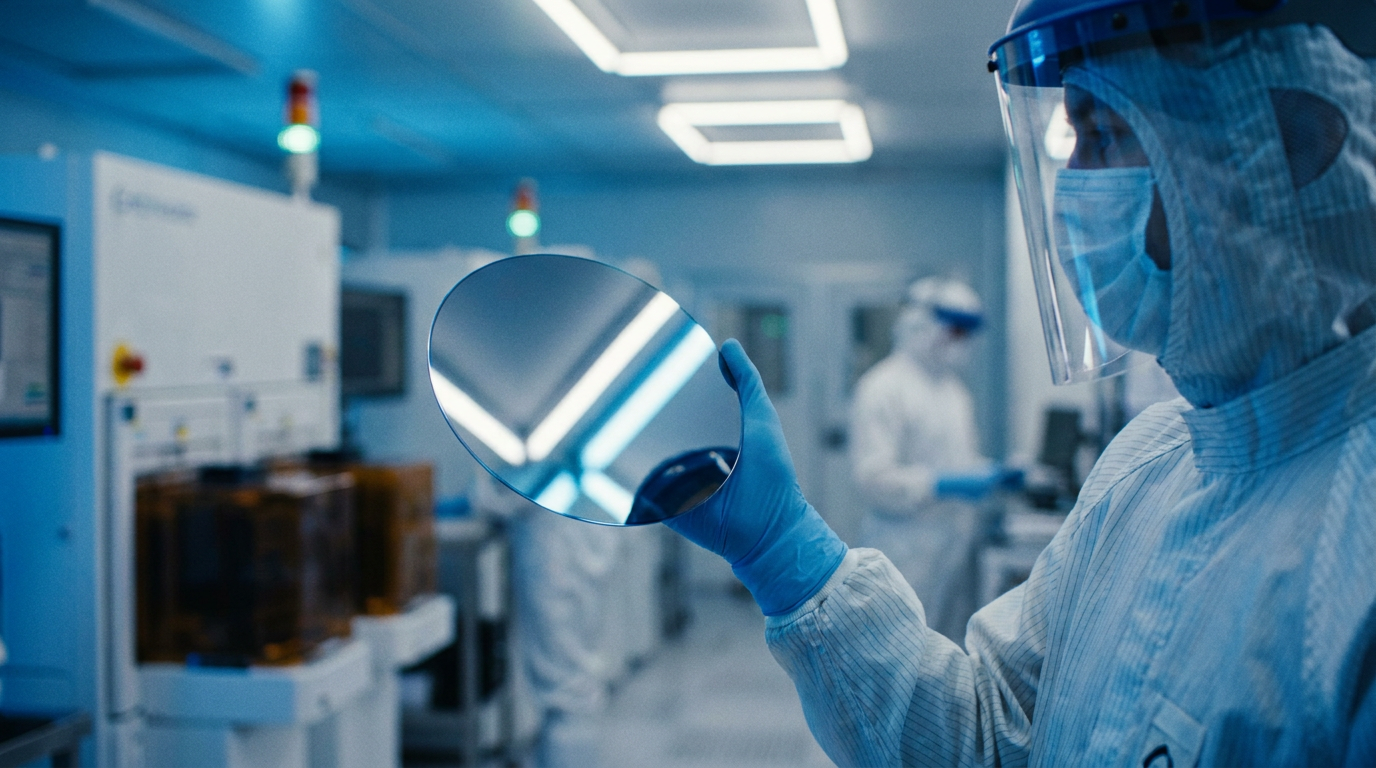
Apple has reportedly struck a multi-year deal to manufacture future smartphone and computer chips at Intel's U.S. foundries, aiming to reduce its reliance on overseas suppliers. The partnership marks a major shift in the semiconductor landscape as tech giants race to secure domestic production capacity.
By Factlen Editorial Team
- Supply Chain Analysts
- Focus on the strategic necessity of diversifying away from TSMC due to AI-driven capacity constraints.
- Domestic Manufacturing Advocates
- View the partnership as a triumph for U.S. industrial policy and national security.
- Consumer Technology Watchers
- Focused on how the diversification will impact the pricing, performance, and availability of future devices.
What's not represented
- · Taiwanese government officials managing the geopolitical implications of TSMC losing exclusive Apple production.
- · TSMC executives responding to the diversification of their largest client.
Why this matters
The chips powering our daily devices are almost exclusively manufactured in Taiwan, creating a fragile bottleneck. By bringing production to the U.S., Apple is securing the supply chain against geopolitical shocks and AI-driven shortages, ensuring future iPhones and MacBooks remain readily available.
Key points
- Apple has agreed to use Intel's U.S. foundries to manufacture future custom-designed chips.
- The move aims to diversify Apple's supply chain away from its heavy reliance on Taiwan's TSMC.
- TSMC's advanced production lines are currently constrained by massive orders from AI companies.
- Intel is expected to begin by producing lower-volume Mac and iPad chips by 2027.
- The U.S. government previously took a 10 percent equity stake in Intel to boost domestic manufacturing.
- Intel's valuation has surged to roughly $600 billion following the government investment and Apple deal.
Apple has reportedly struck a landmark agreement with Intel to manufacture its custom-designed processors in the United States, a move that promises to reshape the global semiconductor supply chain. The partnership pairs the world's most valuable consumer technology company with America's legacy chipmaker, marking a significant shift in how the silicon powering iPhones and MacBooks will be produced. For Apple, the deal represents a critical step toward diversifying a manufacturing network that has long been overwhelmingly reliant on overseas facilities.[1][3]
The arrangement was thrust into the public spotlight on Thursday when U.S. President Donald Trump announced the partnership on social media, touting it as a victory for domestic manufacturing. Trump stated that Apple had agreed to "design and build its chips in America," framing the collaboration as the latest success in a broader administration push to reshore critical technology infrastructure. Following the announcement, Intel's stock surged by more than 10 percent in premarket trading, reflecting investor optimism about the foundry's future.[1][2][6]
Under the new framework, Intel will act strictly as a contract manufacturer—or foundry—for Apple. The Cupertino-based tech giant will continue to engineer its own proprietary Arm-based silicon, such as the A-series chips for smartphones and the M-series for computers. Intel's role will be to physically fabricate these designs at its advanced facilities in states like Oregon, Arizona, and Ohio. This mirrors the exact relationship Apple currently maintains with its primary supplier, Taiwan Semiconductor Manufacturing Company (TSMC).[1][3][4]

The pivot toward Intel is driven by an increasingly constrained global supply chain. Over the past two years, the explosive growth of artificial intelligence has fundamentally altered the semiconductor landscape. TSMC's most advanced production lines have been inundated with massive orders from AI hardware leaders like Nvidia and AMD. This unprecedented demand has created a severe bottleneck, leaving Apple vulnerable to supply shortages and potential price hikes if it remained entirely dependent on a single manufacturer.[3][7]
The pivot toward Intel is driven by an increasingly constrained global supply chain.
Industry analysts suggest the transition will be gradual, targeting specific product lines rather than an immediate overhaul of Apple's flagship devices. According to supply chain experts, Intel is expected to begin by producing lower-volume or older-generation processors. Preliminary reports indicate that Apple's M7 chip, destined for future MacBook Airs and entry-level iPads, could be manufactured using Intel's 18A-P process node by late 2027.[3][8]
Looking further ahead, the partnership is expected to expand into the highly lucrative smartphone sector. Analysts project that Intel could begin fabricating a portion of Apple's A21 or A22 smartphone chips utilizing its next-generation 14A process technology by 2028. While TSMC is universally expected to retain the manufacturing contracts for Apple's highest-end "Pro" devices, offloading entry-level and mid-tier silicon to Intel provides Apple with vital breathing room and enhanced negotiating leverage.[3][8]

For Intel, securing Apple as a foundry customer is a monumental validation of its recent corporate turnaround. Under the leadership of CEO Lip-Bu Tan, the company has aggressively restructured to compete directly with TSMC in the contract manufacturing space. Building chips for Apple—notoriously one of the most demanding clients in the tech industry—serves as the ultimate proof-of-concept for Intel's modernized fabrication capabilities and its ambitious roadmap to deliver five process nodes in four years.[9]
The deal also carries immense geopolitical weight. By establishing a robust secondary supply chain on American soil, Apple significantly mitigates the risks associated with concentrating its production in Taiwan. The U.S. government has heavily incentivized this shift; last August, Washington took a 10 percent equity stake in Intel through an $8.9 billion investment aimed at securing domestic semiconductor independence. Since that intervention, Intel's valuation has skyrocketed from roughly $100 billion to over $600 billion.[1][6]

Ultimately, the Apple-Intel alliance signals a maturation of the global hardware ecosystem. As the artificial intelligence boom continues to consume the world's leading-edge manufacturing capacity, consumer electronics giants can no longer afford single points of failure. By bridging the gap between Silicon Valley design and American manufacturing, Apple is securing the silicon pipeline it needs to power the next decade of spatial computing, mobile technology, and personal AI.[7]
How we got here
August 2025
The U.S. government takes a 10 percent equity stake in Intel for $8.9 billion to boost domestic manufacturing.
December 2025
Apple and Intel reportedly sign a preliminary chipmaking agreement behind closed doors.
May 2026
Reports emerge that test production for Apple processors has begun at Intel facilities.
June 2026
President Trump publicly announces the finalized manufacturing partnership, sending Intel stock surging.
Late 2027
Expected mass production of Apple's M7 chips on Intel's 18A-P process node.
Viewpoints in depth
Supply Chain Analysts
Focus on the strategic necessity of diversifying away from TSMC due to AI-driven capacity constraints.
For hardware analysts, Apple's pivot is a pragmatic response to a shifting market. TSMC's most advanced nodes are increasingly monopolized by high-margin AI accelerators from Nvidia and AMD, leaving traditional consumer electronics vulnerable to delays. By securing Intel as a secondary foundry, Apple gains crucial leverage and guarantees a steady flow of silicon for its high-volume, lower-margin devices like the MacBook Air and entry-level iPads.
Domestic Manufacturing Advocates
View the partnership as a triumph for U.S. industrial policy and national security.
Proponents of reshoring argue that relying entirely on Taiwan for the world's most critical technology presents an unacceptable geopolitical risk. The U.S. government's aggressive backing of Intel—including a 10 percent equity stake—was designed specifically to attract mega-clients like Apple. This deal is seen as the ultimate validation of the CHIPS Act ecosystem, proving that American foundries can once again compete at the bleeding edge of semiconductor fabrication.
What we don't know
- The exact financial terms and total volume of the manufacturing contract between Apple and Intel.
- Whether Intel will eventually be tasked with producing Apple's highest-end 'Pro' tier smartphone chips.
- How the dual-sourcing strategy will impact the retail pricing of future iPhones and MacBooks.
Key terms
- Foundry
- A manufacturing facility that builds semiconductor chips designed by other companies.
- TSMC
- Taiwan Semiconductor Manufacturing Company, the world's largest dedicated independent semiconductor foundry and Apple's primary chip supplier.
- Process Node
- A specific semiconductor manufacturing process; smaller nodes generally indicate more advanced, efficient, and powerful chips.
- System-on-Chip (SoC)
- An integrated circuit that combines all or most components of a computer or other electronic system into a single chip.
Frequently asked
Will Intel be designing the chips for my iPhone?
No. Apple will continue to design its own custom silicon. Intel will only act as a contract manufacturer, physically building the chips according to Apple's blueprints.
Why is Apple moving away from TSMC?
Apple isn't abandoning TSMC, but rather adding Intel as a secondary supplier. TSMC is currently overwhelmed by AI chip orders, and Apple needs to diversify to ensure a steady supply and avoid price hikes.
When will the first Intel-manufactured Apple chips arrive?
Analysts expect the first Intel-fabricated Apple processors, likely the M7 chip for MacBooks, to enter mass production by late 2027.
Sources
Source coverage
9 outlets
3 viewpoints surfaced









[1]The New York TimesDomestic Manufacturing Advocates
Trump Says Apple to Buy Computer Chips from Intel
Read on The New York Times →[2]BloombergDomestic Manufacturing Advocates
Trump Says Intel Inked Chip Deal With Apple
Read on Bloomberg →[3]Tom's HardwareSupply Chain Analysts
Intel and Apple reportedly strike deal for chip manufacturing
Read on Tom's Hardware →[4]AppleInsiderConsumer Technology Watchers
Trump says Apple will use Intel to make its processors
Read on AppleInsider →[5]EngadgetConsumer Technology Watchers
Trump claims Apple has finalized a deal with Intel to manufacture chips in the US
Read on Engadget →[6]CBS NewsDomestic Manufacturing Advocates
Intel shares jump after Trump says chipmaker will work with Apple
Read on CBS News →[7]LiveMintSupply Chain Analysts
Apple-Intel deal: Will iPhones and MacBooks cost more?
Read on LiveMint →[8]GSMArenaSupply Chain Analysts
Apple once again rumored to partner with Intel for chip manufacturing
Read on GSMArena →[9]MacRumorsConsumer Technology Watchers
Trump Says Apple Has Agreed to Manufacture Chips With Intel in the U.S.
Read on MacRumors →


Every angle. Every day.
Get technology stories with full source coverage and perspective breakdowns delivered to your inbox.