
Supreme Court Unanimously Narrows Federal Gun Ban for Drug Users
The Supreme Court ruled 9-0 that a federal law barring habitual drug users from owning firearms is unconstitutional as applied to a Texas marijuana user, finding the restriction lacks historical precedent.
By Factlen Editorial Team
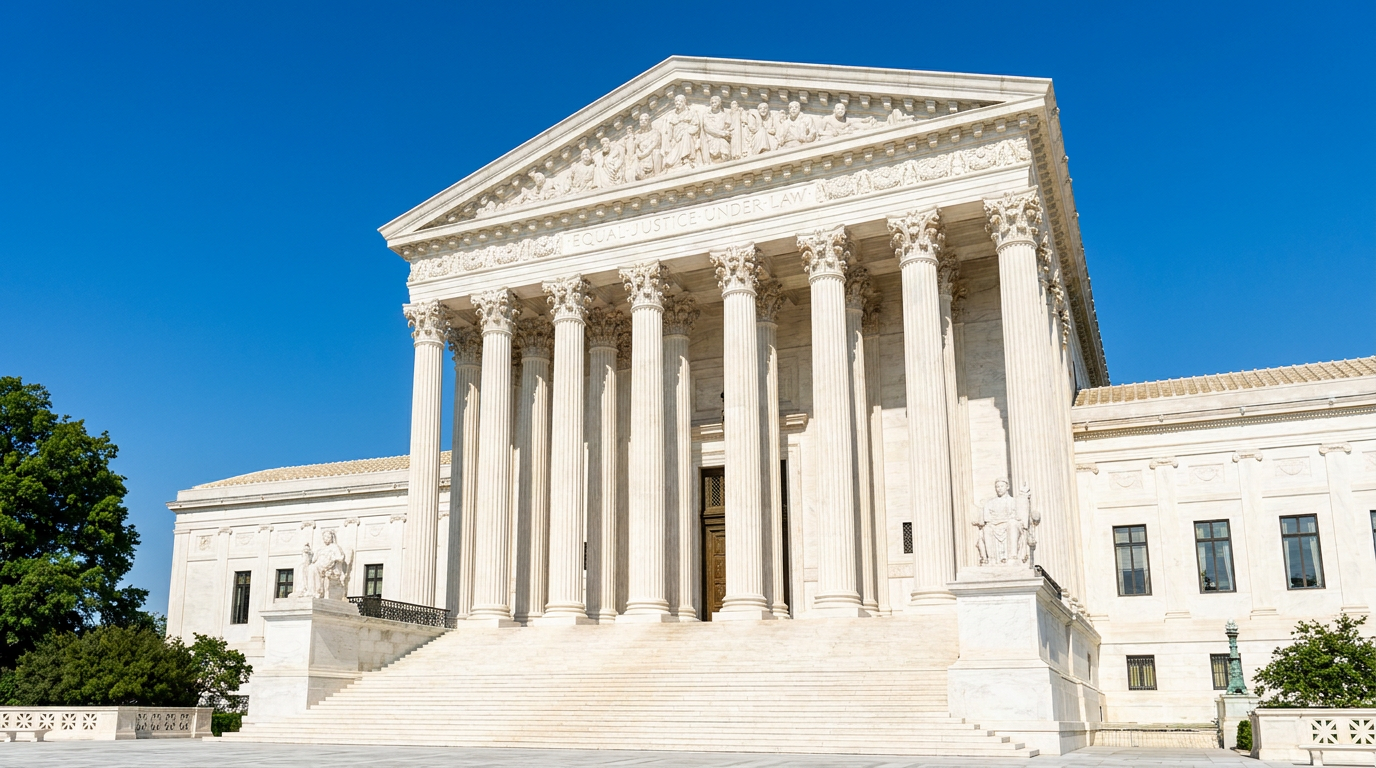
- Civil Liberties & Cannabis Advocates
- Argue that the federal ban is unconstitutionally vague and unfairly strips millions of responsible, state-legal cannabis users of their fundamental rights.
- Gun Rights Organizations
- View the ruling as a necessary enforcement of the Bruen standard, arguing that the government cannot invent new categories of prohibited persons without clear historical precedent.
- Federal Law Enforcement & Gun Control Groups
- Maintain that the intersection of firearms and habitual drug use poses a clear danger to society, warning that the ruling weakens a critical tool for federal prosecutors.
What's not represented
- · State-level law enforcement agencies navigating the conflict between state cannabis legalization and federal gun laws.
- · Medical marijuana patients who rely on cannabis for health reasons but wish to own firearms for self-defense.
Why this matters
The decision narrows a key provision of the 1968 Gun Control Act, potentially restoring Second Amendment rights to millions of Americans who use marijuana in states where it is legal, while creating new hurdles for federal prosecutors seeking standalone gun charges.
Key points
- The Supreme Court unanimously struck down the application of a federal gun ban for a habitual marijuana user.
- Justice Neil Gorsuch wrote that the government failed to prove the law aligned with the nation's historical tradition of firearm regulation.
- The ruling is narrow and does not protect individuals who are actively intoxicated while possessing a firearm.
- The decision unites unusual allies, including the ACLU, NORML, and the NRA.
- The statute in question is the same one used to convict Hunter Biden in 2024.
The Supreme Court unanimously ruled on Thursday that the federal government cannot strip an individual of their Second Amendment rights solely for being a habitual user of marijuana. In a 9-0 decision, the justices sided with a Texas man who challenged a decades-old federal statute barring unlawful drug users from possessing firearms, marking another significant expansion of gun rights under the current court.[1][5]
The case, United States v. Hemani, centered on 18 U.S.C. § 922(g)(3), a provision of the Gun Control Act of 1968 that makes it a felony for an "unlawful user" of a controlled substance to possess a gun. The ruling represents a major defeat for the Justice Department, which had defended the law as a necessary public safety measure.[2][4]
Writing for the unanimous court, Justice Neil M. Gorsuch concluded that the government's application of the law to a regular marijuana user who was not actively intoxicated failed to meet the strict constitutional standard established by the court's recent Second Amendment jurisprudence. "We appreciate that drugs and guns can sometimes make for a dangerous mix," Gorsuch wrote, but emphasized that the restriction could not be squared with the nation's historical tradition of firearm regulation.[3][5]

The dispute began in August 2022 when federal agents raided the Texas home of Ali Danial Hemani. During the search, agents discovered a Glock 9mm handgun and 60 grams of marijuana. Hemani, who was not accused of any other crimes, admitted to investigators that he consumed marijuana "about every other day."[5][7]
Crucially, prosecutors never alleged that Hemani was under the influence of drugs while handling the weapon. Instead, they relied entirely on his admission of habitual use to charge him under the federal statute. Lower courts, including the Fifth Circuit Court of Appeals, dismissed the charge, prompting the Trump administration's Justice Department to appeal to the Supreme Court.[4][8]
Crucially, prosecutors never alleged that Hemani was under the influence of drugs while handling the weapon.
During oral arguments and in briefs, the government attempted to justify the modern drug-user ban by pointing to founding-era laws that disarmed "habitual drunkards." Gorsuch and the rest of the court rejected this comparison. "Apart from pointing to habitual drunkard laws, the government has not even attempted to prove that any other specific historical principle might justify its prosecution in this case," the opinion stated, calling the analogy strained.[5][8]

Despite the unanimous outcome, Gorsuch explicitly noted that the court's decision is "narrow." The ruling does not address whether the government can disarm individuals who are actively intoxicated while possessing a firearm, nor does it strike down laws preventing convicted felons or those with severe addiction issues from owning guns.[3][6]
The case generated highly unusual political alliances. Hemani's defense was supported by a coalition that included the American Civil Liberties Union, cannabis legalization advocates like NORML, and the National Rifle Association. On the opposing side, the Trump administration found itself aligned with gun control organizations like Everytown for Gun Safety, which typically oppose the administration's expansive view of the Second Amendment.[4][6]
The statute at the center of the ruling gained widespread public attention in 2024 when it was used to convict Hunter Biden, the son of former President Joe Biden, for purchasing a revolver while addicted to crack cocaine. The younger Biden was later pardoned by his father before the end of his presidential term, but his high-profile prosecution highlighted the severe penalties—up to 15 years in prison—attached to the 1968 law.[1][2]

The legal landscape surrounding cannabis has shifted dramatically in recent years, complicating the enforcement of federal gun laws. More than half of all U.S. states have broadly legalized marijuana for medical or recreational use, and millions of Americans legally consume the drug under state law. However, because marijuana remains a federally controlled substance, users have technically been barred from purchasing or owning firearms.[4][7]
Legal experts suggest the ruling will force federal prosecutors to abandon standalone charges against drug users unless they can prove the individual was actively impaired while armed. While the decision provides immediate relief to Hemani, it also opens the door for further challenges to federal gun restrictions, leaving lower courts to untangle exactly where the line between habitual use and active intoxication lies.[6][8]
How we got here
1968
Congress passes the Gun Control Act, including a provision barring unlawful drug users from possessing firearms.
June 2022
The Supreme Court issues its landmark Bruen decision, establishing a new 'historical tradition' test for evaluating gun laws.
August 2022
Federal agents raid the Texas home of Ali Danial Hemani, finding a handgun and marijuana.
February 2023
A federal grand jury indicts Hemani under the 1968 drug-user statute.
January 2025
The Fifth Circuit Court of Appeals strikes down the law as applied to Hemani.
June 18, 2026
The Supreme Court unanimously rules in Hemani's favor, narrowing the federal gun ban.
Viewpoints in depth
Civil Liberties & Cannabis Advocates
Argue that the federal ban is unconstitutionally vague and unfairly strips millions of responsible, state-legal cannabis users of their fundamental rights.
Civil liberties organizations and cannabis advocates emphasize that the government should not be able to permanently disarm individuals for conduct that is legal in more than half the country. They argue that the statute disproportionately impacts marginalized communities targeted by the war on drugs and creates an impossible legal trap for medical marijuana patients who wish to exercise their Second Amendment rights for self-defense.
Gun Rights Organizations
View the ruling as a necessary enforcement of the Bruen standard, arguing that the government cannot invent new categories of prohibited persons without clear historical precedent.
Second Amendment absolutists contend that the right to bear arms is a fundamental constitutional guarantee that cannot be suspended simply because an individual consumes an intoxicant. They point out that alcohol users have never faced similar blanket federal bans, and they view the DOJ's reliance on founding-era 'habitual drunkard' laws as a strained and legally insufficient attempt to justify modern government overreach.
Federal Law Enforcement & Gun Control Groups
Maintain that the intersection of firearms and habitual drug use poses a clear danger to society, warning that the ruling weakens a critical tool for federal prosecutors.
Gun safety organizations and federal prosecutors argue that the DOJ has historically relied on this statute to disarm dangerous individuals before violence occurs. They express concern that the decision will make it significantly harder to keep guns out of the hands of those engaged in the illegal drug trade, warning that lower courts will now be bogged down in complex evidentiary battles over whether a defendant was 'presently intoxicated' at the exact moment they possessed a firearm.
What we don't know
- How lower courts will define the exact threshold between being a 'habitual user' and being 'presently intoxicated' while possessing a firearm.
- Whether the Justice Department will issue new guidance to federal prosecutors regarding when to pursue standalone gun charges against drug users.
- How this ruling might impact other federal prohibitions on gun ownership, such as the ban on convicted non-violent felons.
Key terms
- 18 U.S.C. § 922(g)(3)
- A federal statute that makes it a felony for an 'unlawful user' of a controlled substance to possess a firearm or ammunition.
- Bruen Test
- A legal standard established by the Supreme Court in 2022 requiring that any modern gun control law be consistent with the nation's historical tradition of firearm regulation.
- Second Amendment
- The provision of the U.S. Constitution that protects the right of the people to keep and bear arms.
- Controlled Substance
- A drug or chemical whose manufacture, possession, or use is regulated by the federal government, such as marijuana or cocaine.
Frequently asked
Does this mean anyone who uses drugs can own a gun?
Not necessarily. The Supreme Court's ruling was narrow and specifically applied to a habitual marijuana user who was not actively intoxicated while possessing the firearm.
Can the government still disarm people who are high?
Yes. Justice Gorsuch explicitly noted that the decision does not address laws that disarm individuals who are presently intoxicated or actively under the influence while handling a weapon.
How does this affect Hunter Biden's past conviction?
Hunter Biden was convicted under the same statute in 2024, but he was pardoned by his father, President Joe Biden. The ruling does not directly impact his resolved case, though it validates the legal arguments his defense team raised.
Is marijuana still federally illegal?
Yes. While many states have legalized marijuana for medical or recreational use, it remains a controlled substance under federal law, which is why the federal gun ban originally applied.
Sources
Source coverage
8 outlets
3 viewpoints surfaced








[1]The New York TimesFederal Law Enforcement & Gun Control Groups
Supreme Court Narrows Law Banning Drug Users From Owning Guns
Read on The New York Times →[2]Fox NewsGun Rights Organizations
Supreme Court unanimously strikes down gun law used to prosecute Hunter Biden
Read on Fox News →[3]NPRCivil Liberties & Cannabis Advocates
Supreme Court sides with marijuana user who was barred from owning guns
Read on NPR →[4]The GuardianCivil Liberties & Cannabis Advocates
Supreme court sides with Texas marijuana user who wants to legally own a gun
Read on The Guardian →[5]The Washington PostFederal Law Enforcement & Gun Control Groups
Government can't restrict gun ownership over habitual weed use, Supreme Court rules
Read on The Washington Post →[6]CBS NewsFederal Law Enforcement & Gun Control Groups
Supreme Court rules for marijuana user in Second Amendment dispute
Read on CBS News →[7]PBS NewsHourCivil Liberties & Cannabis Advocates
Supreme Court sides with Texas marijuana user who says it's not a crime to have a gun
Read on PBS NewsHour →[8]National Constitution CenterGun Rights Organizations
Supreme Court to hear arguments on legality of gun bans for marijuana users
Read on National Constitution Center →
More in news politics
See all 8 stories →U.S.-Iran Deal
U.S. and Iran Sign Preliminary Agreement to End Four-Month Conflict
6 sources
US-Iran Agreement
US and Iran Reach Tentative Peace Agreement to Secure Strait of Hormuz
6 sources
US-Iran Relations
U.S. and Iran Sign Peace Framework to End 110-Day War, Reopen Strait of Hormuz
7 sources
Migration Policy
EU Parliament Approves Migration Law Allowing Offshore Detention Centers
6 sources
Every angle. Every day.
Get news politics stories with full source coverage and perspective breakdowns delivered to your inbox.