
Tactical Analysis: How Spain's Vertical Evolution Faces Its Ultimate World Cup Test
Under Luis de la Fuente, Spain has traded sterile possession for lethal verticality, but an opening 0-0 draw against Cape Verde exposed lingering vulnerabilities to the low block.
By Factlen Editorial Team
- Tactical Analysts
- Praise the shift toward verticality and the strategic use of possession as an attacking weapon.
- Match Reporters
- Emphasize the immediate, practical struggles seen on the pitch when the primary game plan is stifled.
- Data Scientists
- Focus on the underlying metrics that highlight Spain's reliance on specific chance creators.
What's not represented
- · Opposition Managers
- · Cape Verde Supporters
Why this matters
Spain's tactical shift dictates the rhythm of international football's biggest tournament. Whether their high-risk, high-reward system can break down entrenched defenses will likely determine the 2026 World Cup champion.
Key points
- Spain has transitioned from slow possession to a vertical 4-3-3 system under Luis de la Fuente.
- The opening 0-0 draw against Cape Verde highlighted the team's struggles against a low block without their starting wingers.
- Lamine Yamal and Nico Williams are the focal points of the attack, providing crucial 1v1 isolation on the flanks.
- The defense utilizes an asymmetrical fullback system and an aggressive, high-line counter-press.
- De la Fuente made history by selecting zero Real Madrid players, opting instead for a Barcelona-heavy core.
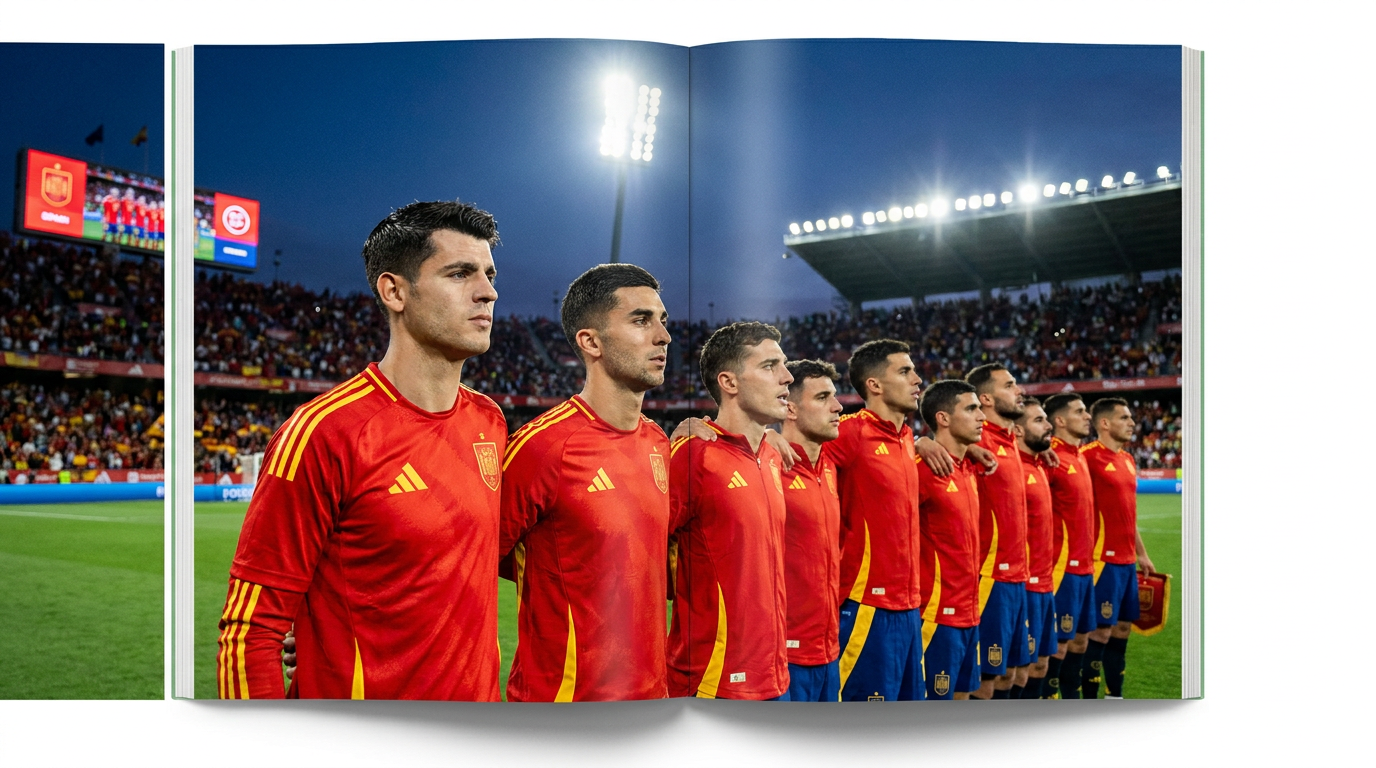
Spain arrived in North America as the reigning European champions and the bookmakers' 9/2 favorites to lift the 2026 World Cup. Under manager Luis de la Fuente, La Roja has undergone a radical tactical evolution, shedding the sterile, slow-paced possession that plagued their 2018 and 2022 campaigns in favor of a dynamic, vertical 4-3-3 system. The desire to simply hold onto the ball has been replaced by an intense drive to use possession as a weapon to create rapid, wide overloads.[1][7]
However, their opening match in Atlanta served as a stark tactical stress test. Facing tournament debutants Cape Verde, Spain ground out a frustrating 0-0 draw. De la Fuente opted to rest his star wingers, Lamine Yamal and Nico Williams, due to minor physical concerns. Without their explosive pace on the flanks, the Spanish attack quickly regressed to the predictable, horizontal passing patterns of previous eras.[3][4]
The statistics from the Cape Verde match highlight the specific challenges of breaking down a disciplined low block. Spain held a staggering 74 percent possession but struggled to penetrate a deeply entrenched defense. Remarkably, Cape Verde committed just one foul throughout the entire match—the fewest by any team in a World Cup game since records began in 1966. The performance proved that Spain's new system relies heavily on specific personnel to disrupt compact defenses.[3]

When fully fit and firing, De la Fuente's system is a masterclass in positional fluidity. The team typically builds up in a 3-2-5 or 2-3-5 shape. Rodri anchors the midfield as the primary tempo-setter, while Pedri and Fabián Ruiz push high into the half-spaces to operate almost as secondary strikers. This structure is meticulously designed to draw opposition midfielders centrally, thereby isolating the wingers against unprotected fullbacks.[4][8]
The data underscores just how heavily this shift relies on individual brilliance in wide areas. At Euro 2024, Yamal led the tournament with 19 chances created, using his elite agility to execute a signature feint that consistently buys him a half-meter of space on the flank. Williams provides mirrored directness on the left. Their ability to bypass the first line of pressure instantly transforms Spain's possession from a defensive tool into a lethal attacking weapon.[5][8]
The data underscores just how heavily this shift relies on individual brilliance in wide areas.
To support this verticality, Spain utilizes an asymmetrical fullback system. On the left, Marc Cucurella often inverts to sit alongside Rodri, creating a double pivot that shields against central counterattacks. On the right, players like Pedro Porro or Marcos Llorente are instructed to make aggressive overlapping runs outside of Yamal, forcing opposition defenses into split-second decisions that invariably leave someone unmarked in the penalty area.[4][6]

Out of possession, Spain has adopted an aggressive counter-pressing structure akin to Jurgen Klopp's Gegenpressing. Rather than retreating into a mid-block when possession is lost, the team pushes incredibly high. The center-back pairing of Aymeric Laporte and Pau Cubarsí frequently defends on the opponent's half, aiming to trap the opposition near the touchline and win the ball back in the attacking third before a counterattack can materialize.[1][6]
This proactive approach carries inherent risks. Because Spain commits so many bodies forward, their high defensive line is vulnerable to rapid, vertical counterattacks if the initial press is bypassed. The half-spaces behind the advanced midfielders can become exposed, requiring the defensive midfielder to cover immense ground horizontally to extinguish fires. Opponents with elite transition speed view this space as Spain's primary structural weakness.[7][8]

De la Fuente's commitment to this specific tactical vision is reflected in his historic squad selection. For the first time ever, a Spanish World Cup squad features zero Real Madrid players. Instead, the manager prioritized tactical fit and club chemistry, leaning heavily on a Barcelona core that includes Yamal, Pedri, Gavi, and Cubarsí, alongside surprise tactical inclusions like Osasuna speedster Víctor Muñoz.[1][2]
As the tournament progresses, Spain's path to a second star hinges on a delicate balance. The coaching staff has explicitly stated their strategy is to manage player minutes to ensure peak performance in the knockout stages. If Yamal and Williams can stay fit, Spain possesses the most dangerous attacking structure in international football. If not, the ghosts of a thousand horizontal passes may haunt them once again.[2][7]
How we got here
Dec 2022
Luis de la Fuente takes over as senior manager following Spain's disappointing 2022 World Cup exit.
Jul 2024
Spain wins Euro 2024, scoring a record 15 goals and validating their new vertical tactical approach.
May 2026
De la Fuente announces his World Cup squad, notably excluding all Real Madrid players to prioritize tactical fit.
Jun 15, 2026
Spain opens their 2026 World Cup campaign with a frustrating 0-0 draw against Cape Verde in Atlanta.
Viewpoints in depth
Tactical Purists
Analysts who praise De la Fuente's vertical evolution of the Spanish system.
This camp argues that De la Fuente has successfully cured Spain of its '1,000 passes to nowhere' syndrome. By integrating direct, explosive wingers like Yamal and Williams, Spain can now bypass defensive lines instantly rather than trying to slowly suffocate them. They view the Euro 2024 victory as proof that possession with purpose is the ultimate winning formula.
Skeptical Pragmatists
Observers who warn that Spain remains overly reliant on a few key individuals.
Pragmatists point to the 0-0 draw against Cape Verde as evidence that Spain's structural flaws remain. They argue that without Yamal and Williams on the pitch, the team lacks a 'Plan B' and easily reverts to horizontal, sterile passing against a disciplined low block. Furthermore, they highlight the extreme risk of Spain's high defensive line against elite counter-attacking teams.
What we don't know
- Whether Lamine Yamal and Nico Williams can maintain full fitness through the grueling month-long tournament.
- How Spain's high defensive line will hold up against elite counter-attacking sides like France or Brazil in the knockout stages.
- If De la Fuente has a viable tactical 'Plan B' when opponents successfully neutralize the wide channels.
Key terms
- Low Block
- A defensive strategy where a team drops deep into their own half, prioritizing a compact shape near their penalty area to deny space.
- Double Pivot
- Two defensive midfielders playing side-by-side to shield the defense and dictate the tempo of passing.
- Half-spaces
- The vertical channels on the pitch between the center and the wide flanks, often exploited by creative attacking midfielders.
- Counter-press (Gegenpressing)
- A tactical approach where a team immediately attempts to win the ball back high up the pitch the moment they lose possession.
Frequently asked
Why are there no Real Madrid players in the Spain squad?
Manager Luis de la Fuente prioritized tactical fit, current form, and club chemistry over prestige, leaning heavily on a core of Barcelona players suited to his system.
Why did Spain struggle against Cape Verde?
Spain rested their explosive wingers, Lamine Yamal and Nico Williams, causing their attack to become slow and predictable against Cape Verde's highly disciplined, deep defense.
How has Spain's style changed since 2022?
They have moved away from pure 'tiki-taka' possession, using the ball to create rapid, vertical attacks down the wings rather than just holding it to control the game.
Sources
Source coverage
8 outlets
3 viewpoints surfaced








[1]The Hard TackleTactical Analysts
FIFA World Cup 2026 Team Spotlight: Spain
Read on The Hard Tackle →[2]The GuardianMatch Reporters
Spain World Cup 2026 team guide
Read on The Guardian →[3]Hindustan TimesMatch Reporters
Spain lose their identity, stray from blueprint of success with baffling tactics before turning to Yamal
Read on Hindustan Times →[4]beIN SPORTSMatch Reporters
Spain's Possible Lineup to Face Cape Verde at the FIFA World Cup 2026
Read on beIN SPORTS →[5]Northeastern Global NewsData Scientists
What does data science say about the top World Cup teams?
Read on Northeastern Global News →[6]SquawkaTactical Analysts
Spain World Cup 2026: Fixtures, manager, squad depth and tactical analysis
Read on Squawka →[7]Total Football AnalysisTactical Analysts
Spain To Win World Cup Odds: 2026 Betting Preview
Read on Total Football Analysis →[8]SoccerDriveTactical Analysts
World Cup 2026 Analysis: Spain
Read on SoccerDrive →

More in sports
See all 10 stories →Standings
WNBA 2026 Standings: Minnesota Lynx Surge to the Top as Expansion Teams Shake Up the Early Race
6 sources
Storyline
Mexico and South Korea Face Off in Guadalajara as 2018 World Cup Friendship Is Renewed
5 sources
Tactics
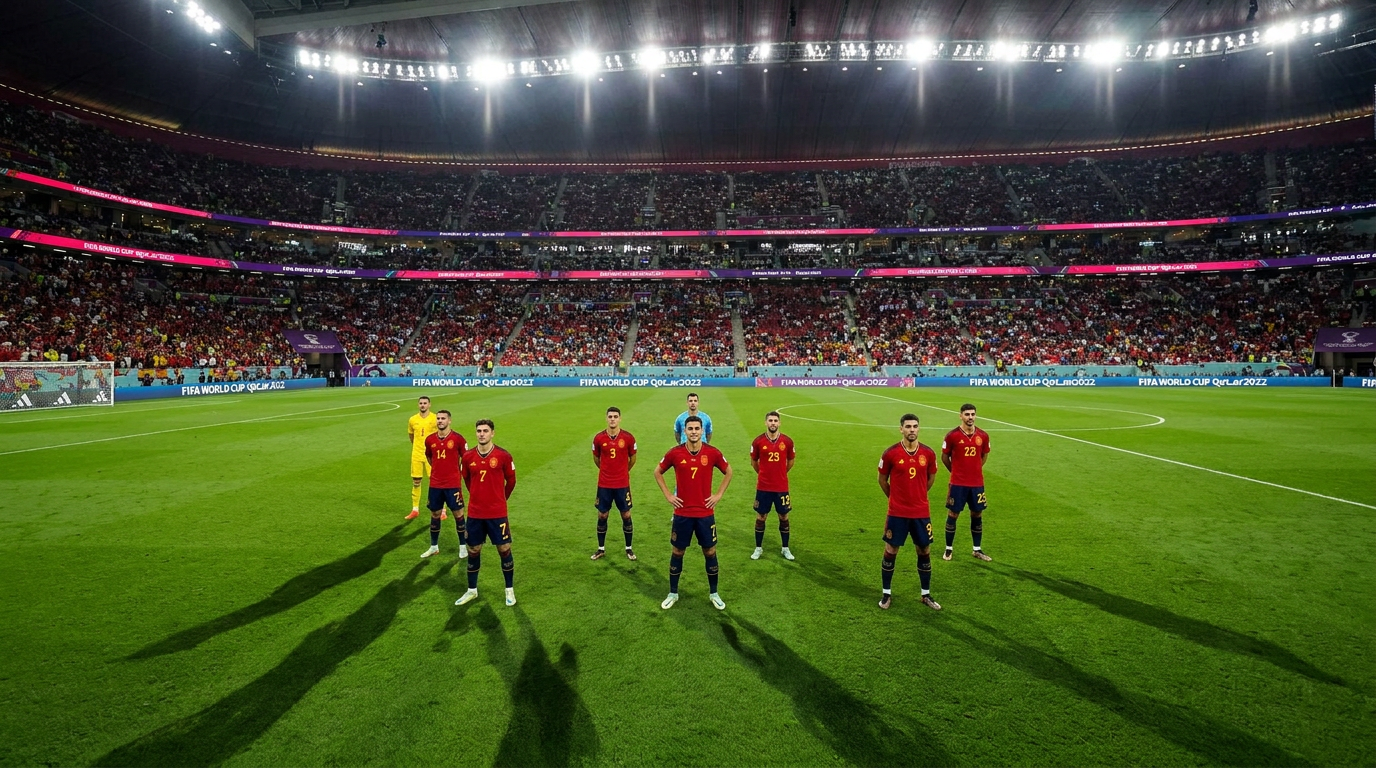
Inside Spain's 2026 World Cup Tactical Evolution Under Luis de la Fuente
6 sources
Preview
USMNT Faces Crucial Test Against Australia in Battle for Group D Control
6 sources
Every angle. Every day.
Get sports stories with full source coverage and perspective breakdowns delivered to your inbox.