
Precision Neuroscience Accelerates Minimally Invasive BCI Rollout Following Major Clinical and Industry Milestones
The brain-computer interface startup is scaling its FDA-cleared Layer 7 device through a new clinical partnership with UChicago Medicine and recent industry accolades, offering a safer alternative to deep-brain implants.
By Factlen Editorial Team
- Minimally Invasive Developers
- Argue that surface-level cortical arrays offer the best balance of high-resolution data and patient safety without damaging brain tissue.
- Clinical Integrators
- Value the technology for its immediate applications in intraoperative brain mapping and its potential to accelerate neuroprosthetic development.
- Industry Observers
- Track the broader BCI market race, comparing the safety, scalability, and bandwidth of competing approaches like deep implants and endovascular stents.
What's not represented
- · Patients living with severe paralysis
- · Bioethics and neural privacy advocates
Why this matters
For the 5.4 million Americans living with paralysis, brain-computer interfaces offer the promise of restored communication and independence. Precision's minimally invasive approach proves that startups can deliver this life-changing technology without requiring high-risk, deep-brain robotic surgery.
Key points
- Precision Neuroscience won Fast Company's 2026 World Changing Ideas award for its minimally invasive BCI.
- The startup's Layer 7 device rests on the brain's surface without penetrating tissue, utilizing 1,024 microelectrodes.
- A new clinical partnership with UChicago Medicine will accelerate AI-driven neuroprosthetic research.
- The FDA previously cleared the device for up to 30 days of continuous neural monitoring.
- The technology aims to restore communication and digital independence for millions of paralyzed patients.
In the escalating race to connect the human brain to digital devices, a New York-based startup is quietly pulling ahead by taking a gentler approach. Precision Neuroscience, founded by a former Neuralink co-founder, has hit a series of major commercial and clinical milestones in June 2026 for its Layer 7 Cortical Interface.[1][6]
This week, the company was named a winner in Fast Company's 2026 World Changing Ideas awards and secured a Webby Award for its potential to restore communication for people living with severe paralysis. These accolades arrive just as the startup strengthens its executive leadership and scales its operations following a landmark FDA 510(k) clearance.[1][2][3]
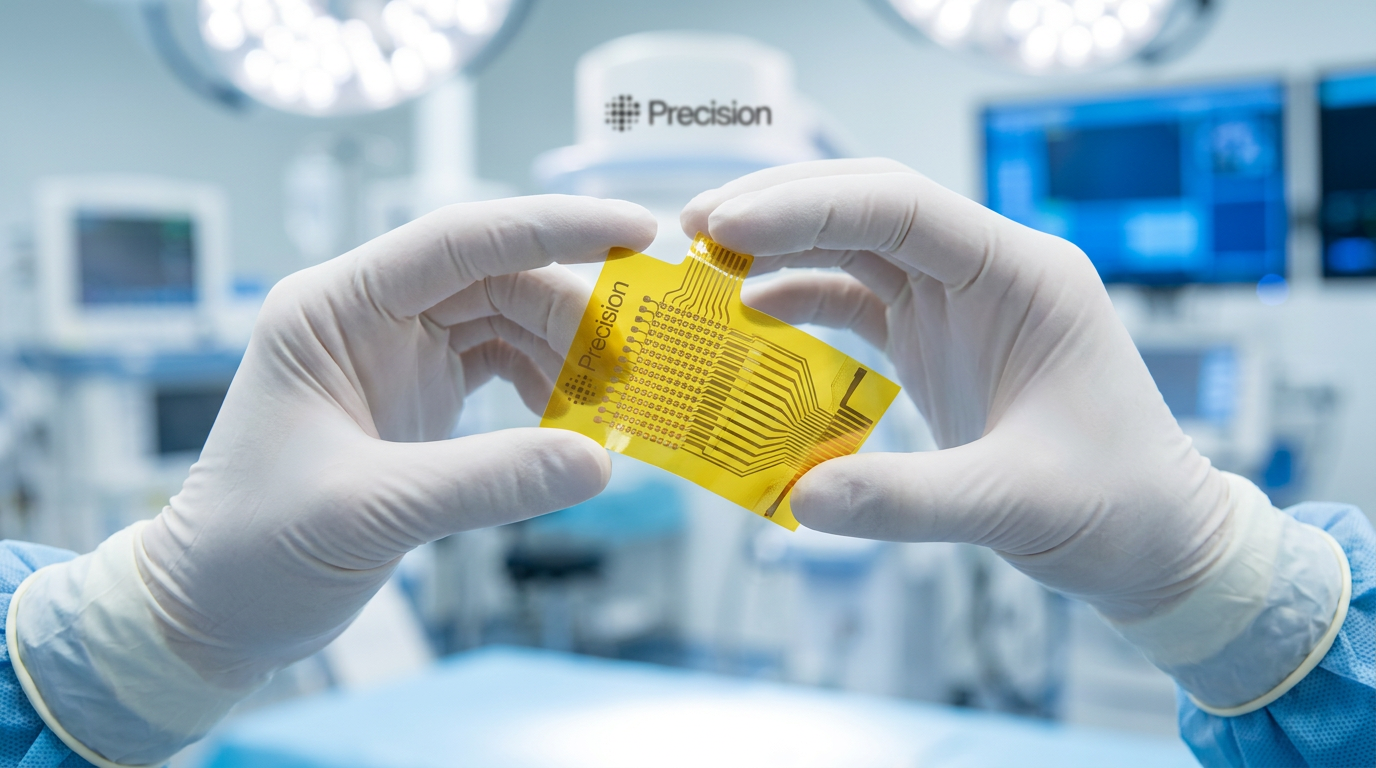
Unlike traditional brain-computer interfaces that require drilling into the skull and penetrating brain tissue with rigid electrodes, Precision's Layer 7 device is a flexible, ultra-thin film. Measuring just one-fifth the thickness of a human hair, the array contains 1,024 microelectrodes and is designed to rest gently on the surface of the cerebral cortex.[3][6]

The device can be slipped onto the brain's motor cortex through a micro-slit incision less than one millimeter wide. This minimally invasive technique avoids the scarring, inflammation, and tissue damage associated with penetrating implants, making the technology significantly safer and more accessible for vulnerable patients.[1][6]
To accelerate the technology's real-world impact, Precision launched a major clinical partnership this month with the University of Chicago Medicine. The collaboration focuses on AI-driven sensorimotor function and neuroprosthetics, allowing researchers to continuously capture high-resolution neural data for up to 30 days.[4]
To accelerate the technology's real-world impact, Precision launched a major clinical partnership this month with the University of Chicago Medicine.
By leveraging advanced artificial intelligence models, the system translates the brain's electrical signals into digital code. For a patient who has lost the ability to speak or move their hands, this decoded neural data can be used to operate a computer, control a smartphone, or even manipulate a bionic limb using only their thoughts.[2][4][6]

The startup's momentum is also being fueled by strategic industry alliances. Precision recently partnered with medical device giant Medtronic to integrate the Layer 7 interface with Medtronic's StealthStation surgical navigation system. This co-development agreement aims to give neurosurgeons real-time functional and structural information, shortening the path to widespread clinical adoption.[5]
The brain-computer interface sector is rapidly maturing from a sci-fi concept into a highly competitive medical technology market, estimated to reach 400 billion dollars in the coming decades. While competitors like Neuralink have captured much of the public's attention with robotic surgical implants, and Synchron has pioneered an endovascular approach through blood vessels, Precision is carving out a unique middle ground.[6]

With over 90 patients already implanted across multiple health systems during temporary surgical procedures, Precision is now preparing for fully implanted, chronic clinical trials. The company's ability to safely gather massive amounts of human neural data is helping to build the foundational AI models required for next-generation neuroprosthetics.[2][6]
As the startup transitions from venture-backed research to commercial medical deployment, its success signals a broader shift in the tech ecosystem. The most celebrated breakthroughs are increasingly those that solve profound human challenges with precision, proving that the future of medical hardware can be both immensely powerful and fundamentally humane.[1][2]
How we got here
2021
Precision Neuroscience is founded by a team including a former Neuralink co-founder.
June 2023
The company begins its first in-human clinical trials, temporarily placing the device during tumor surgeries.
April 2025
The FDA grants 510(k) clearance for the Layer 7 device to be implanted for up to 30 days.
January 2026
Precision partners with Medtronic to integrate its BCI with surgical navigation systems.
June 2026
The startup wins Fast Company's World Changing Ideas award and launches a major clinical partnership with UChicago Medicine.
Viewpoints in depth
Minimally Invasive Developers
Advocating for surface-level cortical arrays to maximize safety.
Companies like Precision Neuroscience argue that the future of brain-computer interfaces relies on patient safety and reversibility. By designing ultra-thin films that rest on the surface of the brain rather than penetrating it, they aim to eliminate the risks of tissue damage, scarring, and inflammation. This approach lowers the barrier to entry for patients, making the technology a viable option for millions rather than a high-risk last resort.
Deep-Implant Competitors
Prioritizing deep neural access for maximum bandwidth.
Rival developers, most notably Elon Musk's Neuralink, maintain that penetrating electrodes are essential for capturing the highest-fidelity neural data. While this method requires robotic surgery to embed threads directly into brain tissue, proponents argue that accessing deeper layers of the motor cortex is necessary to decode the most complex thoughts and achieve seamless, high-bandwidth control of digital devices.
Clinical Integrators
Focusing on immediate surgical and neuroprosthetic applications.
For research hospitals and medical device giants, the immediate value of these interfaces lies in their clinical utility. Beyond futuristic applications, high-resolution cortical arrays are already transforming how surgeons map the brain during tumor removals. By integrating these arrays with existing surgical navigation systems, clinicians can make faster, safer decisions in the operating room while gathering the foundational data needed to build tomorrow's neuroprosthetics.
What we don't know
- When the FDA will grant Premarket Approval (PMA) for the device to be implanted chronically for years at a time.
- How the long-term cost of the procedure and device will impact patient accessibility and insurance coverage.
Key terms
- Brain-Computer Interface (BCI)
- A system that establishes a direct communication pathway between the brain's electrical activity and an external digital device.
- Cortical Interface
- A device designed to rest on the cerebral cortex (the outer layer of the brain) rather than penetrating deep into the tissue.
- Microelectrode Array
- A grid of microscopic sensors used to detect and record the electrical signals generated by neurons.
- Neuroprosthetics
- Devices that connect to the nervous system to replace or improve the function of an impaired nervous system or sensory organ.
Frequently asked
Does the Layer 7 device require drilling into the skull?
Unlike traditional BCIs, the Layer 7 device can be slipped onto the brain's surface through a micro-slit incision less than one millimeter wide, avoiding major invasive surgery.
What can a patient do with this technology?
By decoding brain signals, the system allows paralyzed patients to operate computers, control smartphones, or move bionic limbs using only their thoughts.
Is this technology approved by the FDA?
Yes, the FDA granted 510(k) clearance for the device to be used for up to 30 days to record and monitor brain activity, and chronic implant trials are currently underway.
Sources
Source coverage
6 outlets
3 viewpoints surfaced





[1]Fast CompanyMinimally Invasive Developers
World Changing Ideas 2026: Layer 7, Precision Neuroscience
Read on Fast Company →[2]GlobeNewswireMinimally Invasive Developers
Precision Neuroscience Wins 2026 Webby Award; Earns Back-to-Back Fast Company World Changing Ideas Honor
Read on GlobeNewswire →[3]TMG PulseMinimally Invasive Developers
Precision Neuroscience strengthens leadership following FDA clearance for BCI tech
Read on TMG Pulse →[4]UChicago MedicineClinical Integrators
UChicago Medicine and Precision Neuroscience Launch Clinical Partnership
Read on UChicago Medicine →[5]MedTech DiveClinical Integrators
Medtronic partners with Precision Neuroscience on brain-computer interface
Read on MedTech Dive →[6]FreethinkIndustry Observers
The minimally invasive BCI that could rival Neuralink
Read on Freethink →


Every angle. Every day.
Get business stories with full source coverage and perspective breakdowns delivered to your inbox.