
Cardiovascular Biotech Kardigan Raises $400 Million in Upsized Nasdaq IPO
The clinical-stage heart disease drugmaker debuted on the public markets with a $400 million offering, signaling a robust resurgence in biotech funding for late-stage clinical assets.
By Factlen Editorial Team
- Biotech Sector Analysts
- View the mega-IPO as proof that the funding window for life sciences has fully reopened for late-stage assets.
- Financial Market Observers
- Focus on the strong pricing dynamics, the upsized share volume, and the initial trading performance.
- Cardiovascular Medicine Advocates
- Emphasize the clinical significance of funding precision therapies for untreatable heart conditions.
What's not represented
- · Patients with genetic dilated cardiomyopathy
- · Early-stage biotech founders struggling to raise capital
Why this matters
The successful $400 million public offering not only secures vital funding for experimental therapies targeting untreatable heart conditions, but it also confirms that the biotech sector has fully recovered from its multi-year funding drought. For patients and investors alike, the reopening of the IPO window means that late-stage medical innovations now have the capital required to reach the market.
Key points
- Kardigan Inc. raised $400 million in an upsized IPO, selling 25 million shares at $16 each.
- The company is developing precision cardiovascular medicines for conditions with no approved treatments.
- Kardigan was founded by former executives of MyoKardia, which was acquired for $13 billion.
- The biotech is the fourth drug startup in 2026 to raise at least $400 million in its public debut.
- Critical Phase 2 clinical data for Kardigan's three lead drug candidates is expected in early 2027.
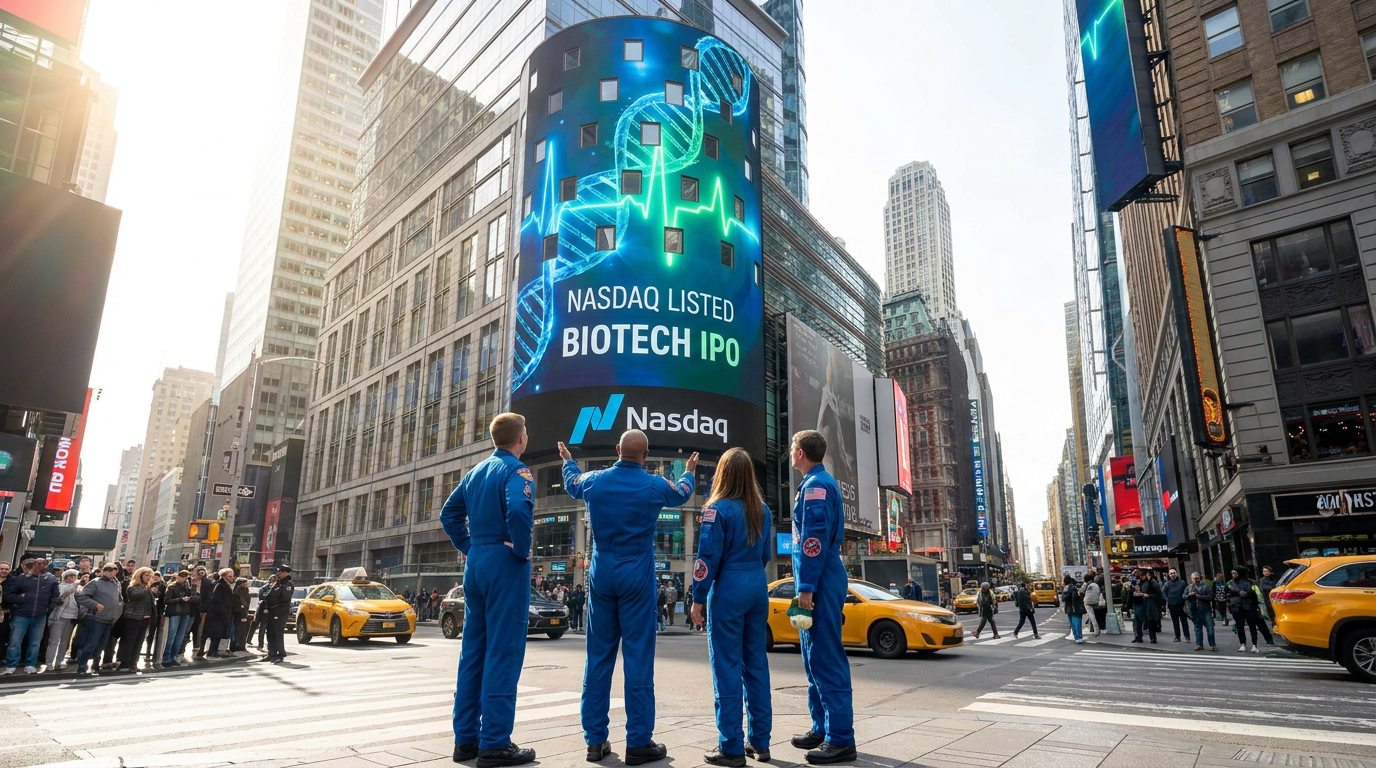
The clinical-stage precision cardiovascular company Kardigan Inc. made a resounding debut on the public markets Thursday, raising $400 million in an upsized initial public offering. Trading under the ticker symbol KARD on the Nasdaq Global Market, the New Jersey and California-based biotech sold 25 million shares at $16 apiece. The offering priced at the top of the company's marketed range, reflecting intense institutional demand that ultimately pushed the total raise above its initial $373 million target.[3][5][7]
The market's reception was immediately positive, with Kardigan's shares edging up nearly 2% in early trading. Underwriters, including J.P. Morgan Securities and Jefferies, were granted a 30-day option to purchase up to an additional 3.75 million shares, which could push the total gross proceeds to $460 million if fully exercised. The successful float provides a massive capital injection for a company dedicated to developing treatments for severe heart conditions that currently have no approved therapies.[1][5][7]
Kardigan’s appeal to investors is heavily anchored in its leadership's pedigree. The company was founded by former executives of MyoKardia, the biotech firm responsible for developing the breakthrough heart drug Camzyos. Following MyoKardia's $13 billion acquisition by Bristol Myers Squibb, CEO Tassos Gianakakos and his team regrouped to form Kardigan in 2023, aiming to replicate their previous clinical and commercial success in the cardiovascular space.[2][3][7]
The newly secured capital will fund a pipeline of three in-licensed, clinical-stage drug candidates. The company's lead asset, danicamtiv, is an oral cardiac myosin activator currently in Phase 2 testing. It is designed to treat genetic dilated cardiomyopathy, a life-threatening condition caused by specific gene variants that weaken the heart muscle. Unlike their previous drug Camzyos, which inhibits heart muscle contractions, danicamtiv works mechanistically in the opposite direction to help the heart pump more effectively.[2][3][7]

Beyond danicamtiv, Kardigan is advancing two other promising therapies. Ataciguat is being evaluated for moderate calcific aortic valve stenosis, while tonlamarsen—an antisense oligonucleotide licensed from Ionis Pharmaceuticals—is targeting acute severe hypertension in patients who have been hospitalized following sudden blood pressure spikes. The company expects critical Phase 2 data readouts for all three programs in early 2027.[2][3]
Beyond danicamtiv, Kardigan is advancing two other promising therapies.
Kardigan’s blockbuster debut is the latest evidence of a dramatic resurgence in the broader biotechnology sector. After a prolonged period of cautious funding and depressed valuations, the IPO window for drug developers has swung wide open in 2026. Kardigan marks the 13th venture-backed biotech company to go public this year, officially eclipsing the total number of biotech listings seen in all of 2025.[2][4]
The scale of these recent offerings is particularly notable. Kardigan is the fourth drug startup in 2026 to raise at least $400 million in IPO proceeds—a high-water mark rarely achieved since the biotech boom of 2021. It joins the ranks of other massive 2026 listings, including obesity drug developer Kailera Therapeutics, which raised $625 million, and peptide maker Parabilis Medicines, which recently secured a record-breaking $670 million.[2][3][4]

This influx of capital highlights a distinct shift in investor appetite. Rather than funding early-stage platform technologies with distant horizons, the public markets are heavily rewarding companies with advanced, clinical-stage assets and proven management teams. Analysts note that the ability to raise capital at this scale allows biotechs to fully fund multiple late-stage trials simultaneously, creating the robust data packages required for commercial approval without needing to constantly return to the well for piecemeal funding.[4][7]
Despite the broader macroeconomic noise—including the massive $85.7 billion IPO of Elon Musk's SpaceX and the looming public debuts of major artificial intelligence firms—biotech executives remain confident that their sector commands its own dedicated pool of capital. Kardigan's CEO noted that the life sciences sector operates on a different investment thesis, one driven by clinical milestones and the urgent need for novel medical interventions.[3][4]

While the company plans to commercialize its therapies independently within the United States, the $400 million war chest will also allow Kardigan to lay the groundwork for a global rollout. If the upcoming 2027 clinical data proves favorable, the biotech will be well-positioned to navigate the regulatory pathways required to bring its precision cardiovascular medicines to patients worldwide.[3]
Ultimately, Kardigan's upsized offering serves as a dual victory. For the company, it provides the financial runway necessary to push its trio of heart drugs through critical mid-stage trials. For the broader life sciences industry, it cements 2026 as a watershed comeback year, proving that the public markets are once again ready to heavily back the next generation of medical breakthroughs.[2][3][4]
How we got here
2020
Bristol Myers Squibb acquires MyoKardia for $13 billion following the successful development of the heart drug Camzyos.
August 2023
Former MyoKardia executives incorporate a new cardiovascular biotech, initially named EnCarda, Inc.
December 2024
The company rebrands as Kardigan, Inc., building a pipeline of in-licensed clinical-stage assets.
January 2025
Kardigan officially unveils itself, backed by nearly $600 million in private venture funding.
June 18, 2026
Kardigan debuts on the Nasdaq, raising $400 million in an upsized initial public offering.
Early 2027
The company expects to release critical Phase 2 clinical data for its three lead drug candidates.
Viewpoints in depth
Biotech Sector Analysts
Industry watchers view the successful mega-IPOs as proof that the funding window for life sciences has fully reopened.
After a multi-year drought characterized by cautious private funding and a frozen public market, analysts see 2026 as a definitive turning point. The ability of companies like Kardigan, Parabilis, and Kailera to raise upwards of $400 million indicates that institutional investors are once again willing to place massive bets on drug development. However, analysts note that this capital is highly selective, flowing almost exclusively to companies with late-stage clinical assets, proven management teams, and clear paths to commercialization, rather than early-stage discovery platforms.
Financial Market Observers
Market trackers focus on the strong pricing dynamics and the upsized nature of the offering.
From a purely financial perspective, Kardigan's debut is a textbook example of strong institutional demand. The company not only priced at the top of its proposed $14 to $16 range but also upsized the offering to 25 million shares, ultimately raising more than its initial $373 million target. Financial observers point out that the stock's positive performance on its first day of trading—avoiding the immediate post-IPO slumps seen in previous years—suggests that the valuation was accurately calibrated to match investor appetite for risk.
Cardiovascular Medicine Advocates
Medical professionals emphasize the urgent need for the precision therapies Kardigan is developing.
For the medical community, the financial mechanics of the IPO are secondary to the clinical potential it unlocks. Advocates highlight that Kardigan's pipeline targets severe, genetically driven heart conditions—such as genetic dilated cardiomyopathy—that currently have zero approved treatments. By securing a $400 million runway, the company ensures that these experimental therapies will not stall in the 'valley of death' due to lack of funding, keeping the hope alive for patients who currently rely solely on symptom management.
What we don't know
- Whether Kardigan's three lead drug candidates will succeed in their Phase 2 clinical trials.
- If the broader biotech IPO window will remain open through the second half of 2026 amid macroeconomic shifts.
Key terms
- Initial Public Offering (IPO)
- The process by which a private company offers shares of its stock to the public for the first time to raise capital.
- Dilated Cardiomyopathy
- A disease of the heart muscle that causes the heart chambers to thin and stretch, growing larger and making it harder to pump blood.
- Cardiac Myosin Activator
- A type of drug designed to increase the contractility of the heart muscle, helping it pump blood more effectively.
- Clinical-Stage
- A term used to describe a biotechnology or pharmaceutical company that has drugs currently being tested in human clinical trials.
- Phase 2 Trial
- A mid-stage clinical trial designed to assess the efficacy of an experimental drug and determine the optimal dose in a specific patient population.
Frequently asked
How much money did Kardigan raise in its IPO?
Kardigan raised $400 million in gross proceeds by selling 25 million shares at $16 each, pricing at the top of its targeted range.
What kind of drugs is Kardigan developing?
The company is developing precision medicines for cardiovascular diseases, focusing on severe heart conditions that currently have no approved treatments.
Why is this IPO significant for the biotech industry?
Kardigan is the 13th venture-backed biotech to go public in 2026 and the fourth to raise at least $400 million, signaling a major rebound in investor funding for the life sciences sector.
When will we know if Kardigan's drugs work?
The company expects to release critical data from its Phase 2 clinical trials for all three of its lead drug candidates in early 2027.
Sources
Source coverage
7 outlets
3 viewpoints surfaced






[1]BloombergFinancial Market Observers
Biotech Kardigan Rises Nearly 2% After $400 Million IPO
Read on Bloomberg →[2]BioPharma DiveBiotech Sector Analysts
Cardiovascular drug startup Kardigan prices $400M IPO
Read on BioPharma Dive →[3]Endpoints NewsBiotech Sector Analysts
Kardigan raises $400M in IPO to back three clinical-stage cardio drugs
Read on Endpoints News →[4]Fierce BiotechBiotech Sector Analysts
'I wouldn't call it a blip': Biotech IPOs here to stay after another record-breaking listing
Read on Fierce Biotech →[5]Investing.comFinancial Market Observers
Kardigan prices IPO at $16 per share, raising $400 million
Read on Investing.com →[6]AxiosFinancial Market Observers
Heart disease biotech Kardigan raises $400M in IPO
Read on Axios →[7]AllSciCardiovascular Medicine Advocates
Kardigan prices up IPO for at least USD 400m on cardiac myosin inhibitor pedigree
Read on AllSci →

Every angle. Every day.
Get business stories with full source coverage and perspective breakdowns delivered to your inbox.