
FISA Section 702 Expires After Congress Deadlocks Over Intelligence Appointments and Election Bills
A critical U.S. surveillance program has lapsed after a bipartisan reauthorization deal collapsed amid disputes over the acting Director of National Intelligence and demands to attach election legislation. Intelligence agencies can continue operations until March 2027 under a prior court order, but the statutory expiration plunges the program into uncertainty.
By Factlen Editorial Team
- Privacy & Civil Liberties Advocates
- View the expiration as a necessary pause to force constitutional reforms.
- Intelligence & Security Officials
- Warn that the lapse creates dangerous uncertainty ahead of major events.
- Congressional Negotiators
- Frustrated by executive interventions that blew up a bipartisan compromise.
What's not represented
- · Technology companies compelled to provide data
- · Foreign nationals subject to surveillance
Why this matters
Section 702 is the U.S. government's primary tool for intercepting foreign communications, but it also sweeps up vast amounts of Americans' private data. Its expiration sets the stage for a historic showdown over whether the FBI should be required to get a warrant before searching your emails and texts.
Key points
- Section 702 of the Foreign Intelligence Surveillance Act expired after Congress failed to pass an extension.
- The legislative collapse was triggered by the controversial appointment of Bill Pulte as acting Director of National Intelligence.
- President Trump further complicated negotiations by demanding a voter ID bill be attached to the surveillance renewal.
- Intelligence officials warn the lapse creates dangerous uncertainty ahead of the 2026 World Cup and America250 celebrations.
- Privacy advocates note the program can legally continue until March 2027 due to a prior court certification.
- A bipartisan coalition is demanding a warrant requirement before the FBI can search the database for Americans' data.
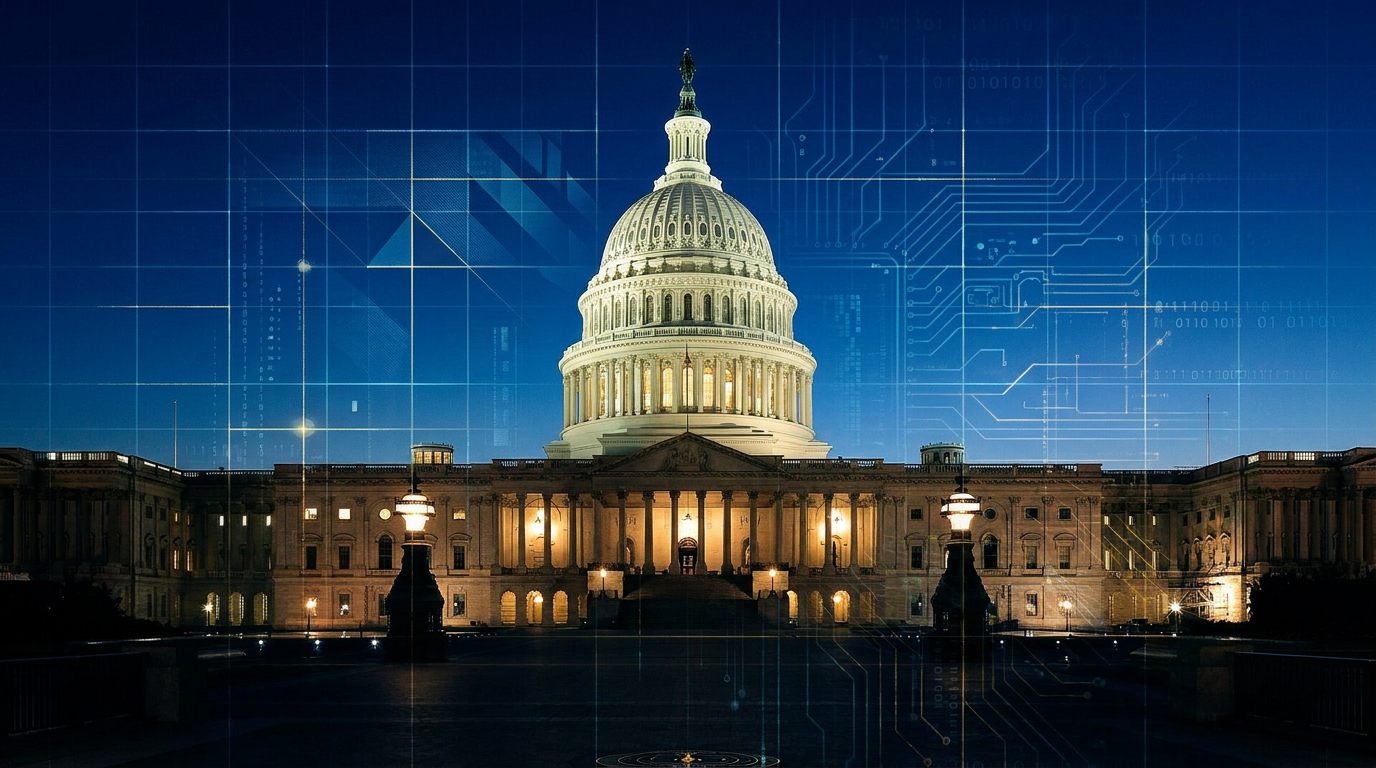
At midnight on Friday, June 12, one of the United States government’s most powerful and controversial counterterrorism tools officially expired. Section 702 of the Foreign Intelligence Surveillance Act (FISA), which allows intelligence agencies to collect the communications of foreign targets abroad without a warrant, lapsed after Congress failed to pass an extension before leaving Washington. The expiration plunges the U.S. surveillance apparatus into uncharted legal and political territory, setting up a high-stakes standoff between the executive branch, national security officials, and a bipartisan coalition of civil liberties advocates. While the immediate operational impact is cushioned by a pre-existing court order, the statutory lapse marks a stunning collapse of a legislative process that had been inching toward a three-year bipartisan compromise just days earlier.[3][4][5]
The proximate cause of the legislative failure was not a sudden disagreement over the text of the surveillance law itself, but a political grenade thrown into the intelligence community. The bipartisan consensus evaporated when President Donald Trump announced his intention to appoint Bill Pulte—the head of the Federal Housing Finance Agency and a major political donor—as the acting Director of National Intelligence (DNI). Pulte, who lacks a background in national security or military intelligence, would be tasked with overseeing all of the nation’s spy agencies and the application of FISA. Democrats, along with several key Republicans, immediately balked at handing sweeping warrantless surveillance powers to an inexperienced loyalist, effectively pulling their support for the reauthorization.[2][3][8]
With the Friday deadline looming, House Speaker Mike Johnson attempted to fast-track a short-term extension that would have kept the authority alive until early July, buying time for negotiations. However, the measure required a two-thirds majority to pass under expedited rules, and it failed spectacularly in a 198 to 218 vote. Nineteen Republicans broke ranks to vote against the extension, joining a unified Democratic bloc that refused to greenlight the program while Pulte was slated to take the helm of the Office of the Director of National Intelligence. House Democratic leadership issued a statement declaring that the appointment defied laws requiring the intelligence chief to have national security experience, making a clean reauthorization impossible.[3][8]
Attempting to contain the fallout, the White House pivoted, announcing the nomination of former Securities and Exchange Commission chair Jay Clayton as the permanent DNI. But in an extraordinary sequence of events, President Trump then derailed the confirmation process of his own nominee. Just hours before Clayton’s scheduled hearing before the Senate Intelligence Committee, Trump announced he was delaying the nomination. He subsequently demanded that any FISA renewal be firmly attached to the SAVE America Act, a sweeping GOP voter ID and election overhaul package. Because the election legislation lacks the 60 votes necessary to clear the Senate, tying the two bills together effectively guaranteed the expiration of the surveillance authority.[1][2][3]

To understand why the expiration of Section 702 has triggered such intense debate, it is necessary to examine how the mechanism actually functions. Enacted in 2008 as an amendment to the original 1978 Foreign Intelligence Surveillance Act, Section 702 permits U.S. intelligence agencies to compel American electronic communication service providers—such as Google, Apple, and telecom giants—to hand over the emails, text messages, and phone records of non-U.S. citizens located abroad. Crucially, the government can acquire this data without obtaining an individualized warrant from a judge, arguing that foreign nationals outside U.S. borders do not enjoy Fourth Amendment constitutional protections.[4][5][6]
The controversy stems from a feature of the program known as "incidental collection." When a targeted foreign national communicates with an American citizen—whether that American is a business contact, a relative, or a journalist—the American’s side of the conversation is swept up into the government’s massive intelligence database. While the law explicitly prohibits the intelligence community from directly targeting Americans for surveillance under this specific authority, the practical reality is that vast amounts of domestic data are continuously ingested by federal agencies as a byproduct of foreign intelligence gathering.[4][5][7][8]
Once that data is stored, federal law enforcement agencies, most notably the FBI, are permitted to search through the database using the names, email addresses, or phone numbers of U.S. citizens. Privacy advocates refer to this practice as a "backdoor search," arguing it provides the government with a loophole to access Americans' private communications without ever showing probable cause to a judge. The scale of these searches has alarmed lawmakers; in 2022 alone, the FBI utilized the FISA authority to conduct over 200,000 queries involving American data. Critics point to instances where the database was improperly used to search for information on racial justice protesters, political activists, and even members of Congress.[5][6][7][8]

The scale of these searches has alarmed lawmakers; in 2022 alone, the FBI utilized the FISA authority to conduct over 200,000 queries involving American data.
This dynamic has forged one of the most unusual political alliances in modern Washington. The push to reform Section 702 is being driven by a coalition of progressive Democrats and ultraconservative Republicans, including members of the House Freedom Caucus. Despite their vast ideological differences, both factions share a deep distrust of the executive branch's surveillance capabilities. They are demanding that any long-term reauthorization of the law include a strict requirement for the FBI to obtain a probable-cause warrant before querying the database for the communications of U.S. citizens. Without that reform, the coalition has vowed to keep the program expired.[4][5][6]
On the other side of the debate, the national security establishment is sounding the alarm, warning that the lapse in statutory authority severely degrades the country's ability to detect and disrupt threats. Intelligence officials emphasize that Section 702 is a cornerstone of modern counterterrorism, generating a substantial portion of the intelligence that makes up the president’s daily briefing. Homeland Security Secretary Markwayne Mullin warned that the department is currently facing a threat level that is the "highest it's ever been," arguing that allowing the program to lapse is a dangerous gamble with American lives.[1][5]
The timing of the expiration has amplified these anxieties. The legislative collapse occurred just days after federal authorities thwarted a major domestic terror plot targeting a massive Ultimate Fighting Championship (UFC) event in Washington, D.C., which President Trump attended. Furthermore, security officials are acutely focused on the intelligence requirements for upcoming mega-events, specifically the 2026 FIFA World Cup hosted across North America and the nationwide America250 celebrations. Supporters of the law argue that hamstringing intelligence collection ahead of these highly visible, target-rich environments is an unacceptable risk.[1][5]
However, privacy advocates and legal experts point out that the immediate warnings of the U.S. "going dark" are somewhat overstated. The expiration of the statute does not mean the surveillance servers were immediately unplugged at midnight. Because Section 702 operates through annual certifications approved by the secretive Foreign Intelligence Surveillance Court (FISC), the program has a built-in buffer. The FISC renewed the government’s surveillance certifications in March 2026, meaning that intelligence agencies can legally continue to operate under the existing directives until March 2027, regardless of congressional inaction.[4][5][8]

Despite this legal cushion, the lapse still creates significant operational uncertainty. The primary concern for the intelligence community is how private technology companies will respond to data requests without the underlying statutory authority actively on the books. Supporters of the law warn that without a clear congressional mandate, communication service providers might begin challenging the government's directives in federal court, potentially slowing down the collection of time-sensitive intelligence during a crisis. The longer the lapse continues, the more vulnerable the program becomes to legal friction from the private sector.[5]
The path forward in the Senate remains entirely obscured by legislative gridlock. Senate Majority Leader John Thune and other Republican leaders have expressed frustration with the sudden executive interventions, noting that the arithmetic in the chamber simply does not support passing the SAVE America Act alongside the surveillance renewal. Thune has publicly urged the White House to prioritize the confirmation of a permanent, experienced intelligence chief to unlock the Democratic support necessary to get the FISA reauthorization across the finish line. Until that happens, the 60-vote threshold in the Senate remains insurmountable.[1][3]
For now, the United States' most prolific foreign intelligence gathering tool exists in a state of legal limbo. It is sustained solely by a classified court order that will expire in less than a year, while the lawmakers tasked with overseeing it remain deadlocked over fundamental questions of constitutional privacy and executive power. Whether the pressure of upcoming international events will force a clean reauthorization, or whether the bipartisan coalition of privacy hawks will successfully leverage the expiration to secure historic warrant requirements, remains the central unresolved question in Washington.[1][4][5][6]
How we got here
April 2026
Congress passes a short-term extension of Section 702 after failing to reach a long-term agreement.
Early June 2026
Bipartisan negotiators close in on a three-year reauthorization deal.
June 10, 2026
President Trump appoints housing regulator Bill Pulte as acting DNI, prompting Democrats to pull support for the FISA extension.
June 11, 2026
The House defeats a short-term extension to July 2 in a 198-218 vote.
June 12, 2026
Section 702 officially expires at midnight.
June 17, 2026
Trump delays the confirmation of permanent DNI nominee Jay Clayton, demanding the SAVE America Act be attached to FISA.
Viewpoints in depth
Intelligence & Security Officials
Warn that the lapse creates dangerous uncertainty ahead of major events.
National security leaders argue that allowing Section 702 to lapse is a dangerous gamble, particularly with the 2026 FIFA World Cup and America250 celebrations approaching. They emphasize that the program is a critical counterterrorism tool that generates a substantial portion of the president's daily intelligence briefing. While acknowledging the 2027 court certification, they warn that relying solely on a court order rather than active legislation risks tech companies challenging data requests, which could slow down time-sensitive intelligence gathering during a crisis.
Privacy & Civil Liberties Advocates
View the expiration as a necessary pause to force constitutional reforms.
Civil liberties groups and privacy-focused lawmakers see the statutory lapse as a vital opportunity to rein in executive overreach. They argue that the immediate national security warnings are scare tactics, given that the active FISC certification allows operations to continue until March 2027. This coalition demands a strict warrant requirement to stop the FBI from conducting 'backdoor searches' of Americans' communications, arguing that the incidental collection loophole has been repeatedly abused to monitor domestic activists and political figures.
Congressional Negotiators
Frustrated by executive interventions that blew up a bipartisan compromise.
Lawmakers who spent months crafting a three-year reauthorization deal are deeply frustrated by the sudden executive branch interventions that derailed their work. They point out that a bipartisan compromise was nearly complete before the controversial appointment of an inexperienced acting DNI and the last-minute demand to attach the SAVE America Act to the surveillance bill. These negotiators argue that tying national security legislation to highly partisan election overhauls creates an insurmountable legislative deadlock in the Senate.
What we don't know
- Whether major technology companies will use the statutory lapse to legally challenge government data requests before the 2027 court certification expires.
- How Senate leaders will untangle the FISA renewal from the executive branch's demands to attach the SAVE America Act.
- Whether the FBI will voluntarily alter its query procedures to appease privacy advocates and secure the votes for reauthorization.
Key terms
- Section 702
- A provision of the Foreign Intelligence Surveillance Act that allows the U.S. government to collect communications of targeted foreigners abroad without a warrant.
- Incidental Collection
- The sweeping up of Americans' communications when they interact with a foreign target who is under surveillance.
- Backdoor Search
- A term used by critics to describe the FBI's practice of querying the Section 702 database using the names or identifiers of U.S. citizens without obtaining a warrant.
- Foreign Intelligence Surveillance Court (FISC)
- A secret federal court that oversees requests for surveillance warrants against foreign spies inside the United States and certifies the annual Section 702 procedures.
- Director of National Intelligence (DNI)
- The head of the U.S. Intelligence Community, responsible for overseeing and directing the implementation of the National Intelligence Program.
Frequently asked
Has the government stopped collecting intelligence?
No. Because the Foreign Intelligence Surveillance Court certified the program in March 2026, agencies can legally continue operations under existing directives until March 2027.
Why did the House vote against the extension?
A bipartisan coalition voted it down after President Trump appointed Bill Pulte, a housing regulator with no intelligence experience, to oversee the nation's spy agencies.
What is incidental collection?
When U.S. intelligence targets a foreigner abroad, any communications that person has with an American citizen are also swept into the government's database.
What is the SAVE America Act?
It is a sweeping GOP voter ID and election overhaul package that President Trump demanded be attached to the FISA renewal, further complicating its passage in the Senate.
Sources
Source coverage
8 outlets
3 viewpoints surfaced








[1]Fox NewsIntelligence & Security Officials
Lawmakers scramble after Trump derails bid to revive key counterterrorism tool days after FBI thwarts UFC plot
Read on Fox News →[2]The Washington PostCongressional Negotiators
Trump derails confirmation of his own intelligence nominee, upending FISA renewal
Read on The Washington Post →[3]CBS NewsCongressional Negotiators
House defeats last-ditch effort to extend key spy authority
Read on CBS News →[4]The GuardianPrivacy & Civil Liberties Advocates
Congress fails to reauthorize section 702 of Foreign Intelligence Surveillance Act amid questions over its future
Read on The Guardian →[5]TimeIntelligence & Security Officials
FISA Section 702 Expires: What Happens Next?
Read on Time →[6]Electronic Frontier FoundationPrivacy & Civil Liberties Advocates
702 has Expired!
Read on Electronic Frontier Foundation →[7]ReasonPrivacy & Civil Liberties Advocates
FISA Section 702 Expires Amid Partisan Brawl
Read on Reason →[8]Office of Rep. Alma AdamsPrivacy & Civil Liberties Advocates
Congresswoman Adams Issues Statement on Expiration of FISA
Read on Office of Rep. Alma Adams →
More in news politics
See all 9 stories →U.S.-Iran Deal
U.S. and Iran Sign Preliminary Agreement to End Four-Month Conflict
6 sources

US-Iran Agreement
US and Iran Reach Tentative Peace Agreement to Secure Strait of Hormuz
6 sources
US-Iran Relations
U.S. and Iran Sign Peace Framework to End 110-Day War, Reopen Strait of Hormuz
7 sources
Migration Policy
EU Parliament Approves Migration Law Allowing Offshore Detention Centers
6 sources
Every angle. Every day.
Get news politics stories with full source coverage and perspective breakdowns delivered to your inbox.