
How the U.S.-Iran Ceasefire is Unlocking the Strait of Hormuz and Driving Down Global Gas Prices
Following a landmark agreement to halt hostilities, global energy markets are rapidly recalibrating as the critical Strait of Hormuz reopens to commercial shipping. The resumption of oil flows has already pushed U.S. gas prices below $4 a gallon, offering significant relief to global inflation pressures.
By Factlen Editorial Team
- Energy Consumers & Markets
- Views the ceasefire as a critical macroeconomic relief valve that lowers inflation and prevents a global recession.
- Middle Eastern Producers
- Focused on the rapid resumption of physical oil flows to clear logistical backlogs and stabilize national revenue streams.
- Geopolitical Analysts
- Maintains cautious optimism but warns that the Strait of Hormuz remains structurally vulnerable to future diplomatic breakdowns.
What's not represented
- · Environmental organizations tracking the emissions impact of resumed fossil fuel flows
- · Maritime insurance underwriters pricing the ongoing risk of Gulf transit
Why this matters
The reopening of the world's most critical oil chokepoint directly lowers the cost of gasoline, diesel, and global shipping. For consumers, this means immediate relief at the pump and a likely easing of broader inflation, which could influence the Federal Reserve's upcoming interest rate decisions.
Key points
- U.S. gas prices have fallen below $4 per gallon following the U.S.-Iran ceasefire.
- Saudi oil supertankers have resumed transit toward the Gulf of Oman after weeks of idling.
- The reopening of the Strait of Hormuz secures roughly 20% of the global oil supply.
- Lower energy costs are expected to ease broader inflation and reduce global shipping overhead.
- Analysts warn that while immediate risks have faded, clearing the logistical backlog will take weeks.
The standoff that choked the global economy for nearly four months is unwinding. Following the newly minted ceasefire between the United States and Iran, the most immediate and tangible economic consequence is playing out on the waters of the Middle East. The threat of military strikes on commercial shipping has rapidly dissipated, allowing the vital arteries of global energy to reopen.[1][2][3]
For American consumers, the impact has been swift. U.S. national average gas prices have officially fallen below the $4 per gallon threshold, erasing a substantial portion of the 30% premium that had been baked into energy markets since hostilities erupted on February 28. This drop functions as an immediate, broad-based economic stimulus just as the summer driving season begins.[1][8]
The relief is palpable across global trading floors. Brent crude, the international benchmark, has seen a sharp downward correction as the geopolitical risk premium evaporates. Traders who had priced in the worst-case scenario of a prolonged regional war are now rapidly unwinding those positions, sending energy futures tumbling.[3][6]

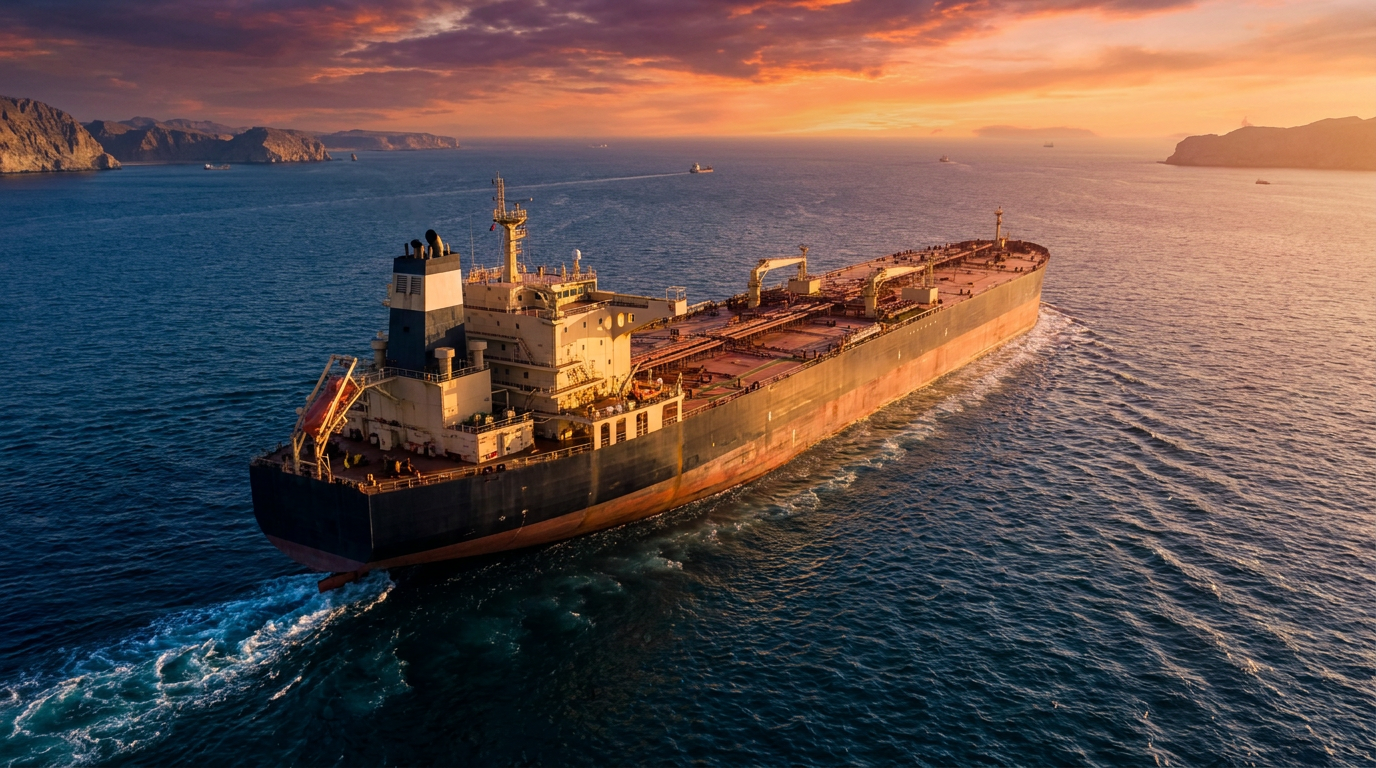
To understand the speed of this market recalibration, one must look at the physical movement of crude. For weeks, at least four Saudi Arabian oil supertankers had been idling in the Indian Ocean, effectively paralyzed by the threat of military strikes and the skyrocketing cost of maritime insurance.[2]
Today, those massive vessels have set sail toward the Gulf of Oman, signaling that major producers are confident enough in the diplomatic resolution to resume standard flows. The movement of these tankers is the clearest indicator yet that the physical supply chain is healing.[2][7]
The focal point of this economic relief is the Strait of Hormuz. This narrow waterway between Oman and Iran is universally recognized as the world's most critical energy chokepoint, a geographic bottleneck that dictates the health of the global economy.[5]
At its narrowest point, the strait is just 21 miles wide, yet it facilitates the transit of roughly 20% of the world's total oil consumption. When the conflict began, the implicit threat of the strait's closure sent shockwaves through international markets, as there are virtually no alternative routes capable of handling that volume of crude.[5][7]

At its narrowest point, the strait is just 21 miles wide, yet it facilitates the transit of roughly 20% of the world's total oil consumption.
The International Energy Agency had previously warned that a prolonged disruption in the strait could not be fully offset by alternative pipelines or strategic petroleum reserves. The sheer volume of oil trapped in the Persian Gulf threatened to trigger a historic energy crisis if the conflict had dragged into the winter.[5]
Now, with the Washington-brokered agreement in place, the dynamic has flipped from scarcity to abundance. Iran is also preparing to resume its own energy exports, adding further supply to a market that had been bracing for severe shortages and rationing.[4]
The economic mechanics of this reopening extend far beyond the gas station pump. Lower energy costs reduce the overhead for global shipping, aviation, and heavy manufacturing. Diesel prices, which dictate the cost of transporting consumer goods via truck and rail, are also seeing steep declines.[7]
This broad-based reduction in input costs is a crucial variable for central banks. The Federal Reserve, which has been grappling with sticky inflation exacerbated by the energy shock, may find renewed flexibility if the downward trend in oil holds. A sustained drop in energy prices could be the catalyst needed to bring inflation back to target levels.[8]

However, energy sector analysts caution that the market remains in a delicate transition phase. While the immediate fear of a supply collapse has abated, the logistical backlog of delayed shipments, rerouted vessels, and depleted regional inventories will take weeks to fully clear.[6]
Furthermore, geopolitical skeptics note that the ceasefire, while holding, requires sustained diplomatic maintenance. The underlying tensions in the region have not been erased, and any localized skirmish could instantly resurrect the risk premiums that have just been priced out of the market.[3][4]
Insurance underwriters are also moving cautiously. While premiums for vessels transiting the Gulf of Oman have dropped from their wartime peaks, they remain elevated compared to pre-conflict levels, reflecting a lingering wariness among maritime insurers.[7]

Despite these lingering frictions, the trajectory is undeniably positive for the global economy. The rapid drop in retail gasoline prices is freeing up billions in discretionary income for households, shifting consumer sentiment from anxiety to cautious optimism.[1][8]
As the supertankers navigate the Gulf of Oman and global supply chains normalize, the world is stepping back from the brink of a major energy-induced recession. The reopening of the Strait of Hormuz stands as a testament to the profound interconnectedness of modern geopolitics and everyday household economics.[2][7]
How we got here
Feb 28, 2026
Hostilities erupt between the U.S. and Iran, sending global energy markets up 30% on fears of supply disruption.
March - May 2026
The Strait of Hormuz is effectively paralyzed; major producers idle supertankers in the Indian Ocean.
Early June 2026
A landmark ceasefire agreement is brokered in Washington, halting military strikes.
Mid-June 2026
Saudi supertankers resume transit through the Gulf of Oman, and U.S. gas prices fall below $4 per gallon.
Viewpoints in depth
Energy Consumers & Central Banks
Relief at lower inflation, viewing the deal as a macroeconomic savior.
For importing nations and central banks, the ceasefire is the economic equivalent of a massive stimulus package. The 30% risk premium that had inflated the cost of everything from aviation fuel to plastic manufacturing is rapidly unwinding. Policymakers at the Federal Reserve and the European Central Bank, who had been forced to maintain restrictive interest rates to combat energy-driven inflation, now have breathing room. Economists in this camp argue that the resumption of Hormuz traffic single-handedly prevents a global recession that was almost certain if oil had remained artificially constrained through the winter.
Middle Eastern Producers
Eager to resume volume, clear the backlog of idling tankers, and stabilize revenue.
For the Gulf states, the conflict represented a catastrophic disruption to their primary economic engine. While the initial spike in oil prices increased the value of each barrel, the inability to safely transport volume negated those gains. Saudi Arabia, the UAE, and now Iran are heavily focused on logistics—clearing the backlog of idling supertankers and reassuring Asian buyers that supply chains are secure. Their priority is demonstrating that the Persian Gulf remains a reliable source of energy, moving quickly to repair any long-term damage to buyer confidence.
Geopolitical Analysts
Cautious optimism, warning that the underlying tensions remain and the chokepoint is still vulnerable.
Security analysts and maritime insurers are adopting a much more guarded stance than the equity markets. While acknowledging the immediate relief of the ceasefire, they point out that the structural vulnerability of the global economy has been starkly exposed. The fact that a localized conflict could instantly paralyze 20% of the world's oil supply highlights the fragility of the Strait of Hormuz. This camp argues that until a broader, permanent diplomatic framework is established, the risk of a sudden closure remains a non-zero probability that must be factored into long-term energy security planning.
What we don't know
- How long it will take for the maritime insurance market to fully normalize its premiums for Gulf transit.
- Whether the Federal Reserve will explicitly cite the drop in energy prices in its next interest rate decision.
- The exact timeline for Iran to return its energy exports to pre-conflict volume levels.
Key terms
- Strait of Hormuz
- A narrow waterway between the Persian Gulf and the Gulf of Oman that serves as the only sea passage from the Persian Gulf to the open ocean.
- Risk Premium
- The extra cost added to the baseline price of a commodity (like oil) by traders to account for the threat of future supply disruptions due to war or instability.
- Brent Crude
- A major trading classification of sweet light crude oil that serves as the primary benchmark price for oil purchases worldwide.
- Supertanker
- An extremely large merchant vessel designed for the bulk transport of crude oil, capable of carrying millions of barrels in a single trip.
Frequently asked
Why did gas prices spike so high in February?
The outbreak of hostilities between the U.S. and Iran threatened to close the Strait of Hormuz, creating a massive 'risk premium' as markets feared a catastrophic drop in global oil supply.
How much oil actually goes through the Strait of Hormuz?
Roughly 20% of the world's total daily oil consumption passes through the 21-mile-wide strait, making it the most important energy chokepoint on Earth.
Will gas prices continue to drop?
Prices are expected to stabilize at lower levels as long as the ceasefire holds and the backlog of delayed oil shipments clears, though local taxes and summer demand will still affect retail prices.
Sources
Source coverage
8 outlets
3 viewpoints surfaced








[1]CNBCEnergy Consumers & Markets
Gas prices fall below $4 per gallon as oil supply fears ease after Iran deal
Read on CNBC →[2]BloombergMiddle Eastern Producers
Saudi Oil Supertankers Head for Gulf of Oman After US-Iran Deal
Read on Bloomberg →[3]ReutersGeopolitical Analysts
Global markets rally as US-Iran ceasefire secures Strait of Hormuz
Read on Reuters →[4]Al JazeeraMiddle Eastern Producers
Iran resumes energy exports following landmark Washington agreement
Read on Al Jazeera →[5]International Energy AgencyGeopolitical Analysts
Global Energy Security Update: Post-Conflict Oil Supply Projections
Read on International Energy Agency →[6]Fox BusinessEnergy Consumers & Markets
Energy sector braces for price drops as Middle East tensions cool
Read on Fox Business →[7]Financial TimesGeopolitical Analysts
The economic mechanics of the Hormuz reopening
Read on Financial Times →[8]The EconomistEnergy Consumers & Markets
Relief at the pump: How the Iran deal alters the global inflation trajectory
Read on The Economist →


Every angle. Every day.
Get business stories with full source coverage and perspective breakdowns delivered to your inbox.