
Do Over-the-Counter Glucose Monitors Actually Improve Health? An Evidence Review
With devices like the Dexcom Stelo and Abbott Lingo now available without a prescription, healthy adults are tracking their glucose in real time. We review the clinical evidence behind the trend to separate metabolic insights from health anxiety.
By Factlen Editorial Team
- Metabolic Optimizers
- Advocates who view real-time glucose data as a powerful tool for personalized nutrition and behavioral change.
- Clinical Skeptics
- Medical professionals who caution against the widespread use of medical devices by healthy individuals without proven long-term benefits.
- Regulatory Bodies
- Agencies focused on expanding access to preventative health tools while ensuring device safety and accuracy.
What's not represented
- · Insurance Providers
- · Low-Income Consumers
Why this matters
Over-the-counter CGMs cost upwards of $150 a month and are aggressively marketed as wellness essentials. Understanding what the clinical evidence actually supports can help you decide if real-time metabolic data is an empowering tool for your lifestyle or an unnecessary source of anxiety.
Key points
- The FDA has cleared continuous glucose monitors like the Dexcom Stelo and Abbott Lingo for over-the-counter use by non-diabetics.
- These devices measure glucose in the interstitial fluid, which typically trails actual blood glucose by 5 to 15 minutes.
- Proponents argue that real-time glucose data helps users make immediate, positive changes to their diet and exercise habits.
- Medical skeptics warn that without clinical guidance, healthy individuals may misinterpret normal glucose spikes, leading to unnecessary anxiety.
The era of prescription-only continuous glucose monitors (CGMs) has officially ended. Following the FDA's landmark clearances of the Dexcom Stelo and Abbott Lingo, a flood of over-the-counter biosensors has hit the consumer market.[8]
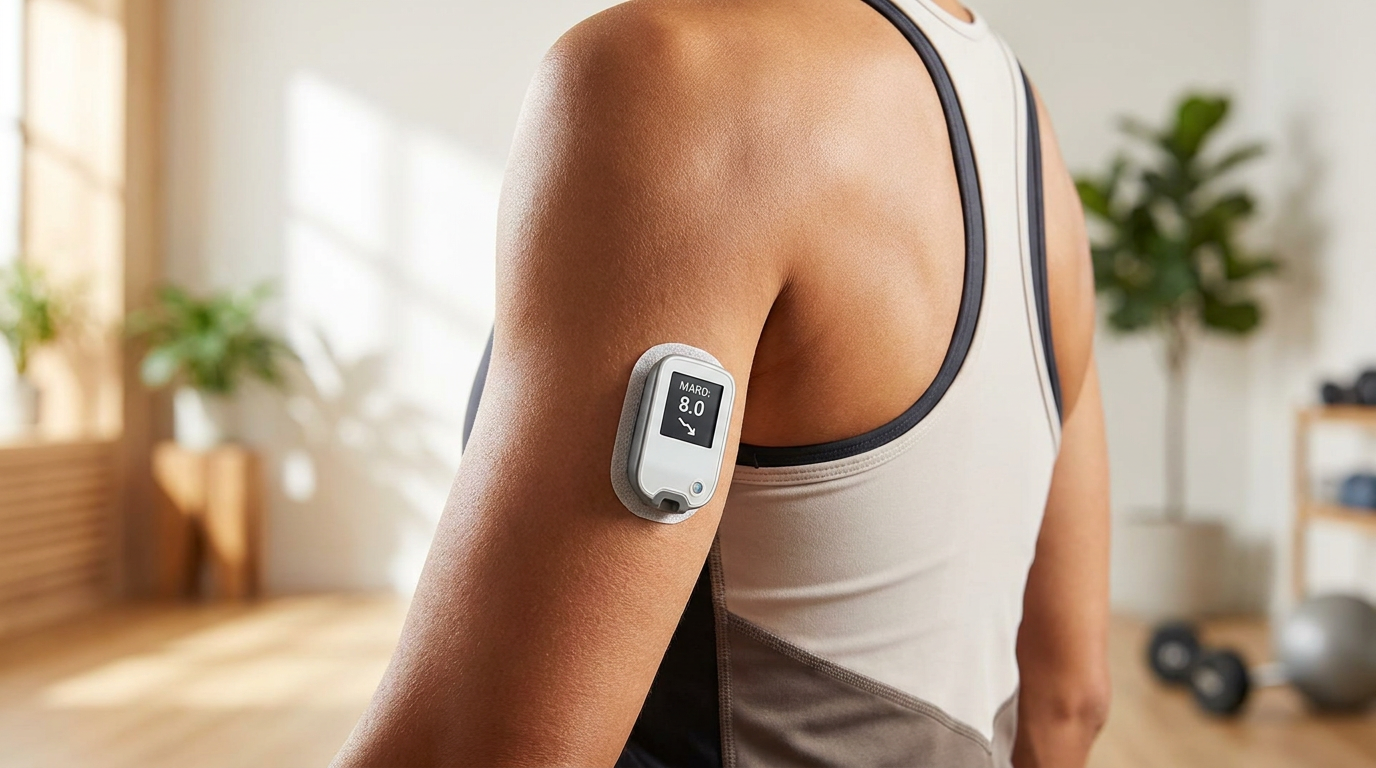
Originally designed to prevent life-threatening hypoglycemic events in insulin-dependent diabetics, these quarter-sized wearables are now being marketed directly to the wellness crowd.[1][2]
The pitch is compelling: stick a sensor to the back of your arm, pair it with a smartphone via Bluetooth, and watch in real time as your body reacts to a bowl of oatmeal, a stressful meeting, or a brisk walk.[2][4]
But as these devices transition from medical necessities to consumer shopping cart staples, a critical question emerges: does the scientific evidence support their use for people who do not have diabetes?[1][7]

To understand the evidence, it is essential to understand what these devices actually measure. Over-the-counter CGMs do not measure blood glucose directly. Instead, a tiny filament sits just beneath the skin, measuring glucose levels in the interstitial fluid—the fluid between cells.[4][7]
Because glucose takes time to travel from the bloodstream into the interstitial fluid, there is an inherent delay. Readings typically trail actual blood glucose by five to fifteen minutes, a lag that becomes most apparent during rapid changes like intense exercise.[7]
Despite this lag, the accuracy of modern over-the-counter sensors is robust. Clinical evaluations published in peer-reviewed journals like Diabetes Technology & Therapeutics indicate that these devices maintain a Mean Absolute Relative Difference (MARD)—the standard metric for CGM accuracy—of under 10 percent.[5]
For a non-diabetic user, an 8.8 percent MARD is more than sufficient to identify broad physiological trends, such as whether a specific meal causes a massive spike or a gentle rolling hill.[5][7]

The primary argument for consumer CGMs is behavioral modification. Proponents argue that seeing a sharp glucose spike after eating a pastry provides immediate, personalized feedback that a generic nutrition label simply cannot match.[2][4]
The primary argument for consumer CGMs is behavioral modification.
Early observational data suggests this feedback loop can be highly effective. Users frequently report reducing their intake of refined carbohydrates and increasing their post-meal physical activity—such as taking a ten-minute walk—to blunt glucose spikes.[2][4]
The landmark Diabetes Prevention Program trial established decades ago that lifestyle interventions, including diet and moderate exercise, are highly effective at preventing the onset of type 2 diabetes in high-risk populations.[6]
If wearing a continuous glucose monitor successfully nudges a user toward those proven lifestyle changes, the downstream metabolic benefits could be substantial, even if the device itself is merely an observational tool.[6][7]
However, clinical skeptics point out a glaring gap in the literature: there are currently no large-scale randomized controlled trials proving that CGM use in healthy adults leads to sustained weight loss or a lower incidence of metabolic disease.[1][7]

Medical professionals warn that more data does not automatically equal better health. In some cases, the hyper-visibility of normal physiological processes can trigger unnecessary anxiety and confusion.[1][2]
It is entirely normal for a healthy body's glucose levels to rise after a meal and subsequently fall as insulin efficiently does its job.[1][2]
Some users, misinterpreting these natural spikes as inherently harmful, may unnecessarily restrict healthy foods like fruits or complex carbohydrates, potentially leading to disordered eating patterns.[1][2]
Despite these concerns, the regulatory landscape continues to broaden. In June 2026, the FDA expanded the clearance for the Dexcom Stelo to include children aged two and older who do not use insulin.[3][8]

This pediatric clearance aims to address the rising rates of childhood prediabetes, offering parents a tool to monitor how family meals and activities impact their children's metabolic health, provided it is used under adult supervision.[3]
Ultimately, the utility of an over-the-counter CGM depends heavily on the user's mindset. At an estimated cost of $100 to $150 per month without insurance coverage, they represent a premium wellness investment.[7]
How we got here
2002
The landmark Diabetes Prevention Program trial demonstrates that lifestyle interventions can significantly reduce the incidence of type 2 diabetes.
March 2024
The FDA clears the Dexcom Stelo, marking the first time a continuous glucose monitor is approved for over-the-counter use in the United States.
June 2024
Abbott receives FDA clearance for its Lingo over-the-counter CGM, expanding the consumer market for metabolic tracking.
June 2026
The FDA expands the clearance of the Dexcom Stelo to include children aged two and older who do not use insulin.
Viewpoints in depth
Metabolic Optimizers
Advocates who view real-time glucose data as a powerful tool for personalized nutrition and behavioral change.
This camp, which includes biohackers, athletes, and preventative health enthusiasts, argues that generic dietary guidelines fail to account for individual metabolic differences. They point to anecdotal evidence and early observational studies showing that when people can actually see a glucose spike on their smartphone, they are far more likely to take a post-meal walk or choose a lower-glycemic snack. For them, the CGM is an educational tool that gamifies healthy habits and provides immediate accountability.
Clinical Skeptics
Medical professionals who caution against the widespread use of medical devices by healthy individuals without proven long-term benefits.
Skeptics emphasize the lack of large-scale randomized controlled trials demonstrating that CGM use in non-diabetics actually prevents disease or leads to sustained weight loss. They worry about the psychological toll of 'number chasing,' noting that perfectly healthy individuals may develop anxiety or disordered eating patterns by misinterpreting normal, physiological glucose spikes as dangerous. Their stance is that without a medical indication, the data is often more confusing than actionable.
Regulatory Bodies
Agencies focused on expanding access to preventative health tools while ensuring device safety and accuracy.
The FDA and similar international bodies have taken a progressive stance by clearing devices like the Dexcom Stelo and Abbott Lingo for over-the-counter use. Their focus is strictly on the safety and accuracy of the biosensors, ensuring that the devices reliably measure interstitial glucose without causing harm. By expanding clearances to include non-insulin-dependent children, regulators are signaling a shift toward using these technologies as early-intervention tools to combat the rising tide of prediabetes.
What we don't know
- There are currently no large-scale randomized controlled trials proving that CGM use in healthy adults leads to sustained weight loss or prevents metabolic disease.
- It remains unclear how the widespread availability of over-the-counter CGMs will impact the long-term psychological relationship consumers have with food.
Key terms
- Continuous Glucose Monitor (CGM)
- A wearable biosensor that tracks glucose levels 24 hours a day, sending real-time data to a connected smartphone app.
- Interstitial Fluid
- The fluid found in the spaces around cells, which is where CGM sensors actually measure glucose levels rather than directly in the blood.
- MARD (Mean Absolute Relative Difference)
- The standard statistical metric used to evaluate the accuracy of continuous glucose monitors, with lower percentages indicating higher accuracy.
- Prediabetes
- A condition where blood sugar levels are higher than normal but not yet high enough to be diagnosed as type 2 diabetes.
Frequently asked
Do over-the-counter CGMs require a prescription?
No. Devices like the Dexcom Stelo and Abbott Lingo have been cleared by the FDA for over-the-counter purchase by individuals who do not use insulin.
How long does a single CGM sensor last?
Most over-the-counter sensors are designed to be worn continuously for 14 to 15 days before they must be removed and replaced.
Does the sensor measure my actual blood sugar?
Not exactly. CGMs measure glucose levels in the interstitial fluid just beneath the skin, which typically trails actual blood glucose levels by 5 to 15 minutes.
Can a CGM diagnose diabetes?
No. Over-the-counter CGMs are not diagnostic tools. Diagnosing diabetes or prediabetes requires specific blood tests, such as an A1C or fasting glucose test, administered by a doctor.
Sources
Source coverage
8 outlets
3 viewpoints surfaced







[1]GoodRxClinical Skeptics
How to Get a Continuous Glucose Monitor OTC Without Diabetes
Read on GoodRx →[2]diaTribeMetabolic Optimizers
diaTribe Reviews: Lingo by Abbott
Read on diaTribe →[3]PienomialRegulatory Bodies
FDA Clears Dexcom Stelo OTC CGM for Children Not Using Insulin
Read on Pienomial →[4]Ted Eytan, MDMetabolic Optimizers
Dexcom Stelo CGM – My Review
Read on Ted Eytan, MD →[5]Diabetes Technology & Therapeutics
Clinical Research on CGM Devices and MARD Accuracy
Read on Diabetes Technology & Therapeutics →[6]New England Journal of MedicineClinical Skeptics
The Diabetes Prevention Program: Lifestyle Intervention
Read on New England Journal of Medicine →[7]Factlen Editorial Team
Synthesis by Factlen editorial team
Read on Factlen Editorial Team →[8]U.S. Food and Drug AdministrationRegulatory Bodies
FDA Clears First Over-the-Counter Continuous Glucose Monitor
Read on U.S. Food and Drug Administration →

Every angle. Every day.
Get shopping stories with full source coverage and perspective breakdowns delivered to your inbox.