
The Rise of 'Functional Organizing': How Science and Neurodiversity are Redefining the Tidy Home
Moving away from Pinterest-perfect aesthetics, experts are embracing 'functional organizing'—a science-backed, low-stress approach designed to reduce cortisol and support neurodivergent brains.
By Factlen Editorial Team
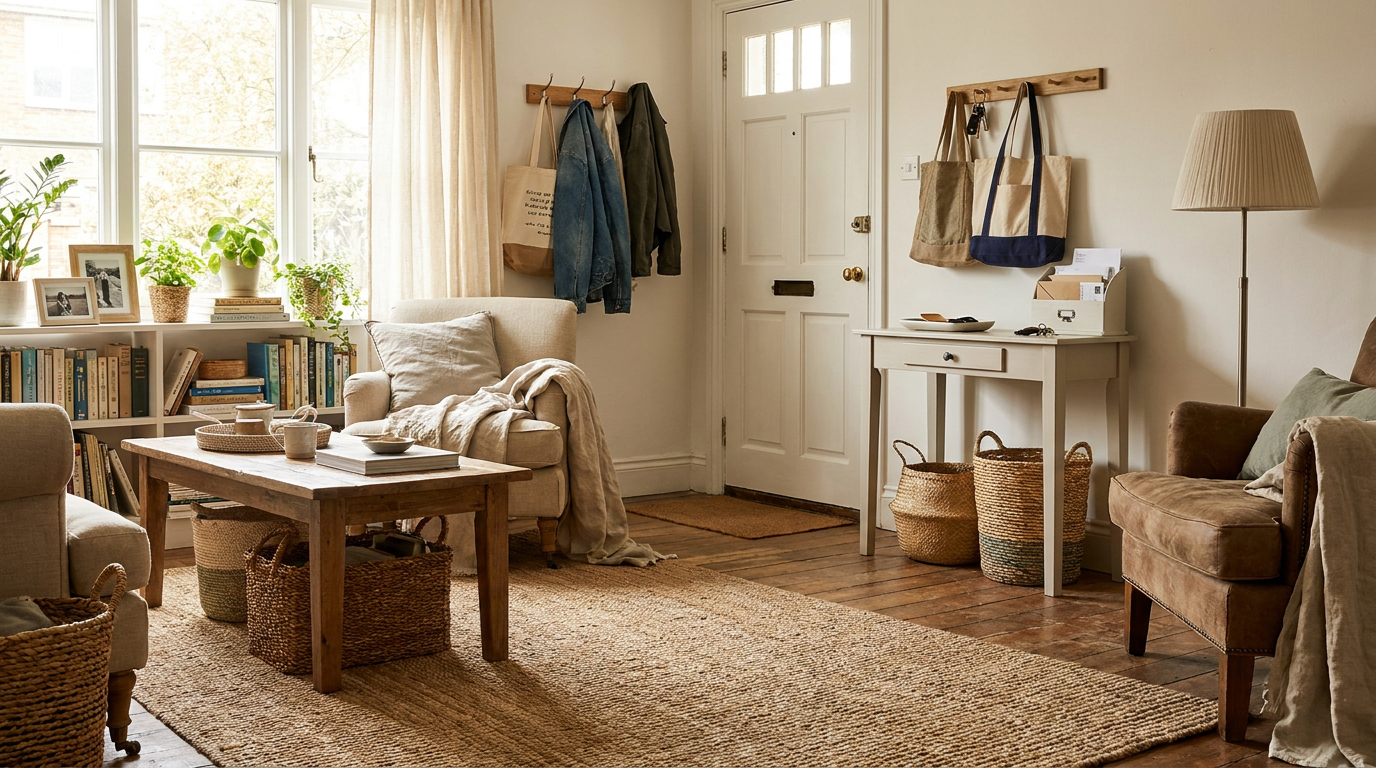
- Functional Organizing Advocates
- Argue that home systems should be designed for the reality of human behavior, prioritizing mental health and ease of use over aesthetics.
- Psychologists & Neuroscientists
- Focus on the cognitive load of domestic spaces, studying how visual clutter impacts cortisol levels, working memory, and executive function.
- Aesthetic & Minimalist Organizers
- Believe that true peace of mind comes from significantly reducing possessions and creating a visually serene, highly curated environment.
What's not represented
- · Interior designers balancing aesthetics with function
- · Individuals with severe hoarding disorders
Why this matters
Traditional decluttering methods often cause anxiety and decision fatigue, especially for neurodivergent individuals. Functional organizing offers a shame-free, scientifically backed alternative that prioritizes mental health and ease of use over visual perfection.
Key points
- Functional organizing prioritizes utility and ease of maintenance over visual perfection.
- Studies link high densities of household objects to elevated cortisol and chronic stress.
- Traditional 'pull everything out' methods can cause decision fatigue and worsen anxiety.
- The '5 Things' method simplifies tidying into trash, dishes, laundry, and items with or without homes.
- Neurodivergent brains benefit from micro-tasks that provide quick dopamine rewards.
For the better part of a decade, the cultural gold standard for home organization was defined by stark minimalism and aesthetic perfection. Fueled by reality television and social media, the prevailing wisdom dictated that getting organized meant pulling every item out of a closet, evaluating its emotional resonance, and placing the survivors into matching, label-forward acrylic bins. But a quiet rebellion is reshaping how experts approach domestic spaces. Driven by behavioral scientists, mental health professionals, and neurodivergent advocates, the focus is shifting away from "Pinterest-perfect" aesthetics toward a concept known as "functional organizing." This approach prioritizes utility, ease of maintenance, and psychological relief over visual symmetry, fundamentally changing the metrics of what makes a home "organized."[6]
To understand why functional organizing is gaining traction, it is necessary to examine the biological impact of clutter. The human brain is not designed to process an infinite number of visual stimuli simultaneously. According to research highlighted by Swedish Health Services, excessive visual clutter actively overloads the visual cortex, forcing the brain to constantly scan and process the environment rather than resting. This cognitive overload triggers a physiological response. A landmark UCLA study found a direct correlation between the density of household objects and elevated levels of cortisol, the body's primary stress hormone. For many individuals, living in a highly cluttered environment induces a chronic state of low-grade fight-or-flight, leading to fatigue, anxiety, and even disrupted sleep patterns.[5]
Traditional decluttering methods often exacerbate this stress before relieving it. The popular "KonMari" method, for instance, requires practitioners to empty entire categories of items—such as all clothing or all books—onto the floor to sort through them at once. While effective for some, productivity experts like Organize 365's Lisa Woodruff point out that this "pull everything out" strategy can be catastrophic for the average household. It creates an immediate, overwhelming mess that requires hours of sustained physical and mental energy to resolve. If the organizer runs out of time or motivation halfway through, they are left with a living space that is significantly more chaotic than when they started, leading to feelings of failure and increased anxiety.[1]

This traditional approach is particularly punishing for individuals with ADHD, depression, or executive dysfunction. Executive function refers to the cognitive processes that handle planning, working memory, and task execution. When an environment is messy, the brain must make dozens of micro-decisions to clean it up: Where does this go? Do I need to keep this? Should I buy a bin for this? For neurodivergent brains, this rapid-fire decision-making leads to "decision fatigue" and complete paralysis. Psychology Today notes that the resulting inability to tidy up often spirals into deep feelings of shame and hopelessness, creating a vicious cycle where the mess worsens the depression, and the depression makes it harder to address the mess.[3]
Functional organizing bypasses these cognitive roadblocks by removing the pressure of perfection. Instead of asking, "How can I make this space look beautiful?" functional organizing asks, "How can I make this space easy to use and easy to reset?" The goal is to create intuitive systems that work with a person's natural habits rather than fighting them. If a family naturally drops their shoes and mail by the front door, a functional organizer will not try to force them to carry those items to a hall closet. Instead, they will place a designated "drop zone" basket exactly where the items naturally fall. The aesthetic might be less polished, but the friction of daily maintenance is virtually eliminated.[1][6]
Functional organizing bypasses these cognitive roadblocks by removing the pressure of perfection.
One of the most prominent frameworks in this new wave of functional organizing is the "5 Things" tidying method, popularized by licensed professional counselor KC Davis. Designed specifically for individuals who are overwhelmed or "drowning" in household tasks, the method posits that no matter how disastrous a room looks, there are only ever five categories of items in it: trash, dishes, laundry, things that have a place, and things that do not have a place. By focusing on only one category at a time—gathering all the trash first, then moving exclusively to dishes—the brain is spared the exhausting task of context-switching. This method provides immediate, visible progress and quick dopamine rewards without requiring complex decision-making.[4]

Another pillar of the functional movement is the "No Mess" decluttering strategy championed by author Dana K. White. Unlike traditional methods that create a larger mess before creating order, White's approach ensures that the space is always better off than when the session began, even if the person only has five minutes to spare. The process begins with the easiest, emotionless tasks: throwing away obvious trash and returning items to their established homes. For items without a home, White relies on two pragmatic questions: "Where would I look for this first?" and "If I needed this, would it even occur to me that I already own it?" The item is then immediately taken to that first-thought location, rather than being placed in a "to sort later" pile.[4]
The success of these functional methods lies in their alignment with neurobiology. ADHD brains, in particular, struggle with dopamine regulation, making it difficult to sustain motivation for tasks that do not offer immediate rewards. By breaking the overwhelming concept of "cleaning the house" into micro-tasks with clear finish lines—such as "only pick up the trash"—functional organizing provides the rapid dopamine hits necessary to build momentum. This approach transforms decluttering from a marathon of endurance into a series of short, manageable sprints, making it accessible even on days when energy and executive function are severely depleted.[2][4]

Perhaps the most profound impact of the functional organizing movement is its focus on removing moral judgment from domestic labor. For generations, a spotless home was culturally equated with personal virtue, while a messy home was viewed as a moral failing or a sign of laziness. Advocates like Davis and Woodruff are actively dismantling this narrative, framing cleaning and organizing not as moral obligations, but as morally neutral acts of functional care. A home is meant to serve the people living in it, not the other way around. If a system—like keeping clean laundry in a basket rather than folding it into drawers—makes life easier for the resident, it is considered a successful organizational strategy.[1][2]
While functional organizing is highly effective for daily maintenance and moderate clutter, mental health professionals acknowledge its limitations. For individuals dealing with severe hoarding disorder, functional micro-decluttering may not be sufficient to address the underlying psychological attachments to objects. Hoarding is a complex psychiatric condition that often requires specialized cognitive behavioral therapy (CBT) and professional intervention, rather than just a change in tidying methodology. Furthermore, while functional organizing reduces the friction of daily life, it cannot magically create space in a home that is fundamentally too small for the number of occupants or the volume of essential possessions.[3][5]

As the conversation around mental health and neurodiversity continues to enter the mainstream, the principles of functional organizing are likely to become the new standard for home management. Professional organizing services are increasingly offering "ADHD-friendly" packages, and interior designers are prioritizing realistic storage solutions over minimalist open shelving. Ultimately, this shift represents a more compassionate and scientifically grounded approach to domestic life. By prioritizing how a space functions over how it looks, individuals can reclaim their time, reduce their cortisol levels, and create homes that act as sanctuaries of rest rather than sources of chronic stress.[6]
How we got here
2014
Marie Kondo publishes 'The Life-Changing Magic of Tidying Up,' sparking a global minimalism trend.
2018
Productivity experts begin pushing back, noting that minimalist systems are unsustainable for many families.
2020
The pandemic forces millions to work and live in the same spaces, highlighting the need for practical, functional home systems.
2022
KC Davis publishes 'How to Keep House While Drowning,' bringing ADHD-friendly organizing into the mainstream.
2026
Functional organizing becomes a dominant framework in interior design and professional organizing services.
Viewpoints in depth
Functional Organizing Advocates
Argue that home systems should be designed for the reality of human behavior.
This camp, largely made up of neurodivergent advocates and modern productivity experts, argues that traditional organizing sets people up for failure. They emphasize that a home is a functional space for living, not a museum for display. By removing the moral weight of cleanliness and focusing on systems that reduce friction—like open bins instead of folded drawers—they believe individuals can maintain healthier, less stressful environments.
Aesthetic & Minimalist Organizers
Believe that true peace of mind comes from significantly reducing possessions and creating visual serenity.
Popularized by figures like Marie Kondo, this viewpoint asserts that the physical environment deeply impacts the spiritual and emotional state. Advocates argue that functional organizing often just manages clutter rather than eliminating it. They maintain that the temporary chaos of a massive decluttering session is a necessary crucible to achieve a permanently curated, joyful, and visually calm home.
Psychologists & Neuroscientists
Focus on the cognitive load of domestic spaces and how visual clutter impacts executive function.
Medical and psychological professionals view home organization through the lens of cognitive bandwidth. They point to studies showing that high object density overloads the visual cortex and spikes cortisol levels. From this perspective, the specific organizing method matters less than the ultimate reduction of visual stimuli, though they widely support micro-decluttering strategies for patients suffering from depression or ADHD to avoid decision fatigue.
What we don't know
- How long-term adherence to functional organizing compares to minimalist methods over a decade.
- The exact threshold of visual clutter required to trigger a cortisol spike, which varies widely by individual.
Key terms
- Functional Organizing
- An approach to home management that prioritizes how easy a space is to use and maintain, rather than how it looks.
- Executive Dysfunction
- A cognitive challenge, common in ADHD and depression, that makes planning, decision-making, and task initiation difficult.
- Cortisol
- The body's primary stress hormone, which studies show can be elevated by living in highly cluttered environments.
- Decision Fatigue
- The deteriorating quality of decisions made by an individual after a long session of decision-making, often triggered by sorting clutter.
Frequently asked
What is the difference between functional organizing and minimalism?
Minimalism focuses on owning as few items as possible to create visual calm. Functional organizing doesn't require getting rid of your belongings; it focuses on creating easy, accessible systems to store the things you actually use.
How does the '5 Things' method work?
When facing a messy room, you only look for five categories in order: trash, dishes, laundry, things that have a place, and things that don't. You complete one category entirely before moving to the next.
Why do traditional organizing methods fail for some people?
Methods that require pulling everything out at once can cause overwhelming decision fatigue. If a person runs out of energy halfway through, they are left with a bigger mess than when they started.
Sources
Source coverage
6 outlets
3 viewpoints surfaced





[1]Organize 365
The Productive Home Solution and Functional Organizing
Read on Organize 365 →[2]ADDitude MagazineFunctional Organizing Advocates
Cleaning House with ADHD: Next Steps and Strategies
Read on ADDitude Magazine →[3]Psychology TodayPsychologists & Neuroscientists
The Connection Between Clutter and Mental Health
Read on Psychology Today →[4]Flow ClubFunctional Organizing Advocates
ADHD-Friendly Decluttering Methods from the Community
Read on Flow Club →[5]Swedish Health ServicesPsychologists & Neuroscientists
How Decluttering Can Improve Physical and Mental Health
Read on Swedish Health Services →[6]Factlen Editorial TeamFunctional Organizing Advocates
Synthesis by Factlen editorial team
Read on Factlen Editorial Team →
Every angle. Every day.
Get home stories with full source coverage and perspective breakdowns delivered to your inbox.