
The Science of Muscle Recovery: How Cold, Heat, and Active Rest Actually Affect Your Body
While ice baths reduce acute soreness, recent meta-analyses reveal they actively blunt muscle growth, prompting a shift toward heat therapy and active recovery for long-term athletic gains.
By Factlen Editorial Team
- Strength & Hypertrophy Athletes
- Prioritize long-term muscle adaptation and protein synthesis, actively avoiding cold exposure immediately after training.
- Endurance & Tournament Competitors
- Value immediate reduction in soreness and inflammation to maintain peak performance across consecutive days of competition.
- Sports Scientists
- Advocate for periodized recovery, matching the specific modality (heat, cold, or active rest) to the athlete's current training phase.
What's not represented
- · Recreational gym-goers who lack access to specialized recovery facilities
- · Physical therapists treating clinical injuries rather than athletic fatigue
Why this matters
Millions of people use ice baths, saunas, and active rest to recover from exercise, often deploying the wrong tool for their specific goals. Understanding the distinct biological mechanisms behind temperature therapy ensures you aren't accidentally erasing the muscle and strength gains you just worked for.
Key points
- Cold water immersion effectively reduces acute muscle soreness and inflammation, making it ideal for multi-day competitions.
- Routine ice baths immediately following resistance training have a 95.7% probability of blunting long-term muscle growth.
- Heat therapy promotes vasodilation and triggers Heat Shock Proteins, which actively repair damaged muscle tissue.
- Active recovery at 40% of VO2 max clears blood lactate significantly faster than complete passive rest.
- Sports scientists now recommend periodizing recovery tools to match specific training goals rather than using them universally.
The modern athlete's toolkit looks increasingly like a thermodynamics laboratory. From professional locker rooms to suburban garages, the pursuit of optimal muscle recovery has spawned an industry of ice baths, infrared saunas, and active-rest protocols. Yet, as sports science advances, a stark realization has emerged: the very tools that make an athlete feel better today might be quietly sabotaging their progress for tomorrow.[1]
The physiological goal of recovery is twofold: clear the metabolic byproducts of intense exertion and repair the micro-tears in muscle tissue. For decades, the prevailing wisdom treated all recovery modalities as universally beneficial. However, recent meta-analyses reveal that recovery is highly specific. The biological pathways that reduce acute soreness are often fundamentally opposed to the pathways that build long-term strength and muscle mass.[1]
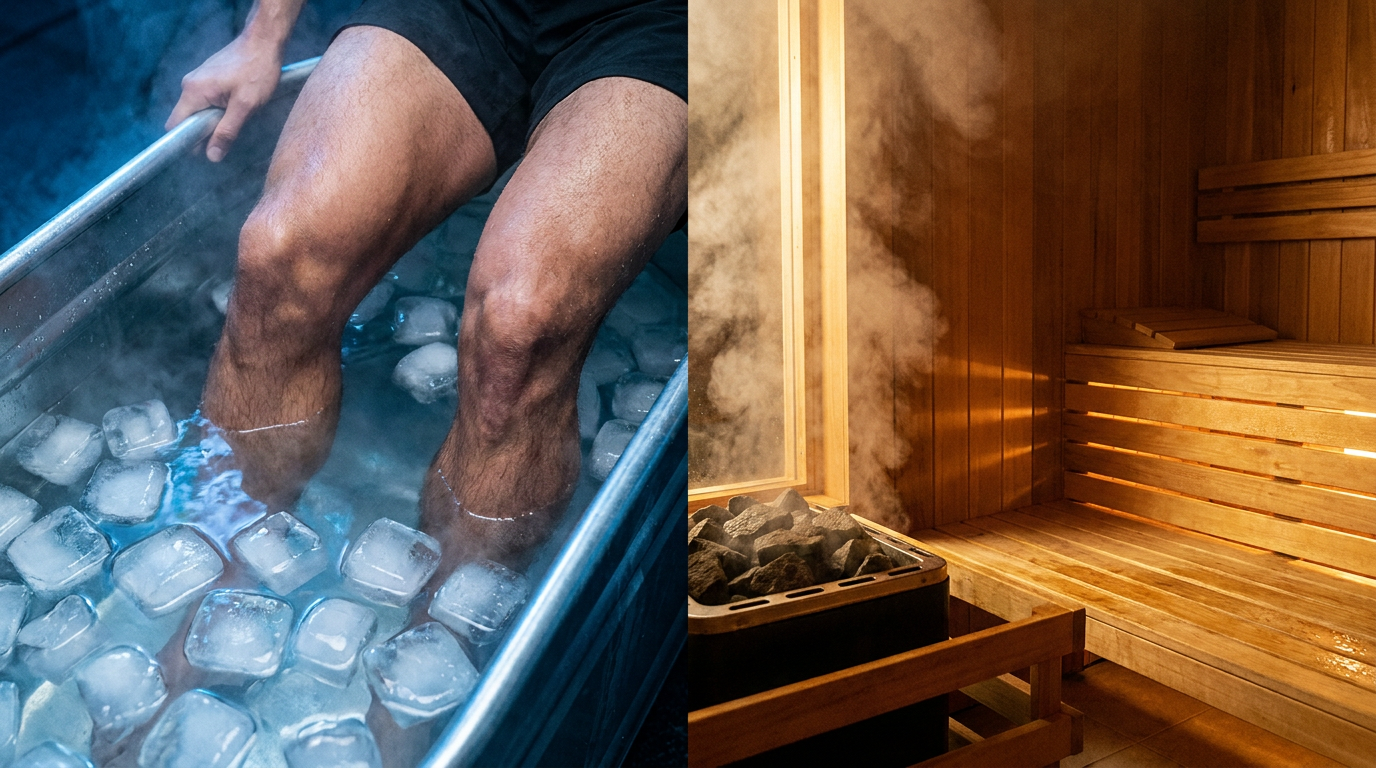
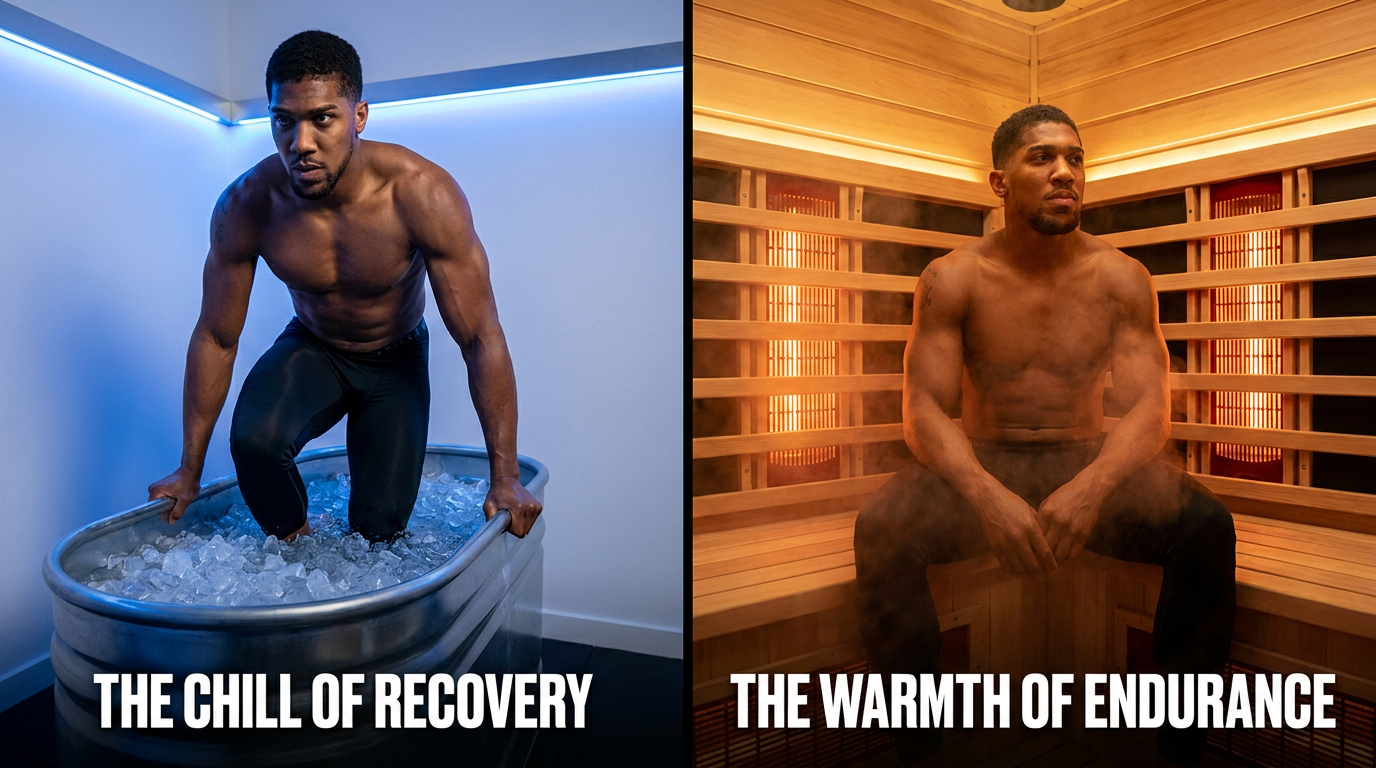
Cold water immersion, commonly known as the ice bath, is perhaps the most debated modality in modern fitness. The practice typically involves submerging the body in water chilled to between 10 and 15 degrees Celsius for ten to fifteen minutes. The immediate sensation is a shock to the system, but the physiological mechanism is precise: extreme cold induces rapid vasoconstriction, narrowing the blood vessels and forcing blood away from the extremities toward the core.[3]
This vascular clamping effect is highly effective at reducing acute inflammation. When an athlete steps out of the ice bath and their body begins to warm, the subsequent vasodilation flushes the muscles with fresh, oxygenated blood. A comprehensive review of thirty randomized controlled trials demonstrated that cold water immersion significantly reduces levels of creatine kinase—a primary biomarker of muscle damage—and alleviates delayed onset muscle soreness (DOMS) in the twenty-four hours following intense exercise.[3]

For athletes competing in multi-day tournaments, stage races, or back-to-back matches, this rapid reduction in soreness is invaluable. By artificially suppressing the body's natural inflammatory response, cold therapy allows an athlete to perform at near-peak capacity again the following day. It essentially acts as a biological pause button, delaying the fatigue and stiffness that would normally follow a grueling effort.[1][4]
But that biological pause button comes with a severe long-term cost for anyone looking to build strength or size. Inflammation is not merely a symptom of muscle damage; it is the crucial first step in the signaling cascade that tells the body to build new muscle tissue. By blunting that initial inflammatory response, cold water immersion actively interferes with the body's adaptation process.[2]
A recent meta-analysis examining the effects of post-exercise cold water immersion on resistance training found overwhelming evidence of this interference effect. The data showed a 95.7 percent probability that routine cold plunges immediately following weightlifting blunt muscle hypertrophy. The cold exposure suppresses satellite cell activity and inhibits the mTOR signaling pathway, which is the primary cellular driver of muscle protein synthesis.[2]
A recent meta-analysis examining the effects of post-exercise cold water immersion on resistance training found overwhelming evidence of this interference effect.
The timing of the cold exposure is the critical variable. Studies show that when athletes plunge into ice water within twenty minutes of a resistance training session, they can build up to a third less muscle mass over a training block compared to those who recover passively. The cold effectively mutes the very signals the athlete just spent an hour in the gym trying to generate. For bodybuilders and powerlifters, the ice bath is increasingly viewed as an active detriment to their goals.[1][2]

Heat therapy, conversely, operates on an entirely different physiological axis. Whether through traditional dry saunas, hot tubs, or infrared cabins, exposing the body to elevated temperatures induces systemic vasodilation. Blood vessels widen, lowering vascular resistance and dramatically increasing blood flow to the skin and muscle tissues. This enhanced perfusion delivers the amino acids and glucose required for tissue remodeling directly to the damaged muscle fibers.[6]
At the cellular level, heat exposure triggers the production of Heat Shock Proteins (HSPs). These specialized molecules act as molecular chaperones within the body. When cells are subjected to thermal stress, HSPs deploy to stabilize and repair other proteins that have been damaged or misfolded during intense exercise. They are a built-in defense mechanism that not only accelerates muscle repair but also protects against future cellular stress.[6]
Emerging research indicates that regular heat therapy can actually aid in muscle growth and cardiovascular endurance. Repeated exposure to heat stress has been shown to increase capillary density around muscle tissues and elevate the expression of endothelial nitric oxide synthase, which improves overall vascular function. Unlike cold therapy, which blunts adaptation, heat therapy appears to mimic and amplify the physiological benefits of aerobic exercise.[1][6]

Yet, neither temperature extreme addresses the immediate metabolic challenge of clearing blood lactate following high-intensity anaerobic exercise. When athletes push past their aerobic threshold, lactate accumulates in the blood faster than the body can clear it, leading to the familiar burning sensation and muscular fatigue. For decades, athletes debated whether it was better to rest completely or keep moving to clear this metabolic byproduct.[7]
Recent clinical trials have definitively answered this question, heavily favoring active recovery. A 2025 study examining soccer players found that low-intensity active recovery—such as light jogging or cycling—cleared blood lactate significantly faster than sitting or lying down. After sixty minutes, athletes utilizing active recovery had cleared 96 percent of their accumulated lactate, compared to just 91 percent for the passive group.[7]
The mechanism behind this accelerated clearance is continuous, moderate blood flow. By maintaining a light muscular contraction, the body sustains an elevated cardiac output without demanding further anaerobic energy. This steady flow of oxygenated blood shuttles lactate away from the working muscles and transports it to the liver and heart, where it is oxidized and converted back into usable energy.[5][7]

The intensity of the active recovery is paramount. Research on cyclists demonstrated that pedaling at exactly 40 percent of their maximum oxygen uptake (VO2 max) was the optimal threshold for lactate removal. Pushing harder than 60 percent begins to generate new lactate, while dropping below 30 percent fails to stimulate enough blood flow to outpace passive rest. The sweet spot is a conversational pace that keeps the heart rate mildly elevated.[5]
Ultimately, the science of recovery dictates that there is no single optimal modality; there is only the right tool for the specific physiological goal. An endurance runner facing a marathon the next morning benefits immensely from the acute soreness reduction of an ice bath. A powerlifter seeking maximum muscle growth should avoid the cold and instead utilize a sauna to promote Heat Shock Protein synthesis.[1][2][6]
Meanwhile, a sprinter or interval-training athlete looking to clear the burning sensation between bouts should rely on precise, low-intensity active recovery to metabolize lactate. The modern approach to athletic recovery is no longer about throwing every available therapy at a tired body. It is about periodizing recovery with the same strategic precision applied to the training itself.[1][5]

How we got here
1978
The RICE protocol (Rest, Ice, Compression, Elevation) is coined, cementing cold therapy as the default response to athletic exertion and injury.
2012
Major meta-analyses confirm that cold water immersion effectively reduces Delayed Onset Muscle Soreness (DOMS), leading to a boom in commercial ice baths.
2015
Early studies begin to show that while cold reduces soreness, it may interfere with the cellular signaling required for muscle hypertrophy.
2024
Comprehensive reviews definitively link post-exercise cold exposure to suppressed satellite cell activity and blunted strength adaptations.
2025
Clinical trials confirm that low-intensity active recovery (40% VO2 max) outperforms passive rest for clearing blood lactate in elite athletes.
Viewpoints in depth
Strength and Hypertrophy Focus
The perspective of bodybuilders and powerlifters prioritizing long-term tissue adaptation.
For athletes whose primary goal is increasing muscle cross-sectional area and absolute strength, the acute inflammatory response is a necessary feature of training, not a bug. This camp views cold water immersion as counterproductive, as it actively suppresses the mTOR signaling pathway and satellite cell activation required for protein synthesis. Instead, they favor heat therapy to increase blood flow and nutrient delivery to damaged tissues, or simply passive rest to allow the body's natural inflammatory cascade to run its course.
Endurance and Tournament Focus
The perspective of athletes competing in multi-day events where immediate readiness is paramount.
For a tennis player in a Grand Slam or a cyclist in a stage race, long-term muscle hypertrophy is irrelevant compared to the need to perform at peak capacity the following morning. This camp relies heavily on cold water immersion to artificially suppress inflammation, flush out metabolic waste via vasoconstriction, and numb acute soreness. The blunting of long-term adaptation is considered a worthwhile trade-off for the immediate restoration of perceived recovery and sprint performance.
The Periodization Approach
The modern sports science consensus that recovery modalities must be cycled like training blocks.
Sports physiologists increasingly argue against a one-size-fits-all recovery protocol. The periodization approach dictates that during off-season or base-building phases—where the goal is maximum physiological adaptation—athletes should avoid cold therapy to ensure they reap the full benefits of their training stress. Conversely, during the competitive season or peaking phases, when readiness and freshness outweigh long-term gains, cold therapy and aggressive active recovery are deployed to keep the athlete functional.
What we don't know
- The exact time threshold after resistance training when an ice bath ceases to blunt muscle hypertrophy.
- How the menstrual cycle and distinct female thermoregulation profiles alter the efficacy of both cold and heat therapies.
- Whether combining heat and cold (contrast water therapy) provides a net benefit or simply cancels out the specific adaptations of each.
Key terms
- Vasoconstriction
- The narrowing of blood vessels, often triggered by cold, which reduces blood flow to the skin and extremities.
- Vasodilation
- The widening of blood vessels, often triggered by heat, which increases blood flow and nutrient delivery to tissues.
- Heat Shock Proteins (HSPs)
- Proteins produced by cells in response to stress (like heat) that act as molecular chaperones to repair damaged or misfolded proteins.
- mTOR Pathway
- A central cellular signaling pathway that regulates cell growth and is the primary driver of muscle protein synthesis after exercise.
- Creatine Kinase
- An enzyme found in muscle tissue; elevated levels in the blood serve as a primary biomarker for exercise-induced muscle damage.
- Delayed Onset Muscle Soreness (DOMS)
- The muscular pain and stiffness that typically peaks 24 to 72 hours after intense or unfamiliar exercise.
Frequently asked
Should I take an ice bath after lifting weights?
If your goal is to build muscle and strength, no. Research shows that cold water immersion immediately after resistance training blunts the signaling pathways required for muscle growth.
When is the best time to use an ice bath?
Ice baths are highly effective during multi-day tournaments or intense endurance events where reducing acute soreness for the next day's performance is more important than long-term muscle adaptation.
What is the optimal intensity for active recovery?
Studies indicate that exercising at roughly 40 percent of your VO2 max—a light, conversational pace—is the most effective intensity for clearing blood lactate without causing further fatigue.
Do saunas actually help with muscle recovery?
Yes. Heat therapy increases blood flow to damaged tissues and triggers the release of Heat Shock Proteins, which help repair cellular damage and promote vascular health.
Sources
Source coverage
7 outlets
3 viewpoints surfaced







[1]Factlen Editorial TeamSports Scientists
Synthesis by Factlen editorial team
Read on Factlen Editorial Team →[2]National Institutes of HealthStrength & Hypertrophy Athletes
Throwing cold water on muscle growth: a systematic review with meta-analysis of the effects of postexercise cold water immersion
Read on National Institutes of Health →[3]Frontiers in PhysiologyEndurance & Tournament Competitors
Effects of cold water immersion after exercise on fatigue recovery and exercise performance
Read on Frontiers in Physiology →[4]PLOS OneEndurance & Tournament Competitors
The effect of submaximal exercise followed by short-term cold-water immersion on the inflammatory state
Read on PLOS One →[5]Taylor & FrancisSports Scientists
Comparative effect on lactatemia of active and passive recovery using local heat in male cyclists
Read on Taylor & Francis →[6]Journal of Applied PhysiologySports Scientists
Putative mechanisms underlying the effects of heat therapy on muscle recovery following exercise
Read on Journal of Applied Physiology →[7]Sports PedagogySports Scientists
Effect of active and passive recovery on blood lactate removal pattern
Read on Sports Pedagogy →
More in fitness
See all 6 stories →Training Volume
The Science of the Minimum Effective Dose for Strength Training
7 sources
Fitness Science
The Science of Zone 2: Why Running Slower is the Secret to Endurance and Longevity
9 sources

Thermal Recovery
The Science of Thermal Recovery: Cold Plunges, Saunas, and Contrast Therapy Explained
7 sources
Recovery Science
The Science of Muscle Recovery: Why Ice Baths Might Be Costing You Gains
6 sources
Every angle. Every day.
Get fitness stories with full source coverage and perspective breakdowns delivered to your inbox.