
The Science of Muscle Recovery: Why Ice Baths Might Be Costing You Gains
While cold water immersion is excellent for immediate pain relief, recent meta-analyses reveal it can blunt muscle growth if used right after lifting. Heat therapy is emerging as the superior choice for long-term strength adaptations.
By Factlen Editorial Team
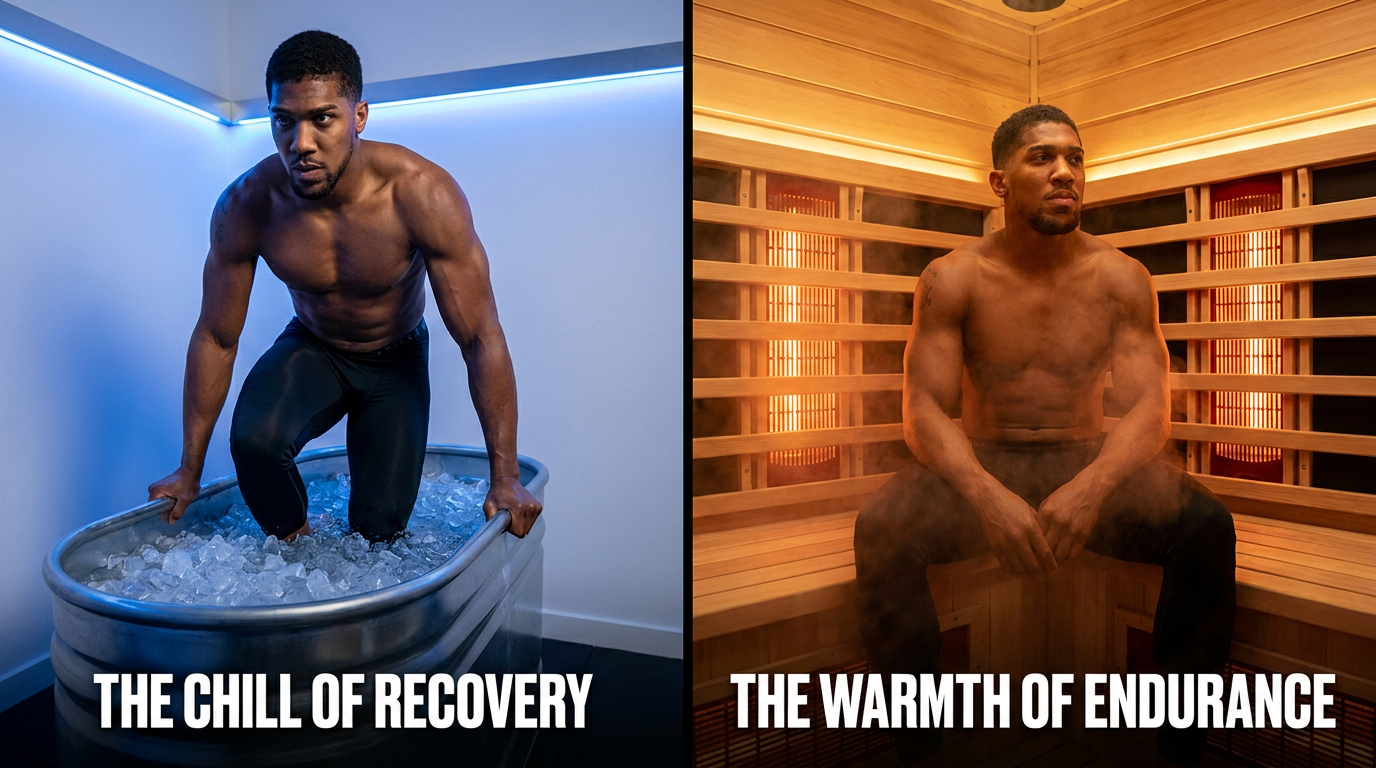
- Strength & Hypertrophy Researchers
- Warn that blunting the post-workout inflammatory response actively prevents the cellular signaling required for long-term muscle growth.
- Endurance & Field Athletes
- Prioritize rapid clearance of fatigue and pain reduction to ensure they can perform at a high level again within 24 hours.
- Heat Therapy Advocates
- Emphasize the cellular repair benefits of vasodilation and heat shock proteins as a way to recover without compromising strength gains.
What's not represented
- · Physical Therapists treating acute injuries
- · Longevity researchers focused on cold exposure for metabolic health
Why this matters
Millions of people endure uncomfortable ice baths hoping to maximize their gym results. Understanding the divergent biological effects of heat and cold allows you to stop accidentally sabotaging your own hard work and tailor your recovery to your specific fitness goals.
Key points
- Cold water immersion immediately after resistance training significantly blunts muscle growth and protein synthesis.
- Ice baths remain highly effective for reducing delayed onset muscle soreness and restoring power for endurance athletes.
- Heat therapy (saunas) increases blood flow and delivers nutrients to damaged muscles without stopping the growth signal.
- Sauna use triggers Heat Shock Proteins, which actively assist in cellular repair and muscle regeneration.
- Athletes should match their recovery tool to their goal: cold for immediate performance recovery, heat for long-term muscle adaptation.
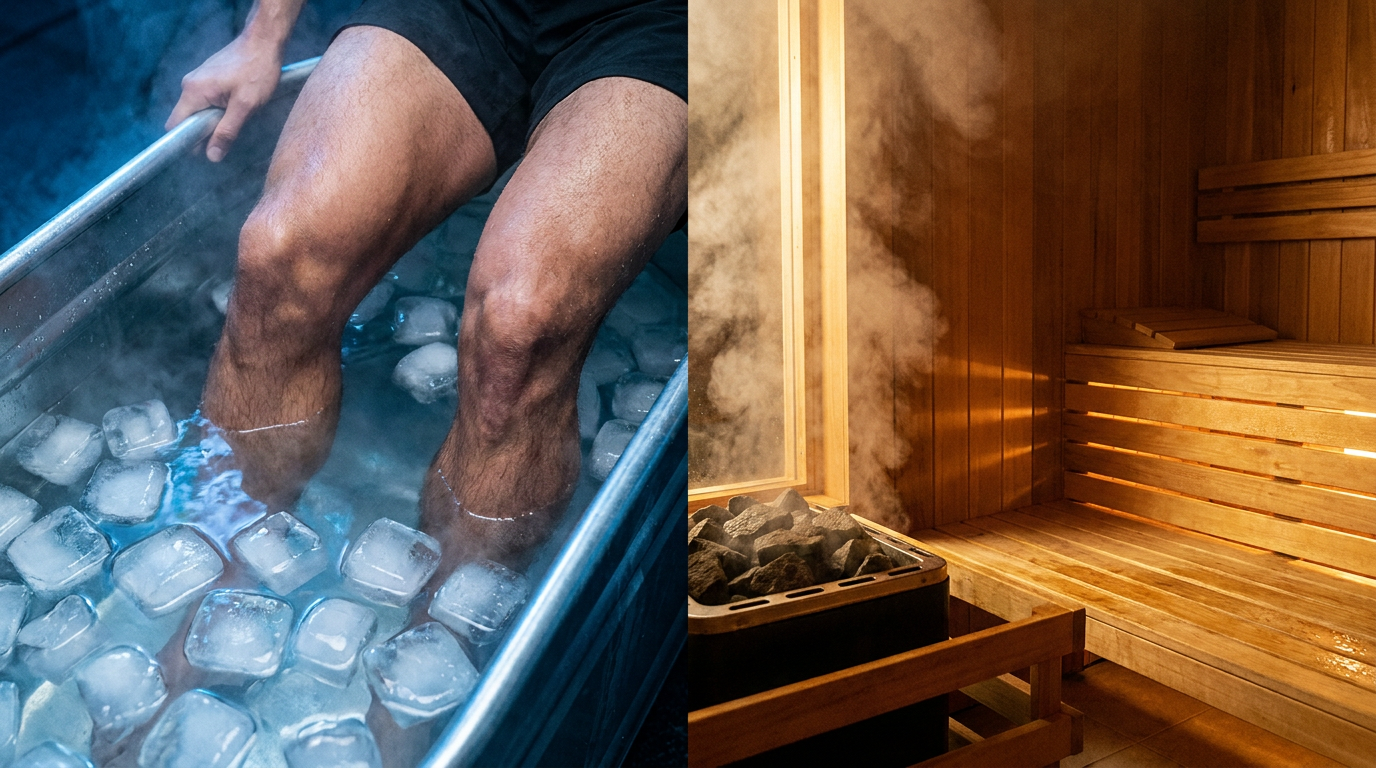
The modern athlete's toolkit has expanded far beyond a post-workout protein shake and a foam roller. Walk into any high-end gym, physical therapy clinic, or scroll through fitness social media, and you will see a stark dichotomy in recovery methods: the icy shock of the cold plunge and the sweltering calm of the sauna.
For years, the prevailing wisdom in sports medicine was simple: if you train hard, you create micro-trauma in the tissue, and nothing puts out the resulting inflammatory fire quite like ice. Cold water immersion became the gold standard for everyone from professional rugby players to weekend marathoners seeking an edge.[2]
But sports science is undergoing a quiet revolution. A wave of recent meta-analyses and physiological studies has revealed a complex plot twist in the story of muscle recovery, challenging the assumption that all inflammation is inherently bad.[6]
The emerging consensus suggests that while cold water is a powerful tool for immediate pain relief and endurance recovery, it might actively sabotage one of the primary reasons people lift weights in the first place: long-term muscle growth.[1][4]
To understand why, we have to look at the physiological mechanisms of cold exposure. When you submerge your body in water below 15 degrees Celsius, your blood vessels rapidly constrict—a survival process known as vasoconstriction.

This physiological shunting pulls blood away from the extremities and toward the core to preserve vital organ heat. In the process, the extreme cold numbs peripheral nerve endings and dramatically reduces the acute swelling and inflammation that follows intense exercise.[2]
For an endurance athlete running a multi-day stage race, or a tennis player facing another grueling match in 24 hours, this is exactly what is needed. By blunting the inflammatory response, cold water immersion significantly reduces Delayed Onset Muscle Soreness and restores muscular power for the next day's event.[5]
However, if your goal is to build strength or increase muscle size—known clinically as hypertrophy—that same inflammatory response is not your enemy. It is the essential biological signal your body relies on to trigger growth.[6]
However, if your goal is to build strength or increase muscle size—known clinically as hypertrophy—that same inflammatory response is not your enemy.
A landmark systematic review and meta-analysis published in SportRχiv examined the effects of post-exercise cooling coupled with resistance training. The findings were stark: applying cold water immersion immediately following bouts of lifting significantly attenuated hypertrophic changes in both trained and untrained individuals.[1]
The science comes down to cellular signaling and nutrient delivery. Muscle protein synthesis—the process by which the body repairs micro-tears to build denser, stronger fibers—requires a robust, uninterrupted flow of amino acids.
By constricting blood vessels, cold plunges actively reduce the delivery of these vital building blocks to the muscle tissue. A pivotal study demonstrated that immersing limbs in near-freezing water after resistance training reduced muscle protein synthesis rates for up to five hours post-application.[4]

This is where heat therapy enters the conversation as the superior choice for strength athletes. Unlike cold water, sitting in a traditional or infrared sauna induces vasodilation, widening the blood vessels and increasing circulation to fatigued muscles.[3]
This enhanced blood flow acts as a nutrient highway, delivering oxygen and proteins to damaged tissue while efficiently clearing metabolic waste products like lactate without blunting the necessary inflammatory signals.[6]
Beyond simple circulation, heat exposure triggers a fascinating cellular defense mechanism: the production of Heat Shock Proteins. These microscopic structures protect cells against stress, assist in folding damaged proteins, and stimulate pathways linked directly to muscle regeneration.[3]

Recent trials, including a study on basketball players published in the Biology of Sport, found that athletes using infrared saunas after resistance exercise preserved explosive muscle power and reported reduced soreness compared to those who simply rested passively.[3]
Crucially, they achieved this accelerated recovery without blunting the anabolic signals required for long-term muscle growth. The heat provided the soothing benefits of recovery while keeping the biological pathways for adaptation wide open.[3][6]
For those who want the best of both worlds, Contrast Water Therapy—alternating between hot and cold—offers a compelling middle ground. This creates a "vascular pump" effect, rapidly dilating and constricting vessels to flush tissues without subjecting the body to prolonged periods of restricted blood flow.[2]

Ultimately, the new science of recovery is about matching the tool to the adaptation you want. If you need to perform again tomorrow, take the ice bath. But if you want the muscle you just broke down to grow back stronger, skip the plunge and embrace the heat.[6]
Viewpoints in depth
Strength & Hypertrophy Researchers
Scientists focused on long-term tissue adaptation warn against post-lift cold exposure.
For researchers studying muscle growth, the post-workout window is a delicate biological cascade that shouldn't be interrupted. They point to data showing that the acute inflammation following a heavy lifting session is not a 'fire' to be put out, but rather a necessary signal that tells the body to rebuild stronger. By using cold water to artificially suppress this inflammation and constrict blood flow, athletes are effectively starving their muscles of the amino acids needed for protein synthesis during the most critical repair window.
Endurance & Field Athletes
Athletes competing in high-frequency events prioritize rapid clearance of fatigue over long-term muscle growth.
In the world of endurance sports, multi-day tournaments, and professional leagues with packed schedules, the calculus changes entirely. For these athletes, maximizing muscle size is secondary to simply being able to walk onto the pitch the next day without debilitating soreness. They rely on cold water immersion because its ability to numb pain receptors and flush out metabolic waste provides an unmatched, immediate restoration of functional power, allowing them to survive grueling competitive calendars.
Heat Therapy Advocates
Proponents of sauna use emphasize the cellular repair benefits of vasodilation and heat shock proteins.
Advocates for post-workout heat therapy argue that saunas offer a way to accelerate recovery while working with the body's natural adaptations rather than against them. By inducing vasodilation, heat acts as a nutrient highway, speeding up the delivery of oxygen and proteins to micro-tears in the muscle. Furthermore, the activation of Heat Shock Proteins provides a cellular-level defense mechanism that aids in tissue regeneration, making heat the optimal choice for athletes who want to recover quickly without sacrificing their strength gains.
What we don't know
- The exact threshold of cold exposure (temperature and duration) required before muscle protein synthesis is significantly blunted.
- Whether the long-term cardiovascular benefits of cold plunging outweigh the localized loss of muscle hypertrophy for the average recreational athlete.
- How individual genetic differences in thermoregulation affect a person's specific response to contrast water therapy.
Key terms
- Hypertrophy
- The enlargement of an organ or tissue; in fitness, it specifically refers to the increase in muscle mass and cross-sectional area.
- Vasoconstriction
- The narrowing of blood vessels resulting from contraction of the muscular wall of the vessels, typically triggered by cold to preserve core body heat.
- Vasodilation
- The widening of blood vessels, typically triggered by heat, which increases blood flow and nutrient delivery to tissues.
- Heat Shock Proteins (HSPs)
- A family of proteins produced by cells in response to exposure to stressful conditions, like sauna heat, which help repair damaged proteins and protect cellular health.
- Muscle Protein Synthesis
- The biological process where cells build new proteins to repair muscle damage caused by intense exercise, leading to stronger muscle fibers.
Frequently asked
Does taking an ice bath destroy my workout?
It doesn't destroy the workout, but if you lift weights to build muscle size, plunging immediately afterward reduces the protein synthesis required for maximum growth. It is better to separate cold exposure from lifting sessions.
When is the best time to use a cold plunge?
Cold plunges are highly effective after endurance training, during multi-day tournaments, or on rest days when your primary goal is reducing soreness and fatigue rather than building new muscle tissue.
How long should I sit in a sauna for recovery?
Research suggests that 15 to 20 minutes in a traditional or infrared sauna post-workout is sufficient to increase blood flow, trigger heat shock proteins, and aid in muscle repair.
What is contrast therapy?
Contrast therapy involves alternating between hot and cold water (e.g., 3 minutes hot, 1 minute cold). This creates a 'vascular pump' that flushes metabolic waste from the muscles without prolonged blood vessel constriction.
Sources
Source coverage
6 outlets
3 viewpoints surfaced




[1]SportRχivStrength & Hypertrophy Researchers
Throwing cold water on muscle growth: A systematic review with meta-analysis
Read on SportRχiv →[2]National Institutes of HealthEndurance & Field Athletes
Cold Water Immersion and Athletic Recovery: A Comprehensive Review
Read on National Institutes of Health →Effects of infrared sauna on neuromuscular recovery after resistance exercise
Read on Biology of Sport →[4]Journal of PhysiologyStrength & Hypertrophy Researchers
Post-exercise cooling impairs muscle protein synthesis rates in recreational athletes
Read on Journal of Physiology →[5]Cochrane LibraryEndurance & Field Athletes
Cold-water immersion (cryotherapy) for preventing and treating muscle soreness after exercise
Read on Cochrane Library →[6]Factlen Editorial TeamHeat Therapy Advocates
Synthesis by Factlen editorial team
Read on Factlen Editorial Team →
More in fitness
See all 6 stories →Training Volume
The Science of the Minimum Effective Dose for Strength Training
7 sources
Fitness Science
The Science of Zone 2: Why Running Slower is the Secret to Endurance and Longevity
9 sources

Thermal Recovery
The Science of Thermal Recovery: Cold Plunges, Saunas, and Contrast Therapy Explained
7 sources
Recovery Physiology
The Science of Muscle Recovery: How Cold, Heat, and Active Rest Actually Affect Your Body
7 sources
Every angle. Every day.
Get fitness stories with full source coverage and perspective breakdowns delivered to your inbox.