
The Science of Thermal Recovery: Cold Plunges, Saunas, and Contrast Therapy Explained
While cold water immersion excels at reducing immediate muscle soreness, heat therapy and contrast protocols offer distinct advantages for long-term muscle growth and cellular repair.
By Factlen Editorial Team
- Cryotherapy Advocates
- Prioritize rapid reduction of inflammation and immediate pain relief for endurance and high-frequency athletes.
- Hypertrophy Proponents
- Focus on cellular repair, hormonal optimization, and avoiding the blunting of muscle protein synthesis.
- Contrast Therapy Supporters
- Advocate for alternating temperatures to maximize vascular flushing and reduce perceived fatigue.
- Evidence-Based Skeptics
- Highlight that much of the benefit, especially in contrast therapy, may be subjective rather than objective.
What's not represented
- · Recreational Athletes
- · Female Athletes (often underrepresented in thermal recovery studies)
- · Physical Therapists
Why this matters
Athletes and fitness enthusiasts spend billions on recovery tools, but using the wrong temperature at the wrong time can actively sabotage your goals. Plunging into ice after lifting weights can blunt muscle growth, while saunas can accelerate it—understanding the science ensures your recovery matches your training.
Key points
- Cold water immersion (5–10°C for 10–15 minutes) is highly effective for reducing delayed onset muscle soreness and lowering creatine kinase levels.
- Using ice baths immediately after resistance training can blunt the anabolic signaling pathways necessary for muscle hypertrophy.
- Sauna use upregulates heat shock proteins and stimulates human growth hormone, creating an optimal cellular environment for muscle repair.
- Contrast water therapy alternates hot and cold to create a vascular pumping action, which is highly effective for reducing perceived fatigue in team sports.
- Athletes should match their thermal recovery to their goals: cold for acute pain relief and endurance, heat for strength and muscle growth.
The modern athletic recovery landscape is increasingly defined by extremes of temperature. From professional locker rooms to suburban garages, athletes are plunging into freezing water and sweating in cedar saunas in pursuit of faster recovery and enhanced performance. The global sports recovery market has exploded into a multi-billion dollar industry, driven largely by the proliferation of thermal therapies. Yet, despite the ubiquity of these tools, the biological mechanisms underlying them are frequently misunderstood by the general public, leading to suboptimal implementation.[7]
Temperature manipulation is not a one-size-fits-all tool. The physiological responses triggered by extreme cold and extreme heat are fundamentally opposed, meaning that using the wrong modality at the wrong time can actually sabotage specific training goals. Sports scientists emphasize that recovery is not merely the absence of fatigue, but an active biological process of adaptation. Therefore, the choice between an ice bath, a sauna, or a combination of both must be dictated by whether the athlete is prioritizing immediate pain relief, long-term muscle growth, or central nervous system recovery.[7]
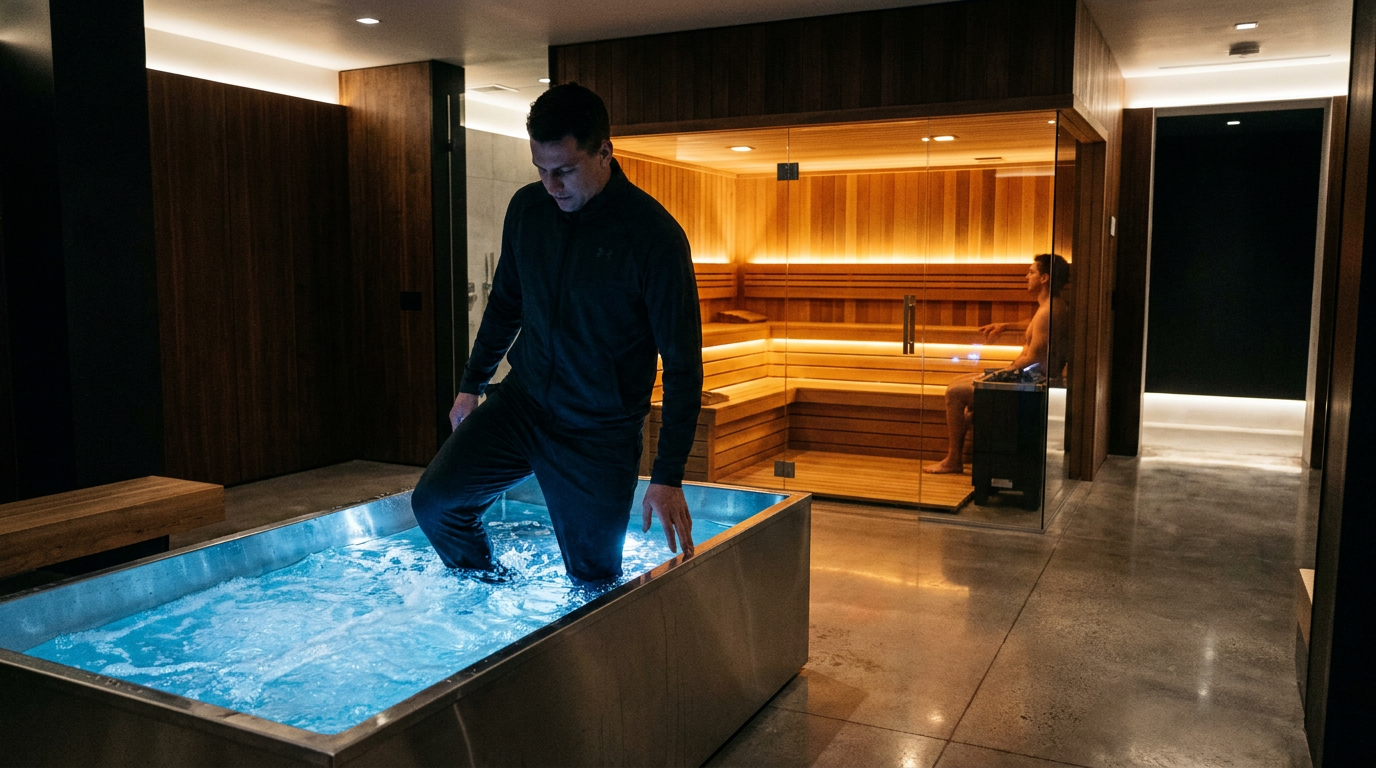
Cold water immersion operates primarily through rapid vasoconstriction and neurological numbing. When the human body is submerged in water below 15 degrees Celsius, peripheral blood vessels rapidly constrict, shunting blood away from the extremities to protect the vital organs of the core. This aggressive physiological triage serves a dual purpose in recovery: it limits the acute inflammatory response in damaged muscle tissue and slows the transmission velocity of nociceptive pain signals to the brain, providing immediate analgesic relief.[1][2]
The empirical evidence supporting cold therapy for pain management is robust and continually expanding. A comprehensive systematic review analyzed dozens of controlled trials and confirmed that cold water immersion is highly effective at reducing delayed onset muscle soreness. Furthermore, recent network meta-analyses have pinpointed the optimal therapeutic dose: submerging the body for 10 to 15 minutes at temperatures between 5 and 10 degrees Celsius yields the greatest reductions in creatine kinase, a primary blood biomarker indicative of exercise-induced muscle damage.[1][2]

However, the potent anti-inflammatory power of the cold comes with a significant physiological trade-off. For athletes focused on strength and hypertrophy, plunging into ice water immediately after resistance training can actively blunt the anabolic signaling pathways necessary for muscle growth. By artificially suppressing the body's natural inflammatory response, cold water immersion interrupts the cellular signaling required for muscle protein synthesis, ultimately attenuating long-term adaptations to strength training.[6][7]
Heat therapy, conversely, leans into the body's natural repair mechanisms rather than attempting to suppress them. Sauna use induces widespread vasodilation, increasing cardiac output and flooding damaged muscle tissues with oxygen- and nutrient-rich blood. This process mimics the cardiovascular demands of moderate aerobic exercise, earning sauna bathing the moniker of 'passive cardiovascular conditioning.' By keeping the vascular system open, heat therapy facilitates the efficient delivery of the amino acids and nutrients required for structural tissue repair.[5][7]
Heat therapy, conversely, leans into the body's natural repair mechanisms rather than attempting to suppress them.
Beyond simple blood flow, heat stress triggers a profound cellular defense mechanism. Research highlights the upregulation of Heat Shock Proteins, specifically a class known as HSP70. These specialized molecular chaperones patrol the cellular environment, actively repairing misfolded proteins and protecting muscle fibers from oxidative stress during the delicate remodeling phase. Regular sauna use increases the baseline levels of these proteins, essentially providing the muscles with a larger, more active maintenance crew.[5]

Sauna use also exerts a powerful hormonal effect that directly supports muscle growth. Sustained heat exposure has been shown to trigger significant spikes in human growth hormone. In some extreme experimental protocols, researchers have observed up to a 16-fold increase in circulating growth hormone levels following intense sauna sessions. This hormonal surge supports tissue repair, collagen synthesis, and long-term muscle hypertrophy, making heat a superior post-workout choice for bodybuilders and strength athletes.[5][7]
For athletes unwilling to choose between hot and cold, contrast water therapy offers a hybrid approach. By alternating between warm water immersion and cold plunges, this protocol aims to create a vascular pumping action. The rapid shift from vasodilation in the heat to vasoconstriction in the cold acts as a mechanical pump for the circulatory system, theoretically accelerating the clearance of metabolic waste products, such as lactate, from the muscle tissue.[3][4]
A landmark meta-analysis evaluating contrast water therapy found that this rapid cycling is highly effective at managing the perception of fatigue. The pooled data demonstrated that contrast therapy significantly reduces perceived muscle soreness and systemic fatigue at 24, 48, and 72 hours post-exercise when compared to passive rest. This makes the modality particularly attractive during dense competition schedules where athletes must perform repeatedly with minimal rest.[3]

Consequently, contrast therapy has become a staple in professional team sports like soccer, basketball, and rugby. In these environments, athletes accumulate significant metabolic fatigue and require rapid turnaround times between matches. While objective markers of neuromuscular recovery, such as countermovement jump height or sprint speed, may not fully recover any faster than with cold water alone, the subjective reduction in perceived exertion allows athletes to perform at a higher intensity.[4]
Despite the proliferation of these thermal recovery tools, sports scientists caution against over-reliance. Evidence suggests that some of the benefits of contrast therapy may be driven by the placebo effect, as the intense sensory experience of alternating temperatures makes athletes feel as though they are actively recovering. Furthermore, chronic use of any aggressive recovery modality can potentially blunt the body's natural adaptive responses over a long training block, leading to diminished returns.[3][7]
Ultimately, the science of thermal recovery dictates that temperature should be carefully matched to the specific training adaptation desired. Cold water immersion remains the ultimate tool for acute pain relief and rapid turnaround in endurance events or multi-day tournaments. Conversely, heat therapy provides the cellular and hormonal environment necessary for long-term strength and muscle growth, proving that in the pursuit of optimal recovery, timing and temperature are everything.[7]
How we got here
Post-Workout (0-2 hours)
Acute inflammation begins; cold therapy can blunt this response, while heat therapy can increase blood flow.
24 Hours Post-Exercise
Cold water immersion shows peak effectiveness in reducing subjective muscle soreness and creatine kinase levels.
48-72 Hours Post-Exercise
Delayed onset muscle soreness (DOMS) typically peaks; contrast therapy remains effective at alleviating perceived fatigue.
Viewpoints in depth
Cryotherapy Advocates
Prioritize rapid reduction of inflammation and immediate pain relief.
Proponents of cold water immersion emphasize its unmatched ability to reduce delayed onset muscle soreness (DOMS) and lower circulating levels of creatine kinase. By forcing rapid vasoconstriction, cold plunges limit the secondary phase of muscle damage caused by acute inflammation. For endurance athletes, CrossFit competitors, and team-sport players who must perform multiple times in a single weekend, this rapid return to baseline is prioritized over long-term muscular adaptations.
Hypertrophy & Heat Proponents
Focus on cellular repair, hormonal optimization, and maximizing muscle growth.
This camp warns against the indiscriminate use of ice baths, pointing to evidence that cold exposure blunts the mammalian target of rapamycin (mTOR) pathway—the primary driver of muscle protein synthesis. Instead, they advocate for sauna use and heat therapy. By upregulating heat shock proteins (HSPs) and triggering significant pulses of human growth hormone (HGH), heat exposure acts as a form of passive cardiovascular conditioning that actively supports tissue remodeling and hypertrophy without interrupting the body's natural inflammatory repair signals.
Contrast Therapy Supporters
Advocate for alternating temperatures to maximize vascular flushing.
Contrast water therapy (CWT) advocates argue that alternating between hot and cold environments provides the best of both worlds. The rapid shift from vasodilation (heat) to vasoconstriction (cold) creates a physiological 'pumping action' that flushes metabolic waste products, such as lactate, from the muscle tissue. While objective performance metrics like sprint speed may not see massive gains, the psychological and subjective benefits—specifically the dramatic reduction in perceived fatigue—make it a staple in professional team sports.
What we don't know
- The exact degree to which chronic cold water immersion blunts long-term muscle hypertrophy in non-elite recreational lifters.
- Whether the subjective benefits of contrast water therapy are primarily driven by a physiological vascular pump or a psychological placebo effect.
Key terms
- Delayed Onset Muscle Soreness (DOMS)
- The muscle pain and stiffness that typically peaks 24 to 72 hours after intense or unfamiliar exercise.
- Heat Shock Proteins (HSPs)
- Molecular chaperones produced by cells in response to thermal stress that help repair damaged or misfolded proteins.
- Creatine Kinase (CK)
- An enzyme found in muscle that leaks into the bloodstream when muscle tissue is damaged, used as a biomarker for exercise-induced muscle damage.
- Contrast Water Therapy (CWT)
- A recovery protocol that alternates between hot and cold water immersion to create a vascular pumping effect.
- Vasoconstriction
- The narrowing of blood vessels, which reduces blood flow and can help limit acute inflammation and swelling.
Frequently asked
Should I take an ice bath immediately after lifting weights?
No. Research suggests that cold water immersion immediately after resistance training can blunt the anabolic signaling pathways necessary for muscle hypertrophy.
How long should I stay in a cold plunge?
Meta-analyses indicate that 10 to 15 minutes at temperatures between 5°C and 10°C is optimal for reducing muscle soreness and biochemical markers of damage.
Does sauna use actually build muscle?
While it doesn't replace resistance training, sauna use upregulates heat shock proteins and stimulates human growth hormone release, creating a favorable cellular environment for muscle repair and growth.
Is contrast therapy better than just cold water?
Contrast therapy is highly effective for reducing perceived fatigue, especially in team sports, but cold water immersion alone is often superior for lowering physiological markers of muscle damage like creatine kinase.
Sources
Source coverage
7 outlets
4 viewpoints surfaced







[1]Sports MedicineCryotherapy Advocates
Effects of Cold-Water Immersion Compared with Other Recovery Modalities
Read on Sports Medicine →[2]Frontiers in PhysiologyCryotherapy Advocates
Network meta-analysis of cold water immersion protocols on exercise-induced muscle damage
Read on Frontiers in Physiology →[3]PLOS OneContrast Therapy Supporters
Contrast Water Therapy and Exercise Induced Muscle Damage: A Systematic Review and Meta-Analysis
Read on PLOS One →[4]Journal of Strength and Conditioning ResearchContrast Therapy Supporters
Effects of Cold Water Immersion and Contrast Water Therapy for Recovery From Team Sport
Read on Journal of Strength and Conditioning Research →[5]JAMA Internal MedicineHypertrophy Proponents
Association Between Sauna Bathing and Fatal Cardiovascular and All-Cause Mortality Events
Read on JAMA Internal Medicine →[6]Journal of Applied PhysiologyHypertrophy Proponents
Post-exercise cold water immersion attenuates acute anabolic signalling and long-term adaptations in muscle to strength training
Read on Journal of Applied Physiology →[7]Factlen Editorial TeamEvidence-Based Skeptics
Synthesis by Factlen editorial team
Read on Factlen Editorial Team →
Every angle. Every day.
Get fitness stories with full source coverage and perspective breakdowns delivered to your inbox.